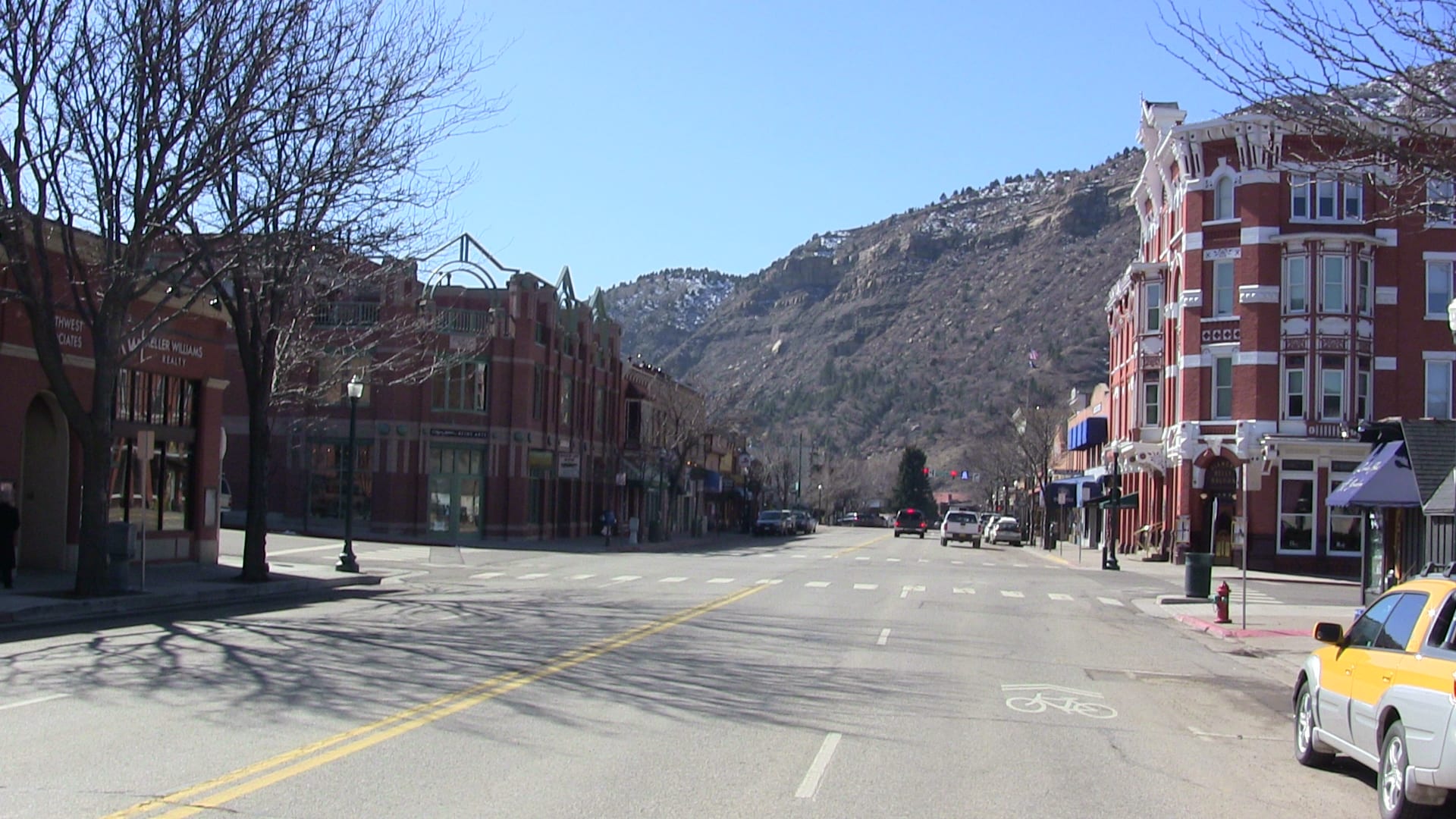
A street in downtown Durango under a clear blue sky, with red-brick Victorian buildings and a rocky ridge behind

The Rocky Mountains, United States

Durango

Downtown Durango on a clear winter day. (Durango web creations / Wikimedia Commons · CC BY-SA 3.0)

A small city on the Animas River in south-west Colorado, founded by the Denver and Rio Grande Railway in 1880 to serve the mines of the San Juan Mountains. Its narrow-gauge steam line to Silverton still runs, and today the brick downtown, Fort Lewis College, mountain biking, rafting and nearby Mesa Verde shape a lively outdoor town.

Neighbourhoods

  • Downtown and Main Avenue
    • First-time visitors
    • Best for food
    • Historic district

    The historic business district along Main Avenue, running north from the railway depot, lined with brick and stone buildings from the late 19th century. Shops, galleries, restaurants, breweries and bars fill them, and the steam trains leave from the south end of the street.

    Open in Maps
  • East Third Avenue
    • Quiet and residential
    • Historic homes

    A residential street just east of downtown, lined with large older houses, close to Main Avenue but quieter.

    Open in Maps
  • North Main and Animas City
    • Local life
    • River access

    The northern end of the city, around the site of the older settlement of Animas City, two miles north of the original town. Motels, cafés, shops and parks line the road north along the river towards the mountains.

    Open in Maps
  • Fort Lewis College and the mesa
    • Students
    • Views
    • Trail access

    The college campus on a 350-foot mesa overlooking downtown, with views over the city and the Animas Valley.

    Open in Maps

Things to do

The railway and the town

  • Durango and Silverton Narrow Gauge Railroadattraction

    A steam-hauled narrow-gauge line of 1882 that climbs about 45 miles up the Animas canyon to Silverton, with a museum of railway history at the Durango depot and yard.

    Open in Maps
  • Fort Lewis Collegelandmark

    A public college on the mesa above the city, known for its large share of Native American students, who have long been offered free tuition.

    Open in Maps

The river

  • Animas Riverpark

    The river that runs through the city, followed by a riverside trail and used for rafting, kayaking and tubing in the warm months.

    Open in Maps

Short trips: ancient sites

  • Mesa Verde National Parkpark

    A national park and UNESCO World Heritage Site west of the city, protecting Ancestral Puebloan cliff dwellings built under the overhangs of canyon walls.

    Open in Maps
  • Chimney Rock National Monumentlandmark

    Ruins of an Ancestral Puebloan great house on a high ridge below twin rock pinnacles, east of the city.

    Open in Maps
  • Aztec Ruins National Monumentlandmark

    Across the state line in New Mexico, the remains of a large Ancestral Puebloan town with a reconstructed great kiva.

    Open in Maps

Short trips: mountain towns and roads

  • Silvertonattraction

    A high mining town at the end of the narrow-gauge line, with a historic main street surrounded by peaks.

    Open in Maps
  • Million Dollar Highwayviewpoint

    The stretch of US 550 between Silverton and Ouray, cut into cliffs over steep drops, one of the most dramatic mountain roads in Colorado.

    Open in Maps
  • Ignacioattraction

    The small town that is the seat of the Southern Ute Indian Tribe, south-east of Durango, with the tribe's cultural centre and museum.

    Open in Maps
  • Purgatory Resortattraction

    The ski area about 25 miles north of the city, in the San Juan Mountains.

    Open in Maps
  • Molas Passviewpoint

    A high pass on US 550 just south of Silverton, on the San Juan Skyway scenic byway and the last pass of the Iron Horse bicycle race.

    Open in Maps
  • Weminuche Wildernesstrail

    The largest wilderness area in Colorado, north-east of the city, where the narrow-gauge train stops to let hikers off at trailheads in the Animas canyon.

    Open in Maps

Seasonal events

  • SnowdownMidwinter

    A midwinter festival with a different theme each year and a Parade of Lights among its events.

  • Iron Horse Bicycle ClassicLate spring

    A bicycle road race held since 1972, in which riders race the steam train over mountain passes from Durango to Silverton.

Eat and drink

Long-standing places and food districts in Durango. Hours, ratings and directions come from your maps app, always current.

Food districts

  • Main Avenueneighborhood

    Most of the city's restaurants, cafés and bars are on or just off Main Avenue downtown, many in buildings of the railway boom.

    Open in Maps
  • Durango breweriesneighborhood

    Several craft breweries and brewpubs around downtown and the edges of the city, a large number for a place of its size.

    Open in Maps

Experience Durango

History

The Animas Valley lies in the homeland of the Ute people, and before them Ancestral Puebloan farmers lived across the region; their villages and cliff dwellings survive at Mesa Verde and nearby sites. Spanish explorers named the river El Río de las Ánimas, the River of Souls, in the 18th century. In the 1870s silver and gold strikes in the San Juan Mountains brought miners into the mountains north of the valley, and a small settlement called Animas City grew up along the river.

In 1880 the Denver and Rio Grande Railway, after a brief negotiation with Animas City, laid out a new town of its own about two miles to the south and named it Durango, after the city in Mexico. The tracks arrived in 1881, and the line up the Animas canyon to Silverton opened in 1882 to carry ore down from the mines. A smelter processed the ore, and the town grew quickly into the commercial centre of the region, with brick and stone blocks on Main Avenue.

Mining declined in the 20th century, but the railway brought tourists and film-makers to the area, and growing tourist traffic saved the Silverton line from closure; it became one of the best-known heritage railways in the country. Fort Lewis College, founded in 1911 on a former army post at Hesperus, later moved to the mesa above the city. Outdoor recreation drove later growth, and the city hosted the first UCI Mountain Bike World Championships in 1990. In 2015 a mine waste spill at the Gold King Mine turned the river orange, and in 2018 a large wildfire burned in the hills to the north.

Culture & Customs

Durango's identity mixes the railway town with an outdoor culture of mountain biking, rafting, kayaking and skiing. The town has a strong mountain-biking tradition, and the Iron Horse Bicycle Classic, in which riders race the steam train to Silverton, has been held since 1972. The city's trails begin close to downtown, and riding is part of daily life.

The steam railway remains central to local identity, with its whistles heard across downtown in summer. Fort Lewis College brings students from many Native nations, and the Southern Ute and Ute Mountain Ute tribes are close neighbours, with powwows and cultural events held across the region. Snowdown, a midwinter festival with a different theme each year, brings a Parade of Lights and other events.

The town is informal and friendly, with a mix of long-time ranching and railway families, students and newer arrivals drawn by the outdoors. Breweries, galleries and live music add to an active downtown life for a city of its size.

Daily Life

About 19,000 people lived in the city at the 2020 census, and La Plata County has about 56,000. Tourism is a large part of the economy, led by the railway, rafting, the ski area and visitors to Mesa Verde. Fort Lewis College, the regional hospital, government offices and services for the wider Four Corners region also employ many people.

Housing costs have risen sharply as people move to the area, making it hard for workers, students and young families to find homes. Many live in Bayfield, Ignacio or the rural areas of the county and drive into the city. Wildfire risk and water supply in dry years are recurring concerns.

Life follows the seasons. Summer days start with the train whistle and end with people on patios and along the river. Spring brings snowmelt and high water, autumn the golden aspens and the hunting season, and winter quieter streets in town while skiers head north to the mountains.

Food

Durango's food mixes Colorado mountain cooking with the flavours of the South-West. Green chile, served as a stew, smothered over burritos or added to burgers, is common on menus, and New Mexican dishes are popular because of the closeness of the state line. Navajo tacos, made on a base of fry bread, appear at fairs and some restaurants in the Four Corners.

Main Avenue and the streets around it hold most of the city's restaurants, from breakfast diners and burrito shops to steakhouses and more ambitious dining. Local menus lean on hearty dishes suited to an outdoor town, and produce from the farms of the surrounding valleys appears in season.

Craft beer is a large part of local life, and the city has several breweries and brewpubs, among them Ska, Steamworks and Carver. Coffee shops are popular with students and cyclists, and peaches from western Colorado are sold in late summer.

Planning tools

Budget

Durango is cheaper than Colorado's big ski resorts, but summer rooms are in high demand and prices rise in July and August. The steam train is the largest single cost for many visitors. Trails, the river path and the downtown streets are free, and a car is needed for Mesa Verde and the mountain roads.

Daily Budget Midrange
USD 220–400 (hotel downtown, restaurant meals, a train ride or rafting trip, rental car and fuel)
Daily Budget Shoestring
USD 100–170 (campsite or budget motel, groceries and casual meals, local buses)

July, August and the autumn colour season are the busiest and most expensive times for both the train and rooms.

Best Time to Visit

Summer, from June to August, is the main season for the steam train, rafting and mountain biking, though July and August bring afternoon thunderstorms. September and early October bring golden aspens along the railway and settled weather. Winter is quiet in town and busy at the ski area to the north.

Suggested Number of Days

Two or three days suit the town, the river and the railway. Adding the cliff dwellings to the west and the mountain towns to the north stretches a stay to most of a week, because the distances and mountain roads take time.

First Visit
2–3 days
With Surroundings
4–6 days

Transportation

Downtown is compact, and a city bus network and a downtown trolley serve the main streets. A car is needed for Mesa Verde, the ski area, the mountain roads and most trailheads. Cycling is popular, and the river trail links much of the city.

Mountain roads north of the city can close in winter storms; check road conditions before driving towards Silverton and Ouray.

Airport & Station Connections

Durango–La Plata County Airport is about 12 miles south-east of the city, with regional flights to hubs such as Denver, Dallas and Phoenix. Albuquerque, to the south, has the nearest large airport, and Denver is a long drive across the mountains. There is no passenger railway apart from the tourist line to Silverton.

Walkability

Downtown is very walkable, with the depot, Main Avenue, East Third Avenue and the river all within a few blocks of one another. The river trail is the pleasant way to cover longer distances. The college is a steep climb up the mesa. At about 6,500 feet, uphill walks are tiring for new arrivals.

Safety

Durango is generally safe, with mostly petty crime. The main risks are natural: cold, fast water in the Animas in spring, afternoon lightning in summer, mountain driving in winter, and wildfire and smoke in dry years.

Wear a life jacket on the river and use a guide in high water, store food and rubbish securely, and start mountain outings early. Check current official travel advice before travelling.

Climate

A dry, sunny climate at about 6,500 feet, with warm summer days, cold nights and snowy winters. July and August bring afternoon thunderstorms.

Summer
warm and sunny — July days are typically in the mid-80s °F, with nights around 50°F
Winter
cold nights and mild sunny days — January days are often near 40°F and nights fall to around 10°F, with periodic snow

Local Customs

Dress is casual and outdoorsy throughout. Tipping is expected at about 18–20 per cent in restaurants and a dollar or two a drink at bars, and rafting guides and train attendants are commonly tipped. The Southern Ute and Ute Mountain Ute reservations are nearby; visitors should follow tribal rules about photography and access, and at Mesa Verde never climb on walls or touch the ancient structures.

The legal age for alcohol and for recreational cannabis is 21 in Colorado; cannabis may not be used in public, on federal land such as Mesa Verde, or on the train.

Common Payment Methods

The currency is the US dollar. Cards and contactless payment are accepted almost everywhere, and ATMs are common downtown. A small amount of cash is useful for tips and small purchases.