History · Nauru
How did Nauru go from one of the richest countries per person to the brink of bankruptcy?
Phosphate made a tiny Pacific island one of the richest nations on Earth; mined-out land, bad investments and debt left it on the edge of bankruptcy.
By Globeway Editorial · 13 October 2026
The short answer
Nauru got rich by digging up itself. The tiny Pacific island was made of phosphate rock, a valuable fertiliser, and soon after independence in 1968 its people took over the mines. Through the 1970s and 1980s the royalties gave them one of the highest incomes per head in the world. By some measures it was the highest; by others it was second only to the United Arab Emirates. The government saved much of the surplus in a trust fund meant to support the nation once the phosphate ran out.
Then the money disappeared. Lavish spending, heavy borrowing, poor investments and corruption drained the trust just as the phosphate was running out, and by the early 2000s Nauru was virtually bankrupt, with its overseas property seized by creditors and its only airliner repossessed. "One of the poorest" overstates the fall: estimates of income per head in the mid-2000s were around US$2,400 to US$5,000, a fraction of the old wealth rather than the very bottom of the world table, and the economy has grown again since 2012. But few countries have fallen so far, so fast.
An island made of fertiliser
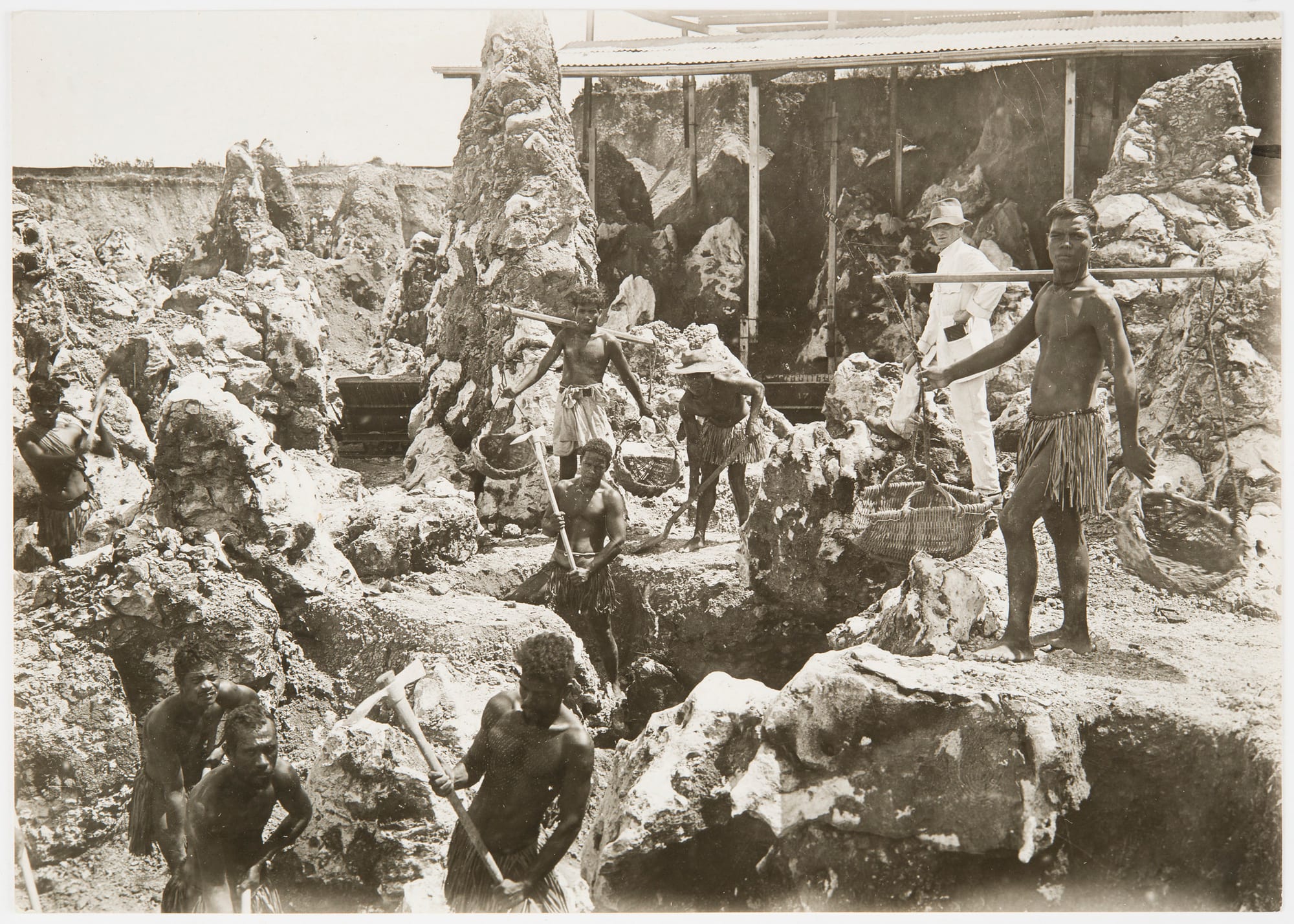
Nauru is a raised coral island of about 21 square kilometres (8 sq mi). Over millennia, seabird droppings on the coral built up deposits of phosphate rock of the richest quality. A prospector, Albert Ellis, identified it in 1900, and the Pacific Phosphate Company began mining in 1906 under an agreement with Germany, which then ruled the island. After the First World War the operation passed to the British Phosphate Commission, a board run by Britain, Australia and New Zealand.
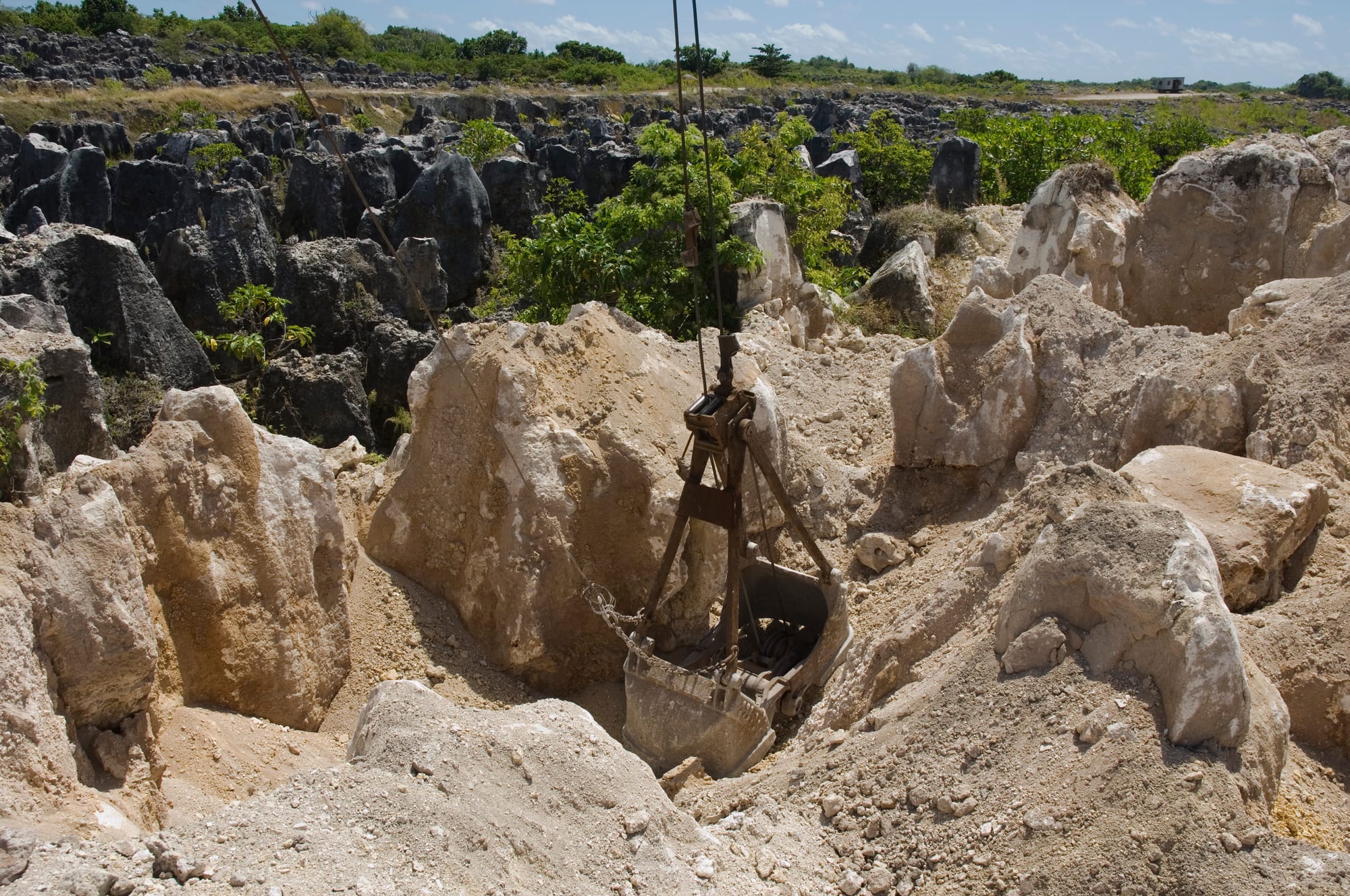
For six decades most of the profit went to the companies and the governments that controlled the island. Mining stripped the interior, now called Topside, down to a wasteland of jagged limestone pinnacles where phosphate had been cut away. Around four-fifths of the island is left unfit to live on or farm. In the early 1960s Australia even proposed resettling the whole Nauruan population on Curtis Island, off Queensland, but Nauruans wanted their own sovereign state rather than Australian citizenship, and the plan was dropped.
The richest people on Earth
Nauru became the world's smallest independent republic on 31 January 1968. Under a deal agreed in 1967 it bought out the British Phosphate Commission's operation for A$21 million, and in June 1970 the locally owned Nauru Phosphate Corporation took control. Advisers warned that, at the rate of extraction, the remaining reserves would last only until 1996.
The money was enormous for so small a place. Mining brought in around A$100 to 120 million a year, against government spending of around A$30 million, and the surplus flowed into the Nauru Phosphate Royalties Trust. Nauruans paid no taxes, and a generous welfare state grew up. The trust bought property around the Pacific Rim, including hotels in Fiji, New Zealand and Guam, towers in Hawaii, land in Oregon and Houston, and its showpiece, Nauru House in Melbourne, known as the jewel in the crown of the portfolio. By 1991 it was valued at about A$1.3 billion.
Even before independence, a 1962 United Nations mission had seen the danger, describing the island's happy state of affairs as "a false paradise" because it could not last.
How the fortune drained away
The trouble was that the island spent as though the wealth were endless. The public service grew to more than 1,500 employees in a country of fewer than 10,000 people. The national airline, Air Nauru, was costly to run. Budgets overran year after year, and the government covered the gap by borrowing, eventually more than A$200 million. To consolidate the debt it took a A$240 million loan from General Electric's finance arm, secured against the trust's overseas property.
Some investments became notorious. In 1993 the government put £2 million into Leonardo the Musical: A Portrait of Love, a West End show about Leonardo da Vinci and the Mona Lisa. It opened at the Strand Theatre on 3 June, with a performance that ran to nearly four hours, and closed five weeks later, remembered as one of the biggest disasters in London theatre history. In 1993 the trust's own Australian secretary resigned, warning that government bodies kept bleeding the funds.
At the same time the foundation was crumbling. By the close of the 20th century the phosphate was fast running out; falling prices, the airline's costs and financial mismanagement brought the economy down in the late 1990s. Nauru had also become an offshore banking centre: in December 1999 four major US banks banned dollar transactions with it, and in 2001 it was blacklisted internationally over money laundering.
- 1900
Albert Ellis identifies phosphate on Nauru.
- 1968
Nauru becomes independent.
- 1970
The Nauru Phosphate Corporation takes over the mines.
- 1991
The royalties trust is valued at about A$1.3 billion.
- 2003
The mines close.
- 2004
The trust is worth about A$300 million; Nauru House is sold.
- 2005
Air Nauru's only aircraft is seized.
- 2006
The Bank of Nauru closes.
Hitting bottom
The 2000s were the low point. The mines closed in 2003, though small-scale mining of what remained later restarted. By 2004 the trust, once worth A$1.3 billion, was estimated at only A$300 million; creditors seized the island's real estate portfolio, and Nauru House was sold that year to pay down the debt to GE Capital. In December 2005 the US Export-Import Bank repossessed Air Nauru's only aircraft, a Boeing 737, leaving the island without an airline. The Bank of Nauru closed in 2006, and Nauru became a cash economy.
At home, the government could not pay civil servants on time. Wages were frozen, the telecommunications system collapsed in 2004, and shortages of basic goods fed unrest. Unemployment that year was close to 90%. The Asian Development Bank estimated income per head in 2007 at between US$2,400 and US$2,715.
The island also bore the human cost of the boom years. Imported processed food replaced the old diet of fish, coconut and pandanus, and Nauru now has the world's highest level of type 2 diabetes, affecting more than 40% of the population.
Living on what is left
Nauru found new sources of income, many of them controversial. From 2001 it hosted an offshore immigration detention centre for Australia in exchange for aid, the so-called Pacific Solution. The arrangement wound down in 2007, but the Regional Processing Centre reopened in 2012, and the economy has grown significantly since then, helped by Australian funding. By 2020 the centre and the sale of fishing rights in Nauru's tuna-rich waters were the island's two main sources of income, and in 2014 Nauruans began paying income tax for the first time.
The island has also sought compensation for its ruined land. In 1989 it took Australia to the International Court of Justice over the damage done by mining before independence, and in 1993 Australia agreed an out-of-court settlement that included A$2.5 million a year for 20 years, with Britain and New Zealand contributing. The search for money continues: in March 2025 the government began selling citizenship from about US$105,000 to help fund moving most of the population to higher ground, and in 2026 the country formally renamed itself the Republic of Naoero, its name in the Nauruan language.