History · Rwanda
How did Rwanda rebuild after 1994?
Community courts, a single national identity, a long-term development plan and firm one-party rule rebuilt Rwanda, with results that are admired and contested.
By Globeway Editorial · 13 October 2026
The short answer
In the summer of 1994 Rwanda was shattered. Over about 100 days, hundreds of thousands of people, the great majority of them Tutsi along with moderate Hutu and Twa, had been murdered in the genocide against the Tutsi. Most scholarly estimates put the Tutsi dead at between 500,000 and 662,000; the Rwandan constitution says more than a million people were killed. The Rwandan Patriotic Front (RPF), a rebel army of Tutsi exiles led by Paul Kagame, ended the genocide by mid-July, and some two million Hutu fled to neighbouring countries, above all to what is now the Democratic Republic of the Congo.
Rwanda rebuilt along several lines at once. It tried an enormous number of genocide suspects through gacaca, village courts revived from tradition. It officially set ethnic labels aside in favour of a single Rwandan identity and made remembrance of the genocide central to national life. And under Kagame, president since 2000, it followed a long-term development plan that brought fast growth and big gains in health. The results are widely admired, but critics, including Human Rights Watch, say they have come with tight one-party control and little room for dissent.
Justice on the grass
The first problem was justice. Rwanda's courts had collapsed, and most of its legal professionals had been killed. By 1998 the country's 19 prisons, built for about 18,000 inmates, held more than 100,000 people. With some 130,000 suspects in custody, the ordinary courts handled just 3,343 cases between 1996 and the end of 2000; at that pace, it was calculated, the trials would take more than 200 years. The United Nations set up the International Criminal Tribunal for Rwanda in Arusha, Tanzania, but it dealt only with leaders, indicting fewer than a hundred people.
The answer was gacaca. The word refers to the short grass where male elders once met to settle local disputes. Set up by law in 2001, the new gacaca courts began trials in 2002. More than 12,000 of them were held across the country, presided over by elected judges known as inyangamugayo, "people of integrity", and they heard more than a million cases. Suspects who confessed and named others could receive lighter sentences, and punishments ranged from work on public projects to life imprisonment.
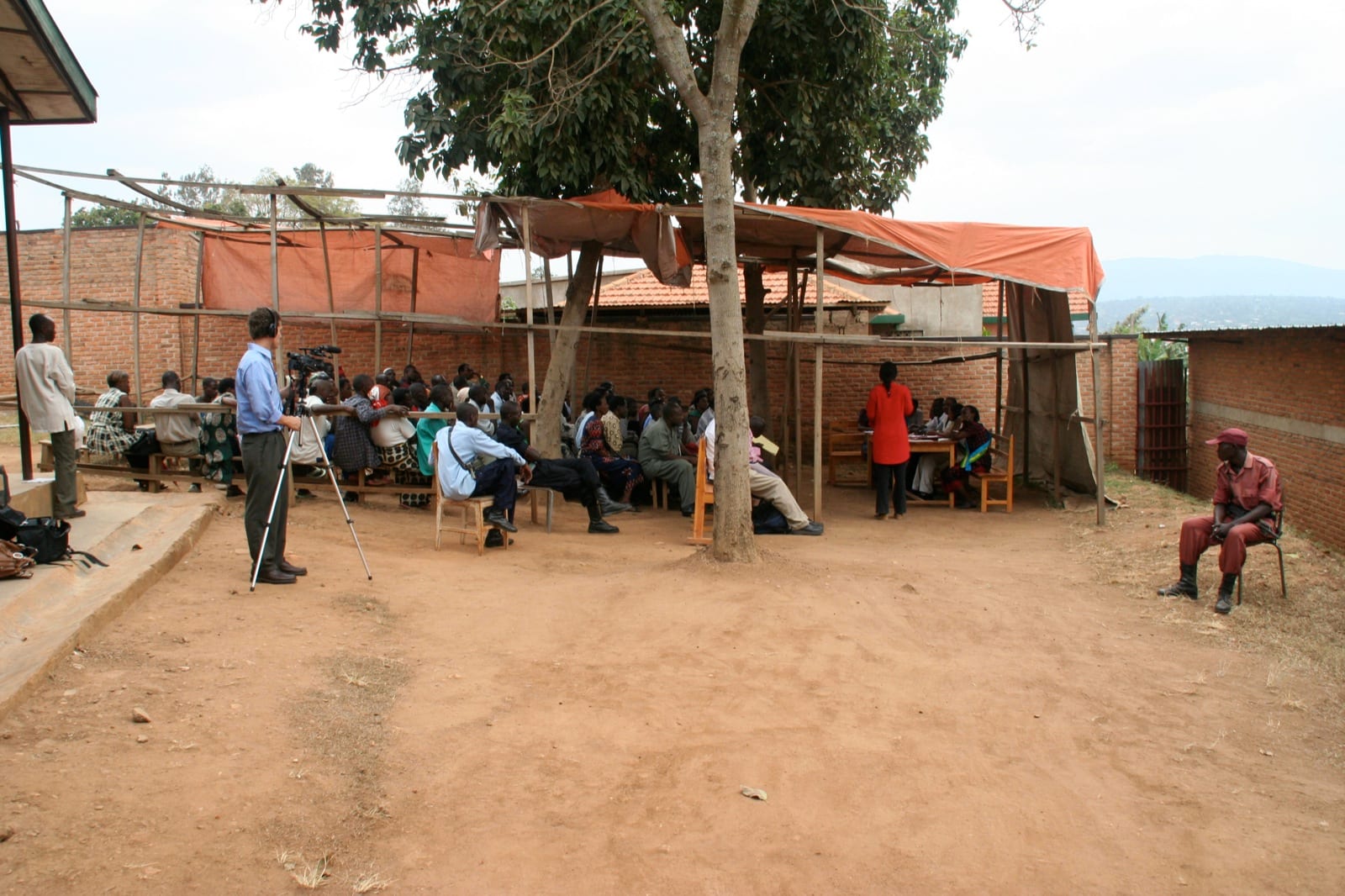
Gacaca divides opinion to this day. Supporters say it revealed what happened in each community, helped families find the bodies of relatives so they could be buried, and brought tens of thousands of perpetrators to justice. Critics point out that defendants had no lawyers and few of the protections of a normal court, that some judges took bribes, and that witnesses faced intimidation. Human Rights Watch also objected that crimes by RPF soldiers, who killed tens of thousands of people between April and December 1994, were removed from gacaca's remit by a 2004 amendment.
One identity instead of three
Rwanda's ethnic divisions had been hardened by colonial rule. In the 1930s Belgium issued identity cards labelling every person Hutu, Tutsi or Twa, ending the earlier possibility of moving between groups. After 1994 the new state set out to undo that. At the end of 2001 it unveiled a new flag and national anthem with no overt ethnic references, and its constitution bars political organisations from basing themselves on race, ethnic group, clan, region or religion. Rwanda has also passed laws against "genocide ideology" and "divisionism", and the government has actively promoted a shared Rwandan identity over ethnic labels.
Memory became part of the rebuilding. The genocide is commemorated each April as Kwibuka, "remembrance". The Kigali Genocide Memorial, inaugurated in April 2004 on the tenth anniversary, holds the remains of more than 250,000 people and is one of six major memorial centres around the country.
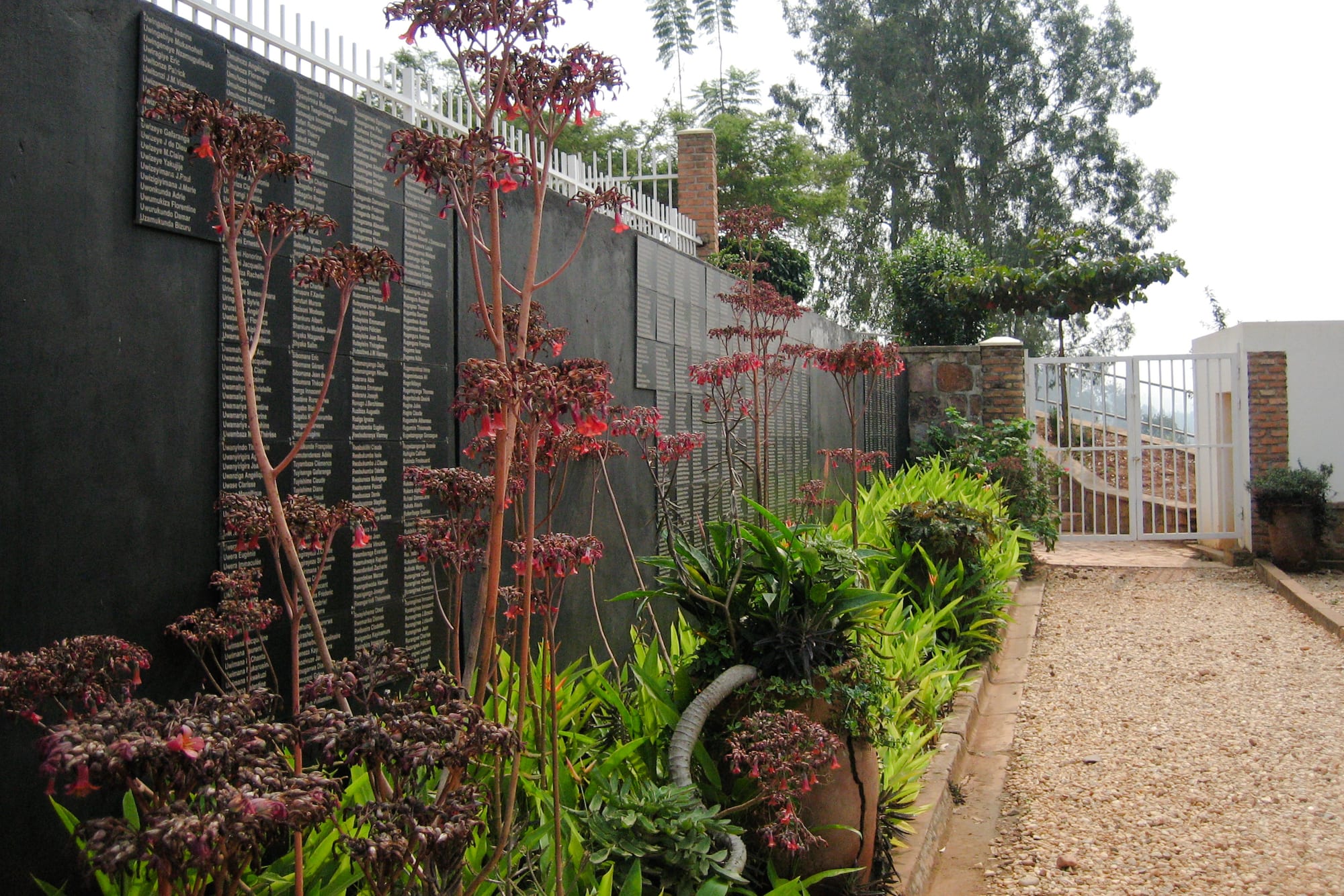
The approach has its critics too. Some scholars argue that gacaca and the official account of the genocide recognise only Tutsi as victims and Hutu as perpetrators, which they say oversimplifies people's real histories and complicates genuine reconciliation. The government presents Rwanda as a country that chose reconciliation and self-reliance.
A plan for a poor country
The economic rebuilding followed a plan. After consulting widely, including with experts from China, Singapore and Thailand, Kagame launched Vision 2020 in 2000, aiming to turn a highly impoverished country into a knowledge-based, middle-income one. Health became a priority: spending on health care rose from 1.9 per cent of GDP in 1996 to 6.5 per cent in 2013, and community health insurance schemes called mutuelles de santé, piloted in 1999, were available nationwide by the mid-2000s. Life expectancy rose from 46.6 years in 2000 to 65.4 in 2021.
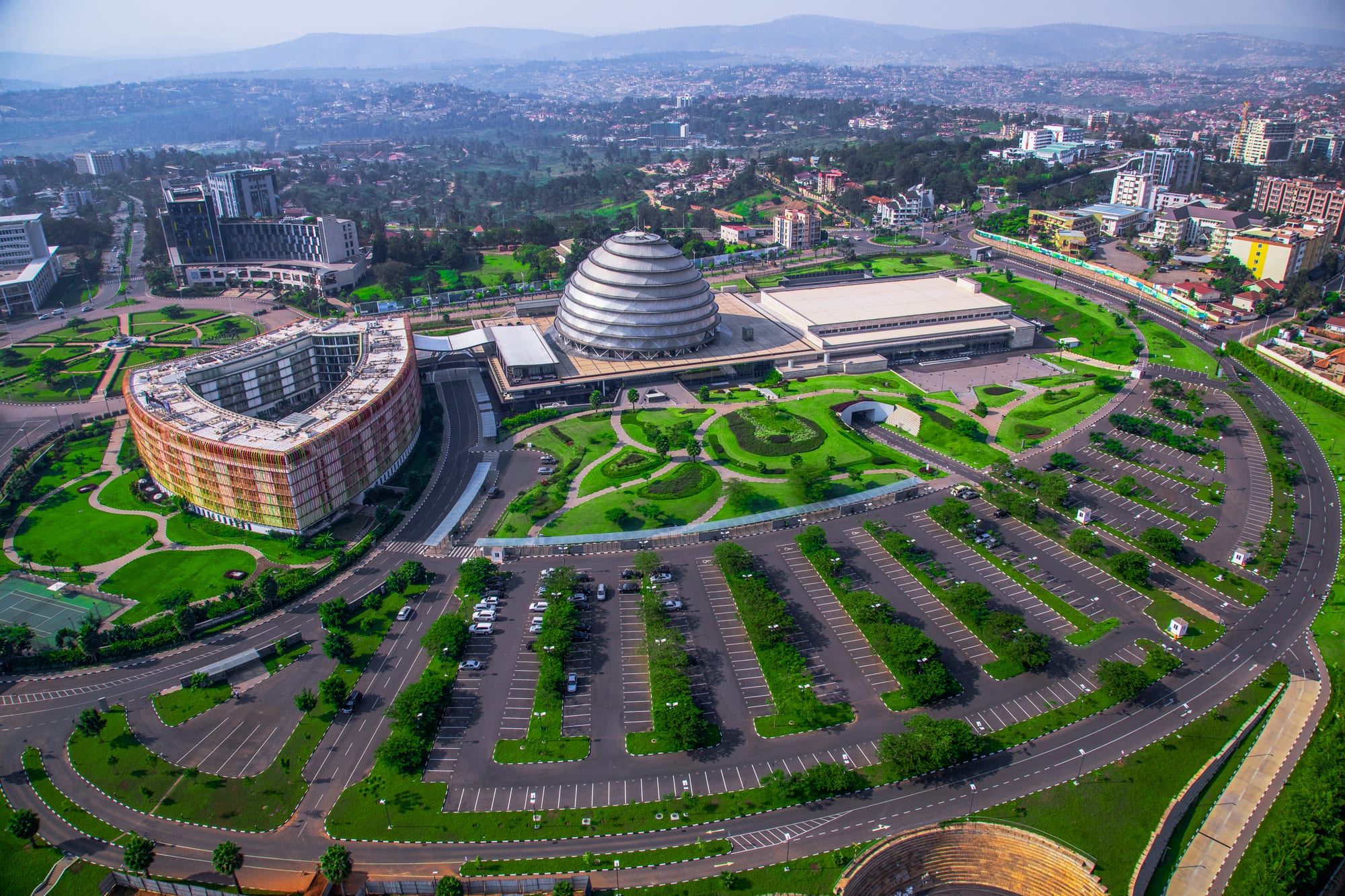
The economy has grown consistently since 1994, by 9.4 per cent in 2025 according to the national statistics office. The share of people below the national poverty line fell from about 60 per cent in 2000 to 27.4 per cent in 2024. Tourism, built on mountain gorilla tracking and conferences in Kigali, is now the leading earner of foreign currency, and part of park revenues is shared with nearby communities. Rwanda is still classed by the UN as one of the least developed countries, however, and many Rwandans remain very poor.
- July 1994: the RPF takes control and the genocide ends
- 1999: mutuelles de santé health insurance is piloted
- 2000: Paul Kagame becomes president and launches Vision 2020
- 2001: a new flag and anthem drop ethnic references; gacaca courts are set up by law
- 2003: Rwanda first has the world's highest share of women in parliament
- 2004: the Kigali Genocide Memorial is inaugurated on the tenth anniversary
- 2007: the death penalty is abolished
- 2009: monthly umuganda community work is re-established
Order, community work and women in power
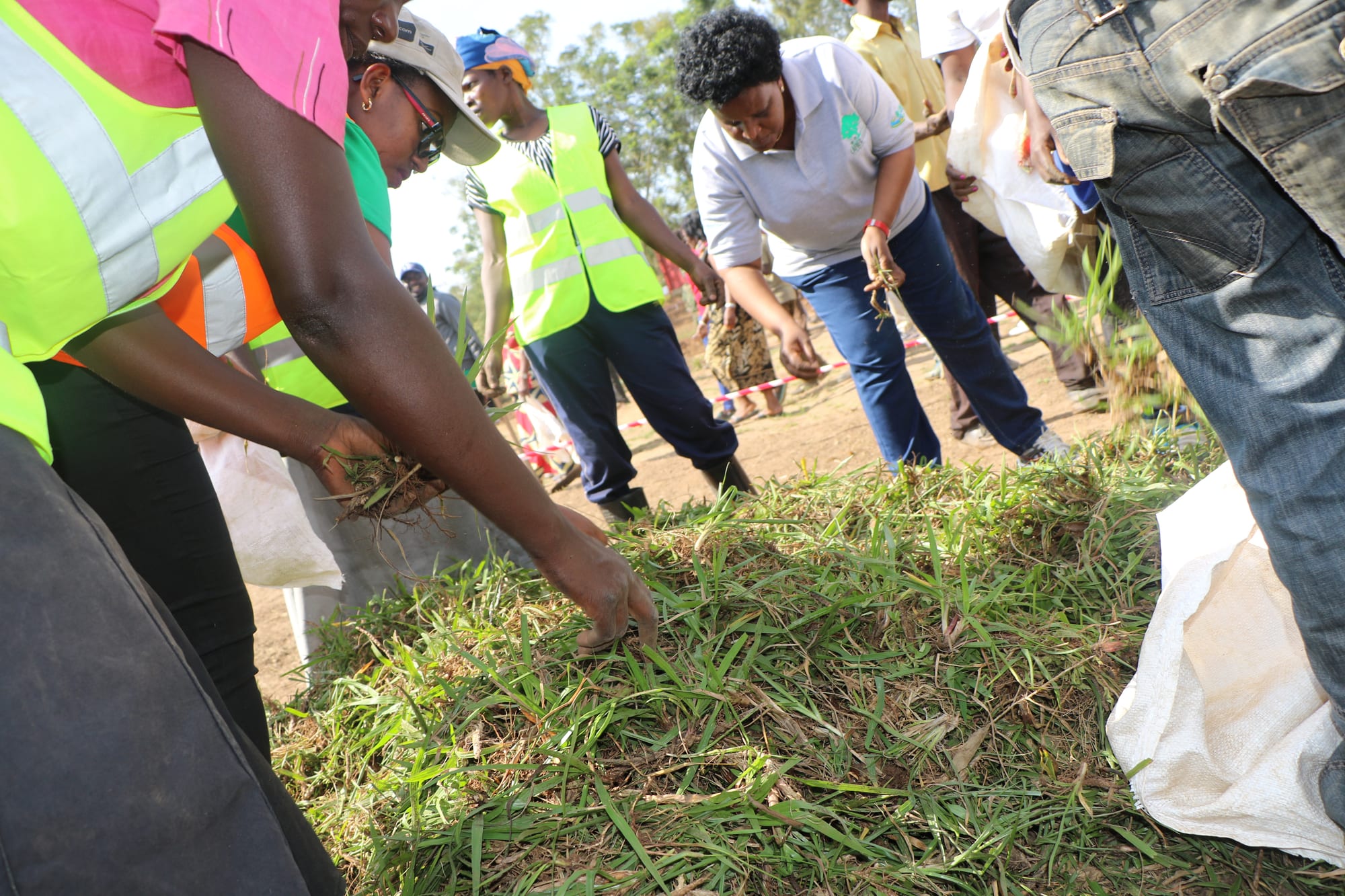
Some of the rebuilding is visible on the streets. On the last Saturday of every month, Rwandans aged 18 to 65 must take part in umuganda, three hours of community work from 08:00 to 11:00, or risk a fine. The custom has deep roots and a dark history: in the run-up to the genocide, weekly umuganda meetings were used to mobilise Hutu civilians. Re-established in its present form in 2009, it is now largely a day of clean-up and local meetings, and it has made Rwanda noticeably cleaner.
Women moved into public life in large numbers after the genocide and played leading roles in reconstruction. Since 2003 Rwanda has had the highest share of women in parliament of any country; 24 of its seats are reserved for women. Rwanda also has low corruption by regional standards: in 2014 Transparency International ranked it the fifth-cleanest of 47 countries in sub-Saharan Africa.
The price of stability
The other side of the story is political. The RPF has governed Rwanda as a de facto one-party state since 1994. Kagame was re-elected with 98.8 per cent of the vote in 2017 and 99.15 per cent in July 2024, an election Human Rights Watch said took place against a backdrop of widespread repression; the organisation also reports arbitrary detention, intimidation and politically motivated trials, alongside praise for progress such as the abolition of the death penalty. Abroad, the Democratic Republic of the Congo broke off diplomatic relations in January 2025 over Rwanda's alleged support for the M23 rebels in the eastern Congo.
Supporters point to a remarkable recovery in stability, growth, health and education since 1994. Critics point to the tight control, weak opposition and limited press freedom that have come with it.