Culture & Customs · Indonesia
How does Indonesia hold together 17,000 islands and 700 languages?
A shared trade language nobody owned, a 1928 pledge, a state creed built as a compromise, and, where those failed, force and later autonomy.
By Globeway Editorial · 13 October 2026
The short answer
Indonesia holds together mainly because of a choice its nationalists made in the 1920s: to unite around a common language that belonged to none of the big ethnic groups. Malay had been the trade language of the islands for centuries, so in 1928 young activists from across the colony pledged themselves to one homeland, one nation and one "language of unity", which they called Indonesian. Today more than 97 per cent of Indonesians speak it, while most still speak one of the country's more than 700 local languages at home.
The second glue is Pancasila, the five-principle state creed written in 1945 as a deliberate compromise between those who wanted an Islamic state and those who wanted a secular one. Unity has not been seamless. Regions have rebelled, the army has fought long campaigns in Aceh and Papua, and East Timor left altogether. Since 1998 the country has leaned less on force and more on handing power to the regions.
An archipelago too big to count
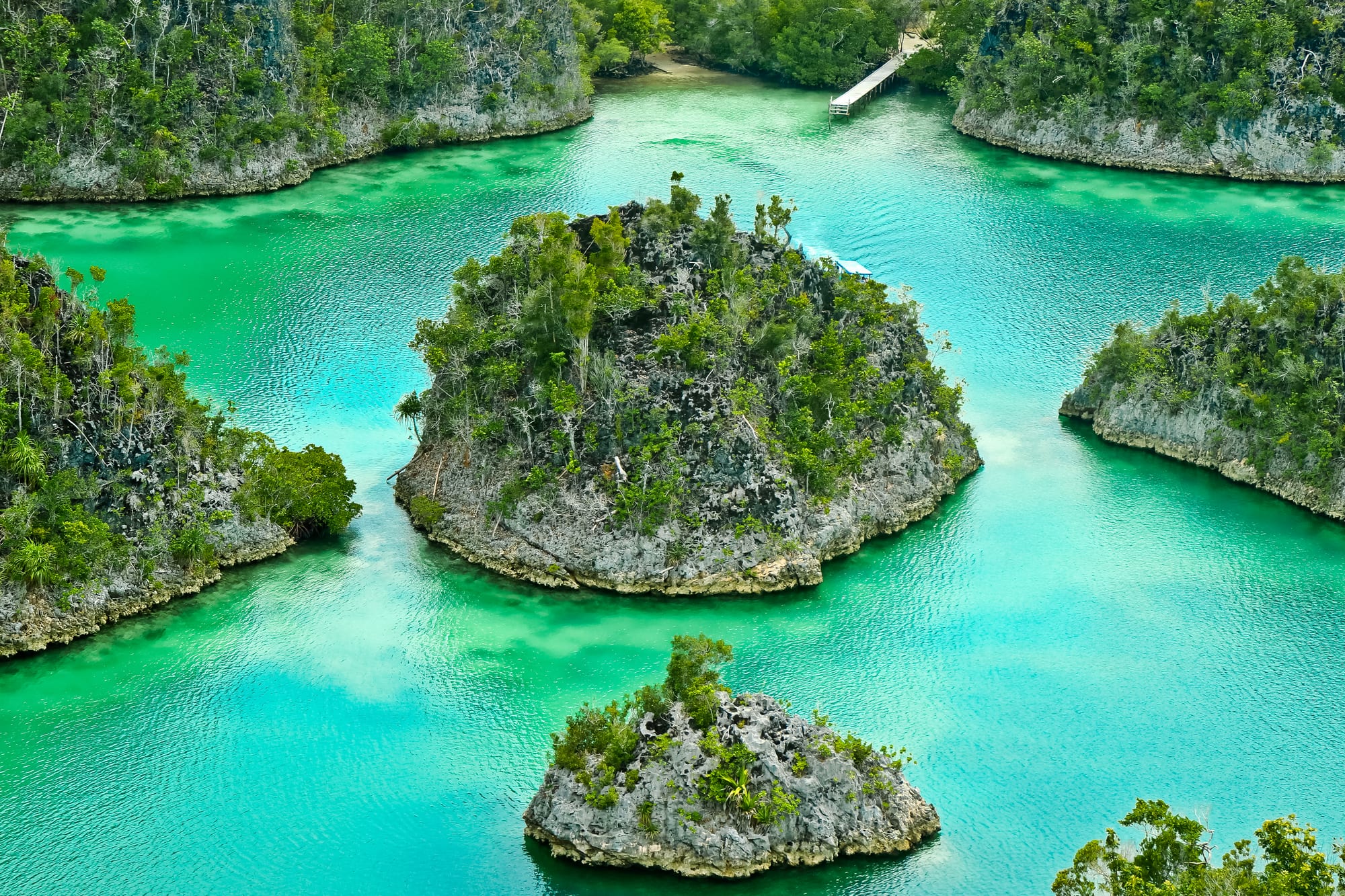
Even the famous figure is approximate. Depending on the counting method, published totals range from 13,466 named islands to more than 17,500, and only about 922 are permanently inhabited. The country stretches 5,120 kilometres (3,181 miles) from east to west, across the equator between the Indian and Pacific oceans, and its five main islands are Sumatra, Java, Sulawesi, Borneo and New Guinea.
The human map is just as crowded. The 2010 census listed over 1,300 ethnic groups; a 2015 study, noting how hard they were to classify, regrouped them into about 600. Most of the more than 700 languages are Austronesian, spoken in the west and centre; the east is home to more than 150 Papuan languages, which are unrelated to them. Together they make up roughly a tenth of all the languages in the world. Only Papua New Guinea is more linguistically diverse. The Javanese are by far the largest group, about 40 per cent of the population, and Java alone holds 56.1 per cent of all Indonesians on less than 7 per cent of the land.
That imbalance is the heart of the problem. Any nation built around Java and its language risked looking, to everyone else, like Javanese rule.
A trade language that belonged to no one
The solution was already in the ports. Malay, originally spoken in north-east Sumatra, had served as the lingua franca, or shared trading language, of the archipelago for around half a millennium. Merchants, sailors and officials of every background used it, and it did not favour any single ethnic group.
The Dutch, who ruled the islands as the Netherlands Indies, helped by accident. Unlike the French, Spanish or Portuguese, they made little effort to spread their own language among the local population, and their officials often dealt with Indonesians in Malay. Dutch stayed the language of a small elite, which made it easy for nationalists to reject.
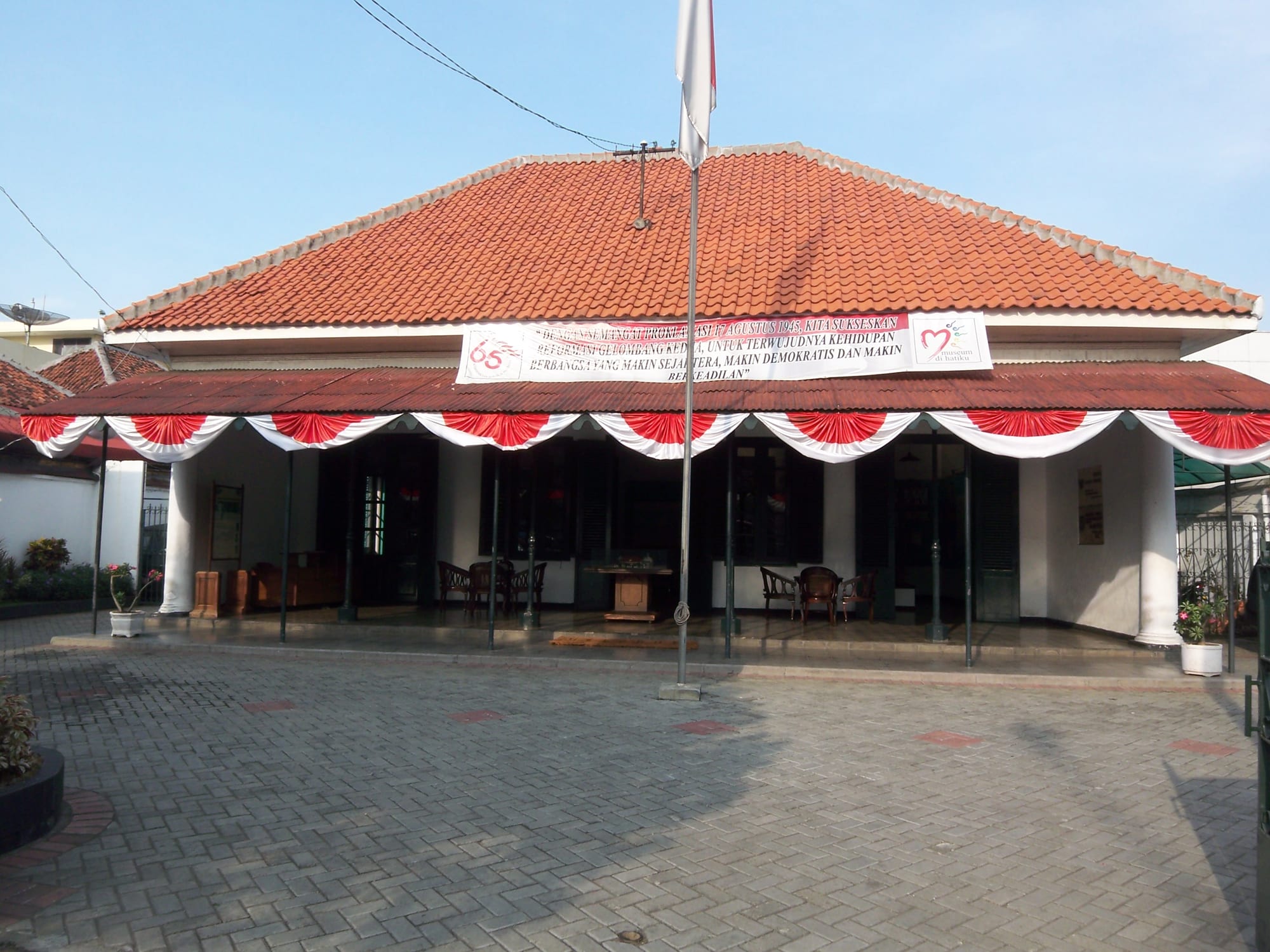
The final session of the Second Youth Congress met in this house, owned by Sie Kong Lian, and closed with a violin performance of the song that became the national anthem, Indonesia Raya.
On 28 October 1928, at the Second Youth Congress in Batavia (now Jakarta), young delegates from across the colony swore the Youth Pledge: one motherland, one nation, and one language of unity. The first draft, by Mohammad Yamin, named that language Malay. The journalist Mohammad Tabrani objected, arguing it should carry the nation's own name, and the final text said bahasa Indonesia, the Indonesian language.
War then did the rest. When Japan conquered the colony in 1942 it banned Dutch and ran official business in Indonesian. In 1945 the new republic made it the national language. It spread through schools, government and the mass media, and the 2020 census found more than 97 per cent of Indonesians fluent. Yet in 2010 Javanese was still the first language of 31.8 per cent of the population: most Indonesians are bilingual, with a local language for home and Indonesian for everything public.
Five principles and a deleted clause
Language solved one division; religion was harder. On 1 June 1945, still under Japanese occupation, Sukarno proposed five principles as the basis of the coming state and named them Pancasila, from the Sanskrit for "five principles". They are belief in one God, just and civilised humanity, the unity of Indonesia, democracy guided by deliberation among representatives, and social justice for all.
A committee then wrote a draft preamble, the Jakarta Charter, that added a clause to the first principle obliging Muslims to follow Islamic law. On 18 August 1945, the day after independence was proclaimed, the preparatory committee deleted the clause so that the founding text would bind every citizen equally. Belief in God stayed; a state religion did not. The country has the world's largest Muslim population, about 87 per cent of the total, yet it officially recognises six religions, and Christian majorities live in several eastern provinces.
Where unity was enforced
Pancasila and a shared language did not stop every challenge. In 1958 rebels in Sumatra, soon joined by the Permesta movement in Sulawesi, set up a rival government after demands for more autonomy from Jakarta went unmet, and were defeated. Western New Guinea, kept by the Dutch at independence, came under Indonesian administration in 1963 and was formally incorporated through the 1969 Act of Free Choice, in which just over a thousand selected community leaders took part amid reports of military intimidation. Many Papuans opposed the integration, and an armed resistance has continued since.
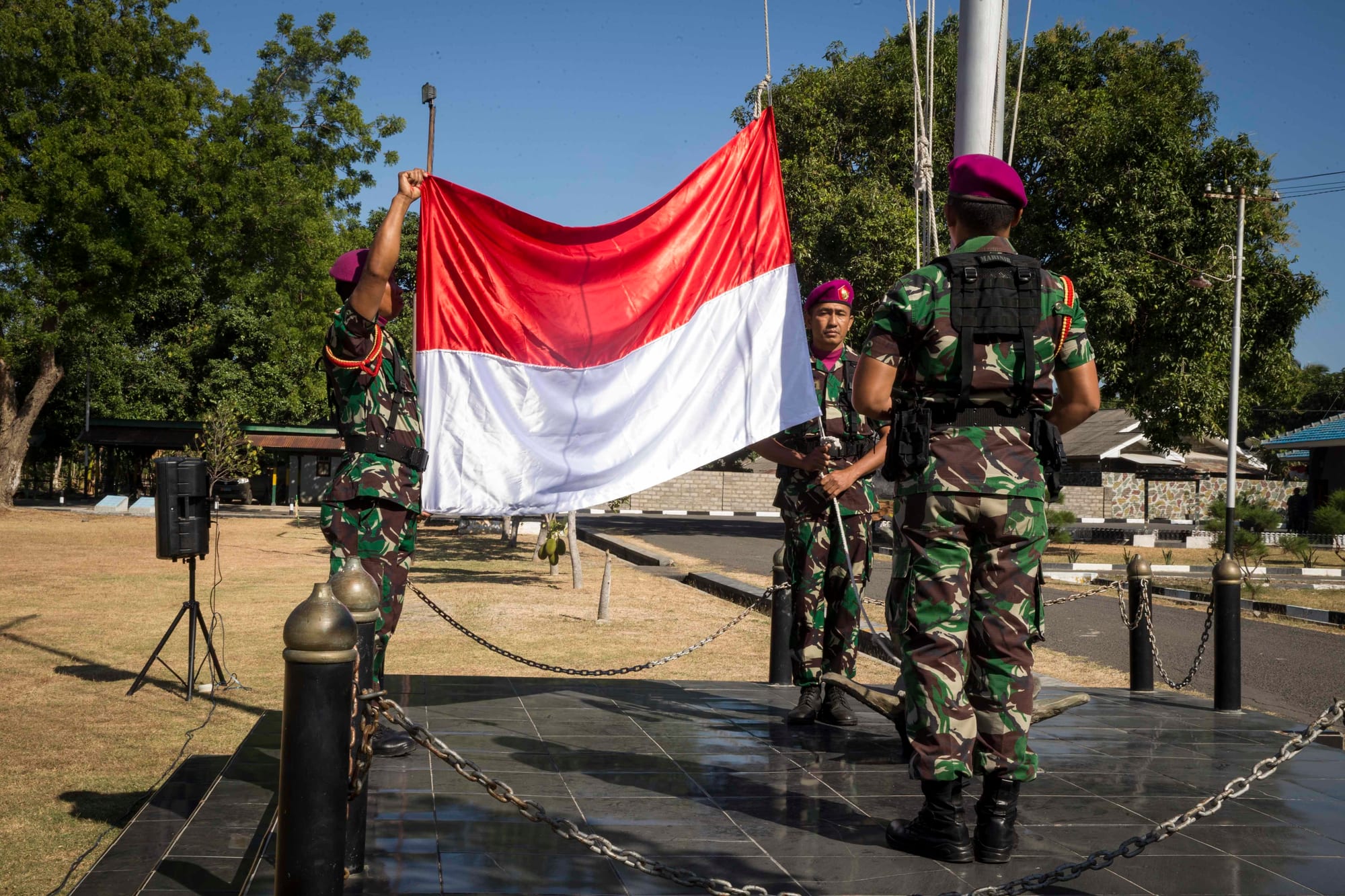
Independence was proclaimed on 17 August 1945, and the date is marked every year with flag-raising ceremonies across the islands.
Indonesia invaded Portuguese Timor in 1975; after a UN-supervised referendum in 1999, East Timor voted to leave and became independent in 2002. In Aceh, at the northern tip of Sumatra, the Free Aceh Movement declared independence in 1976, and a long military campaign followed. A government programme called transmigration, which moved millions of mostly Javanese and Madurese settlers to the outer islands, was meant to ease crowding on Java, but local fears of "Javanisation" fed separatist movements and communal violence.
Holding together by letting go
The fall of Suharto in 1998 opened the period Indonesians call Reformasi, and with it a change of method: substantial powers were transferred from Jakarta to elected regional governments. A peace agreement with the Aceh separatists followed in 2005, after the 2004 Indian Ocean tsunami drew the world's attention to the province.
Today the country is divided into 38 provinces, and nine have special arrangements: Aceh may apply aspects of Islamic law, the six provinces of Papua have special autonomy, Yogyakarta keeps its hereditary sultan, and Jakarta has its own status as the capital. Ships, planes and the Palapa Ring, a national fibre-optic network laid partly under the sea, link the islands, though connections remain weaker in the east. The formula, in short, is one language in public, many at home, and a central state that has learned to share power.