History · Zimbabwe
Who built Great Zimbabwe, and why was that question so controversial?
Ancestors of the Shona people built it between the 11th and 15th centuries. For decades, colonial Rhodesia refused to admit it.
By Globeway Editorial · 13 October 2026
The short answer
Great Zimbabwe was built by African people: the ancestors of the Shona, who still live in Zimbabwe and neighbouring countries. Construction began in the 11th century and continued for more than 300 years, making it the capital of a kingdom that grew rich on cattle and on the gold and ivory it sent to the Indian Ocean coast. It is the largest stone structure in precolonial Southern Africa, and archaeologists have agreed on its African origin since the 1950s.
The question became controversial because many Europeans would not accept that answer. From the 1870s, explorers and settlers credited the ruins to Phoenicians, Arabs or the Queen of Sheba, and the white government of Rhodesia later pressured archaeologists to deny that black Africans had built them. Admitting the truth would have undermined the claim that colonial rule was bringing civilisation to Africa. At independence in 1980, the new country took its name from the ruins.
A capital of stone and gold
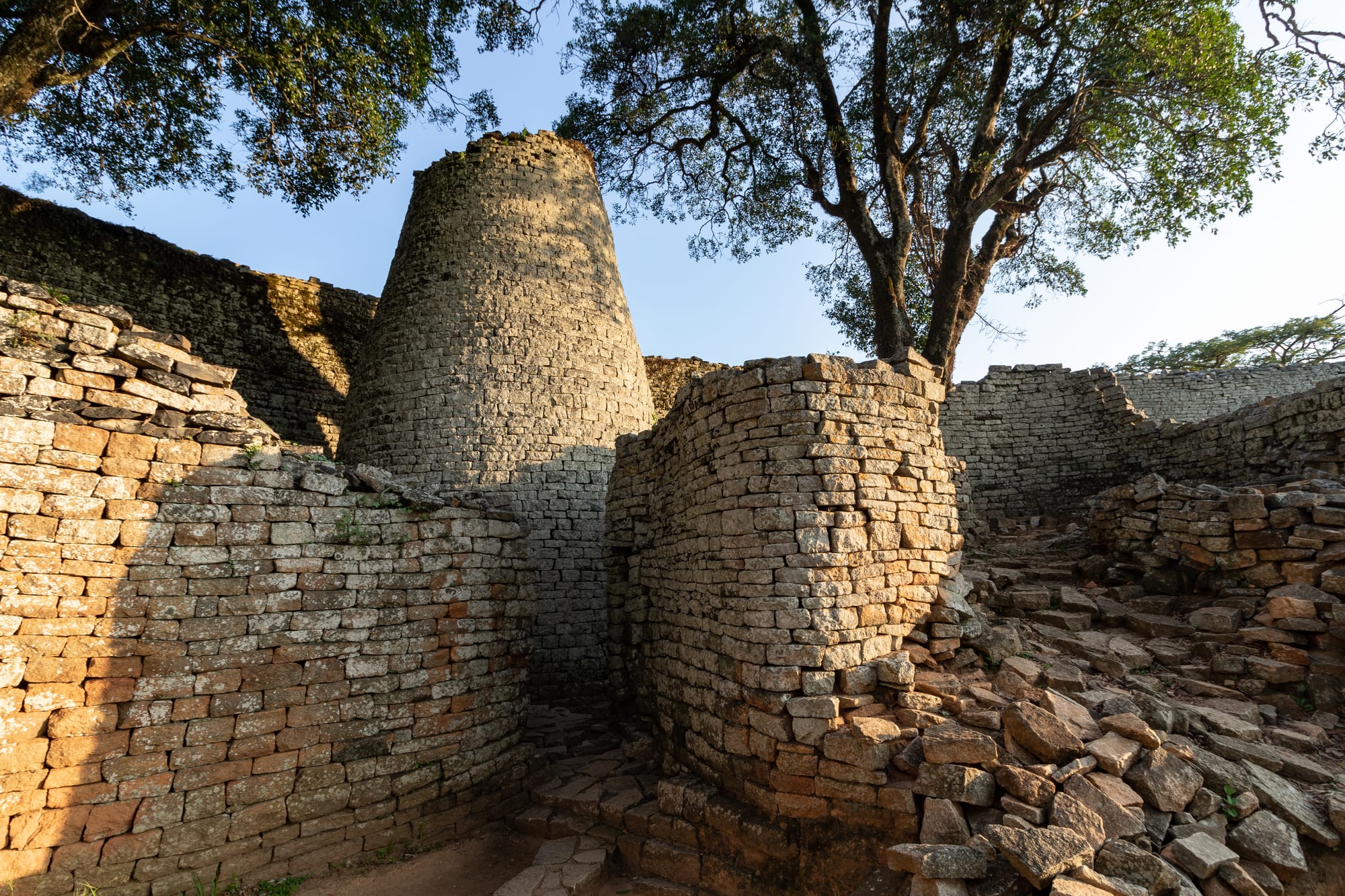
The site lies in the hills of south-eastern Zimbabwe, near Masvingo, and was settled from around 1000 AD. Its rulers first built houses of thick daga, a kind of earthen plaster, then stone walls to screen themselves from public view. From the 13th century the walls grew enormous. The Great Enclosure, built in the 13th and 14th centuries and probably the royal residence, has walls up to 11 metres high that run for about 250 metres, all of granite laid as dry stone, meaning without mortar.
The city's wealth came largely from controlling the routes between the goldfields of the Zimbabwean plateau and the Swahili coast. Through ports such as Sofala, gold and ivory entered the Indian Ocean trade, and porcelain from China and Persia, glass beads and Arabian coins came back. Estimates of the peak population have ranged as high as 18,000 to 20,000, though a recent study suggests it never exceeded 10,000. The name comes from the Shona language, probably from dzimba-dze-mabwe, "large houses of stone". More than 400 smaller stone sites, also called zimbabwes, are spread across the region.
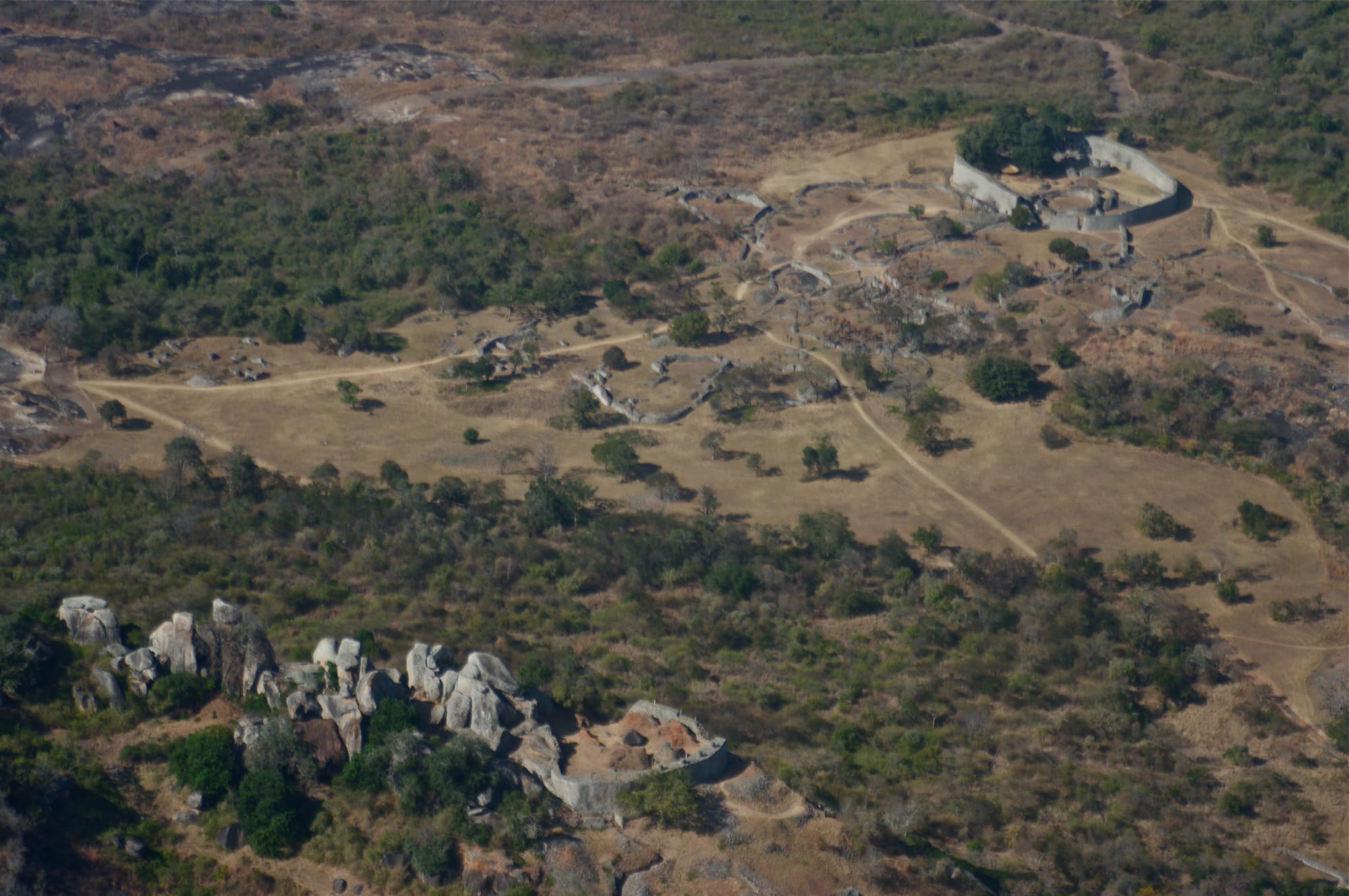
The site has three main groups of ruins. The Hill Complex is the oldest, occupied from the 11th to the 13th century, followed by the Great Enclosure and then the Valley Complex. Scholars still debate whether these were the homes of successive kings or served different purposes at the same time, such as ritual on the hill and royal life in the enclosure.
The Europeans who would not believe it
Portuguese traders heard of the stone buildings in the early 16th century. In 1531 a Portuguese captain, Vicente Pegado, recorded that local people called them Symbaoe, meaning "court". But the modern controversy began when a hunter, Adam Render, came across the ruins in 1867 and in 1871 showed them to the German explorer Karl Mauch. Mauch immediately ruled out African builders. He suggested the ruins copied the Queen of Sheba's palace in Jerusalem and claimed a wooden beam must be cedar from Lebanon, brought by Phoenicians.
The Sheba story spread through the settler community. In 1891, just after Cecil Rhodes's British South Africa Company invaded Mashonaland, Rhodes backed an excavation by James Theodore Bent. Bent, who had no formal archaeological training, dug recklessly inside the Conical Tower, destroying the layers of soil that might have dated it, and concluded that the builders were Phoenicians or Arabs. Treasure seekers did worse. A company formed to exploit the ruins stripped them of anything saleable, and the antiquarian Richard Nicklin Hall dug out deposits that can never be studied again.
What the archaeologists found
The first scientific excavation, by David Randall-MacIver in 1905 and 1906, found objects of African origin and concluded that the ancestors of the Shona had built the site in the medieval period. His conclusion was not immediately accepted. In 1929 the archaeologist Gertrude Caton-Thompson, leading the first all-female expedition of its kind, dug test trenches across the site and reached the same conclusion. She found not one item that contradicted an African origin and a medieval date.
Even she carried the prejudices of the age. She described the site as the "product of an infantile mind" built by a subjugated society. But the evidence kept accumulating. Of 28 radiocarbon dates from the site, all but the first four, made in the early days of the method, support construction between the 12th and 15th centuries. Pottery, oral traditions and DNA all point to Shona-speaking builders, possibly with early influence from Mapungubwe, an older kingdom to the south.
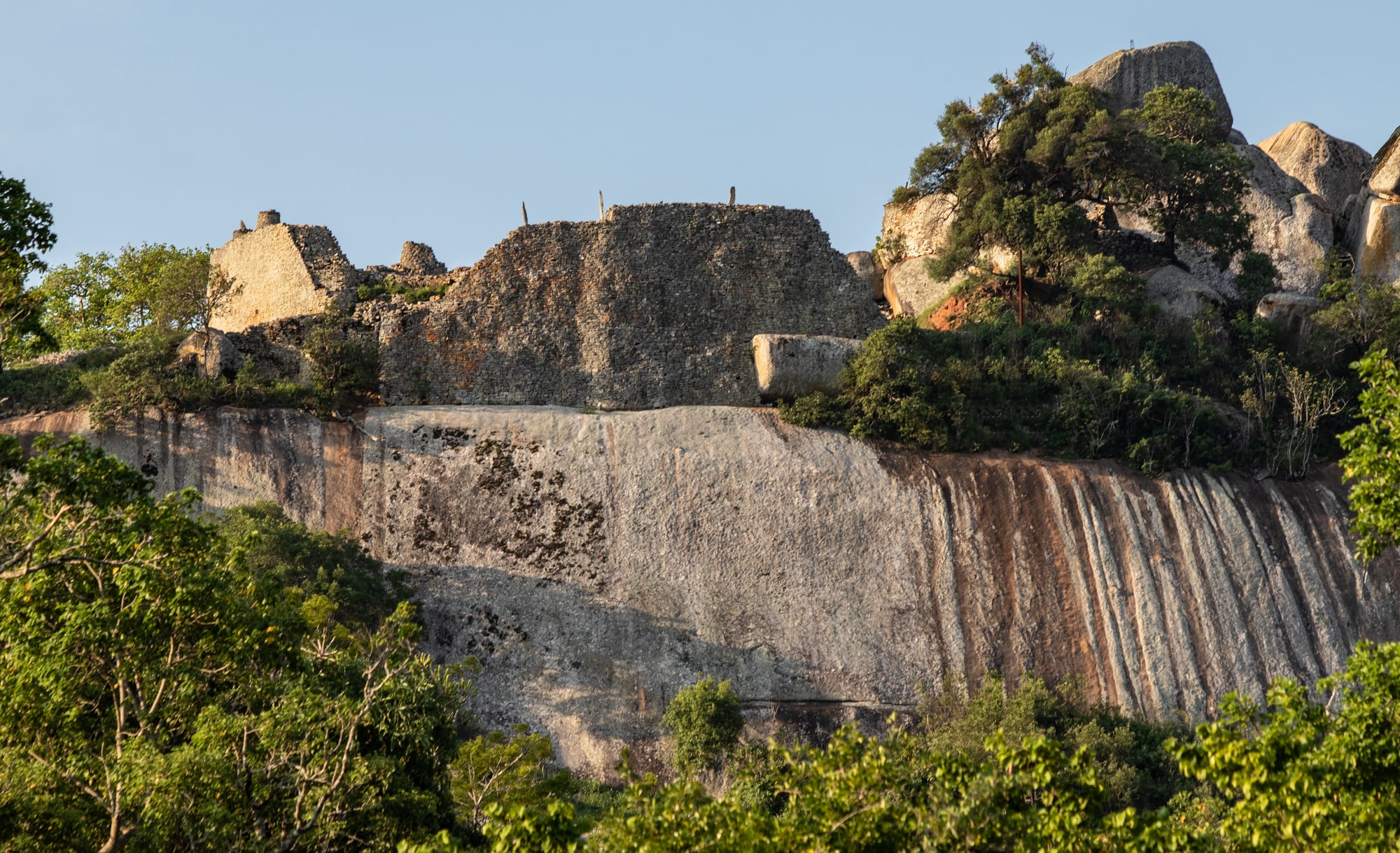
The Hill Complex held a shrine that, according to the historian Ken Mufuka, housed spirit mediums who acted as the conscience of the state. The eight soapstone birds found at the site, probably representing the bateleur eagle, a messenger of God in Shona belief, are thought to have stood in its Eastern Enclosure.
Archaeology under censorship
By the 1950s archaeologists agreed that Africans had built Great Zimbabwe. The government did not. In 1965 the white minority government of Southern Rhodesia declared independence from Britain to delay black majority rule, and through the 1960s and 1970s the official line was that the ruins had been built by non-blacks, and archaeologists who disputed it were censored.
Paul Sinclair, the archaeologist stationed at the site, later recalled that guidebooks, museum displays, school textbooks and broadcasts were censored as a daily matter, and that he was threatened with losing his job if he said publicly that black people had built it. Leading archaeologists, including Peter Garlake, the senior inspector of monuments, and Roger Summers of the National Museum, left the country.
A ruin that named a nation
For black nationalists, the same ruins became proof of what Africans had achieved, and reclaiming their history was part of the struggle for majority rule. In 1980 the newly independent country took the name Zimbabwe, and the soapstone bird, already used on Rhodesian symbols, stayed on the new national flag and coat of arms. A pedestal of one bird, sold to a Berlin museum in 1907, was returned in 2003.

Since 1980, Great Zimbabwe has been presented in changing ways, first as a model of precolonial "African socialism", later as an example of wealth and power gathered by a ruling elite.
Great Zimbabwe is now a national monument and a UNESCO World Heritage Site. Its end remains a puzzle: from the 15th century, falling demand for gold, perhaps exhausted land, and new trade routes shifted power north and west, and the city was abandoned in the 16th or 17th century. For many local communities it is not just a ruin but a sacred landscape, still tied to the ancestors and to Mwari, God in traditional Shona religion.