Culture & Customs · United Kingdom
Who invented the kilt, and why do Scots wear tartan?
No one person invented the kilt, though an English ironmaster gets the credit for its modern form. Tartan became a national symbol after it was banned.
By Globeway Editorial · 13 October 2026
The short answer
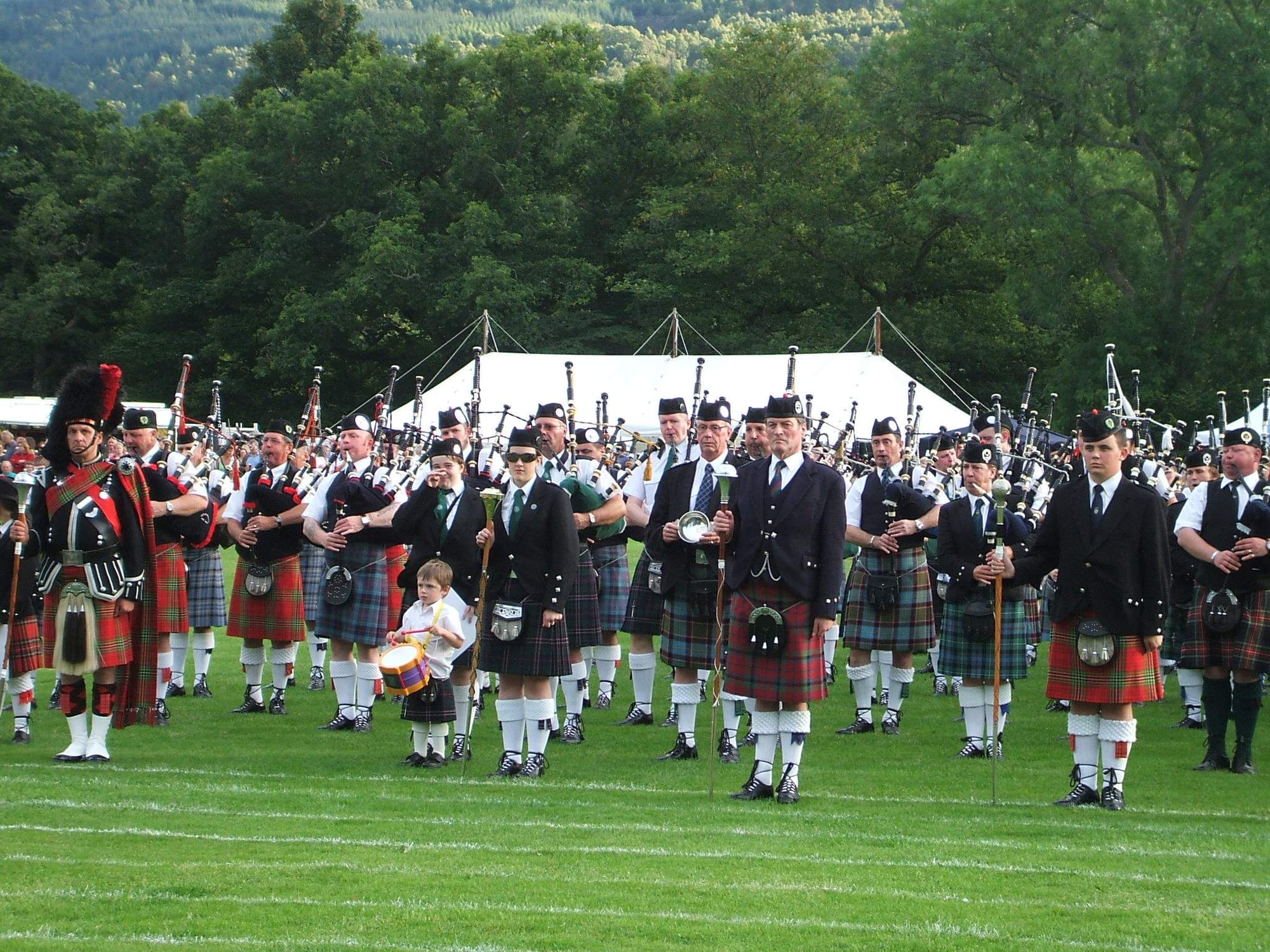
Nobody invented the kilt in one stroke. It began as the great kilt, or belted plaid, a huge length of cloth that Highlanders gathered into pleats and belted around the waist, with the upper half worn as a cloak. It was first clearly described in 1594. The small kilt, the knee-length garment worn today, appeared in the early 18th century as the bottom half of that plaid. An English Quaker ironmaster from Lancashire, Thomas Rawlinson, is often named as its inventor in the 1720s, but that story is disputed, and some historians point to earlier evidence.
Tartan, the cloth of crossing coloured stripes, is far older in Scotland, but it became the national symbol through a twist of history. After the Jacobite rising of 1745, the British government banned Highland dress. When the ban was lifted in 1782, the kilt and tartan were reborn as romantic emblems of Scotland, crowned by King George IV's tartan-filled visit to Edinburgh in
- Most clan tartans date from that 19th-century revival, not from
ancient times.
A blanket with a belt
Tartan cloth has a long past in Scotland. The earliest documented tartan-like cloth in Britain, the "Falkirk tartan", is a simple check of undyed light and dark wool from the 3rd century AD, found near the Antonine Wall. The oldest surviving piece of complex, dyed tartan in Scotland, the Glen Affric tartan, was found in a Highland peat bog in the early 1980s and radiocarbon-dated to the 16th century. The earliest certain written use of the word comes from royal accounts of 1532–33, recording a "tartane" coat given to the king.
Highlanders of the 16th century wrapped themselves in long woollen mantles. In the later part of that century some began pleating the cloth and putting a belt around the waist on the outside, creating the belted plaid, the Gaelic filleadh mòr. An Irish account of 1594 describes Scottish mercenaries in "a mottled garment with numerous colours hanging in folds to the calf of the leg, with a girdle round the loins". By the late 16th century tartan Highland dress is said to have been worn by everyone from lairds to crofters.
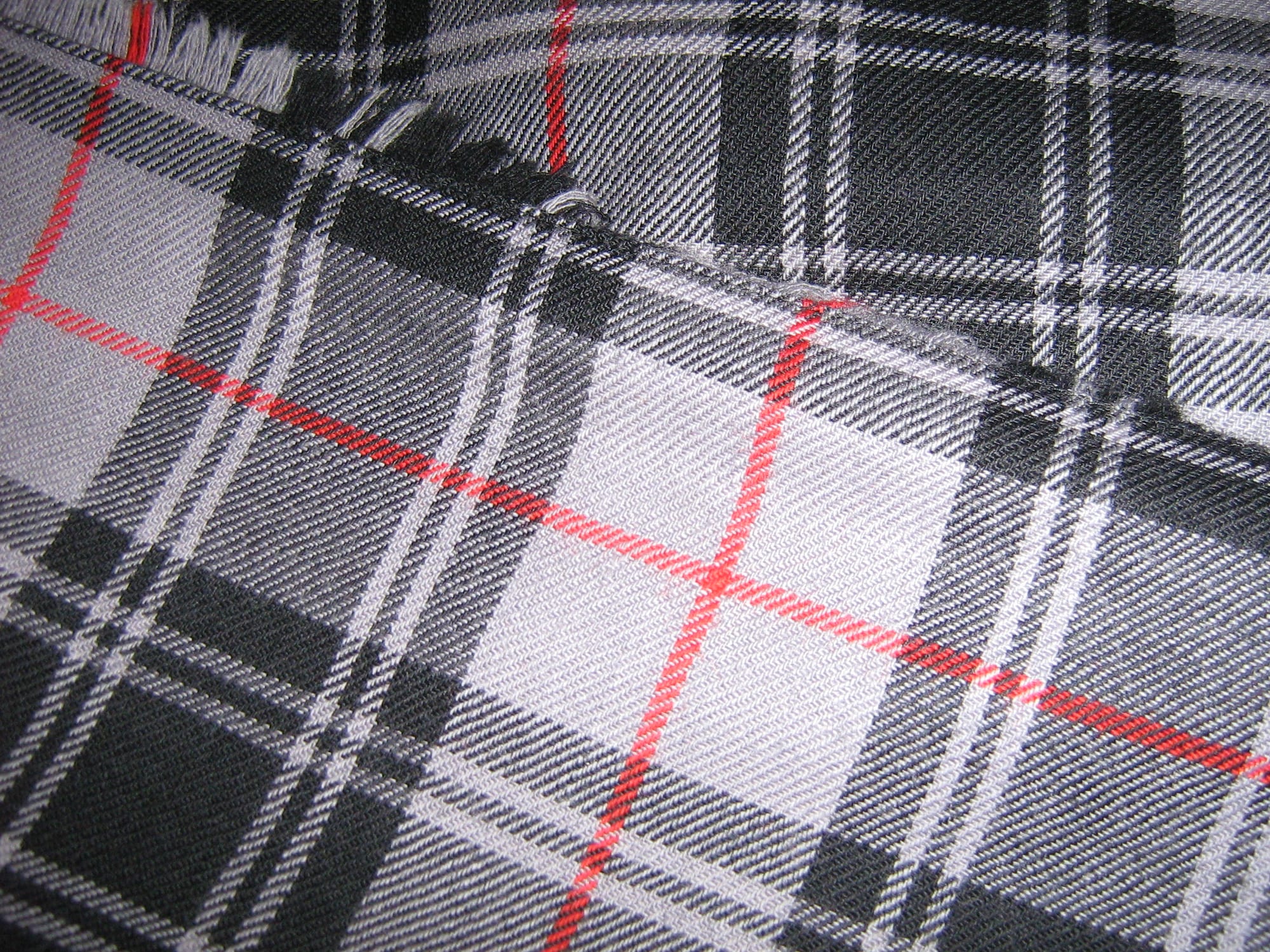
A tartan's pattern, called its sett, is written as a thread count: a sequence of colours and the number of threads of each, repeated in both directions of the weave so that the stripes cross at right angles.
The ironmaster from Lancashire
Thomas Rawlinson, born in 1669 into a family of Quaker ironmasters, became managing partner of an ironworks at Invergarry in the Highlands. In 1727 his company leased woodland from the local chief, John MacDonell, to make charcoal for its furnace. According to the story, Rawlinson found the belted plaid "a cumbersome unwieldy habit to men at work" and had the lower, pleated part separated from the upper and worn on its own.
That account comes from a letter by Ivan Baillie of Aberiachan, published in the Edinburgh Magazine in March 1785. It was not contradicted at the time, and leading authorities on Scottish custom confirmed it. But it has since been challenged. Matthew Newsome, director emeritus of the Scottish Tartans Museum in North Carolina, has said there are numerous illustrations of Highlanders wearing only the bottom part of the belted plaid from long before Rawlinson arrived, and it has been suggested that a small kilt with unsewn pleats was being made from the 1690s. The fairest verdict is that Rawlinson may have popularised, or tailored, a garment that was already emerging.
Banned, then romanticised
After the defeat of the Jacobite rising of 1745, the government set out to break the power of the Highland clans. The Dress Act, which came into force on 1 August 1746, made it illegal for men and boys north of the Highland line to wear Highland dress, including the kilt. Highland regiments of the British Army and the landed gentry were exempt, and the act did not ban all tartan: women, for example, kept wearing it. Even so, it effectively ended the everyday Highland habit of wearing tartan.
Because soldiers and the gentry could still wear it, tartan gradually came to be associated with the army and the affluent. When independent Highland companies were joined into one regiment, the Black Watch (later numbered the 42nd), in 1739, its uniform became the tartan still known as Black Watch or Government. After much protest, the act was repealed in 1782, chiefly through the efforts of the Highland Society of London. By then two or three generations of Highlanders had grown up without the kilt as ordinary clothing, which made it easier to remember it, romantically, as the ancient dress of the Highlands.
A king in a kilt
The novelist Sir Walter Scott, whose tales of Highland adventure were best-sellers, did much to make that romance national. In 1822 George IV became the first reigning monarch to visit Scotland in nearly two centuries, and Scott organised the visit as a tartan pageant. The king ordered a full Highland outfit for £1,354 18s, and Scott announced that no gentleman was to appear in anything but "the ancient Highland costume", unless in uniform. Lowland gentlemen suddenly began a desperate search for Highland ancestry, however remote, and a suitable kilt from the Edinburgh tailors. When someone complained that the king's kilt was too short for modesty, Lady Hamilton-Dalrymple replied: "Since he is to be among us for so short a time, the more we see of him the better."
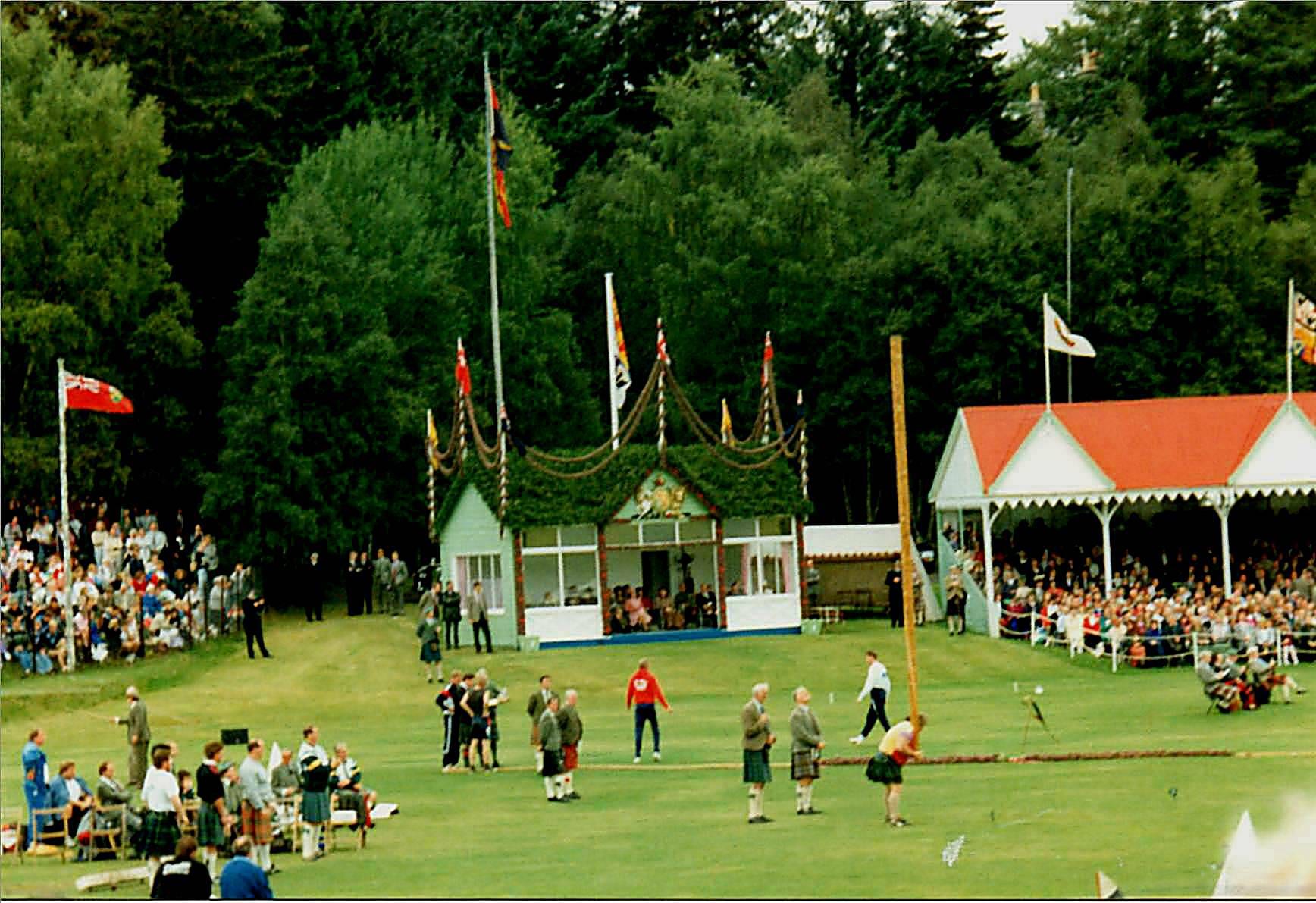
Queen Victoria attended the Braemar Gathering in 1848, the year she and Prince Albert took on nearby Balmoral Castle, which they bought in 1852. The royal family went on to popularise the kilt, and has its own Balmoral tartan, dating from 1853.
The visit is often seen as the moment when what had been thought of as the primitive dress of mountain thieves became the national dress of the whole of Scotland. Ordinary Highlanders gained little from the fashion: the Highland Clearances were still driving many of them from the land, even as aristocrats and landowners paraded in kilts.
Are clan tartans ancient?
Many people believe each clan has worn its own tartan for centuries. The evidence says otherwise. Before the 19th century, tartans were mostly linked to regions rather than to families. Tartans named after clans mostly date to the early and middle 19th century, when weavers such as Wilsons of Bannockburn, the dominant manufacturer, designed and sold patterns, and the Highland Society of London began collecting them around 1815. The idea has been called "an astonishingly successful marketing story" and an example of an invented tradition, yet the clans themselves adopted it enthusiastically.
One book did much of the work. The Vestiarium Scoticum, published in 1842, claimed to reproduce a 15th-century manuscript of clan tartans. It was soon denounced as a forgery, and the brothers behind it, who called themselves the Sobieski Stuarts and claimed to be grandsons of Bonnie Prince Charlie, as impostors. Even so, many of its designs passed into "official" clan tartans. Today every clan has at least one tartan, and thousands more are recorded in the Scottish Register of Tartans, for districts, regiments, companies and individuals. Most Scots now treat the kilt as formal or national dress, worn at weddings, Highland games and football matches rather than every day. Clan tartans may not be traditional in the strict sense, but in two centuries they have become entirely conventional.