Attractions & Natural Wonders
Why are hurricanes, typhoons and cyclones the same thing with different names?
All three are tropical cyclones; the name depends on which ocean the storm forms in, and each word comes from a different language and history.
By Globeway Editorial · 13 October 2026
The short answer
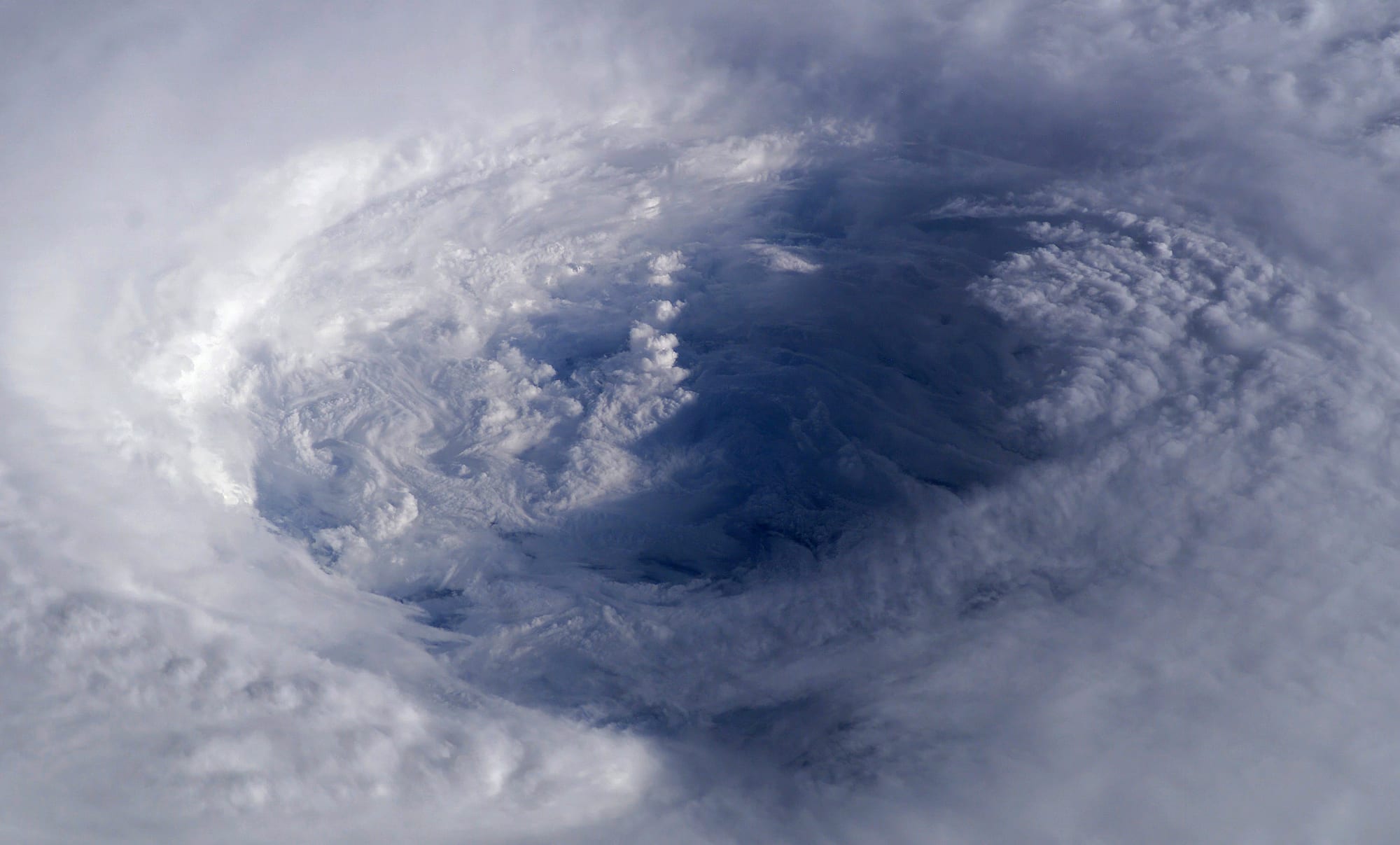
Hurricanes, typhoons and cyclones are all the same kind of storm. Scientists call it a tropical cyclone: a rapidly spinning system of thunderstorms around a centre of low pressure, which forms over warm tropical seas and draws its energy from water evaporating off the ocean. The only real difference is where it happens. A strong one in the Atlantic or the north-eastern Pacific is a hurricane; in the north-western Pacific it is a typhoon; in the Indian Ocean and the South Pacific it is simply a tropical cyclone, or a severe cyclonic storm.
The different names exist because people met these storms in different parts of the world long before anyone knew they were one phenomenon. Each word came from the language of the region: hurricane from the Taíno people of the Caribbean, typhoon probably from Chinese or Persian, cyclone from Greek by way of a British official in India. Today the names are kept because each ocean is watched by its own forecasters, with their own warnings and scales.
One storm, one engine
Every tropical cyclone works the same way. Warm, moist air rises from the sea surface, cools, and condenses into cloud and rain, releasing the heat that powers the storm. That makes them different from the storms of cooler latitudes, such as European windstorms, which feed on contrasts between warm and cold air masses. A tropical cyclone weakens when it moves over water much cooler than 26.5 °C (79.7 °F), or over land.
The spin comes from the rotation of the Earth. As air flows inwards towards the centre, it keeps the spin the planet gave it and whirls faster, like a skater pulling in their arms. Because that effect, called the Coriolis effect, is almost absent near the equator, tropical cyclones rarely form within 5 degrees of it. It also sets the direction: the winds turn anticlockwise in the Northern Hemisphere and clockwise in the Southern. A hurricane over Florida, a typhoon over Japan and a cyclone over Madagascar are mirror images, not different species.
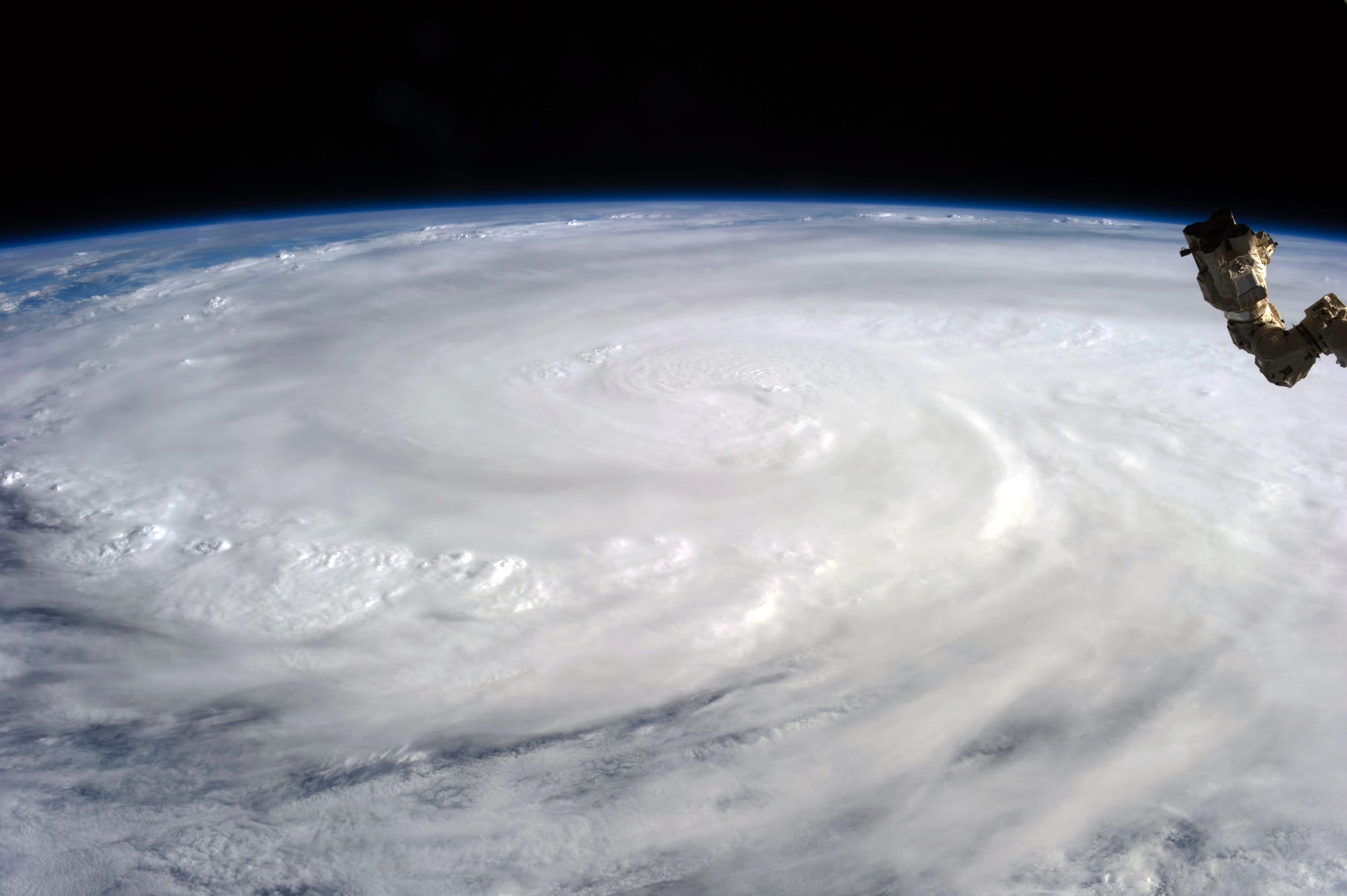
The north-western Pacific produces almost a third of the world's tropical cyclones, and its storms are called typhoons.
Around 80 to 90 named tropical cyclones form each year worldwide, and more than half reach hurricane force, with sustained winds of at least 119 km/h (74 mph). They range from about 100 to 2,000 kilometres across.
Three words from three worlds
Hurricane comes from the Caribbean. The Taíno people of Puerto Rico, Hispaniola, Jamaica and Cuba believed in Guabancex, a goddess who controlled the weather and conjured storms called juracán when she was displeased. The word was later borrowed to name these storms across the Western Hemisphere.
Typhoon has a more tangled history, and scholars disagree about it. One explanation traces it to Chinese: a term meaning "winds which last long" was first recorded in 1124, and a later form, pronounced roughly "tai fung" in Mandarin, was picked up by foreign sailors. The other traces it to tūfān, meaning storm in Persian and Hindustani, a word that may go back to Typhôn, a monster of Greek myth. The word reached English in 1588 as "touffon", followed by spellings from "tuffoon" to "tiffoon".
Cyclone was coined by Henry Piddington, a British East India Company official who published 40 papers on tropical storms from Calcutta between 1836 and 1855. He took it from the Greek kýklos, a circle or ring, because of the way the winds spiral.
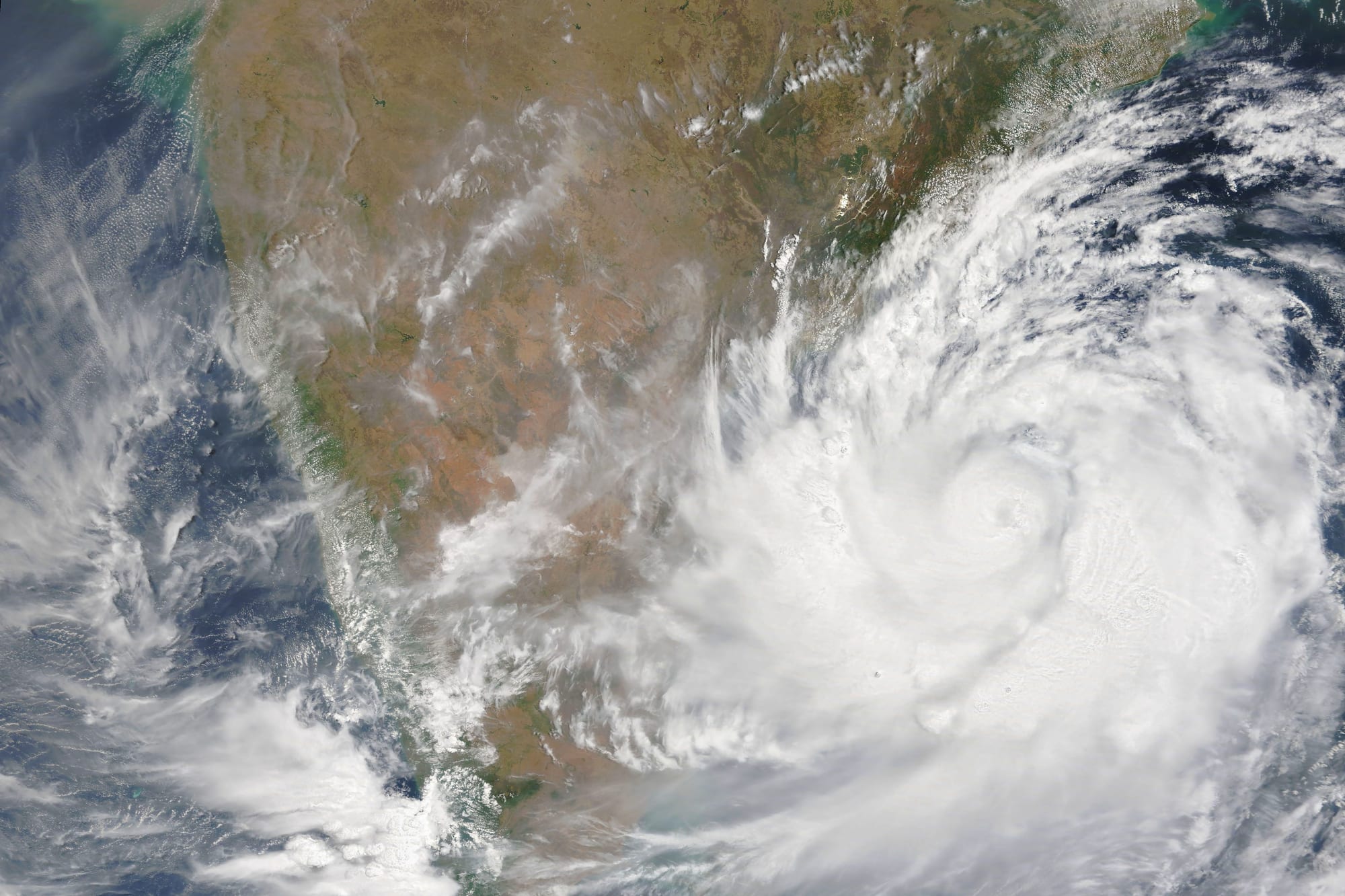
In the Indian Ocean the same storms are called tropical cyclones, and the strongest can be called severe cyclonic storms.
Who decides what to call a storm
The names are now fixed by geography. The World Meteorological Organization divides the tropical oceans into basins, and ten warning centres around the world are designated to watch them. Most tropical cyclones form in one of seven basins. The US National Hurricane Center covers the Atlantic, the Central Pacific Hurricane Center covers the Pacific from 140°W to the International Date Line, and Japan's meteorological agency leads for the north-western Pacific, where the list of storm names is agreed among 18 countries. In the Southern Hemisphere, Météo-France on Réunion watches the south-western Indian Ocean.
Each region also measures strength in its own way. In the Atlantic and eastern Pacific, hurricanes are ranked on the Saffir–Simpson scale from Category 1, with winds of at least 119 km/h, to Category 5, with winds of at least 252 km/h (157 mph). Typhoon forecasters use other labels. The Hong Kong Observatory has divided typhoons since 2009 into typhoon, severe typhoon and super typhoon, the last with winds of at least 190 km/h, while the US Joint Typhoon Warning Center keeps "super typhoon" for storms of at least 240 km/h. So the same wind speed can earn a different label depending on which ocean it blows over.
Names for individual storms follow regional rules too. Storms are generally named once their sustained winds reach about 63 to 65 km/h (39 to 40 mph). Atlantic lists rotate from year to year, alternate men's and women's names, and skip the letters Q, U, X, Y and Z.
The storm that changed its name
Because the label belongs to the ocean, a storm that crosses from one basin to another changes its title but keeps its personal name. A storm crossing the date line from the central Pacific stops being a hurricane and becomes a typhoon. The most famous case is Hurricane John in 1994, which followed a 13,180-kilometre (8,190-mile) path from the eastern Pacific to the western Pacific and back again, lasting 31 days. It was one of a small number of storms designated both a hurricane and a typhoon, and it is still the farthest-travelling tropical cyclone ever observed.
Its record for longevity fell in 2023 to Cyclone Freddy, which began south of Indonesia and crossed the Indian Ocean in the Southern Hemisphere for 36 days. Had Freddy formed in the Atlantic, it would have been called a hurricane; over the Pacific near Japan, a typhoon. The storm itself would have been exactly the same.
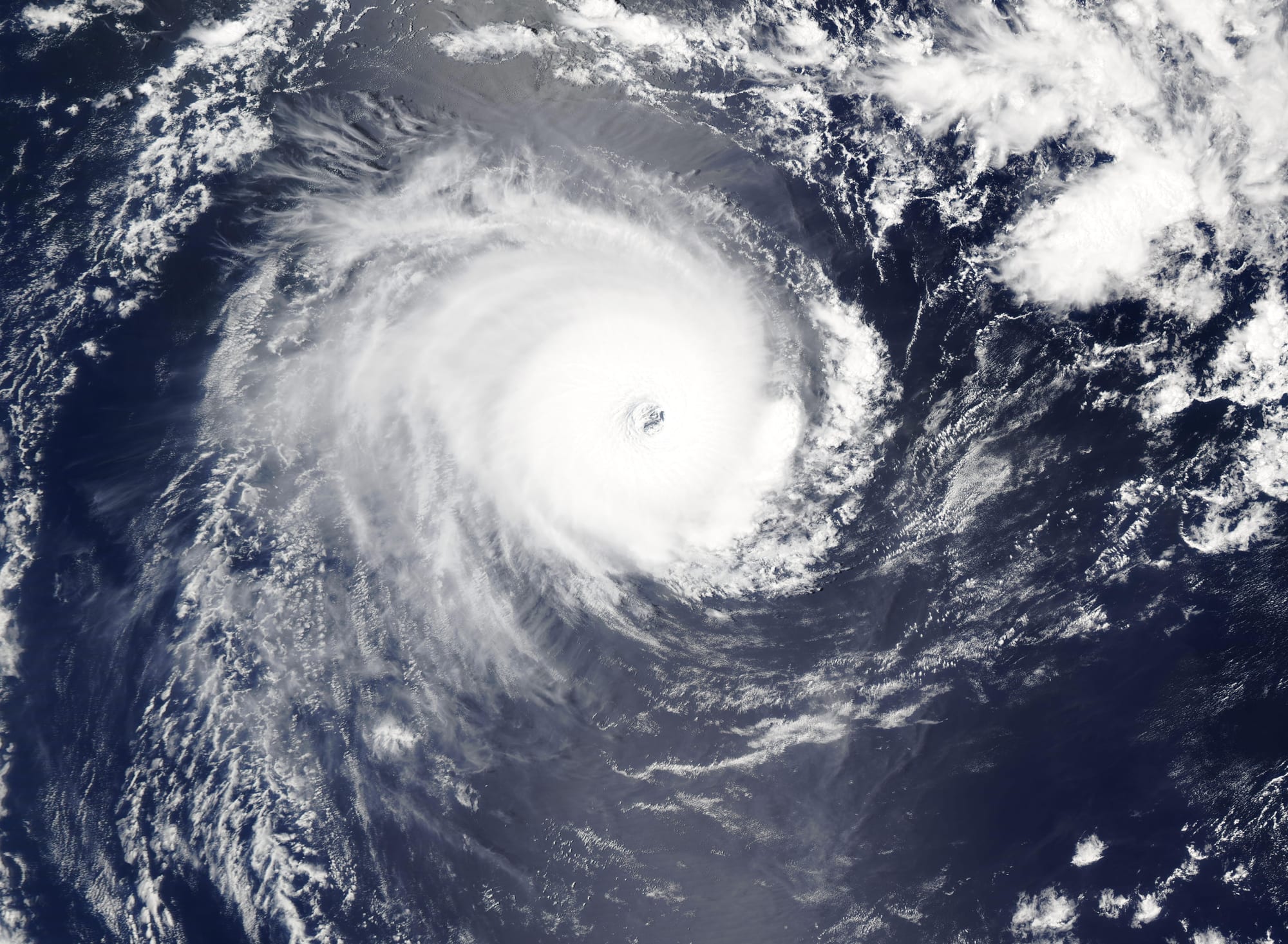
In the Southern Hemisphere a cyclone's winds turn clockwise, the mirror image of a hurricane or typhoon north of the equator.