History · Germany
Why did a Bavarian king build Neuschwanstein, the castle behind Disney's?
Ludwig II built a private stage set of a medieval knight's castle, honouring Wagner's operas and a royal power he no longer had, and its debts helped bring him down
By Globeway Editorial · 13 October 2026
The short answer
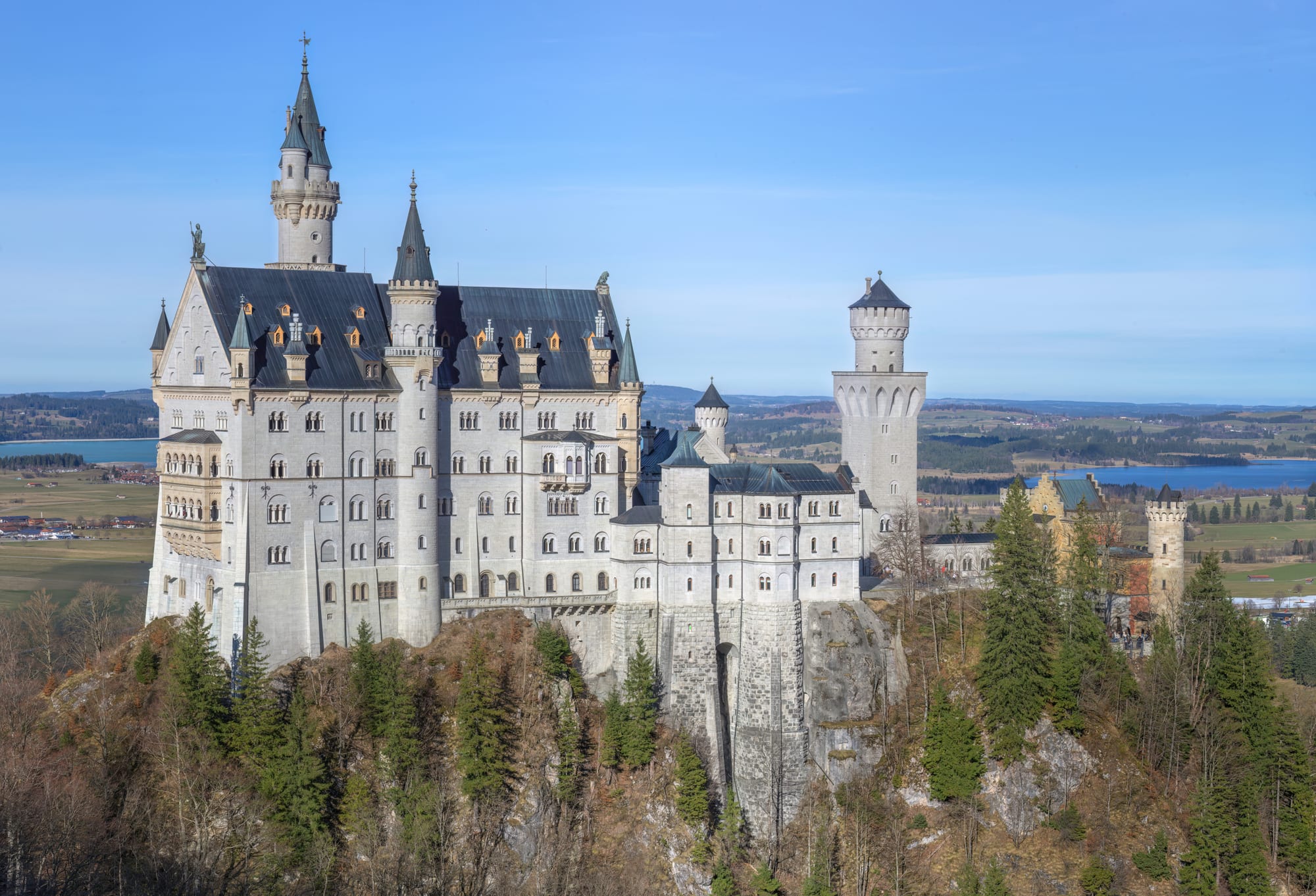
King Ludwig II of Bavaria built Neuschwanstein as a private refuge, a place where he could live inside his own idea of the Middle Ages. It was a tribute to the composer Richard Wagner, whose operas about swan knights and singing contests had obsessed him since his teens, and an escape from Munich and from a kingship that, after Bavaria's defeat by Prussia in 1866, held less and less real power. It was designed by a theatre painter, it was never meant for a royal court or for visitors, and it has no real fortifications. It is a stage set built in stone.
He paid for it from his own fortune and with ever larger loans, not from Bavarian public funds. The debts helped bring him down: in June 1886 his ministers had him declared insane and deposed, and he died days later. The castle, still unfinished, opened to paying visitors within six weeks. Seven decades on, it became the model for Sleeping Beauty Castle at Disneyland.
A boy among the swan knights
Ludwig grew up in the landscape he later crowned with Neuschwanstein. In 1832 his father, King Maximilian II, bought the ruins of a medieval castle above the village of Hohenschwangau and replaced them with a comfortable neo-Gothic palace, finished in 1837. Its rooms were painted with heroic German sagas, above all Lohengrin, the Knight of the Swan, and the young Ludwig spent much of his childhood there.
On a rugged hill above the family palace stood the ruins of two more medieval castles. The crown prince knew them from his walks and sketched one in his diary in 1859. At 15 he saw Wagner's opera Lohengrin, and ten months later Tannhäuser, and the operas fed his imagination for the rest of his life. A few months after becoming king in 1864, at the age of 18, he summoned Wagner to his court.
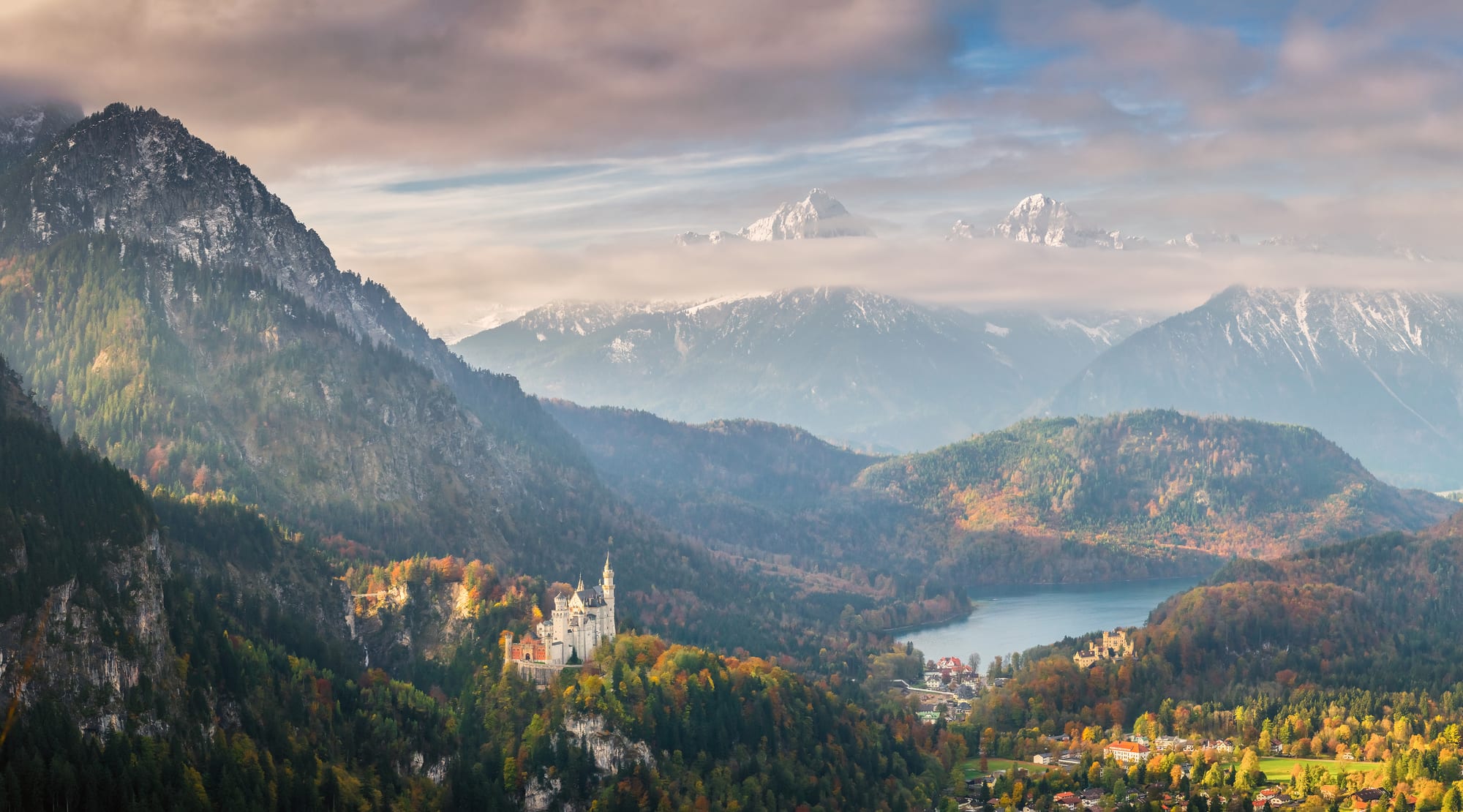
Ludwig called his new palace New Hohenschwangau Castle. The name Neuschwanstein was given only after his death.
A king losing his kingdom
The young king's political world shrank fast. In 1866 Bavaria fought on Austria's side against Prussia and lost, and was forced into a defence treaty with the victor. In 1870 Bismarck used financial concessions to persuade Ludwig to write a letter endorsing the creation of a German Empire under the King of Prussia, and in 1871 Bavaria joined it. Ludwig kept his crown, but he felt his sovereignty diminished by an emperor above him. From 1873 he also received an annual subsidy from Bismarck.
Ludwig withdrew more and more from the business of government into art and building. Neuschwanstein, the first of his palace projects, was a refuge far from the capital where he could live out his idea of the Middle Ages. Its Throne Hall, designed like a church, combines the Grail Hall of Wagner's Parsifal with a symbol of the divine right of kings, the unlimited power that Ludwig, as a constitutional monarch, no longer held. The throne itself was never completed.
A theatre set in stone
In 1867 Ludwig visited two buildings that shaped his plans: the Wartburg near Eisenach, setting of the legendary singers' contest in Tannhäuser, and the Château de Pierrefonds in France, which the architect Eugène Viollet-le-Duc was turning from a ruin into a showpiece for Napoleon III. In May 1868 he wrote to Wagner that he meant to rebuild the old ruin "in the authentic style of the old German knights' castles", as a temple for his "divine friend".
The design was drawn by Christian Jank, a stage designer, and carried out by the architect Eduard Riedel. The old ruins were demolished, and the foundation stone was laid on 5 September 1869. The king approved every draft and dictated details down to the angle of a painted knight's neck. Rooms were themed on Tannhäuser, Lohengrin and Parsifal. The Hall of the Singers copies two halls of the Wartburg, and a small artificial grotto, recalling Tannhäuser, once had a waterfall and a rainbow machine.
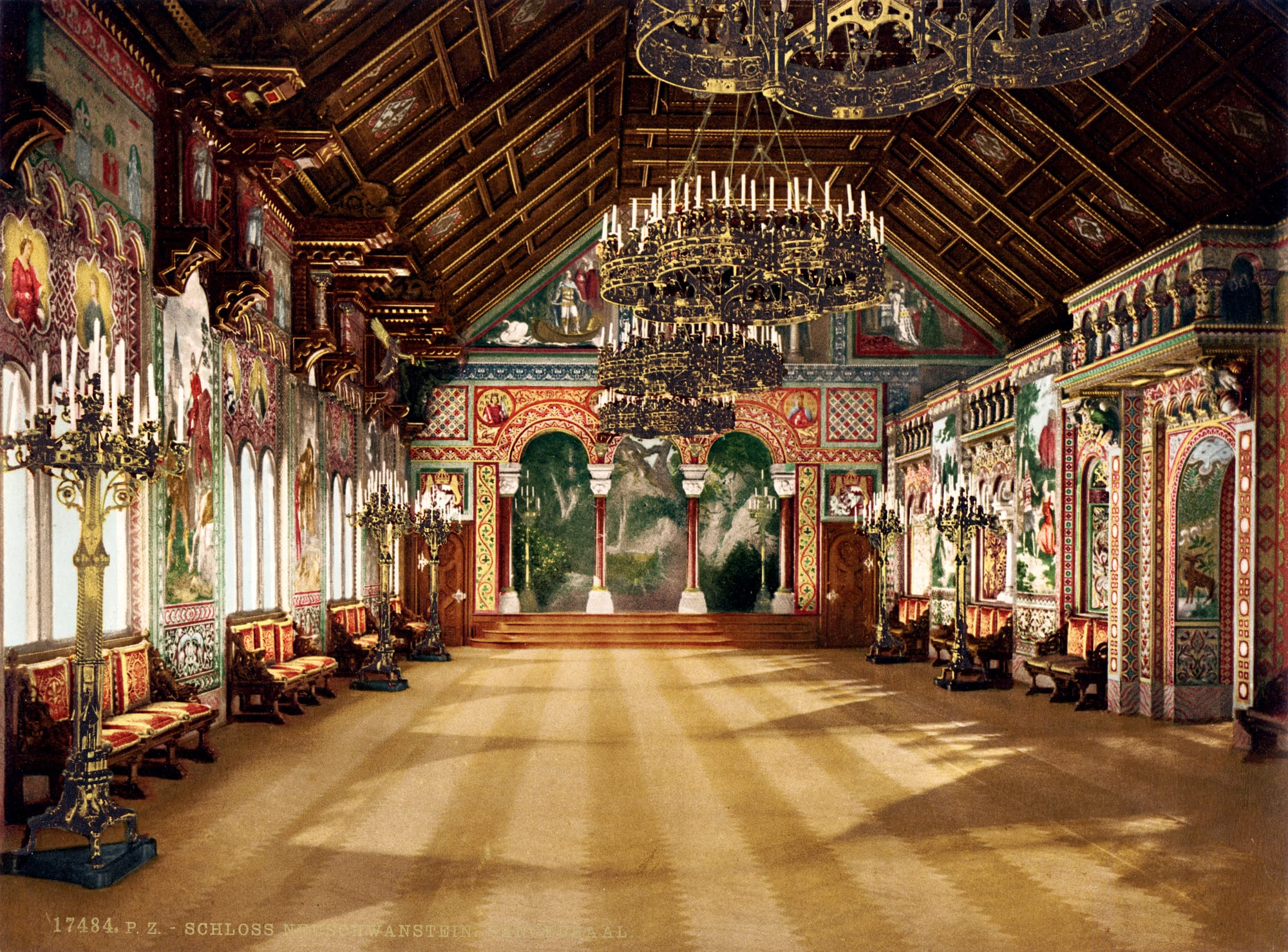
The hall was never used for court festivities. Its first performance came in 1933, a concert marking 50 years since Wagner's death.
The medieval look hid modern machinery. The castle had telephone lines, a battery-powered bell system for servants, central heating, running warm water and toilets with automatic flushing. Despite its size, it held only the king's private rooms and servants' quarters; its courtyard buildings were mostly decoration.
The bill that cost a crown
Neuschwanstein cost 6.2 million gold marks in Ludwig's lifetime, almost twice the first estimate, and it was only one of three huge projects, alongside Linderhof and Herrenchiemsee. By 1885 the king was 14 million marks in debt. Rather than economise, he planned more.
In June 1886 the government acted. A panel of four psychiatrists, only one of whom had ever met him, declared him unfit to rule, mainly on the strength of servants' gossip. On 12 June he was taken from Neuschwanstein to Berg Castle on Lake Starnberg, and the next evening he and his psychiatrist, Bernhard von Gudden, were found dead in the shallow water. His death was ruled a suicide; both that verdict and the finding of insanity are now questioned. In all, Ludwig lived in his castle for only 172 days, and only about 15 rooms and halls were ever finished. Wagner died in 1883 without ever seeing it.
From Bavaria to Anaheim
The king had never meant the public to see his castle, but it soon paid its way: Ludwig's estate cleared the construction debts by 1899. More than 61 million people have now visited, and in 2025 it became part of a UNESCO World Heritage Site with Ludwig's other palaces.
Its picture-book silhouette travelled far. Sleeping Beauty Castle, which opened at Disneyland in California on 17 July 1955, is based on Neuschwanstein. It is only 23 metres (77 feet) high, and uses forced perspective, with larger features at the base and smaller ones at the turrets, to look taller. Cinderella Castle at Walt Disney World drew on a whole list of real buildings, including the Alcázar of Segovia, Château de Chambord and Neuschwanstein itself. A king's private dream of the Middle Ages became the model for one of the most familiar castles in the world.
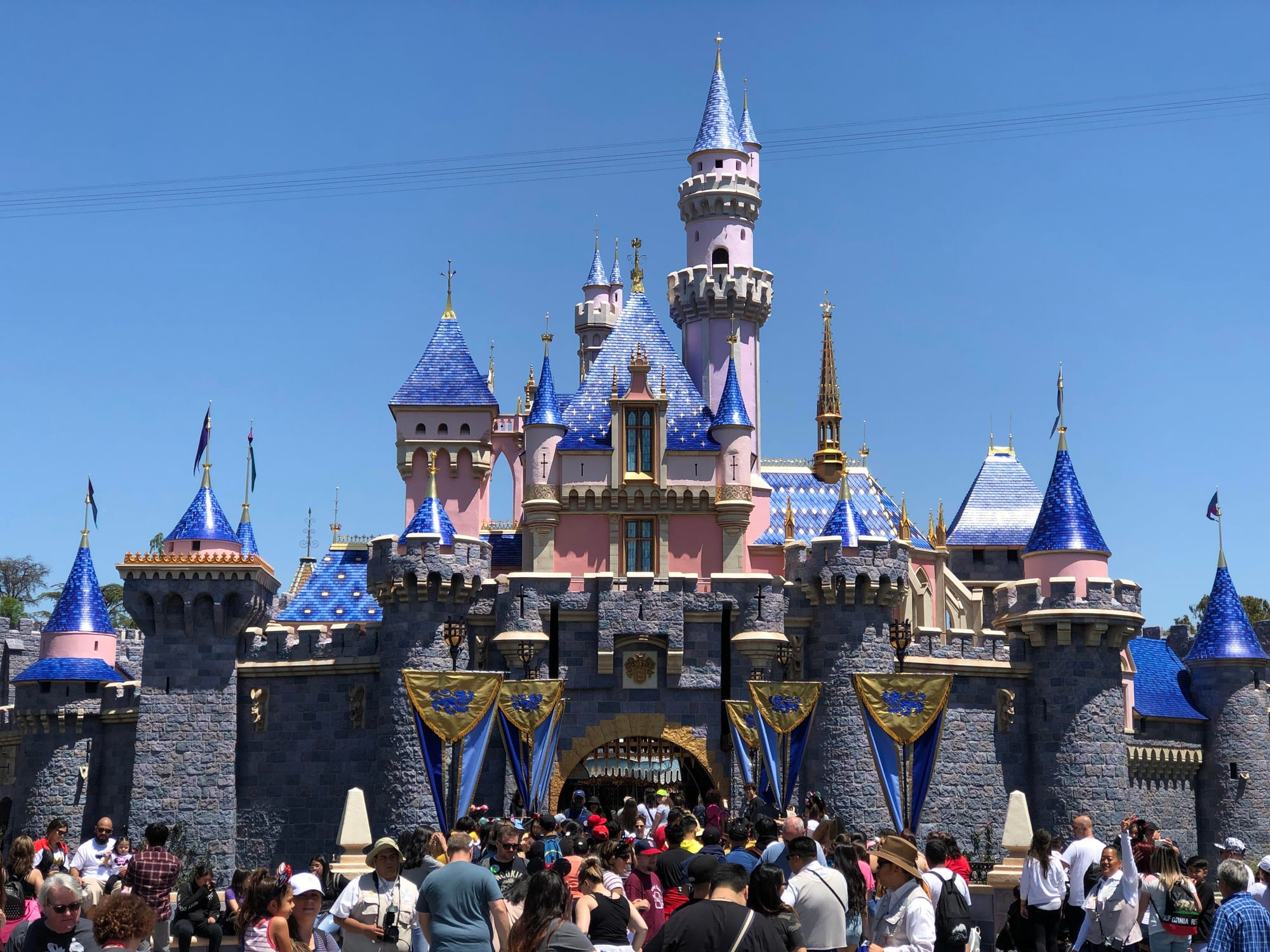
Opened in 1955, it is the oldest of all the Disney castles.