History · China
Why did China build the Great Wall, and did it work?
Two thousand years of walls against the steppe nomads, which often stopped raids, sometimes failed spectacularly, and never saved a falling dynasty
By Globeway Editorial · 13 October 2026
The short answer
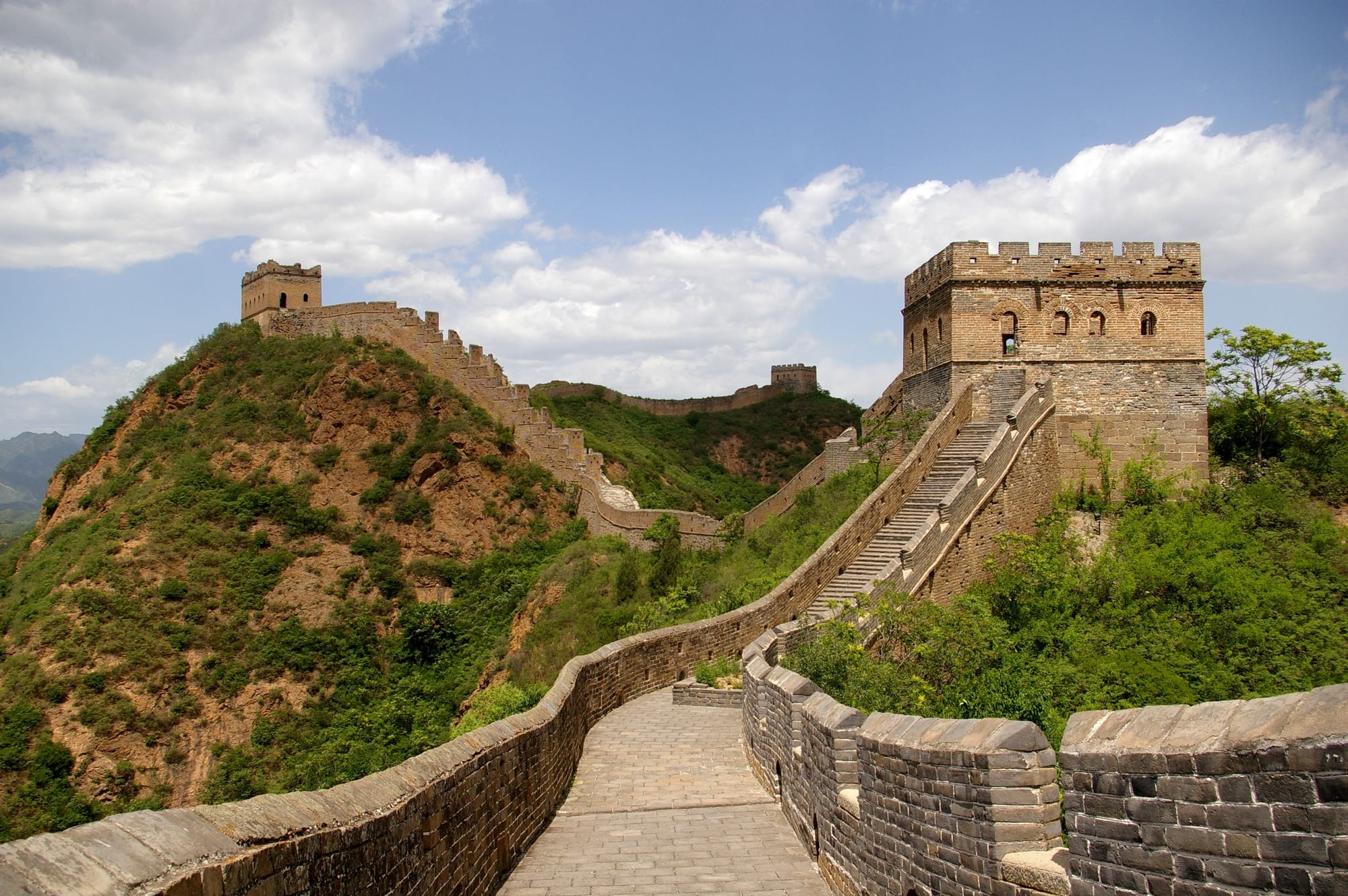
China's walls were built to hold the northern frontier against the nomadic peoples of the Eurasian steppe, the grasslands that run across Mongolia. Farming states could not easily chase mounted raiders across open country, so they fortified the edge of their land instead, with ramparts, watchtowers, barracks and beacon towers that passed warnings by smoke or fire. The walls also served as a customs line, controlling who came and went and taxing goods on the Silk Road. There was never a single wall: the Great Wall is a family of fortifications built by many states and dynasties over some two thousand years, and the stone-and-brick wall in most photographs is the work of the Ming dynasty (1368–1644).
Did it work? In part. Strong sections often turned back raids, and the Ming wall around Beijing made large raids far harder. But raiders repeatedly rode around unfinished stretches, and in 1644 the wall did not save the Ming: rebels walked through passes whose garrisons surrendered, and a Ming general opened one of its most heavily fortified gates to the Manchus. Historians still argue over whether the whole effort was worth its cost.
Walls between rivals, then a wall against the north
The first walls date to the 7th century BC, when rival Chinese states such as Qin, Zhao, Wei and Yan fortified their borders against one another, mostly with stone or with earth and gravel stamped hard between board frames, a method called rammed earth.
When the state of Qin conquered the others in 221 BC, its ruler, the First Emperor, ordered the internal walls between the former states torn down, so that no old kingdom could hide behind them again. On the northern frontier he did the opposite. In 215 BC his general Meng Tian drove the Xiongnu, a confederation of steppe nomads, out of the Ordos Loop of the Yellow River, and the emperor ordered new walls to join up the existing fortifications along the north. Meng Tian's army alone is said to have numbered 300,000 men. The guiding principle was "build and move on": this was not meant as a fixed, permanent border.
Later dynasties, including the Han and the Sui, repaired and extended sections at great cost; the Tang and Song did little.
- 7th century BC
The first defensive walls are built by rival Chinese states
- 221 BC
Qin unites China and tears down the walls between the former states
- 215 BC
Meng Tian drives the Xiongnu from the Ordos; northern walls are joined up
- 1449
The Tumu Crisis: a Mongol victory pushes the Ming onto the defensive
- 1474
Yu Zijun completes the first major Ming wall, across the Ordos
- 1550
Altan Khan rides round the walls and burns the suburbs of Beijing
- 1569
Qi Jiguang begins building hollow brick watchtowers near the capital
- 1644
The Ming fall; the Manchus enter China through Shanhai Pass
How the Ming built the wall seen today
The Ming did not set out to build a wall. Their founder, who drove the Mongol-led Yuan dynasty out of China in 1368, preferred mobile armies and forward garrisons. That changed in 1449, at the Tumu Crisis, when over half of a campaigning Ming army perished and the Mongols captured the emperor himself. From then on the dynasty was on the defensive.
Walls emerged from fierce court debates between attackers and defenders. In 1472 the official Yu Zijun argued that a wall would cost less than endless campaigns, and in 1474 he finished one across the Ordos, more than 1,100 kilometres long, with 800 strongpoints, sentry posts and beacon towers, built by 40,000 men in a few months for over a million silver taels. In 1482 it proved its worth when a large Mongol raiding party was trapped between its double lines and defeated.
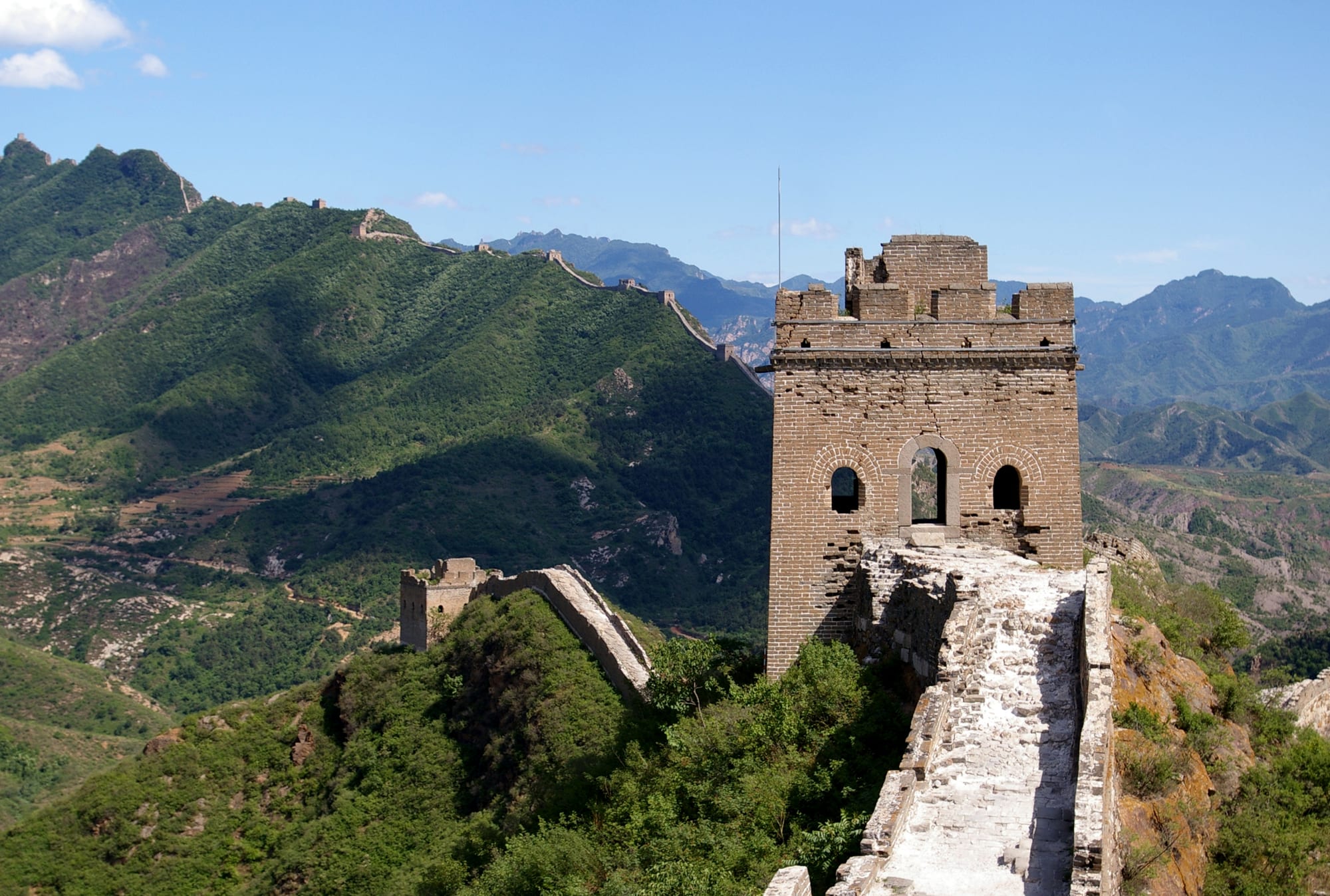
This set the pattern for the next century and a half: each new wall pushed raiders towards the next unwalled gap, which was then walled in turn. The Ming wall was built piece by piece by regional commanders, using soldiers, conscripted peasants and convicts, in conditions harsh enough that it has been called "the longest cemetery in the world".
Where it held, and where it was outflanked
The clearest test came near Beijing. In 1550 the Mongol leader Altan Khan, refused a trading agreement, found the doubled walls of the Xuanfu and Datong garrisons too strong, circled round to the lightly defended pass at Gubeikou and raided the suburbs of the capital; one contemporary source puts the toll at more than 60,000 dead and 40,000 taken prisoner. The Ming responded by rebuilding the walls there in stone and mortar on steeper, more defensible slopes, and in 1554 raiders expecting a repeat met a higher wall and stiff resistance and failed.
From 1569 the generals Qi Jiguang and Tan Lun added some 1,200 hollow brick watchtowers near the capital, where soldiers could live, store supplies and shelter from arrows. Yet the most effective defence of all was not a wall. In 1571 the Ming opened border cities to trade, Altan Khan made peace, and the frontier grew relatively quiet. Trade removed much of the reason to raid, though small raids continued whenever raiding paid better.
The gate that was opened from inside
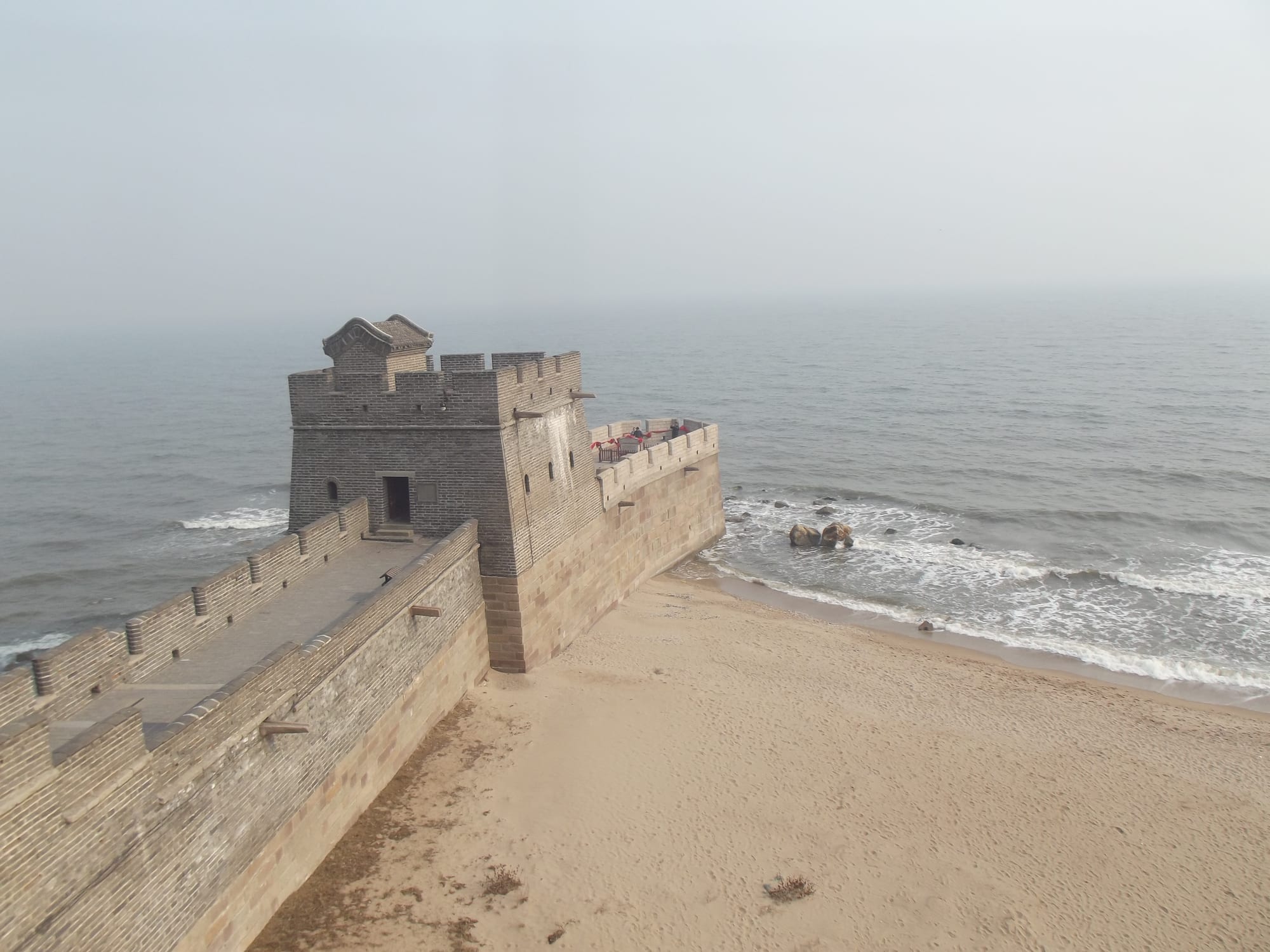
The Ming's final years show both the wall's strength and its limits. The Jurchens, later renamed the Manchus, broke through at Xifengkou in 1629 and raided across the wall again in 1634, 1638 and 1642. But they could not take its eastern anchor: in 1642 their ruler Hung Taiji admitted that "the Shanhai Pass cannot be taken."
The fatal blow came from within. In 1644 the rebel Li Zicheng marched along the wall, and most of its garrisons surrendered without a fight, including Juyong Pass, the last before Beijing. The Chongzhen Emperor hanged himself as the rebels entered the capital. The Ming general Wu Sangui, holding Shanhai Pass between the rebels and the Manchus, then chose the Manchus, opening the gates to them in late May 1644. Within weeks they held Beijing and founded the Qing dynasty. Once Qing rule stretched over Mongolia, the frontier lay far beyond the wall, and building it for defence stopped.
Scholars remain divided. Arthur Waldron and Julia Lovell are critical of the whole enterprise; Waldron compared it with France's failed Maginot Line. The independent scholar David Spindler argues that the wall was only one part of a complex frontier policy and has taken "disproportionate blame" because it is that policy's most visible relic. A fair verdict is that the wall worked well as a tool against raiding, especially near the capital, but no wall could defend a state whose soldiers had stopped defending it.
Seeing the wall today
A 2012 national survey measured 21,196 kilometres of walls and trenches from every period. The Ming wall alone measures 8,850 kilometres from Jiayu Pass in Gansu to the sea at Shanhai Pass and on into the north-east, counting natural barriers such as hills and rivers, and a 2012 report found that 22 per cent of it has disappeared, much of it eroded or taken for building stone.
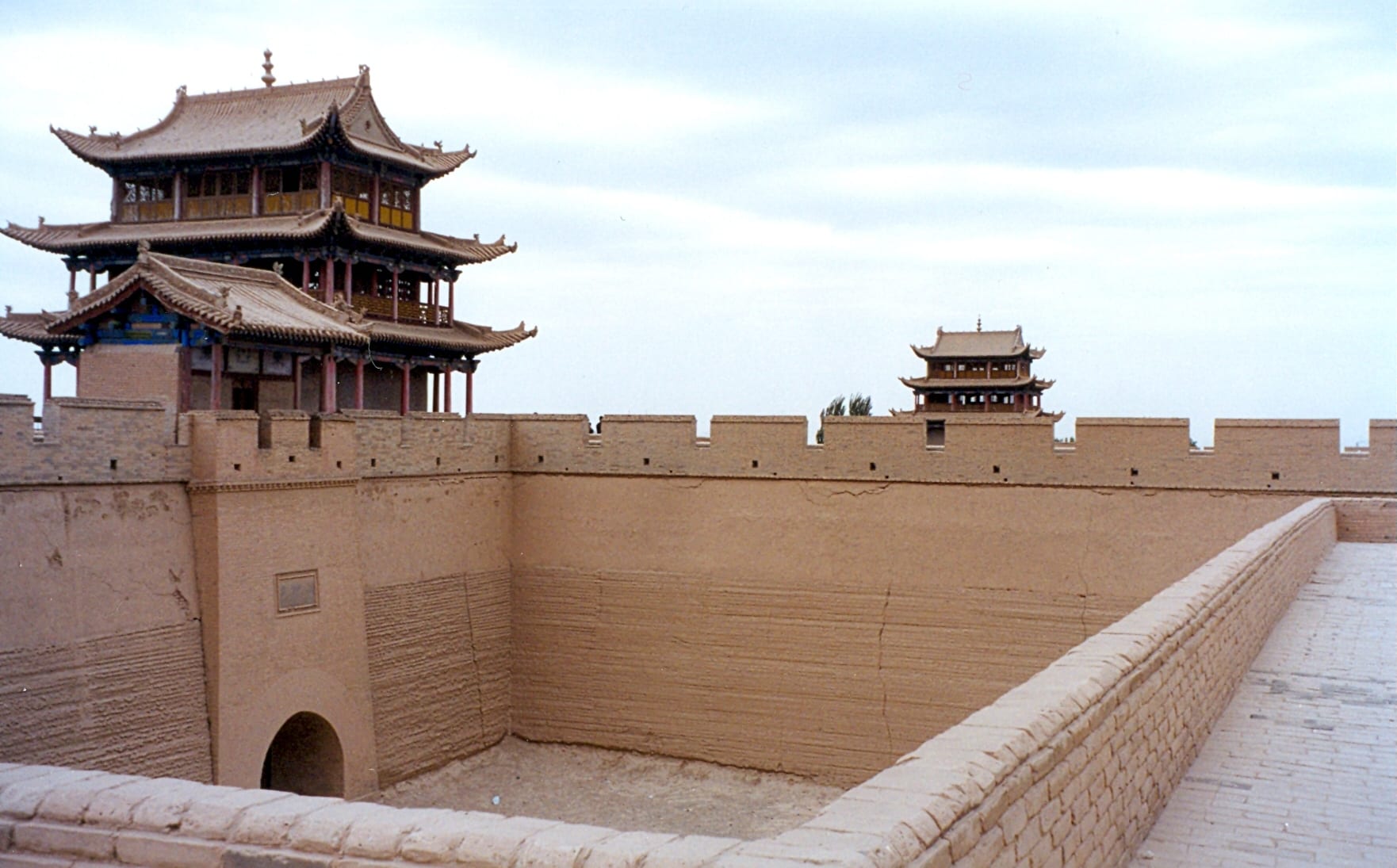
The restored sections north of Beijing are the most visited. Badaling, the first section opened to the public, saw nearly 10 million visitors in 2018, and a daily limit of 65,000 was introduced in 2019. Mutianyu, about 70 kilometres north-east of the city, is one of the best-preserved stretches; Jinshanling and Simatai, further out, follow the wall over steep, rugged ridges. At the two ends of the line stand the desert fortress of Jiayu Pass and the Old Dragon Head on the sea.