Attractions & Natural Wonders · United Arab Emirates
Why did Dubai build the world's tallest building?
With little oil of its own, Dubai built the Burj Khalifa as an 828-metre advertisement for a new economy of tourism, property and trade.
By Globeway Editorial · 13 October 2026
The short answer
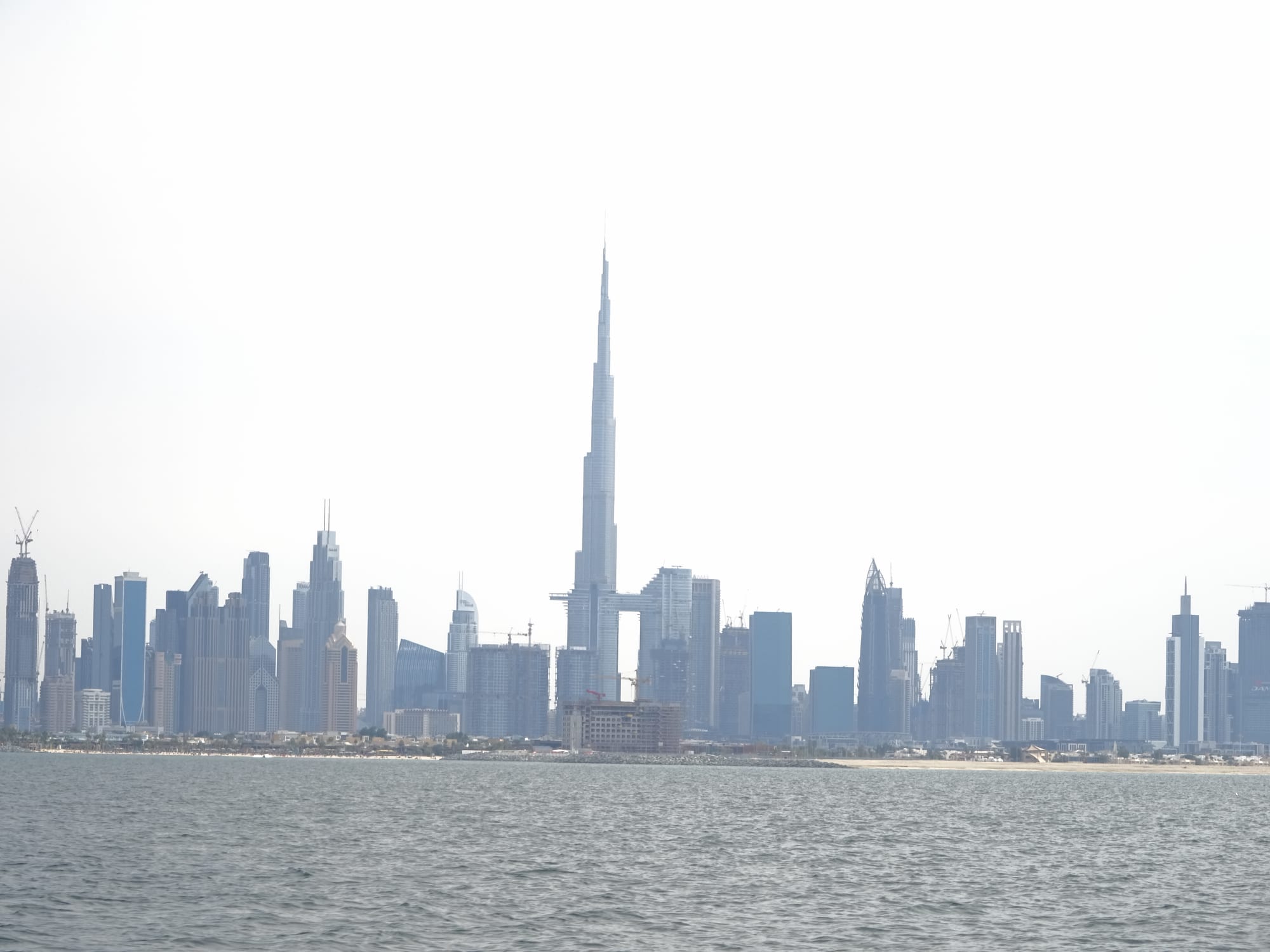
Dubai built the Burj Khalifa to make the world look at Dubai. The emirate had found only modest amounts of oil, and its rulers had decided to build an economy based on services, tourism, trade and property instead. According to officials, projects like the tower were needed to win international recognition, and with it investment. A building that was unmistakably the tallest on Earth was the loudest possible way to announce that Dubai was open for business.
The tower was also the centrepiece of a property venture: Downtown Dubai, a new district of homes, hotels, offices and the Dubai Mall, built around it by the developer Emaar Properties, then majority-owned by the Dubai government. The plan hit trouble when the global financial crisis struck during construction, and the building that opened in January 2010 was renamed at the last minute in honour of the leader of Abu Dhabi, whose emirate had helped Dubai with its debts.
A trading town with little oil
Dubai's wealth was never mainly about oil. In 1901 its ruler made it a free port with no taxes on imports or exports, and it grew as a trading and pearling town. Oil was eventually discovered in its waters in 1966, after large finds in neighbouring Abu Dhabi, but in far smaller quantities. Oil production once accounted for half of Dubai's economic output; today it contributes less than 1 per cent.
The government chose to diversify, turning Dubai into a service- and tourism-based economy. That decision produced a property boom from 2004 to 2008, driven by megaprojects such as the Palm Islands and The World off the coast, Dubai Marina and Business Bay inland, and the Burj Khalifa complex. The tower was the boldest of them all.
An advertisement 828 metres high
The decision to build the tower is reported to have flowed straight from that economic strategy. The Dubai ruler, Sheikh Mohammed bin Rashid Al Maktoum, "wanted to put Dubai on the map with something really sensational", in the words of one tourism executive. Height was the message. Emaar announced in June 2008 that the tower had passed 636 metres but kept the final figure secret until completion.
The building itself was meant to sell everything around it. Downtown Dubai was planned with 30,000 homes, nine hotels, parkland, at least 19 residential skyscrapers, the Dubai Mall and an artificial lake of 12 hectares. Inside the tower went an Armani hotel, offices and 900 apartments, which the developer said sold out within eight hours of going on the market.
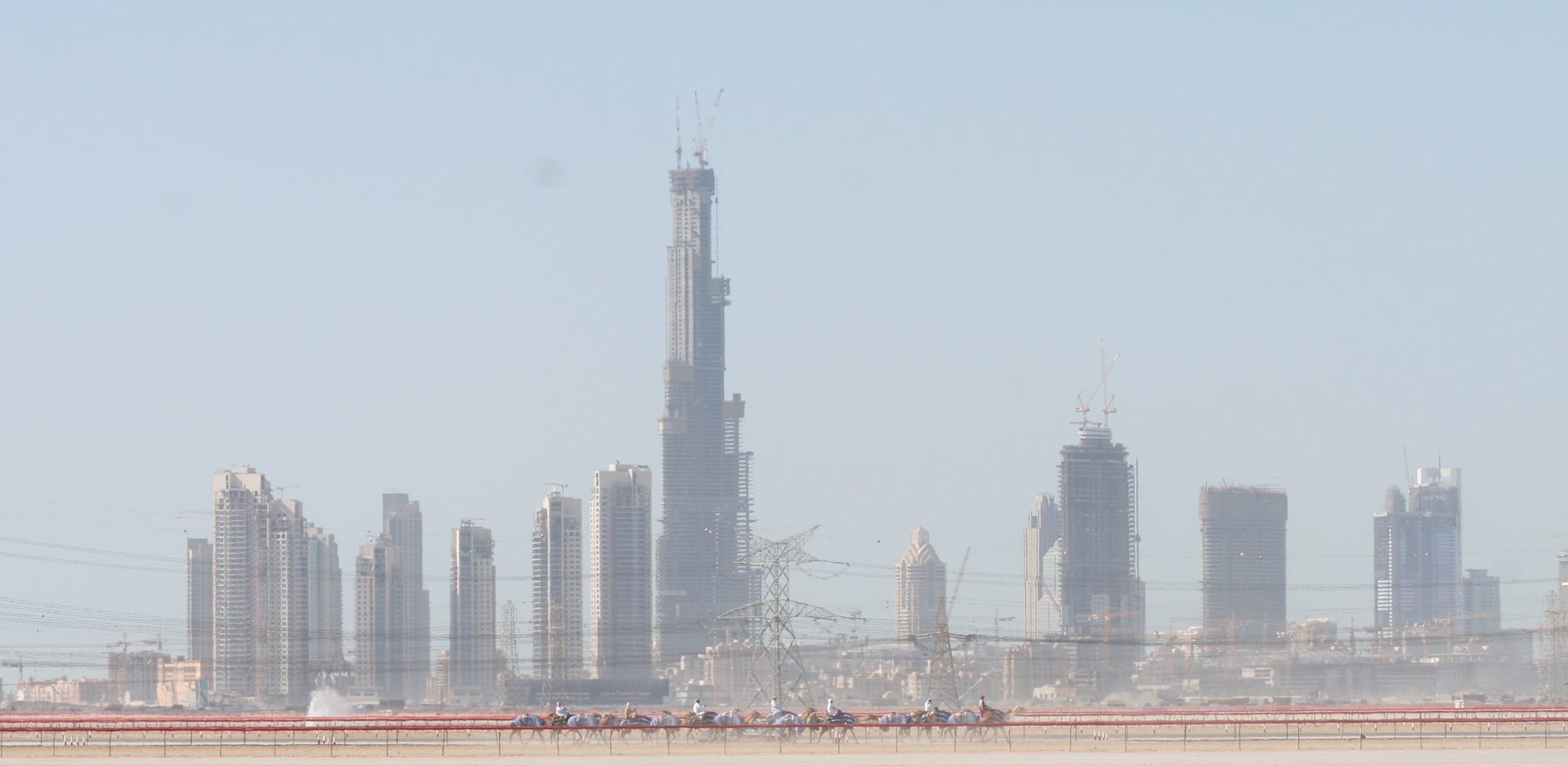
Construction began on 12 January 2004, and the exterior was finished on 1 October 2009. Emaar's chairman, Mohamed Alabbar, put the cost of the project at about US$1.5 billion.
How the record was built
The design came from the Chicago firm Skidmore, Owings & Merrill, which had earlier designed the Sears (now Willis) Tower, itself a former holder of the title. The chief architect, Adrian Smith, drew on the Islamic architecture of the region, and the plan echoes the flower of the Hymenocallis, a desert plant. The engineering trick is a buttressed central core of reinforced concrete, braced by the wings that spread out around it; even so, at the top the tower sways a total of 1.5 metres.
The site posed problems no earlier skyscraper had faced. Persian Gulf summer temperatures can reach 50 °C, so concrete was poured at night, when cooler mixes cured evenly instead of cracking. Concrete was pumped to a then-record 606 metres. The main contractor was Samsung C&T of South Korea, with Belgium's BESIX and the local firm Arabtec.
The workforce was mostly migrants from South Asia and East Asia, about 7,500 skilled workers on site in mid-2008. Press reports in 2006 said labourers earned £2.84 a day, and a BBC investigation and a Human Rights Watch report described abysmal housing and long hours for low pay. In March 2006 about 2,500 workers rioted over delayed buses at the end of their shifts.
A crash, a rescue and a new name
The tower was finished into a downturn. The global financial crisis hit Dubai's overbuilt property market hard, and an emirate that had borrowed at least US$80 billion for construction projects needed tens of billions of dollars from Abu Dhabi and the federal government to pay its debts. At the opening ceremony on 4 January 2010, in a surprise move, Burj Dubai ("Dubai Tower") became the Burj Khalifa, named after Sheikh Khalifa bin Zayed Al Nahyan, then ruler of Abu Dhabi and President of the United Arab Emirates, for his crucial support.
Demand was weak at first. About ten months after the opening, rents had fallen 40 per cent and 825 of the 900 apartments stood empty. Overseas investors gradually bought in, and by October 2012 Emaar reported that around 80 per cent were occupied.
Did it work?
As an advertisement, the tower has done what it was built for. It has been the world's tallest building since its completion, with a roof height of 828 metres and a total of 829.8 metres to the tip, and it collected a shelf of other records: most floors, at 163, the tallest freestanding structure and the longest-travelling lifts. Its fireworks have made it a fixture of New Year's Eve broadcasts. Tourism's contribution to Dubai's economy rose by 138 per cent between 2007 and 2017.
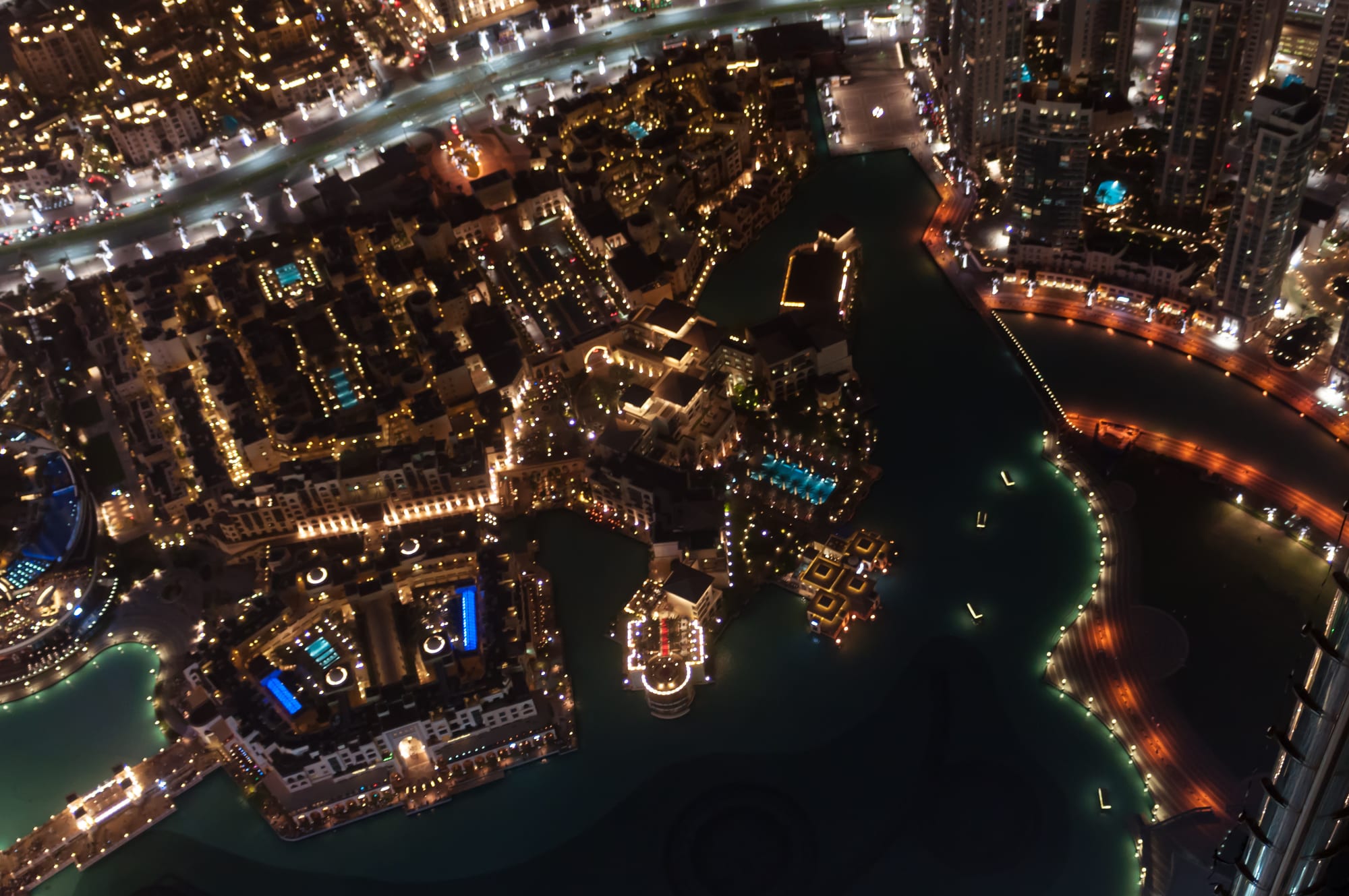
The tower was always meant to anchor this district. Its lake holds the Dubai Fountain, and the neighbouring Dubai Mall is the largest shopping mall in the world by total land area.
The record will not last forever. Jeddah Tower in Saudi Arabia is planned to be the first building one kilometre tall; work restarted in January 2025, it had reached 113 floors by September 2026, and it could be completed as early as 2028. Visitors can still ride up to observation decks on the 124th and 148th floors and a lounge at 585 metres. Since February 2026, however, the war between Iran and the United States and Israel has reached the UAE: Iranian strikes have hit parts of Dubai, and official travel advice should be checked before any trip.