Attractions & Natural Wonders · South Korea
Why did Seoul uncover a river it had buried under a highway?
The Cheonggyecheon vanished under concrete in Korea's post-war boom. By 2003 its ageing highway was a problem, and a mayor bet his career on a stream.
By Globeway Editorial · 13 October 2026
The short answer
Seoul uncovered the Cheonggyecheon, a stream through the heart of the city, because the concrete lid over it and the elevated highway on top had become a liability. Both dated from the 1950s to the 1970s, and by the 1990s their safety was repeatedly in question. Lee Myung-bak made restoring the stream a promise in his 2002 campaign for mayor, won, and in July 2003 began tearing the highway down. The restored stream opened in September 2005.
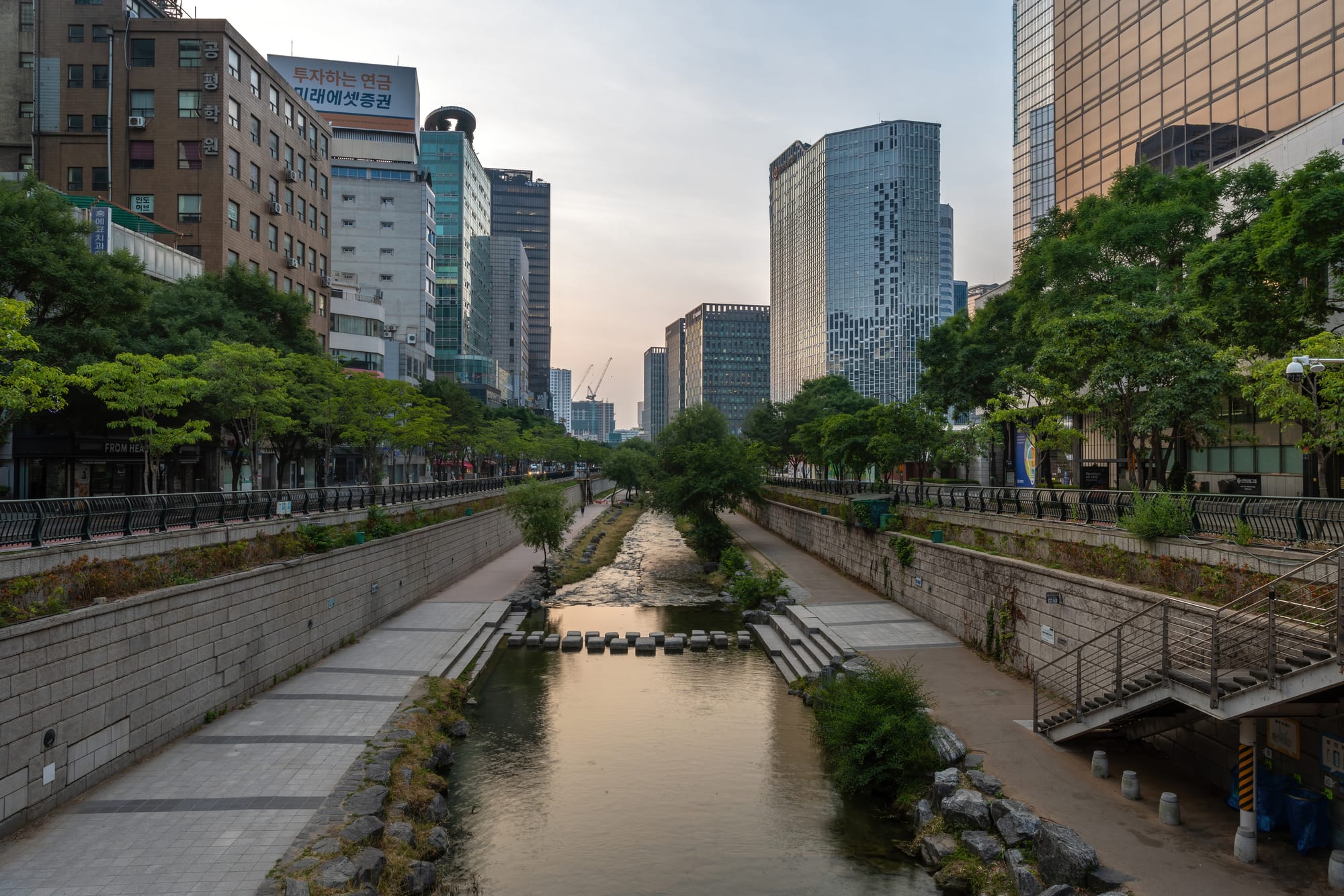
The aim was bigger than replacing a worn-out road. The city wanted to bring nature back into its business district, revive the old commercial area along the stream, and give the city a new public space. The results were striking: wildlife returned, the air got cleaner, the banks became cooler than nearby streets, and traffic did not grind to a halt. Critics called it expensive and artificial, but it has become one of the most popular places in Seoul.
A stream the city tamed, then buried
The Cheonggyecheon rises in the Suseongdong Valley on Inwangsan and flows about 11 kilometres east to join the Jungnangcheon, which runs into the Han River. When Seoul became the capital of the Joseon dynasty, its kings made the stream part of the city's drainage. From 1406 King Taejong had its bed dredged and its banks built up, and in 1411 the government set up a special office to maintain it. Stone bridges were built across it, among them Gwangtonggyo, on the main road through the walled city, and Supyogyo, beside which a gauge for measuring the water level was set up in 1441.
The stream's decline came with the Korean War. Migrants poured into Seoul and built makeshift shacks along its banks, and the water filled with rubbish and waste. By the mid-1950s the area was one of the city's best-known slums. Large-scale covering began in 1958 and continued, section by section, for some 20 years. On top of the concrete ran a road, and above that an elevated expressway, 5.6 kilometres long and 16 metres wide, completed in 1976. At the time it was seen as a symbol of South Korea's successful industrialisation.
Why the highway had to go
By the 1990s the covering structure and the ageing Cheonggye elevated road were raising persistent safety concerns. Lee Myung-bak, a former business executive, campaigned for mayor in 2002 on a pledge to restore the stream, won, and launched the project in July 2003.
It was a gamble. Removing two heavily used roads from the centre of a city of millions risked serious traffic problems, and the stream itself, after decades of neglect, was nearly dry. The administration of the previous mayor, Goh Kun, opposed the plan, fearing gentrification of an area full of shops and small machinery businesses. The city's restoration headquarters drew up new traffic arrangements for the downtown area, and the Cheonggye work went ahead.
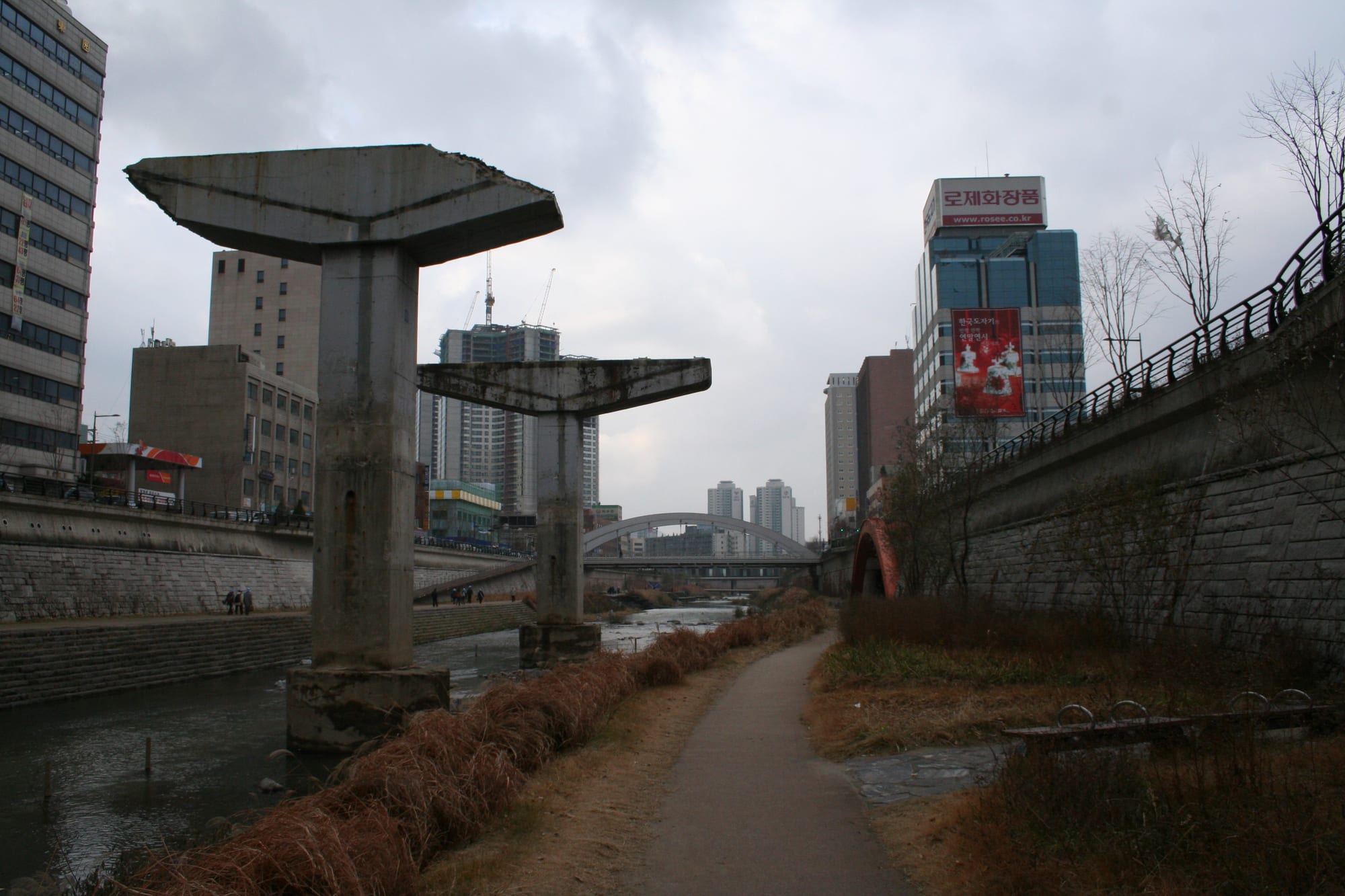
Three of the highway's piers were left standing when the road came down.
The finished stream is not a fully natural river. Its water is pumped in: treated water from the Han River and groundwater from beneath subway stations. The restored section runs about 5.8 kilometres, and the project, budgeted at 349 billion won, cost more than 386 billion won, about US$281 million.
What came back
The ecological change was the most celebrated result. Between 2003 and the end of 2008, the number of plant species recorded along the stream rose from 62 to 308, fish species from 4 to 25, bird species from 6 to 36 and insect species from 15 to 192.
The city felt different too. Air pollution in the area fell by 35 per cent, from 74 to 48 micrograms per cubic metre; before the restoration, local residents had been more than twice as likely to suffer from respiratory disease as people elsewhere in the city. Temperatures along the stream are 3.3 to 5.9 °C lower than on a parallel road a few blocks away, an easing of the urban heat island effect that makes city centres warmer than their surroundings.
Traffic, the great fear, did not collapse. The number of vehicles entering downtown Seoul fell by 2.3 per cent as more people took buses and the subway, and traffic around the city sped up after the motorway was removed. The project is often cited as a real-life example of Braess's paradox, the counter-intuitive idea that taking away a road can make traffic flow better.
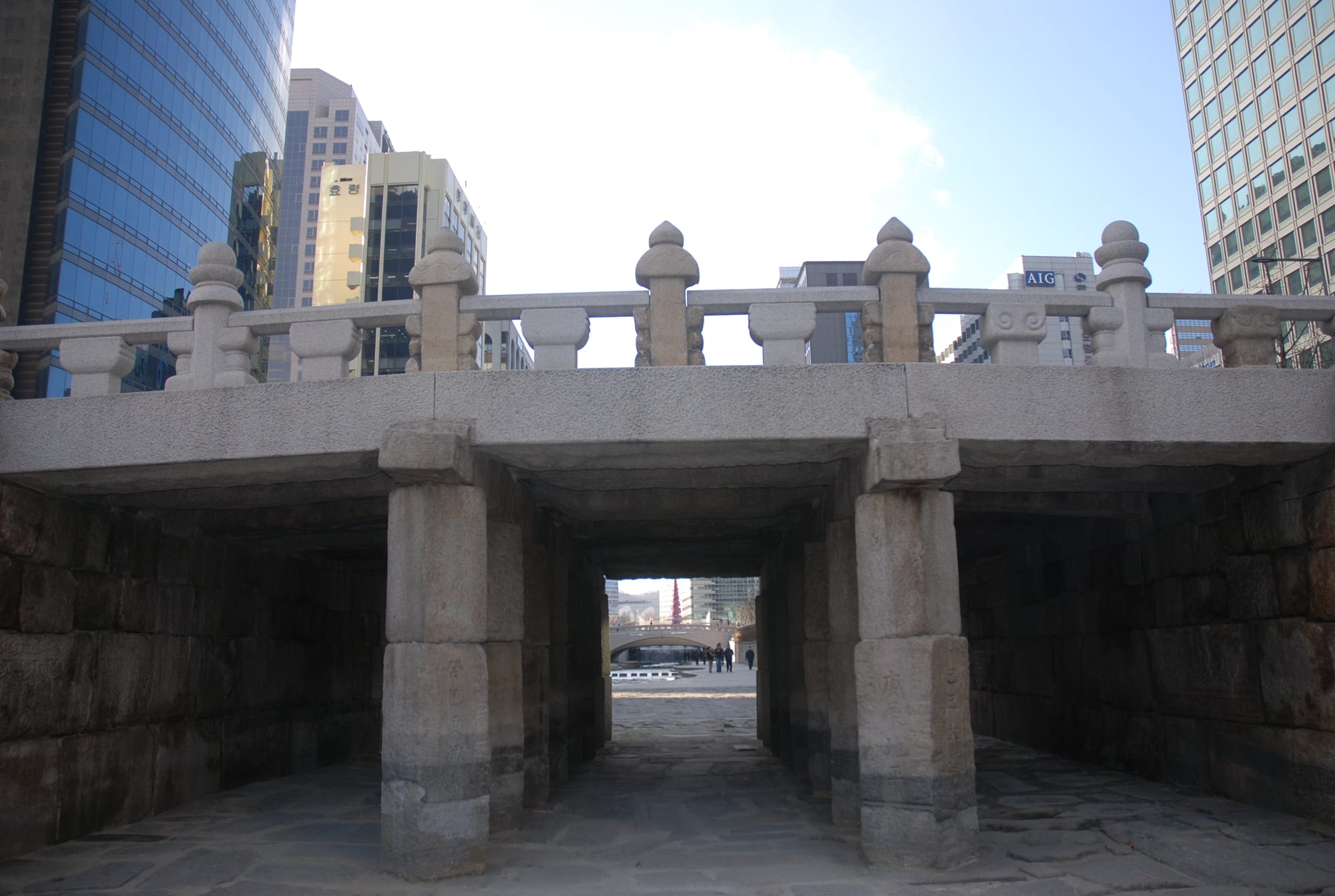
The restoration of the historic bridges was one of the most contested parts of the project. Gwangtonggyo was rebuilt, but not in its original form.
Land prices within 50 metres of the stream rose by 30 to 50 per cent, double the rate elsewhere in Seoul, which pleased property owners and confirmed the fears of those worried about being priced out. Environmental groups criticised the cost and called the stream more symbolic than ecological. Its running costs keep climbing: from October 2005 to the end of 2016 they totalled 85.7 billion won.
A mayor's legacy
The stream became Lee Myung-bak's best-known achievement. He is still regarded by many as one of Seoul's greatest mayors, and in December 2007 he was elected president of South Korea, serving from 2008 to 2013. In 2010 the restoration won Harvard University's Veronica Rudge Green Prize in Urban Design, and the Japanese city of Nagoya has sent officials to learn from it.
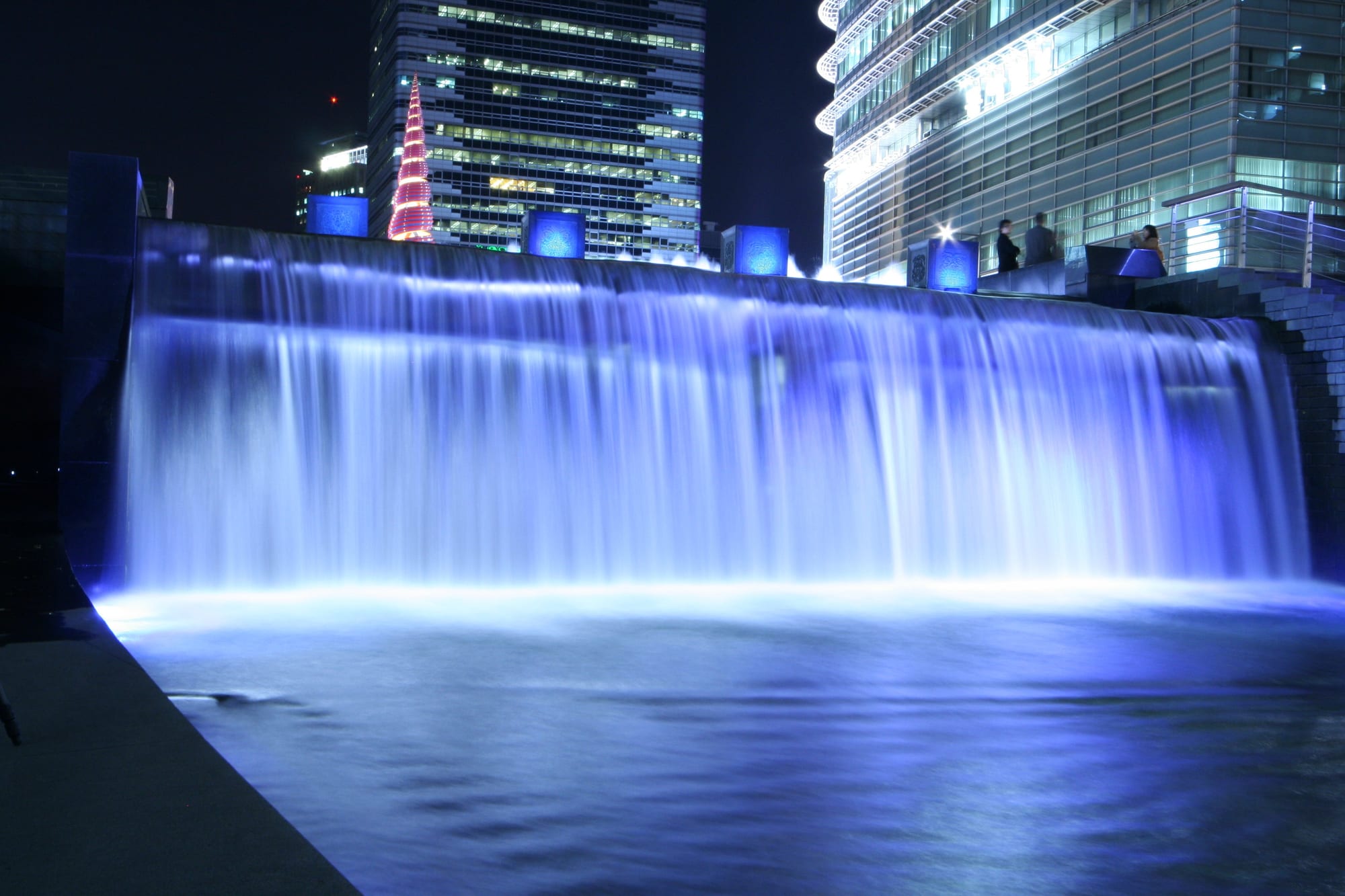
Today the Cheonggyecheon is a sunken walkway below street level, starting at Cheonggye Plaza with a waterfall and Claes Oldenburg's spiral sculpture Spring, and running east past bridges, stepping stones and the old piers. Supyogyo is not among them: the original bridge was taken down in 1959, when the stream was covered, and now stands in Jangchungdan Park, with a temporary bridge standing in for it. Despite the early criticism, the stream has become a favourite with residents and tourists alike.