Attractions & Natural Wonders
Why do deserts get so cold at night?
Dry, cloudless desert air lets the ground's heat radiate straight out to space after sunset, with no water vapour or cloud to hold it in.
By Globeway Editorial · 13 October 2026
The short answer
Deserts cool so fast at night because almost nothing stops their heat from escaping. Everything warm gives off invisible infrared radiation, and after sunset the ground keeps losing heat this way. In most places, water vapour in the air and clouds overhead absorb much of that radiation and send part of it back down, acting like a blanket. Desert air is very dry and the sky is usually cloudless, so the heat streams straight out to space.
The same clear, dry air that lets the heat out also lets the sunshine in, which is why desert days are so hot in the first place. In hot deserts the gap between day and night can be 22 °C (40 °F) or more, against about 4 °C in humid Hong Kong. Desert nights are not always truly cold, though: in summer the Sahara can stay above 30 °C after dark. The chill is sharpest in winter and in high deserts, where nights can fall below freezing.
Every warm surface glows
All surfaces radiate energy, and how they do it depends on their temperature. The Sun, with a surface of about 5,500 °C (9,900 °F), sends out most of its energy as visible light and near-infrared, sunlight. The much cooler Earth gives off its heat as longer-wave infrared, which our eyes cannot see. By day the ground takes in more sunlight than it radiates away, and in a desert it can become extremely hot: in the Sahara the sand easily reaches 80 °C (176 °F), and 83.5 °C has been recorded at Port Sudan.
After sunset the incoming energy stops, but the ground goes on radiating. Heat is lost all night long, which is why the lowest temperature of the day usually comes not at midnight but around dawn. How far it falls depends on how much of that outgoing infrared the atmosphere catches.
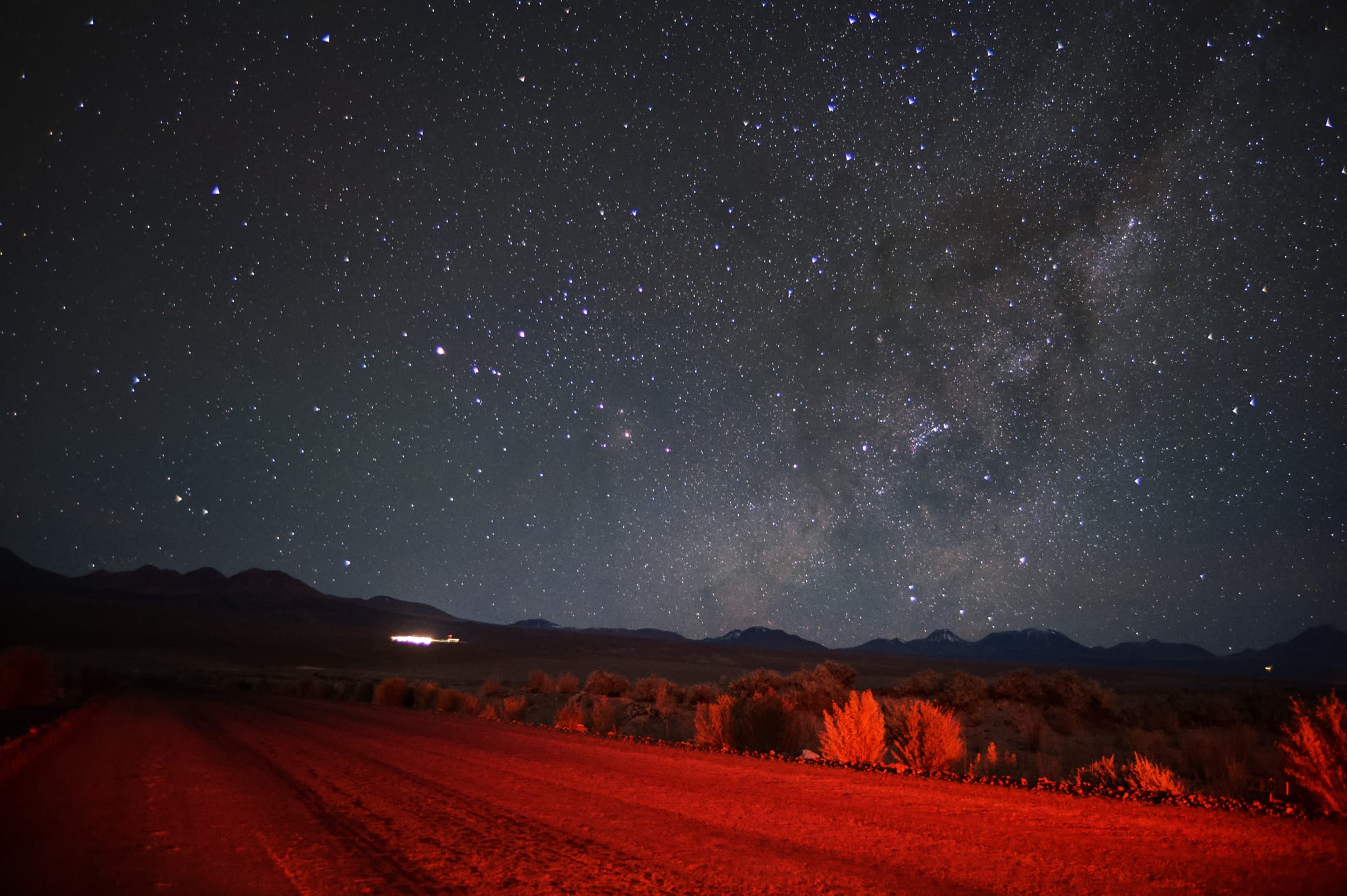
The dry, clear air that makes the Atacama one of the world's best places for astronomy is the same air that lets the ground's heat escape after dark. In the desert city of Calama, average winter lows sit close to 0 °C even though afternoons reach about 21 °C.
The missing blanket of water vapour
Water vapour is the most abundant greenhouse gas. Like the others, it lets most sunlight pass through, but it absorbs the infrared energy radiated upward by the Earth's surface. That is the reason, in short, that humid areas experience very little cooling at night while dry desert regions cool considerably. Clouds do the same job. Across the whole planet, the atmosphere absorbs about 90 per cent of the longwave radiation given off by the surface, which is why Earth's average surface temperature is around 15 °C.
Desert air has little of either. Infrared in the band from about 8 to 14 micrometres can pass straight through dry, clear air, so in the desert the night sky acts as an open window. Over the Sahara, air sinking from high in the atmosphere under a belt of high pressure warms and dries the air below it and prevents clouds from forming, and the near-permanent absence of cloud lets light and heat pass freely in both directions.
The contrast with humid places is striking. Pinnacles National Park in California can reach 38 °C on a summer day and drop to between 5 and 10 °C at night, while much more humid Washington, D.C. typically varies by only about 8 °C, and urban Hong Kong by little more than 4 °C. Within the Sahara itself, nights average 13 to 20 °C cooler than days, but along the more humid coasts the swing is often less than 10 °C.
Bare ground, no water to store the heat
Other things that usually soften temperature swings are missing too. Large bodies of water and moisture on the ground both affect the daily cycle, and water matters because liquid water has one of the highest specific heat capacities of any common substance: it takes a great deal of energy to warm it, and it gives that heat back slowly. Desert surfaces are bare, rocky or sandy, and hold little moisture. That is why low-lying humid coasts have the smallest daily temperature ranges on Earth, and high desert regions typically the largest.
The heating itself is also lopsided. As the morning sun strikes the ground, only a shallow layer of air a few centimetres deep is warmed directly by contact, and heat passes very inefficiently from this thin warm layer to the cooler air above. On a warm summer's day the air temperature can differ by 16.5 °C between just above the ground and chest height.
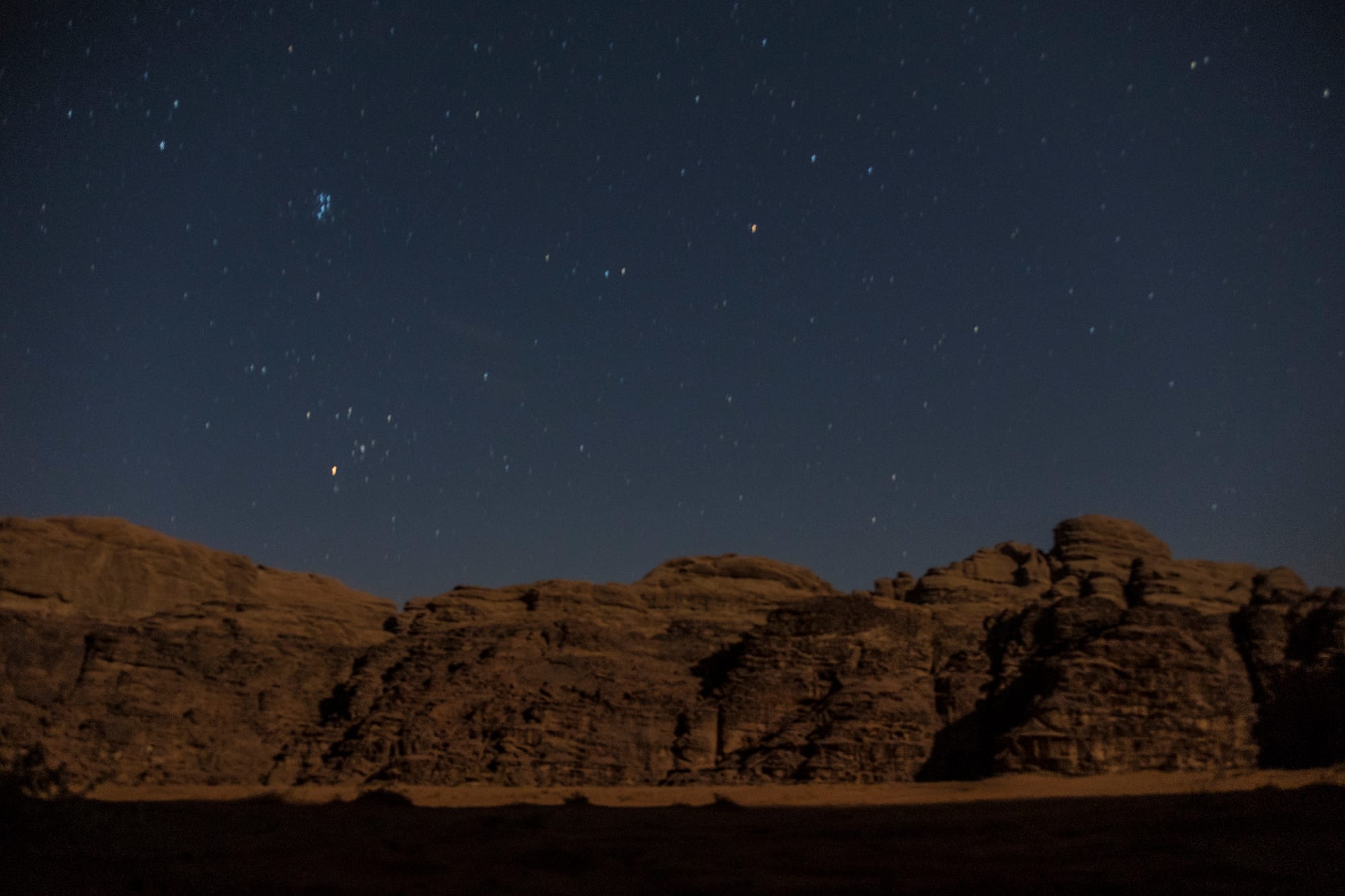
Bare rock and sand, little moisture and a cloudless sky are the ingredients of a steep fall in temperature once the sun goes down.
When desert nights stay warm
Not every desert night is cold. In the oasis town of In Salah, in central Algeria, July days average 46.1 °C and July nights still average 30.4 °C. The real cold comes in winter: In Salah's January nights average 6.8 °C, and across the Sahara winter nights can reach freezing or below, especially at high elevations.
Coastal deserts behave differently again. They form where cold ocean currents run close to land or cold water wells up from the depths, and their daily temperature ranges are relatively small. The biggest daily swings belong to high, dry places such as the Tibetan and Andean plateaus.
Turning the night sky into a freezer
People in hot, dry lands learned long ago to use the night sky's pull. Before refrigeration, ice was made by night-time cooling in both India and Iran. In India, water was set out in shallow ceramic trays with a clear view of the sky; on a clear night it lost heat by radiating it upward. In Iran, builders made large, flat ice pools on beds of insulating material, surrounded by high walls, and stored the ice in domed ice houses called yakhchāls. Records indicate such structures were built as far back as 400 BC, mainly in the deserts of Dasht-e Lut and Dasht-e Kavir.
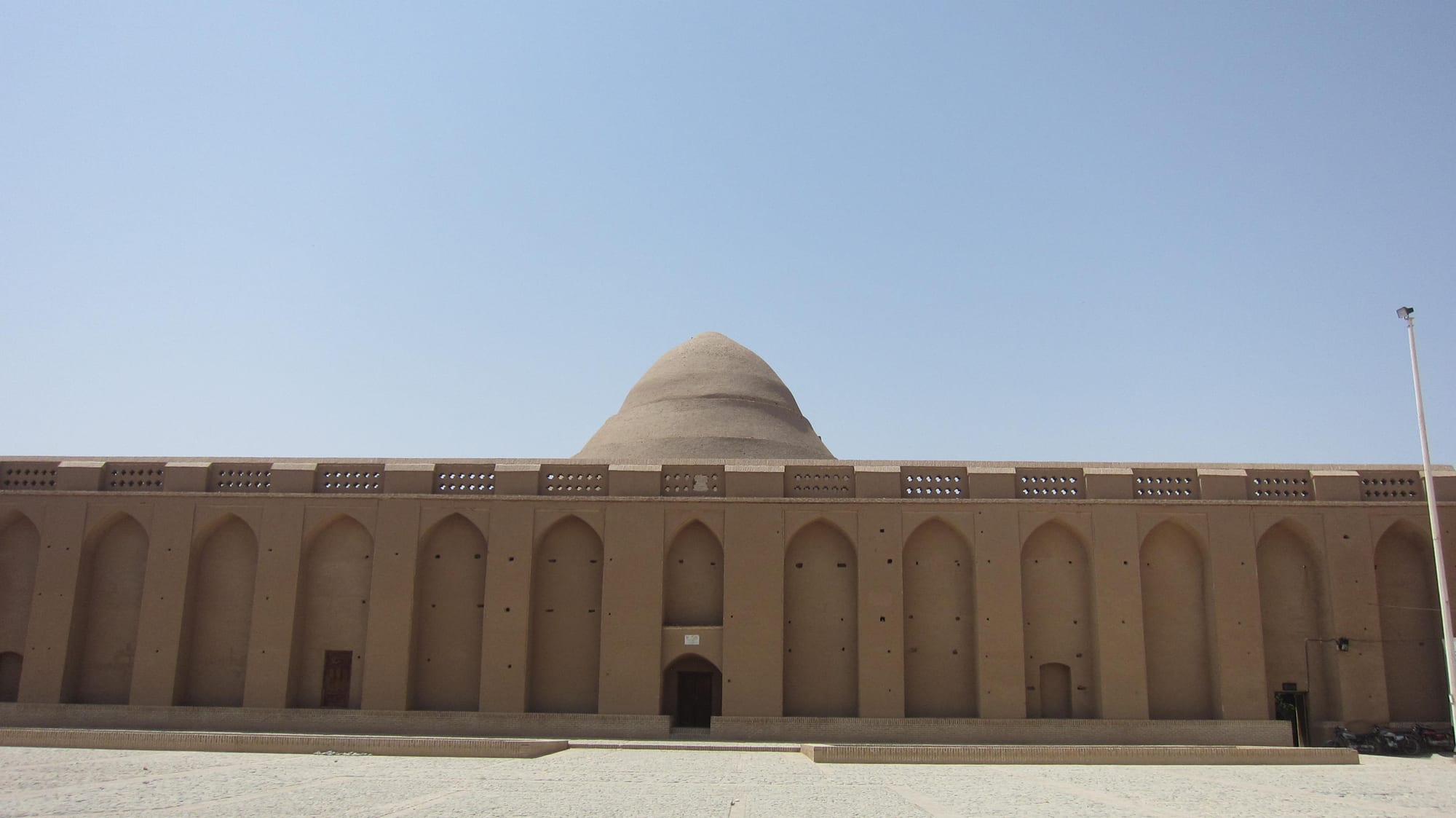
A typical yakhchāl combined a domed roof, an underground store, shade walls and icy pools in which the ice was made.