Daily Life · Kyrgyzstan
Why do families in Kyrgyzstan still live in yurts?
Most Kyrgyz live in houses, but each summer herding families move their animals to high mountain pastures, and the portable felt yurt is still the best home there.
By Globeway Editorial · 13 October 2026
The short answer
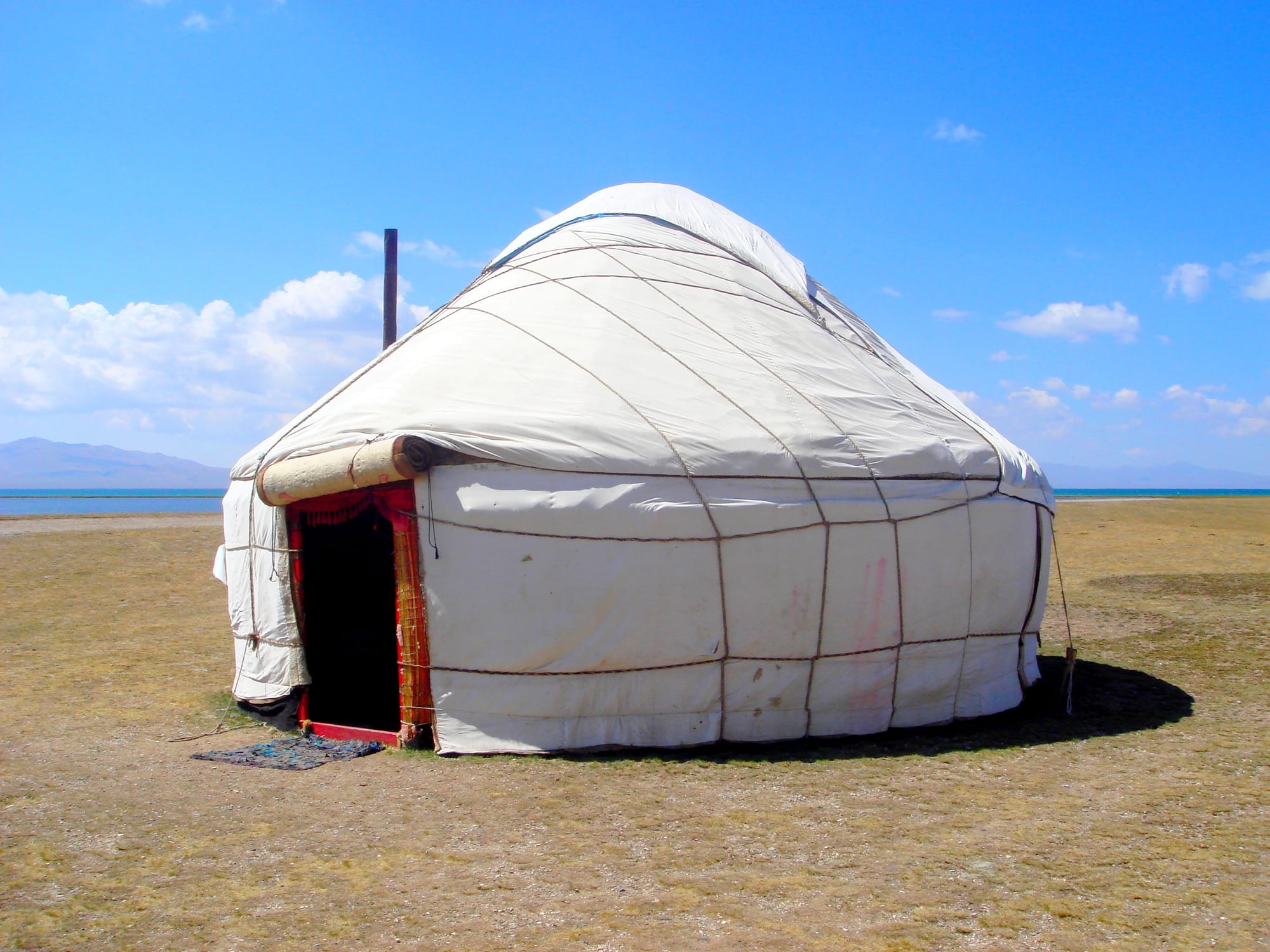
Most families in Kyrgyzstan live in ordinary houses and flats for most of the year. The yurt comes out in summer. The Kyrgyz were historically semi-nomadic herders of sheep, horses and yaks, and that tradition carries on seasonally: from about June to September, herding families take their animals up to the high mountain pastures, called jailoo, and live there in yurts.
They do it because the country is built for it. Almost all of Kyrgyzstan is mountainous, pasture covers far more land than fields do, and the best summer grass grows on high ground that is buried in snow for half the year. A round felt tent that a family can raise in an hour or so, warm on a cold night and airy on a hot afternoon, is still the most practical home on those pastures. After independence in 1991 hard times pushed many families back towards herding, and the yurt has also become a proud emblem of Kyrgyz identity.
A country made of mountains
The Tian Shan and Pamir mountain systems cover about 65 percent of Kyrgyzstan, and almost 90 percent of the country lies more than 1,500 metres above sea level. Only 6.8 percent of the land is used for crops, while 44 percent is pasture for livestock, more than 9 million hectares in all. Because of the mountains, animal husbandry remains a large part of farming, and wool, meat and dairy products are major goods.
That grass is seasonal. At Song-Köl, a lake at 3,016 metres in Naryn Region, the average temperature is around minus 20°C in January and 11°C in July, snow lies for 180 to 200 days a year, and the ice does not fully clear until late May. Pastures like this can only be grazed in summer, so herders move up when the snow retreats and down again before winter. The Kyrgyz word jailoo, like the Turkish yayla, comes from an old Turkic root for summer.
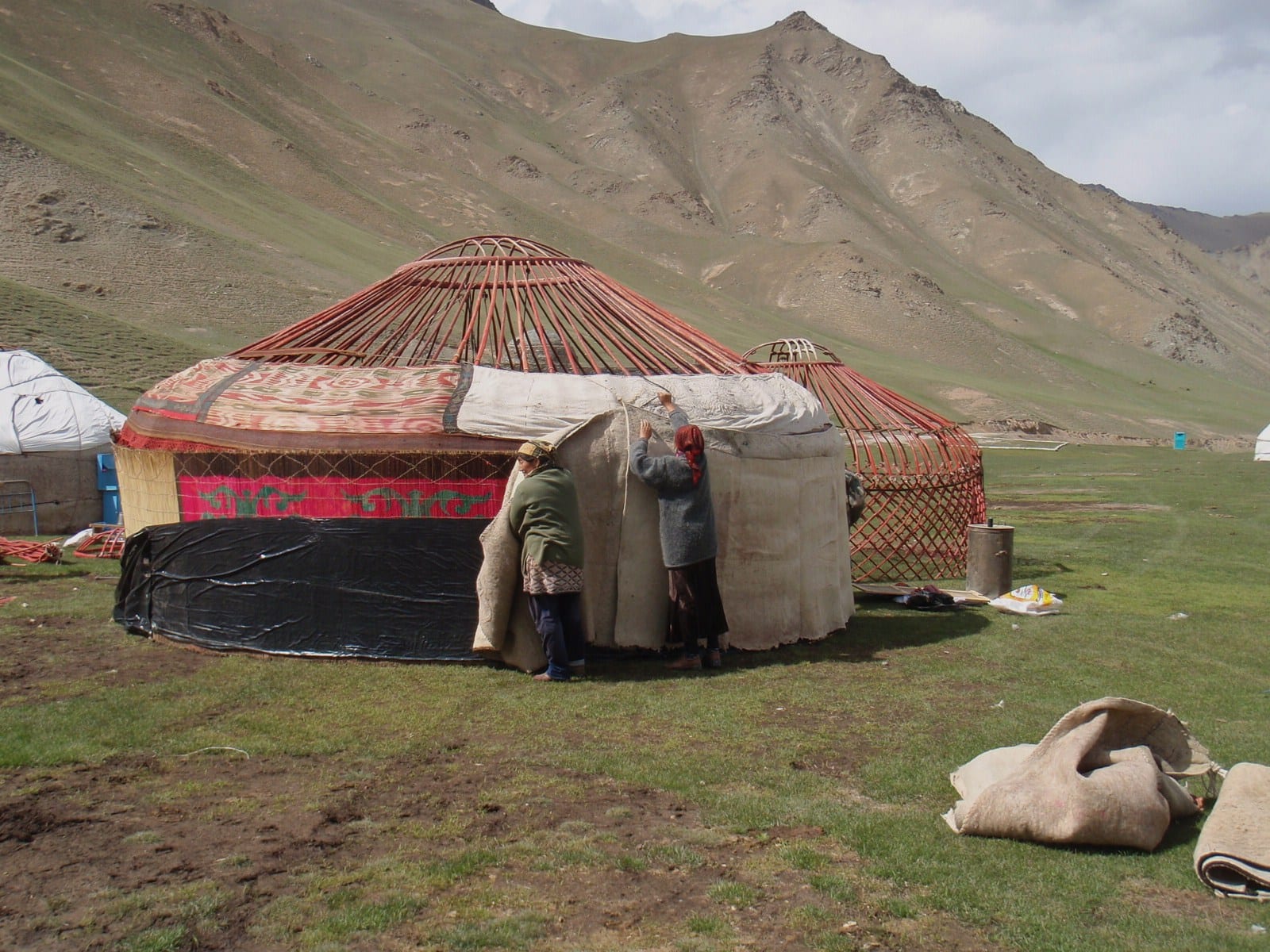
A yurt is a kit of parts: folding lattice walls called kerege, curved roof poles called uuk, a wooden crown called the tündük, a door, and sheets of felt made from the wool of the family's own sheep.
A house that travels
The yurt solves the herder's problem neatly. A family can put one up or take it down in about an hour, and it travels on horses, camels or a truck. The timber for the frame does not grow on the open pastures and has to come from the valleys below, but the felt comes from the flock. Felt keeps out rain, wind and cold, and Kyrgyz yurts need no central posts because their domes are higher and strapped tight around the rim.
The design handles both extremes of mountain weather. Smoke from the central hearth rises through the open tündük, which also lets in daylight; at night a pull on a rope closes it and keeps the heat in. On hot days the side felts are rolled up and breezes pass straight through the lattice walls.
A Kyrgyz yurt usually faces east. Seen from outside, the right-hand side is the women's side, with the household utensils, and the left is the men's side, with saddle and bridle. The place of honour, the tör, lies opposite the door, and the hearth sits in the centre. Ordinary yurts are covered in greyish felt, which gives the yurt its Kyrgyz name, boz üy, the grey house; rich families once covered theirs in white felt and called it ak üy, the white house.
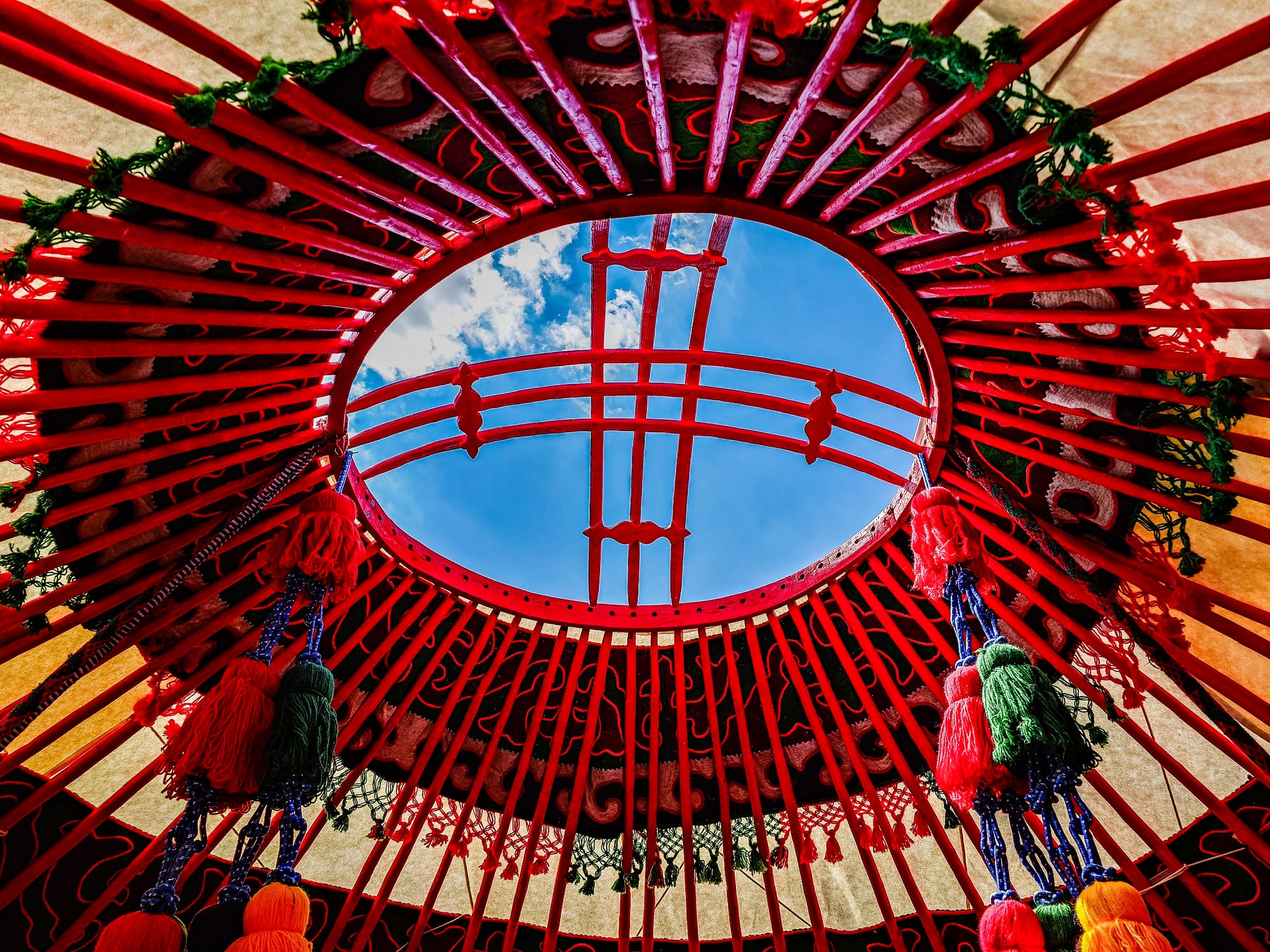
The crown is the heart of the yurt, and a stylised tündük inside a yellow sun has formed the centre of Kyrgyzstan's flag since 1992.
Pressure to settle, and the return to the pastures
Moving with the herds was not always allowed to continue on its own terms. In the 1920s the Bolsheviks taxed nomads more heavily to discourage what they saw as a wandering way of life. At the end of the decade the Soviet Union pushed through collectivisation, forcing farming into huge collective farms called kolkhozes. Russian settlers took the best pasture land, and Kyrgyz, Kazakh and Turkmen nomads were made to settle on soil with too little farming potential. Many resisted between 1928 and 1932, and the region suffered relatively more deaths from collectivisation than any other.
Even so, the seasonal move to the mountains never stopped during the Soviet period. After independence in 1991, in the hard economic years that followed, transhumance, the seasonal moving of herds between pastures, had a resurgence, and it is regarded as integral to Kyrgyz national culture. Agriculture still mattered enormously: in 1996 it made up 43.9 percent of the economy, though by 2015 its share had fallen to 15.9 percent.
Milk, felt and a sense of who the Kyrgyz are
Summer on the jailoo is also the season of kymyz, a slightly alcoholic drink made by fermenting mare's milk. Fresh kymyz is only available from about May until August, when it is sold by the roadside in the mountains, and it was traditionally fermented in horse-hide containers, sometimes left on top of a yurt and turned now and then.
The craft that furnishes the yurt survives too. Kyrgyz women still make felt carpets, above all the brightly inlaid shyrdak and the pressed ala-kiyiz, and most houses contain hand-made felt rugs. One shyrdak takes the wool of about five sheep. In 2012 UNESCO added both carpet traditions to its list of intangible heritage in need of urgent safeguarding. Kyrgyz culture is rooted in nomadic life, and much of that life, from herding on horseback to the yurt itself, is still practised.
Seeing the yurts today
The yurt camps are easiest to see from late June to early September. Song-Köl is ringed in summer by herders' camps, with horses grazing down to the shore, and it is reached by rough road or on horse and trekking routes over the passes. Staying for a while in nomads' yurts has grown into a form of tourism of its own, sometimes called jailoo tourism.
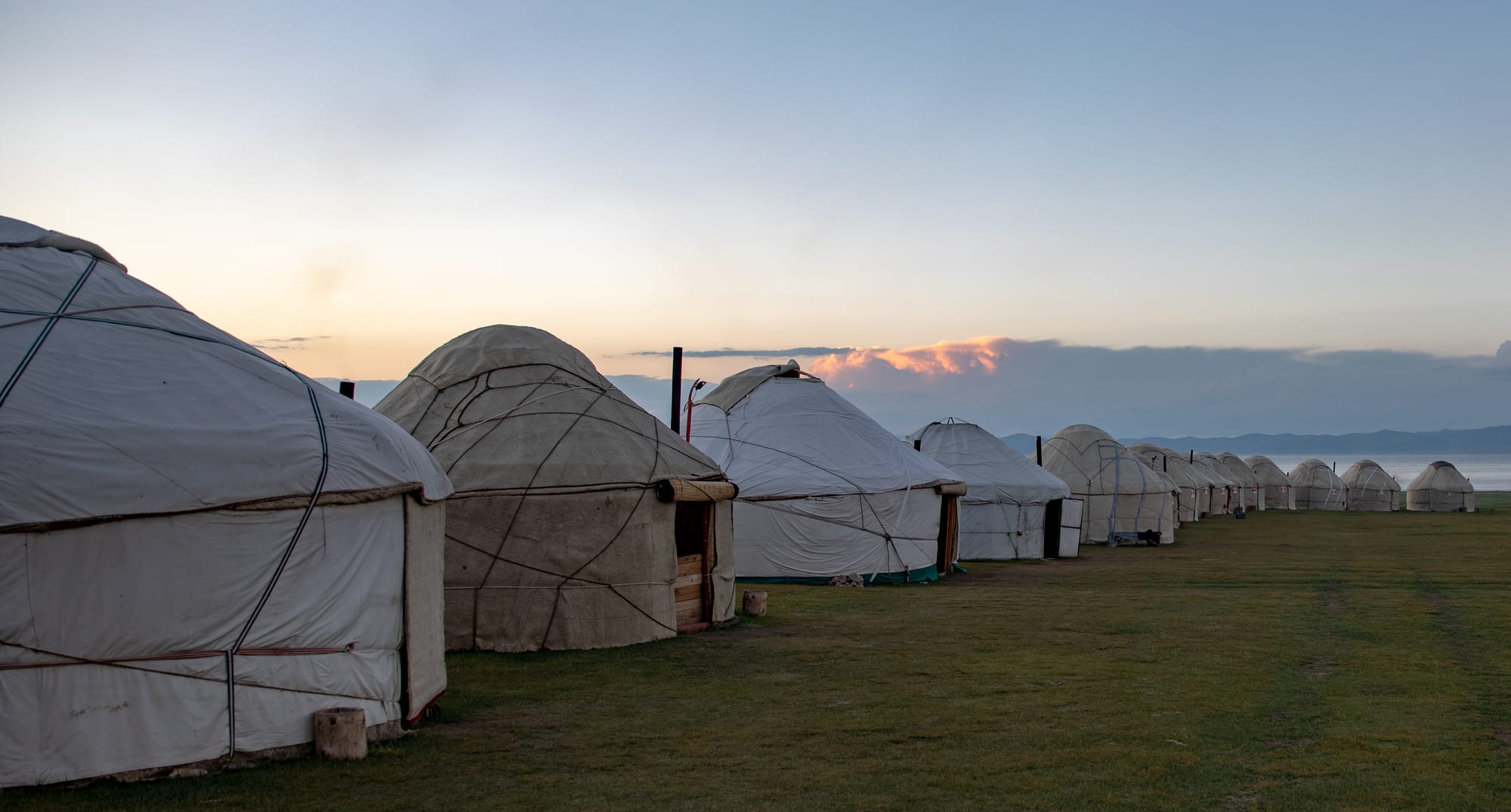
By late May the ice has gone from Song-Köl, and from early summer the herds and their yurts return to its shores.