Attractions & Natural Wonders
Why do islands have so many species found nowhere else?
Isolation lets a few lucky arrivals evolve in their own direction, filling empty niches with creatures that exist on that island and nowhere else
By Globeway Editorial · 13 October 2026
The short answer
Because isolation is a machine for making new species. Few plants and animals ever manage to cross the open sea to a remote island, and those that do find themselves cut off from their relatives, with few competitors or predators and plenty of unused ways of making a living. Over many generations their descendants change to fit the island, until they are different species found nowhere else on Earth. Biologists call such species endemic.
Islands do not usually have more species than the mainland; they generally have fewer. What they have is a high proportion of unique ones. Islands make up nearly a sixth of Earth's land, yet half of the world's endemic bird areas lie on islands, and island ecosystems account for 30 percent of the world's biodiversity hotspots.
The sea is a filter
An island that rises from the ocean floor, from a volcano or a growing reef, starts empty. Nothing can walk there. New arrivals must come by air or water: seeds on the wind or carried by birds, birds and bats under their own power, and the occasional reptile or mammal that swims or drifts across on a natural raft of vegetation washed out from the mainland. Strong travellers such as plants and birds are therefore far more common on islands than poor travellers such as land mammals.
The ecologists Robert MacArthur and Edward O. Wilson set out the rules in a 1967 book, The Theory of Island Biogeography. The number of species on an island, they argued, is a balance between new arrivals and local extinctions. Distant islands receive fewer colonists; small islands lose species more easily. The Hawaiian Islands, about 3,000 km (1,860 miles) from the nearest continent, are an extreme case of distance, and the Galápagos, about 900 km (560 miles) off South America, another.
One arrival, many species
The few species that make it face an unusual situation. Island populations start small, often from a handful of founders, and they are freed from the predators and competitors they evolved alongside. Biologists call this ecological release: a species can spread into roles that on the mainland would be filled by others. Because the population is cut off and rarely interbreeds with outsiders, it drifts and adapts in its own direction until it becomes a separate species.
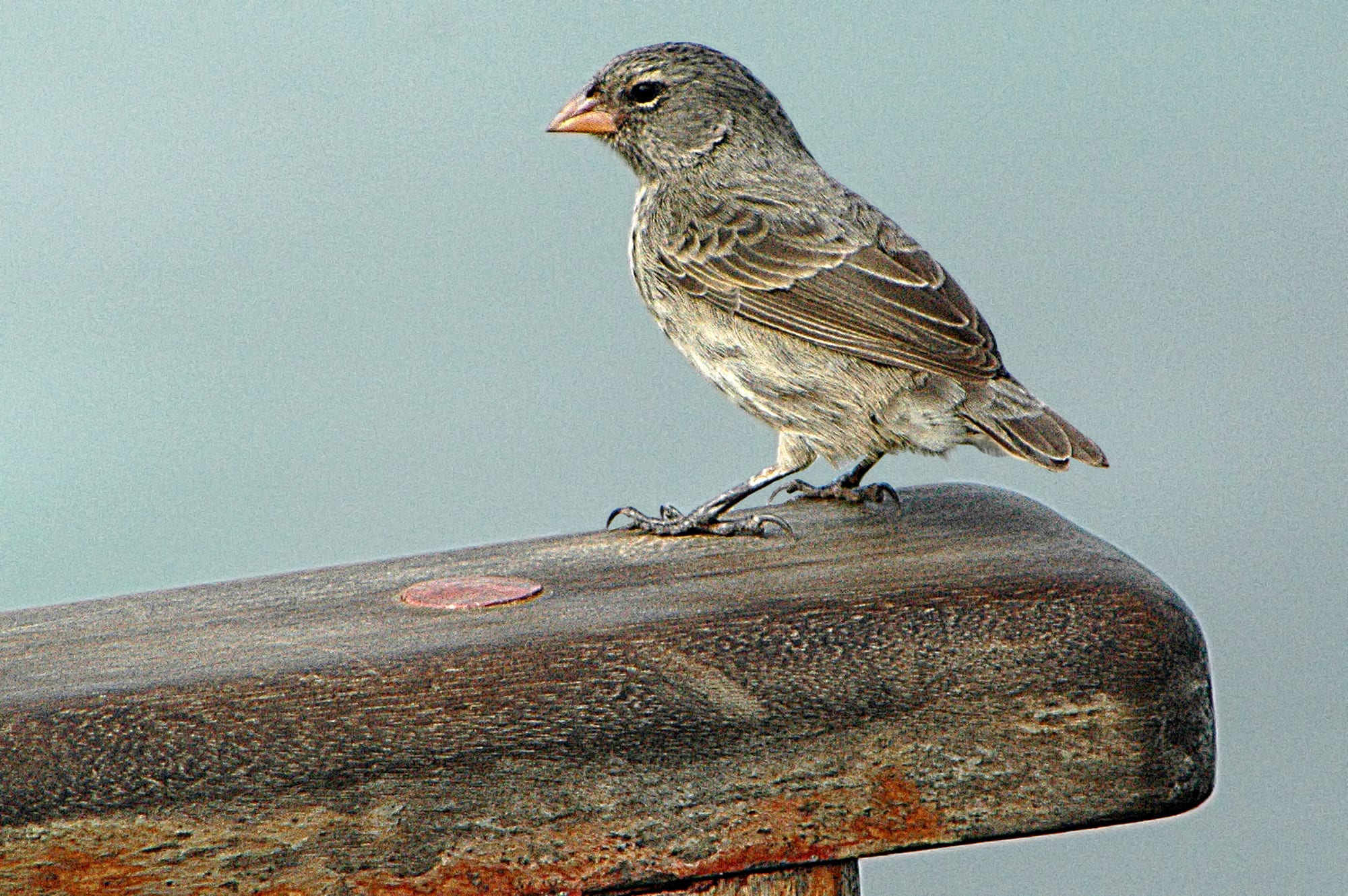
Often a single colonist gives rise to a whole family of new species, each suited to a different way of life. This is adaptive radiation. Darwin's finches in the Galápagos, about 18 species, are thought to descend from one finch species that reached the islands more than a million years ago. Their most important differences lie in their beaks, shaped by the foods available on different islands. Charles Darwin noticed that the islands' mockingbirds also differed from island to island, an observation that made him question whether species were fixed.
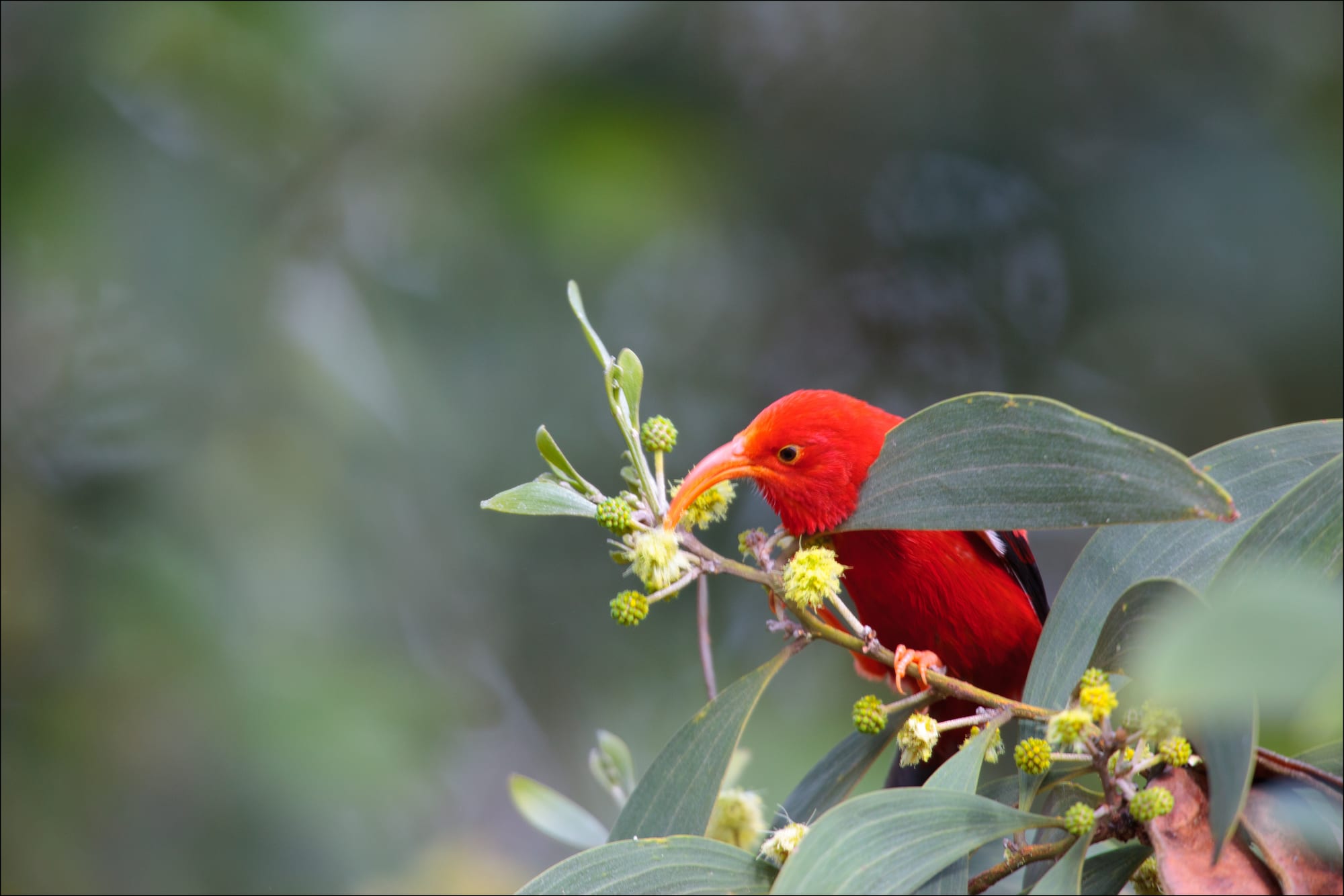
Hawaii went further. Its honeycreepers descend from Asian finches related to the rosefinches, which reached the islands between about 5.7 and 7.2 million years ago. Over 60 species are thought to have existed before humans arrived, many with greatly elongated, curved bills unlike those of any other finch.
Strange bodies, tame manners
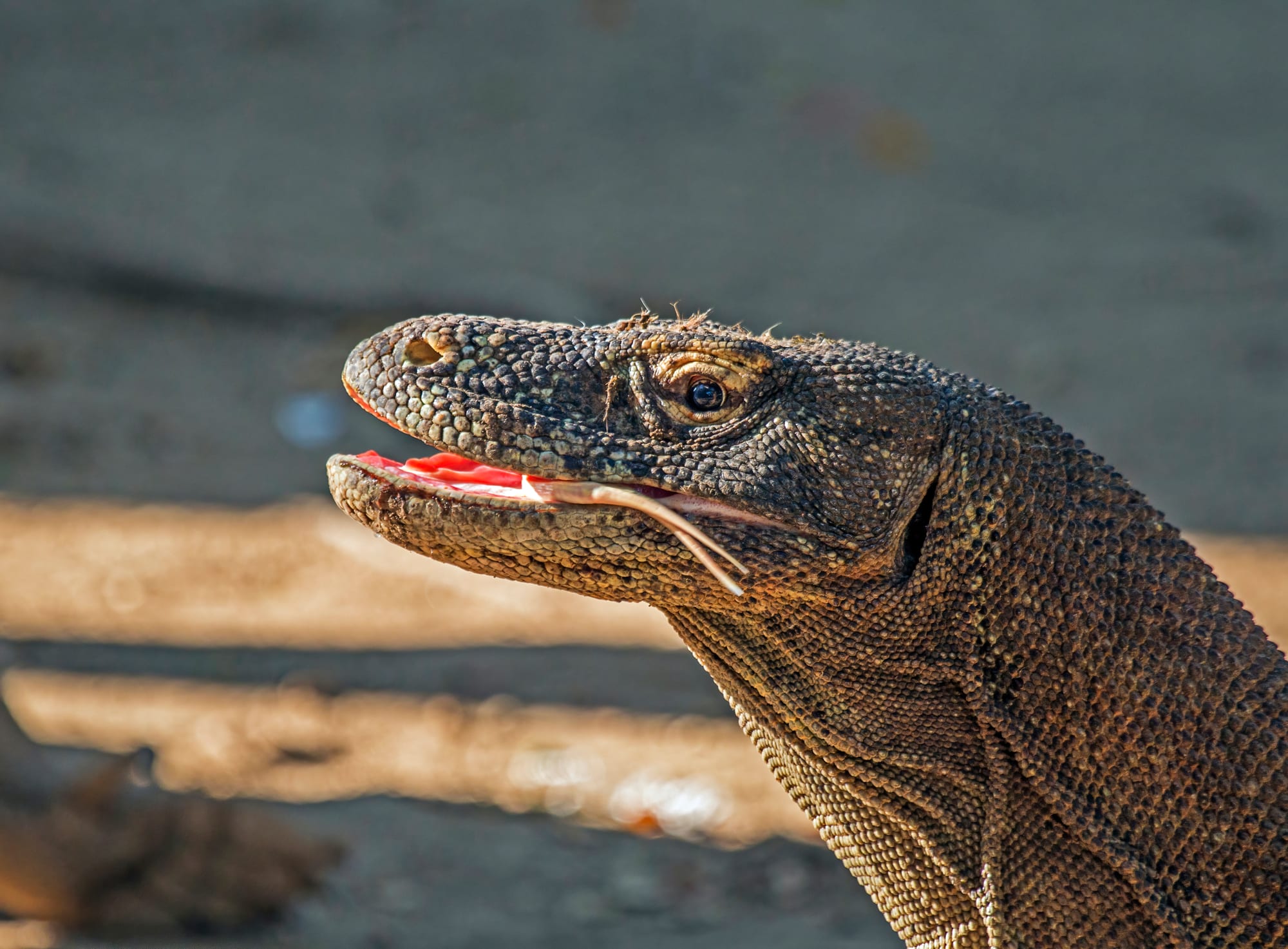
Life on an island reshapes animals in recognisable ways, a set of changes known as island syndrome. Small mammals tend to grow larger and large ones smaller, a pattern called the island rule. Island animals often lose their fear of predators, and island plants may lose their defences against grazers and their ability to spread far. The Komodo dragon, found only on a few Indonesian islands including Komodo, Rinca and Flores, is the largest living lizard, with males up to 3 m (10 ft) long. Islands have also produced pygmy mammoths and the Malagasy hippopotamus.
Old islands, ancient survivors
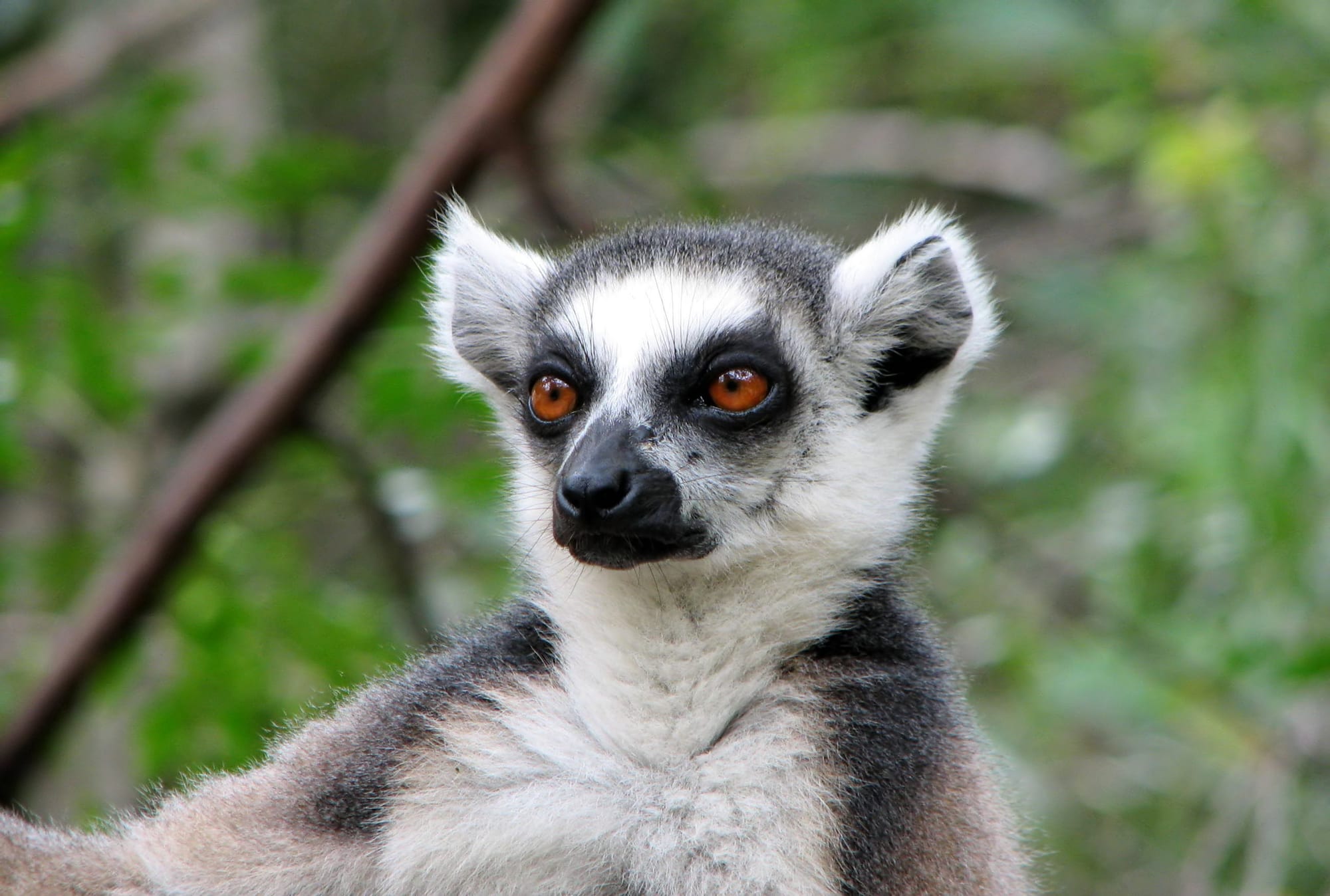
Not every island began empty. Some are fragments of continents that drifted away carrying their wildlife with them. Madagascar broke away from Africa around 180 million years ago and from India about 90 million years ago, and it has been isolated ever since. Only four groups of land mammals are believed to have colonised it from Africa, and they gave rise to its lemurs, tenrecs, carnivores and native rodents. With no monkeys to compete with, the lemurs spread into a wide range of habitats and diversified into dozens of species found only there, and all 31 living species of tenrec are found on the island and nowhere else.
Long isolation produces very high rates of endemism. On Socotra, a Yemeni island 232 km (144 miles) east of the Horn of Africa that is itself a fragment of continent, about 37 percent of the plant species, 90 percent of the reptiles and 95 percent of the land snails are found nowhere else.
Unique, and fragile
The same conditions that create island species also make them vulnerable. Their populations are small, their genetic variety is low, and many have lost the wariness that would protect them from new predators. When people arrived, bringing rats, cats, dogs and pigs, the results were often swift. The dodo of Mauritius, large, flightless and unafraid of humans, was driven extinct less by hunting than by the dogs, pigs, cats, rats and monkeys people brought, which raided its nests and competed for its food. On Guam, the introduced brown tree snake wiped out most of the island's native forest birds and other vertebrates. Of the 60 or more Hawaiian honeycreepers, only 17 species are confirmed to be alive today.
Islands such as the Galápagos, Hawaii and Madagascar remain some of the best places on Earth to see the results of isolation at close quarters. Madagascar alone has dozens of national parks and other protected reserves, and the vast majority of its surviving wildlife is unique in the world.