Attractions & Natural Wonders · Madagascar
Why are lemurs native only to Madagascar?
A few small ancestors drifted over from Africa tens of millions of years ago, found an island with no monkeys, and became about 100 species found nowhere else.
By Globeway Editorial · 13 October 2026
The short answer
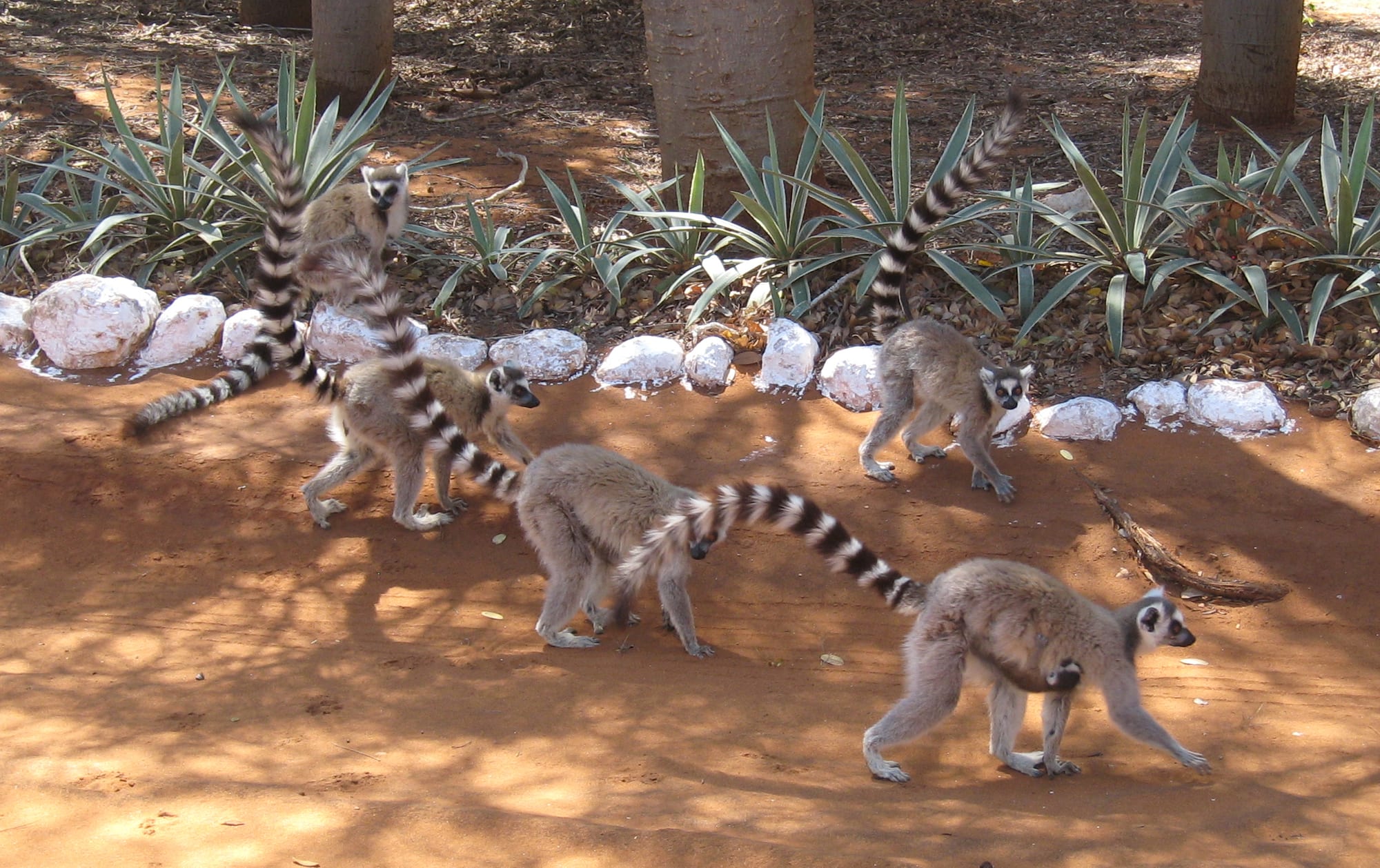
Lemurs are native only to Madagascar because that is where their ancestors landed, and where nothing came along to push them out. Madagascar had already drifted away from Africa and India long before lemurs existed. The most widely accepted explanation is that, tens of millions of years ago, a small group of early primates from Africa was swept out to sea on a floating mat of tangled vegetation and washed up on the island. Ocean currents then changed, the crossing closed, and the newcomers were left to evolve on their own.
On the mainland, their relatives faced monkeys and apes, which took over the daytime treetops; only small, nocturnal cousins, the lorises, pottos and galagos, survived there. On Madagascar there were no monkeys, so lemurs spread into every kind of habitat and became around 100 species. Strictly, the island is not quite their only home: two Madagascar species also live wild in the nearby Comoro Islands, but people almost certainly took them there in the last few hundred years.
An island cut adrift
Madagascar was once part of Gondwana, the southern supercontinent. It broke away from eastern Africa more than 150 million years ago, and from India roughly 80 to 90 million years ago, leaving it alone in the Indian Ocean. By the time the first primates appeared, it was already separated from the African mainland by the Mozambique Channel, a deep channel that is about 420 kilometres (260 miles) across at its narrowest.
That long isolation is why around 90 per cent of all the plant and animal species on Madagascar are endemic, meaning they are found nowhere else. But it creates a puzzle: if the island was cut off before primates existed, how did primates get there? Genetic studies suggest that lemurs split from their closest relatives, the lorises, somewhere between about 65 and 50 million years ago, and that all living lemurs descend from a single arrival.
Rafting across the Mozambique Channel
In 1915 the palaeontologist William Diller Matthew argued that Madagascar's mammals could only be explained by rafting. Floodwaters regularly flush tangled mats of vegetation out of big rivers and into the sea, and over very long periods a few small animals clinging to one could occasionally survive a voyage to a distant island. Rafting has since become the most accepted explanation for how lemurs arrived, and it fits the evidence that only five orders of land mammals ever reached Madagascar, each probably from a single colonisation.
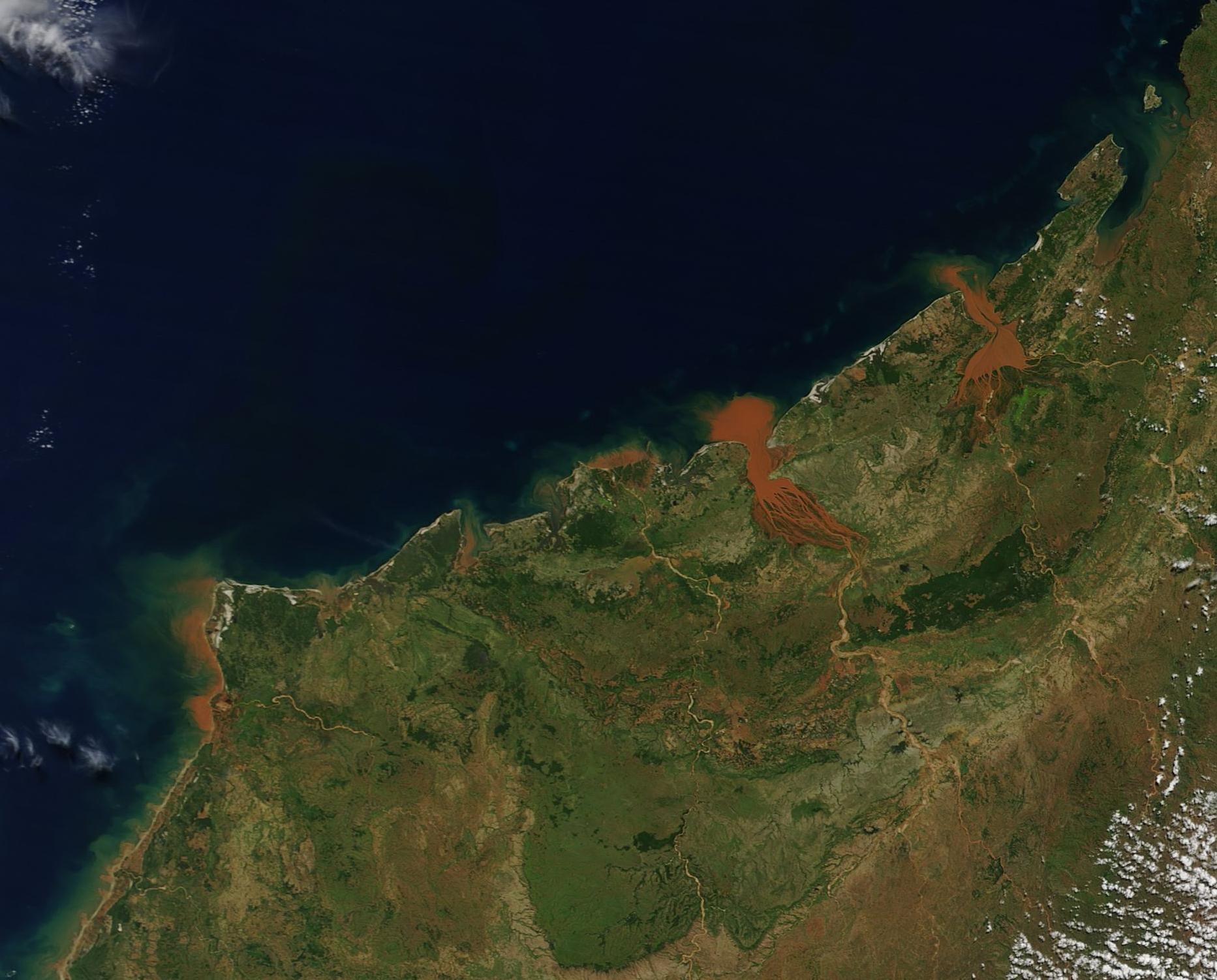
Floodwaters still flush sediment and debris from rivers out into the channel. Mats of vegetation torn loose in the same way are thought to have served as the first lemurs' raft.
For decades the trouble was the sea itself, because today's strong currents flow away from Madagascar towards Africa. A study published in January 2010 offered an answer. Around 60 million years ago, Madagascar and Africa both lay about 1,650 kilometres (1,030 miles) south of where they are now, in a different ocean gyre, a great circulating system of currents. There the currents ran the other way, towards the island, and were stronger than today, which could have cut the crossing to 30 days or less, short enough for a small mammal to survive. As the continents drifted north the currents changed, and by about 20 million years ago the route had closed.
Other ideas have been put forward. Island hopping across seamounts during times of low sea level seems unlikely, because the seamounts of the Davie Ridge in the channel would have been too small. A full land bridge would have let many more African animals in. One variant suggests that tectonic forces lifted the Davie Fracture Zone so that parts of the channel stood above the sea between about 45 and 26 million years ago. The Comoro Islands, which now sit between Africa and Madagascar, are no help: they are volcanic and formed only around 8 million years ago.
An island with no monkeys
Arriving was only half of it. Lemurs belong to the strepsirrhines, an old branch of the primate family tree that also includes the lorises of India and South-East Asia and the pottos and galagos, or bushbabies, of Africa. On the continents, the lorises and galagos have always had to compete with monkeys and apes. By the Oligocene, which began about 34 million years ago, monkeys had evolved, and their intelligence and aggression may have helped them drive the older, day-active primates of Africa and Asia to extinction. The survivors there are all nocturnal, which keeps them out of the way of monkeys active by day.
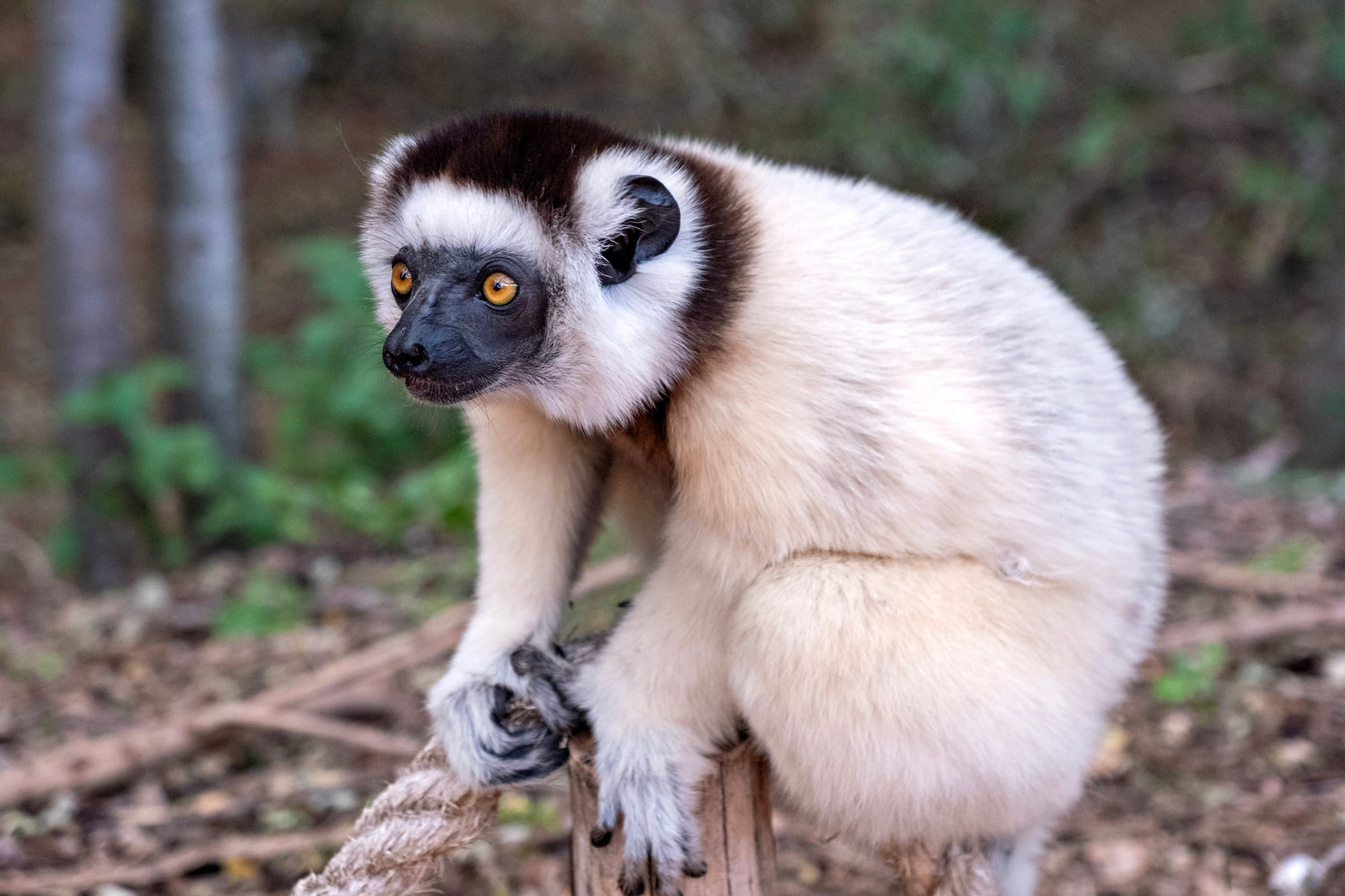
The primatologist Alison Jolly travelled to Berenty in 1962 to study the diet and social behaviour of its ring-tailed lemurs and Verreaux's sifakas. Sifakas and ring-tailed lemurs are often seen sunning themselves, using the sun's warmth rather than their own body heat to warm up.
Madagascar had no monkeys, and few other competing mammals; lemurs did not even have to contend with squirrels. So they filled the roles that monkeys and apes play elsewhere. They range from Madame Berthe's mouse lemur, at about 30 grams the smallest primate in the world, to the recently extinct Archaeoindris, which weighed 160 to 200 kilograms and rivalled a gorilla. Dwarf lemurs are the only primates known to hibernate for long periods. Lemurs are sometimes mistaken for the ancestors of monkeys and apes, but they are not: they are a separate line that evolved in isolation on the island.
The two that crossed by boat
The exceptions prove the rule. The common brown lemur and the mongoose lemur also live wild in the Comoro Islands at the northern end of the Mozambique Channel, including on Mayotte. Both are thought to have been introduced from north-western Madagascar by people within the last few hundred years, and genetic studies have found no differences between the island populations and those on Madagascar. They are lemurs living beyond Madagascar, but not lemurs from anywhere else.
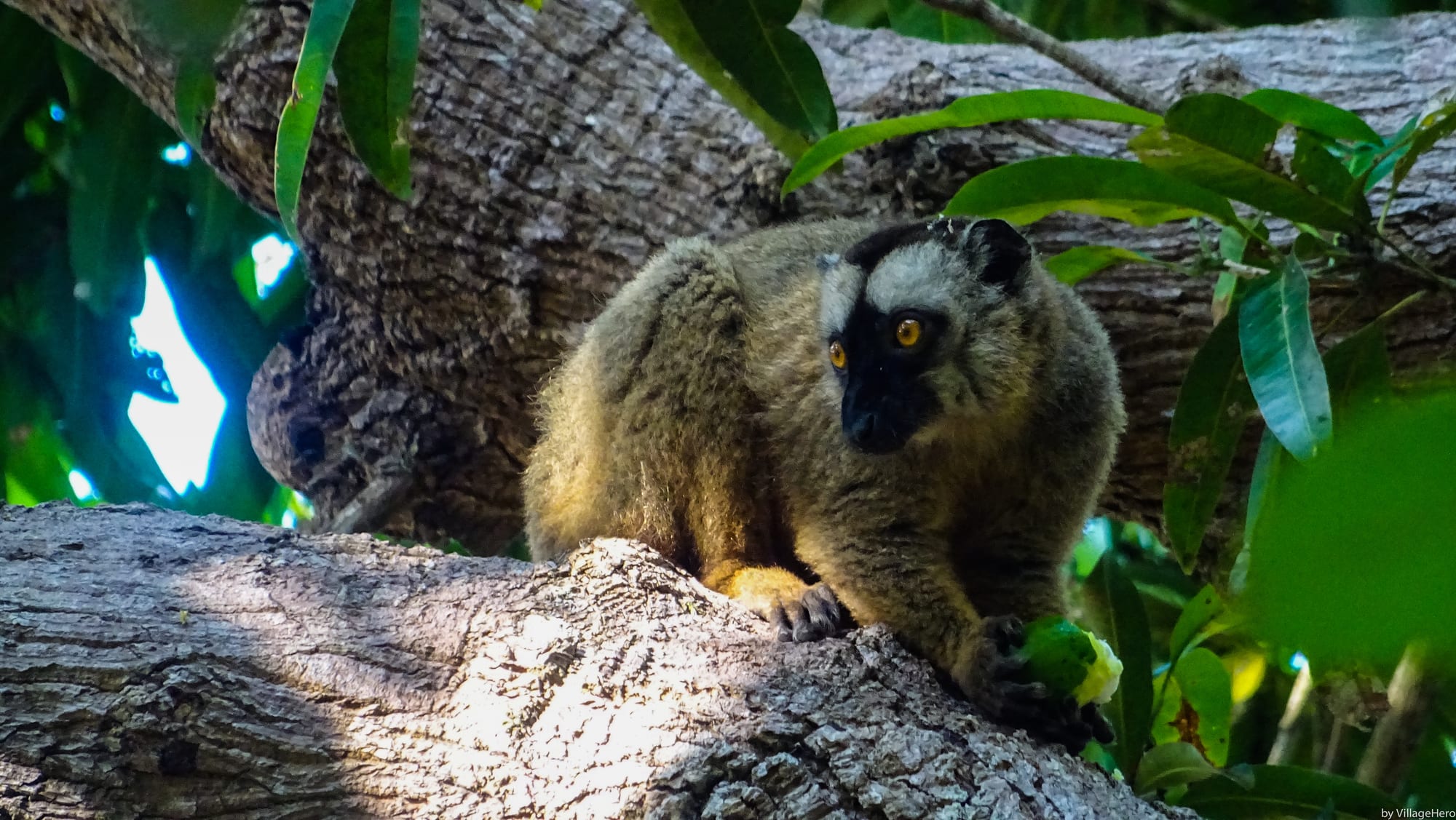
Mayotte's brown lemurs are counted as their own subspecies, but their genes match the brown lemurs of mainland Madagascar.
A home that is shrinking
People reached Madagascar only around 1,500 to 2,000 years ago, and lemurs had been found across the whole island until then. Since that arrival at least 17 species, all larger than any living lemur, have died out; they are known as the subfossil lemurs. Habitat destruction and hunting continue, and the International Union for Conservation of Nature has described lemurs as the world's most endangered mammals, noting in 2013 that up to 90 per cent of species faced the threat of extinction in the wild within 20 to 25 years.
Lemurs are now also the heart of Madagascar's ecotourism. Communities living near national parks receive half of the park entrance fees, which gives them a stake in the forests. Ring-tailed lemurs can be easily seen in parks of the south such as Isalo and Andohahela, and at private reserves like Berenty near Fort Dauphin, while the rainforests of the east hold species such as the indri, one of the two largest living lemurs.