Culture & Customs · Mexico
Why do Mexicans celebrate the Day of the Dead?
Families believe their dead come home on 1 and 2 November, and welcome them with altars, marigolds and food, in a tradition whose roots are still argued over.
By Globeway Editorial · 13 October 2026
The short answer
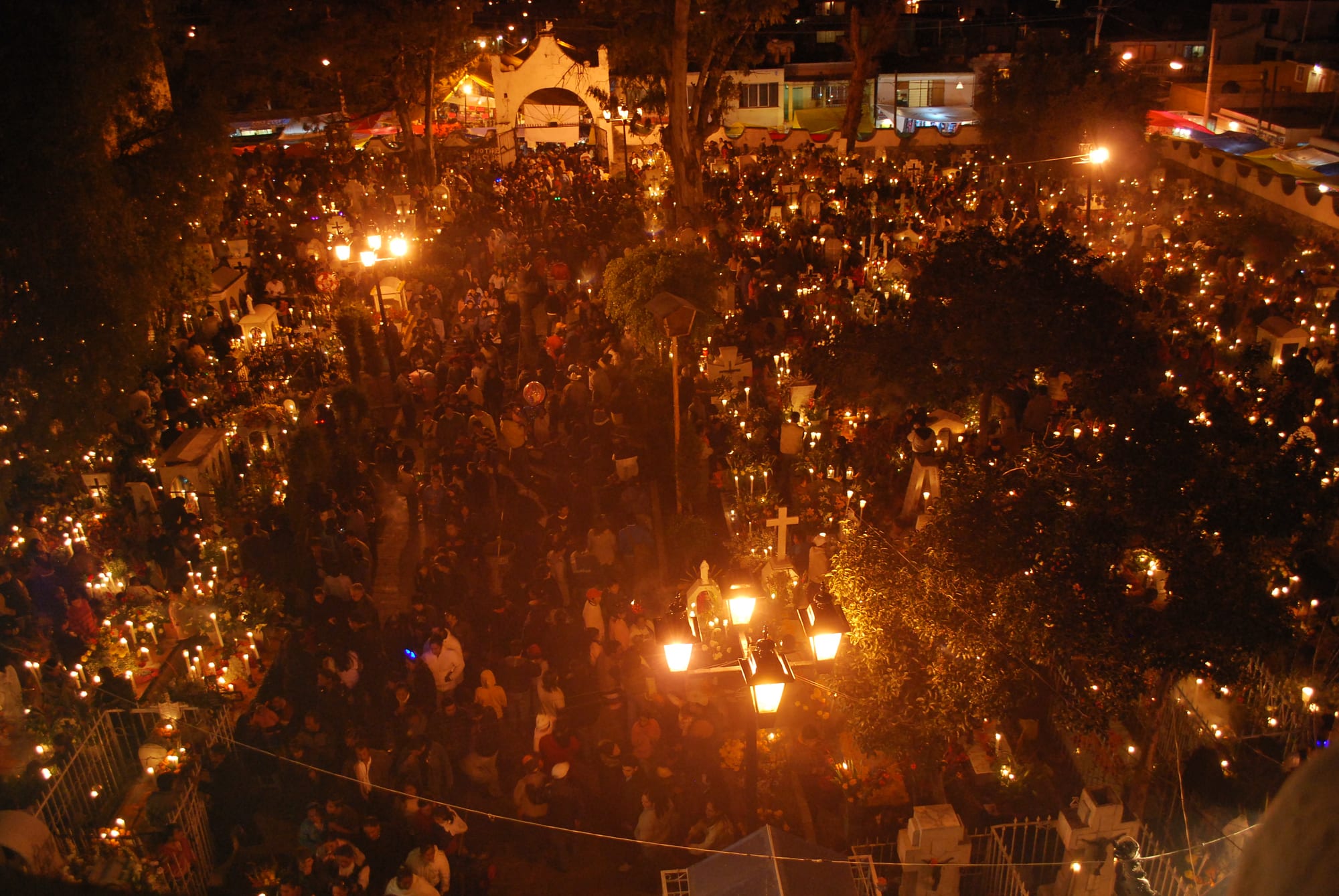
Mexicans celebrate the Day of the Dead to remember family and friends who have died, and, in the belief of many who keep it, to welcome their souls home for a short visit. On 1 and 2 November, and in some places from 31 October or as late as 6 November, families build altars called ofrendas loaded with the dead person's favourite food and drink, decorate graves with orange marigolds and candles, and share bread, sweets and stories. The mood is often warm and even funny: the point is to keep the dead part of the family, not to mourn them.
Why it exists is a harder question. The dates are those of the Catholic feasts of All Saints and All Souls, brought from Spain. Many Mexicans also see in it the survival of Aztec rituals for the dead, while some historians argue that the "ancient" image was largely built in the 20th century. Most likely it is a blend of both, and over the last hundred years it has become a symbol of Mexico itself.
An altar to bring them home
The heart of the holiday is the ofrenda, Spanish for "offering". Families set it up at home, and in many places on the grave as well, to encourage the souls to visit and hear the prayers and words of the living. A common form has three tiers. The top one identifies who is being invited, with photographs of the dead alongside saints, crucifixes and images of the Virgin Mary. The bottom one almost always holds lit candles, and may have a washbasin, soap, a mirror and a towel so the visitor can freshen up after the journey.
Every object has a job. Glasses of water quench the thirst of souls who have travelled a long way. Incense of copal resin is burned to scare away evil spirits. Marigolds, known as cempasúchil, a name from the Nahuatl for "twenty flowers", are believed to draw the dead with their bright colour and strong scent, and petals are often strewn in a path to lead them in. The food is eaten by the living afterwards, but some believe the spirits have already taken its "spiritual essence", leaving it without nourishment. Toys are left for children who have died, called los angelitos, the little angels, and bottles of tequila, mezcal or pulque for adults.
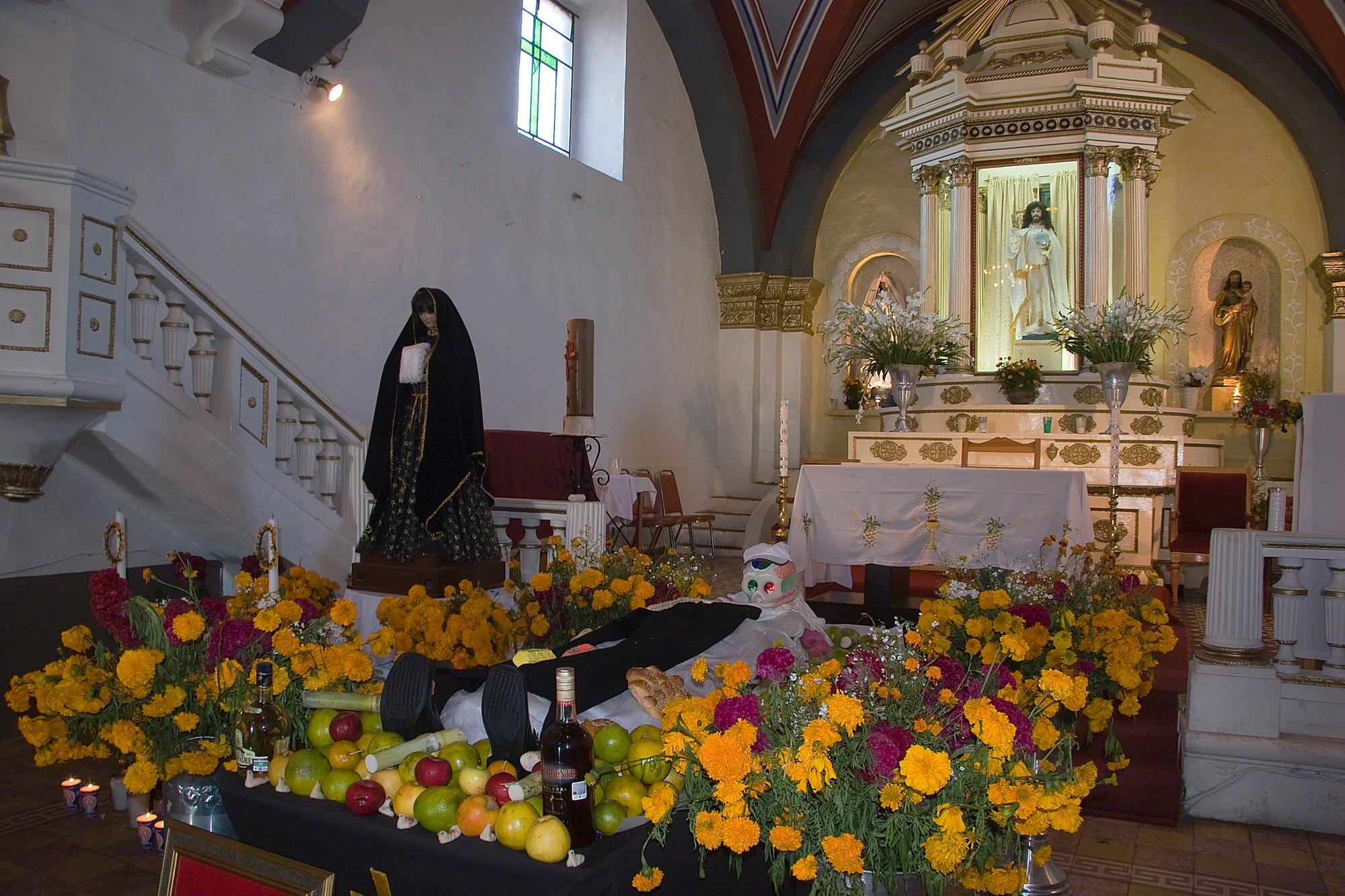
Catholic images and Day of the Dead offerings share the same space, as they do in many Mexican homes.
In Mexico, the first day is generally given to dead children and the second to adults. In some towns, among them Mixquic, Pátzcuaro and Janitzio, people spend the whole night beside the graves of their relatives. On Lake Pátzcuaro in Michoacán, people light candles and cross by boat to the island of Janitzio, where there is a cemetery, to honour their dead.
Aztec roots, or Spanish ones?
Scholars genuinely disagree about where the holiday comes from, and the argument is part of its story.
One side points to the Aztecs. Their ritual calendar devoted two whole 20-day months to the dead, the ninth for children and the tenth for adults, and the Aztecs held at least six festivals a year similar in spirit to the Day of the Dead. For the Aztecs, bones and skulls held enormous sacred power. The writer Octavio Paz, a Nobel laureate, argued in his 1950 essay The Labyrinth of Solitude that the modern holiday continues these ancient festivals of death. Some scholars suggest that the memory of the Aztec months was compressed into two days on the Catholic calendar, which would explain why Mexico, unlike other Latin American countries with the tradition, gives one day to children and one to adults.
The other side points to Europe. The Catholic Church's Allhallowtide, All Hallows' Eve on 31 October, All Saints' Day on 1 November and All Souls' Day on 2 November, falls on exactly the same dates, and in Spain and other parts of Catholic southern Europe families also built altars for the dead and made sweets in the shape of skulls and bread in the shape of bones. The historian Elsa Malvido, of Mexico's National Institute of Anthropology and History, argued that the tradition can be traced entirely to medieval Europe. Others note that the skeletons of the holiday look more like Europe's danse macabre, the medieval "dance of death", than anything Aztec.
Between the two sits a third view, held by many writers: that the Spanish worked hard to stamp out indigenous religion, that converts became devout Catholics, and that what grew up in Mexico was a mixture, a process known as syncretism.
How a holiday became a national symbol
After the Mexican Revolution, governments looked to the country's indigenous past to build a national identity. In the 1930s the left-leaning government of Lázaro Cárdenas began to separate the Day of the Dead from the Catholic Church and to stress its Aztec side. Malvido went so far as to call the modern festival a "Cardenist invention".
Art did the rest. Around 1910 to 1912 the printmaker José Guadalupe Posada made a zinc etching of a skeleton in a big bourgeois hat, La Calavera Catrina, to satirise the upper-class women of the Porfiriato, the long rule of Porfirio Díaz; its first certain publication was in 1913. In 1946 and 1947 the muralist Diego Rivera painted her full-length in his fresco Dream of a Sunday Afternoon in the Alameda Park, giving her features that referred to Mexico's indigenous peoples and turning her into a national emblem. Today the Catrina is everywhere at the end of October, and the holiday itself is taught in Mexican schools, usually with an emphasis on its native origins. In 2008 UNESCO added it to its list of the Intangible Cultural Heritage of Humanity, as practised by the indigenous communities of Mexico.
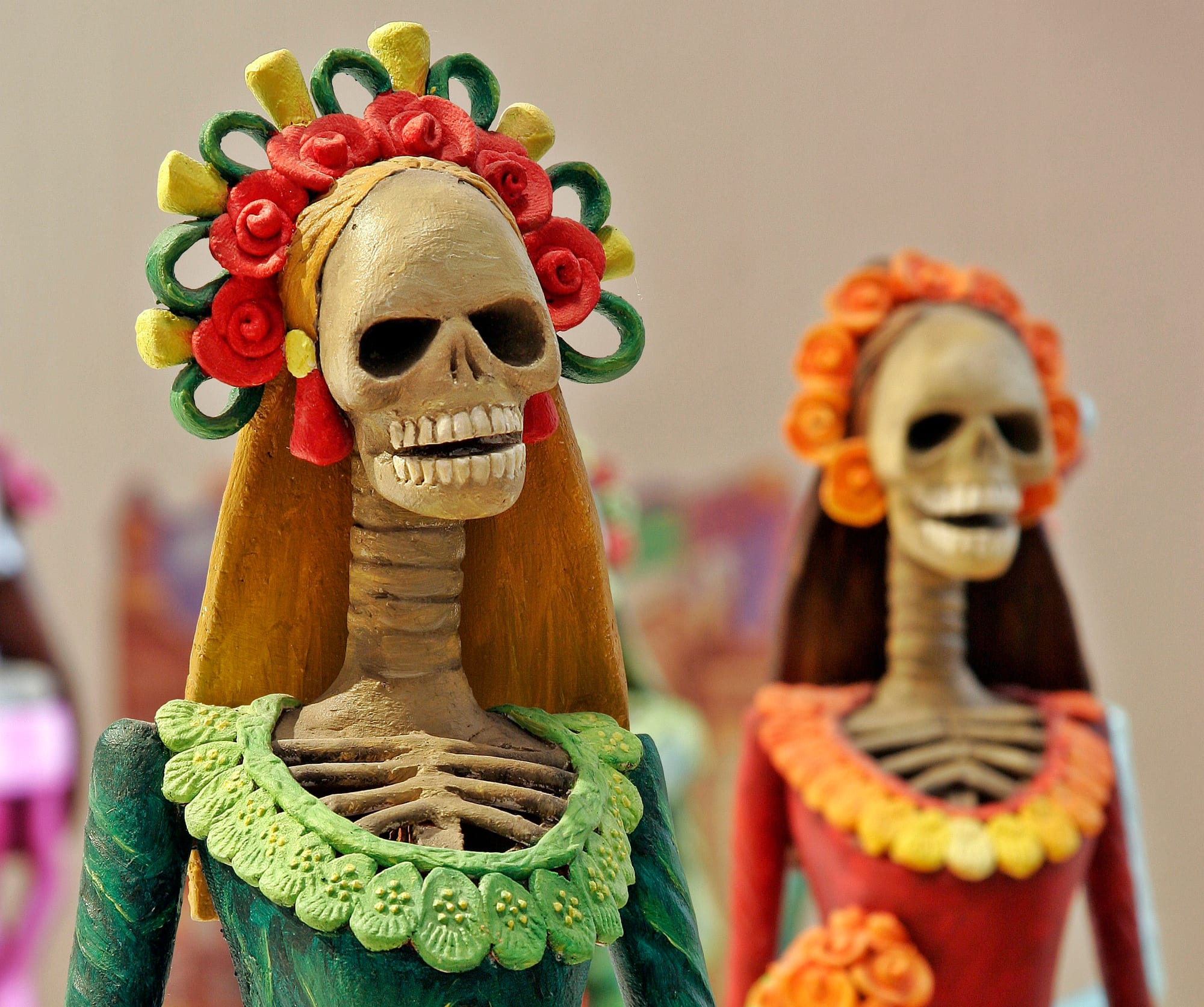
Posada's skeleton was first a joke at the expense of Mexico's rich; it is now one of the country's best-known images.
Laughing with death
Part of what makes the Day of the Dead distinctive is its humour. Families remember funny stories about the people they have lost. Friends give each other sugar or chocolate skulls with the recipient's name written on the forehead. People write calaveras literarias, "literary skulls": mocking verses in the form of epitaphs, aimed at friends, classmates, workmates and public figures, many of them still very much alive.
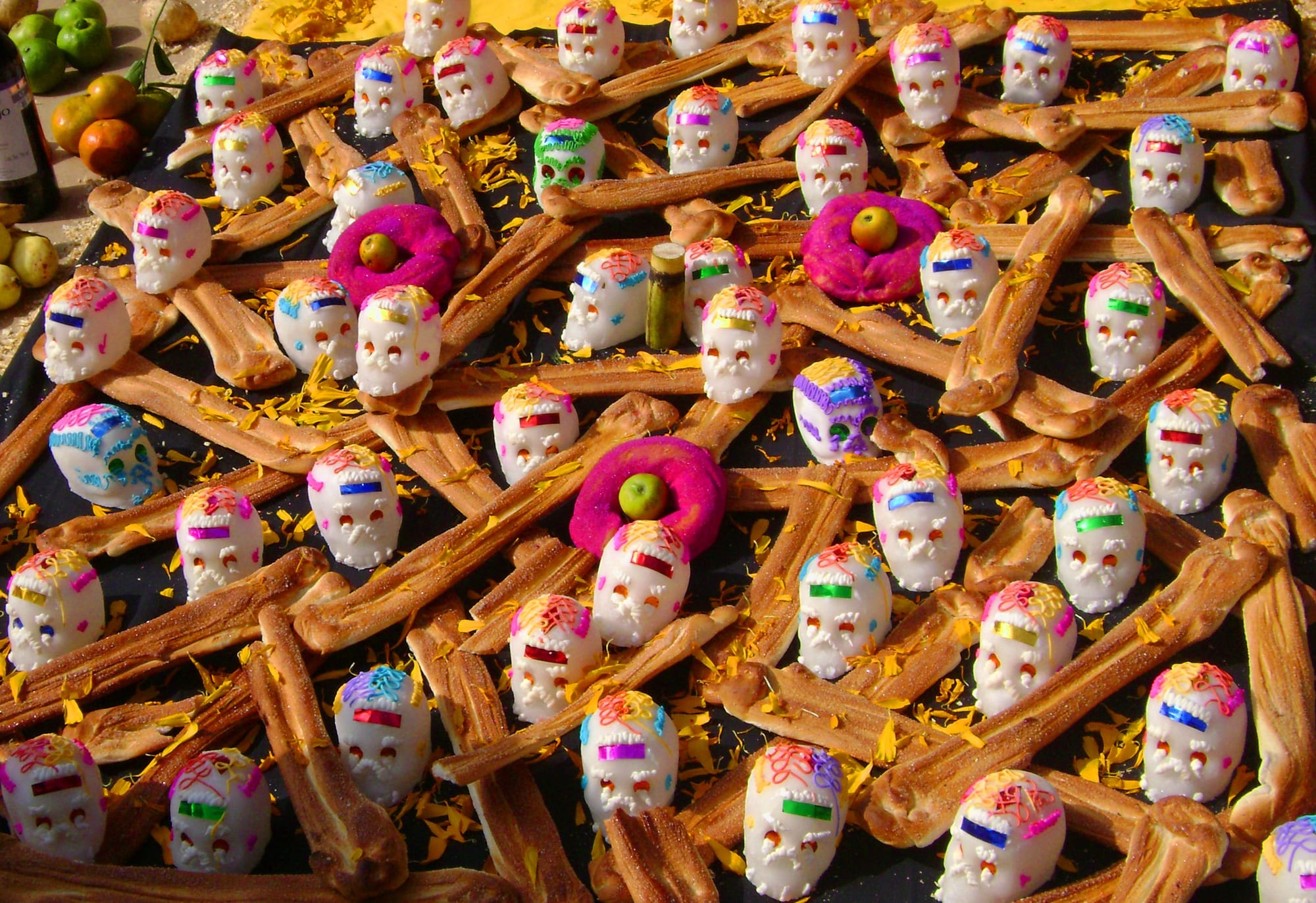
Skulls and bones made of sugar and bread are given and shared, not feared.
The holiday has also travelled. It is widely kept among people of Mexican heritage in the United States and elsewhere, and the Disney Pixar film Coco spread the image of a great celebration around the world. Underneath the parades and the souvenirs, though, the core of it is unchanged: a family setting a place for those who are gone, and waiting for them to come home.