Culture & Customs · New Zealand
Why do the Māori perform the haka?
Not just a war dance, the haka welcomes guests, mourns the dead, honours achievements and makes a point, with the whole body carrying the words.
By Globeway Editorial · 13 October 2026
The short answer
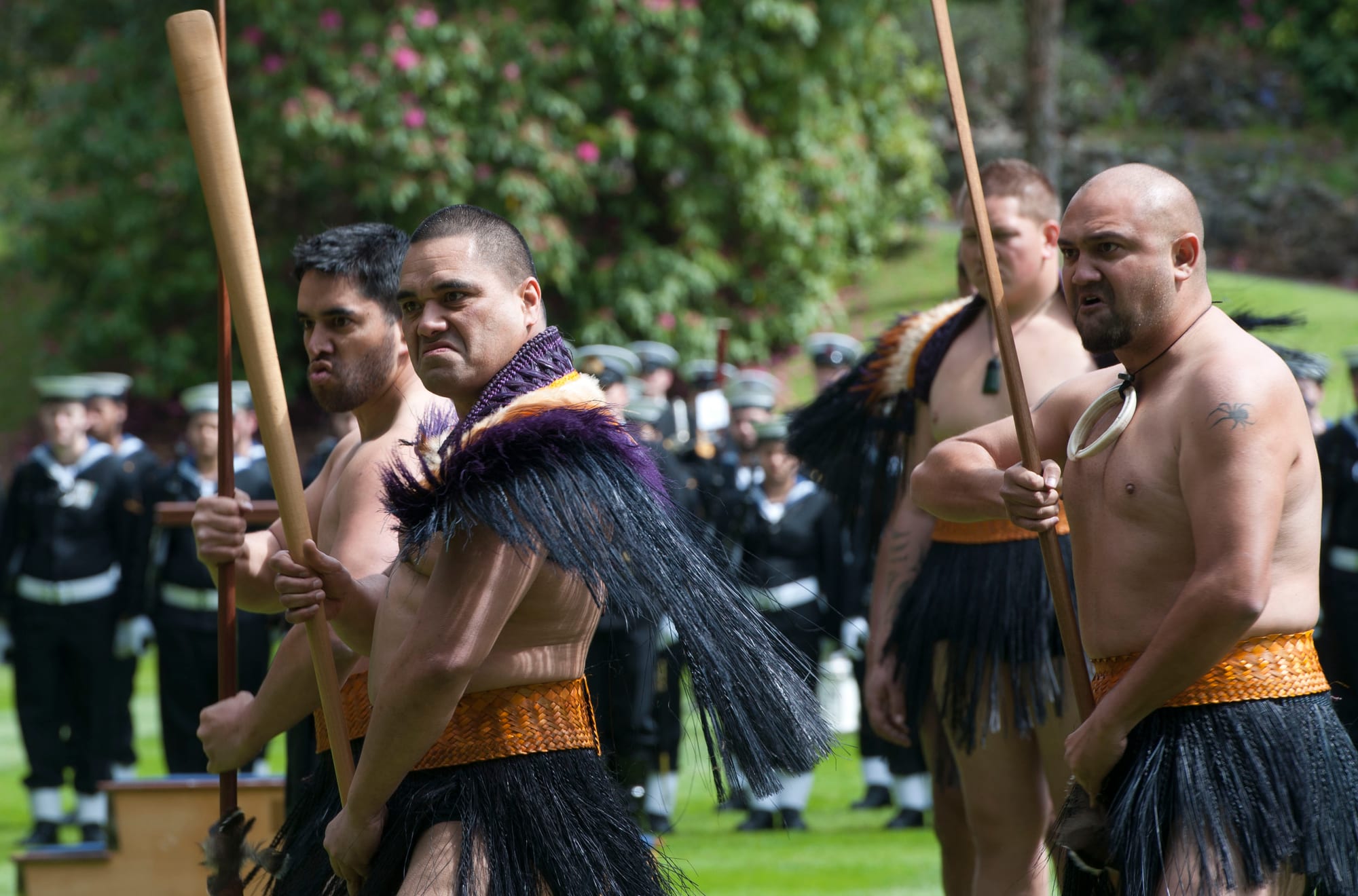
The haka is a Māori posture dance: a group chants or shouts a composition while using every part of the body (stamping feet, slapping hands against chests and thighs, bulging eyes, outthrust tongues) to drive home the words. It is performed to welcome distinguished guests, to farewell and mourn the dead, to honour great achievements and occasions, and to deliver a message, whether political, social or personal. Men and women have both performed haka for generations.
It is often called a war dance, and some haka were exactly that, but Māori scholars consider that description misleading. Most haka carry no weapons and have nothing to do with battle. The version the world knows best, "Ka Mate", performed by the All Blacks before rugby matches, is in fact a song about surviving: a celebration of life over death.
Many dances, many purposes
Haka is a family of forms rather than a single dance. There is the haka pōwhiri, which welcomes guests; waiata tangi for farewelling and mourning the deceased; pātere for restoring self-respect; and haka taparahi and ngeri for sending social and political messages. The peruperu, performed with weapons, is the true war dance, meant to intimidate an enemy. There are also kaioraora, for venting hatred, and manawa wera, usually connected with death.
What unites them is that the body is the instrument. Performers show the whites of their eyes (pūkana) and men thrust out their tongues (whetero), but these grimaces exist to serve the words, which are the heart of any haka. A haka is best understood as a challenge in the broad sense: a way to make a point, honour someone, tell a story or express an emotion with maximum force.
At very formal welcomes on a marae, the meeting ground of a Māori community, a haka may come with the wero. Warriors advance on the visitors with fighting staffs called taiaha and place a token, often a small leafy branch, on the ground. The original purpose was to find out whether the newcomers came in peace or with hostile intent. When an honoured man from the visiting party picks up the token, the warrior turns and leads the visitors onto the marae.
From missionary bans to royal welcomes
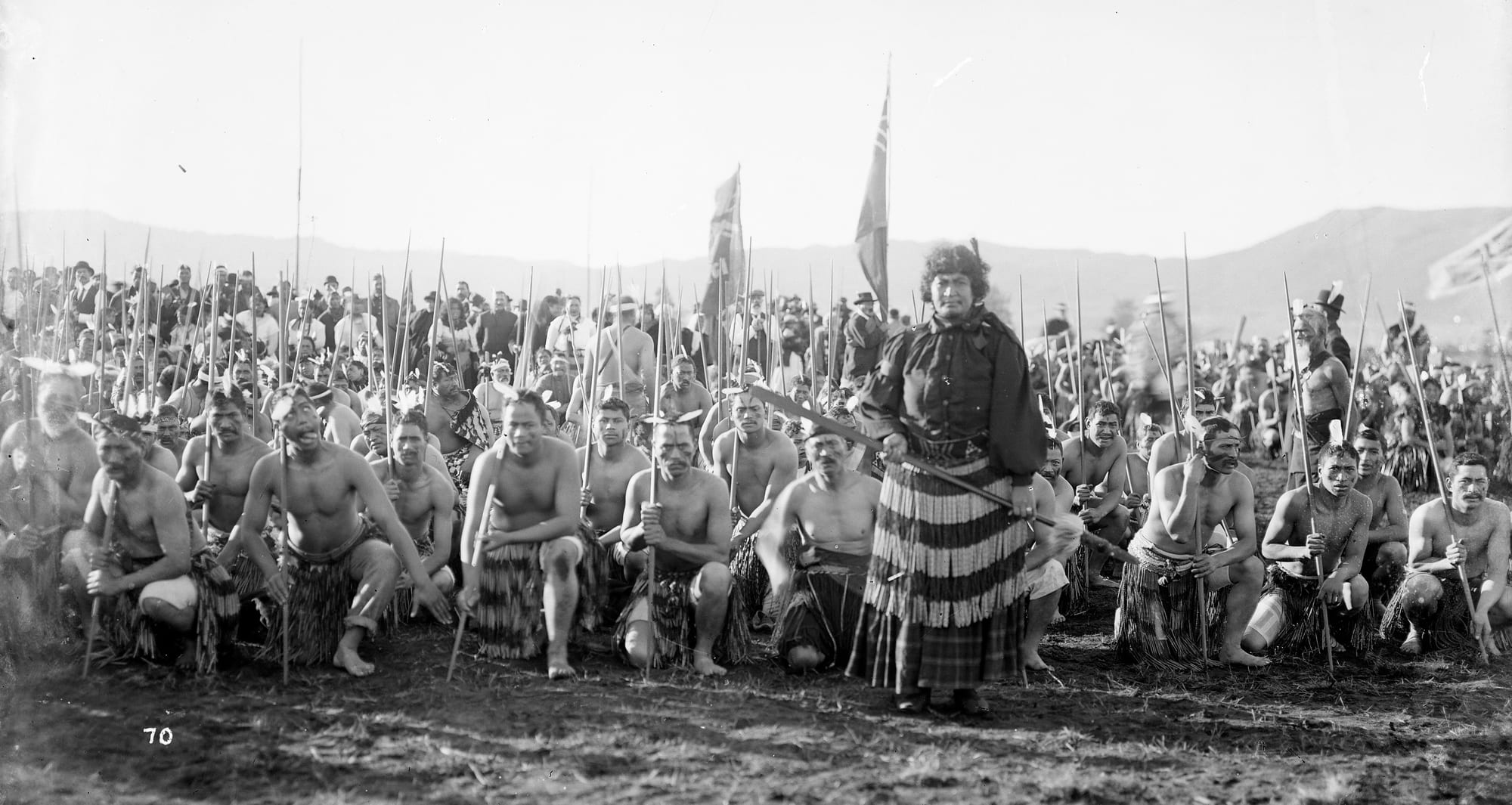
The first Europeans to see haka found them ferocious. Joseph Banks, sailing with James Cook in 1769, described tongues thrust out "incredibly far" and eyes widened until a ring of white showed round the iris. From the early 19th century, Christian missionaries tried to stamp the haka out along with other parts of Māori culture they saw as clashing with their faith. Henry Williams, head of the Church Missionary Society mission, aimed to replace haka and traditional chants with hymns.
Royal visits helped turn opinion. When Prince Alfred, Duke of Edinburgh, became the first royal to visit New Zealand in 1869, he was greeted at the Wellington wharf by a vigorous haka. A local newspaper reported that, for all the yelling, it was entirely friendly: the performers were bidding the Duke welcome. From the 1860s, concert parties in Rotorua also began staging Māori song and dance for tourists, the roots of the modern kapa haka group.
The story inside Ka Mate
"Ka Mate" was composed around 1820 by Te Rauparaha, a war leader of the Ngāti Toa iwi (tribe) during the Musket Wars. Pursued by enemies from Ngāti Maniapoto and Waikato, he hid in a kūmara (sweet potato) storage pit on Motuopihi Island in Lake Rotoaira, while a woman named Rangikoaea sat over the pit to conceal him. When he climbed out into the sunlight alive, he composed the haka in gratitude.
It was written as a short, energising haka of the ngeri type, with no set movements: performers were free to chant and move as they felt, without needing to stay in time. The tightly choreographed version seen at rugby grounds came much later. Because its fame spread so far beyond Ngāti Toa, the iwi spent years seeking recognition as its author. A trademark attempt failed in 2006, but in a settlement agreed in 2009 and signed in 2012, the New Zealand government agreed to record the authorship and significance of "Ka Mate" to Ngāti Toa, though without royalties or a veto over its use.
How rugby carried the haka round the world
The sporting tradition began with the New Zealand Native football team, which performed a haka before its first match of the 1888–89 tour, against Surrey on 3 October 1888. An 1884 New Zealand team touring New South Wales had also performed one. The Original All Blacks of 1905 performed "Ka Mate" at least before their tests against Scotland and Wales, and by 1916 its words were printed in a New Zealand Army team's programme in Wales.
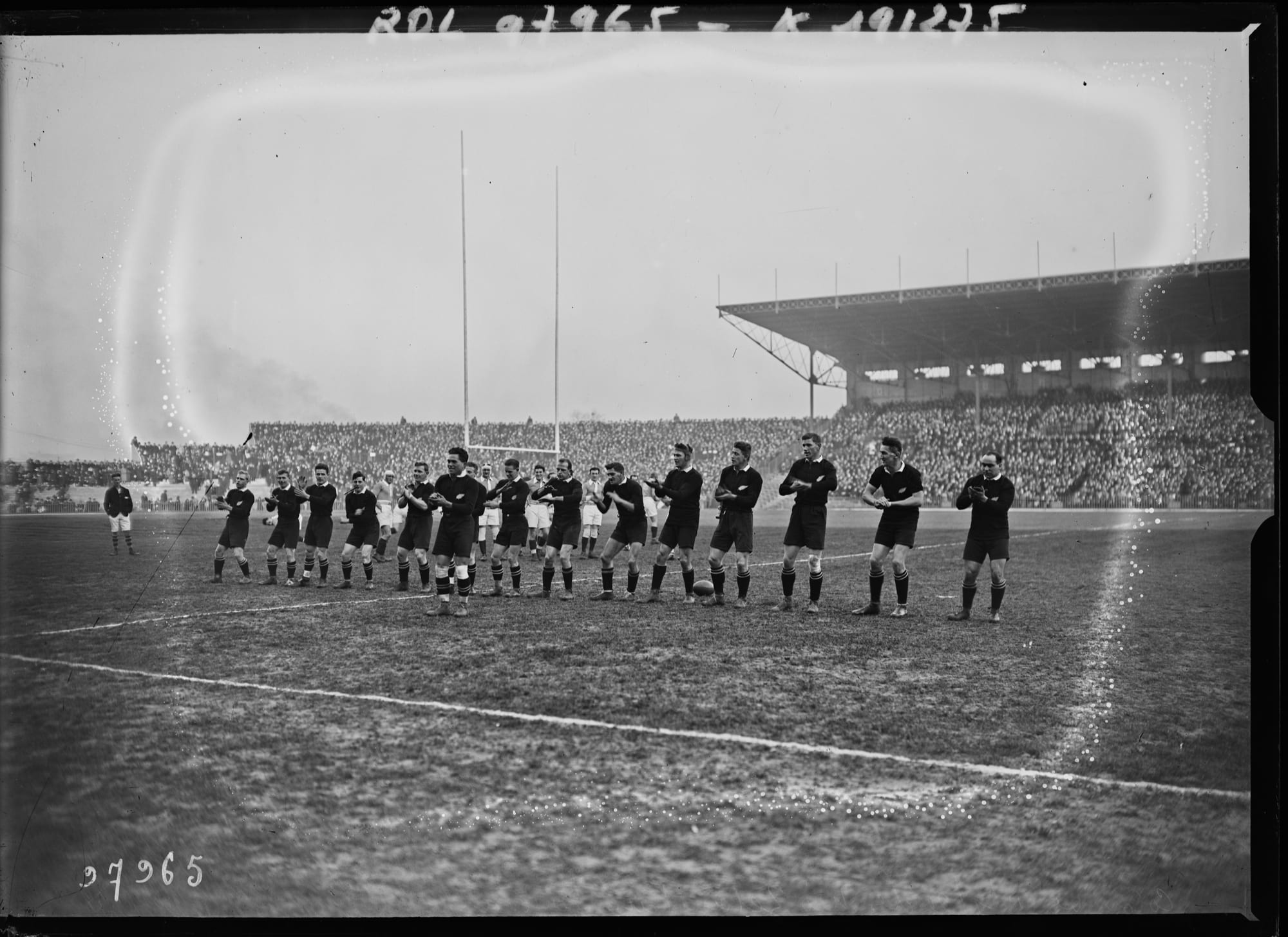
By the 1980s the team's haka had become ragged, performed mainly by non-Māori players with little grasp of its meaning or movements. On the 1986 tour of Argentina, two Māori players, Buck Shelford and Hika Reid, began retraining the team to perform it properly, and from then on non-Māori teammates learned it in the traditional way. Since 2005 the All Blacks have sometimes performed "Kapa o Pango" ("Team in Black"), a haka composed for them by Derek Lardelli. TJ Perenara, the team's haka leader in 2019, explained that in Wellington they always chose "Ka Mate", out of respect for Te Rauparaha and the land he walked.
- 1769
Joseph Banks records haka during James Cook's first voyage.
- 1869
Prince Alfred is welcomed to Wellington with a haka.
- 1888
The New Zealand Natives perform a haka before their first tour match.
- 1905
The Original All Blacks perform "Ka Mate" on tour in Britain.
- 1972
The national kapa haka competition now called Te Matatini begins.
- 2005
The All Blacks first perform "Kapa o Pango".
- 2012
Ngāti Toa's settlement recognising its authorship of "Ka Mate" is signed.
A living art, on stage and in protest
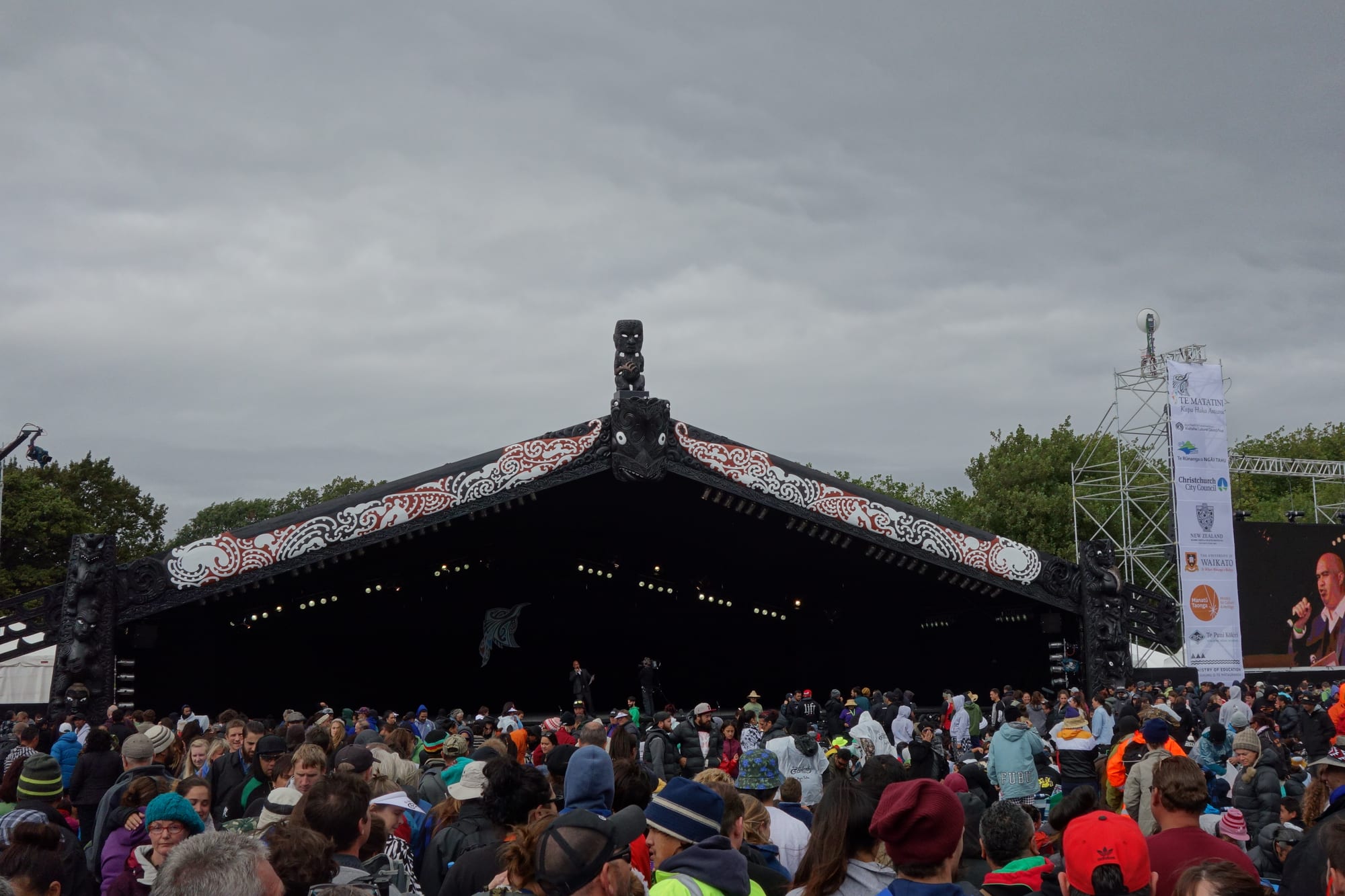
Today haka is far from a museum piece. Kapa haka groups are common in New Zealand schools, the subject is taught at universities, and Te Matatini ("the many faces"), the national kapa haka festival, has run since 1972 and is held every two years in a different region. Teams there must perform six disciplines in a polished 25-minute set, including an entrance, traditional chant, poi, action song, haka and exit. The 2025 festival was held in New Plymouth.
Haka also remains a way of saying something that matters. After the Christchurch mosque shootings in March 2019, school pupils and other groups performed haka to honour those killed. On 14 November 2024, MP Hana-Rawhiti Maipi-Clarke led "Ka Mate" inside Parliament in protest at the first reading of the Treaty Principles Bill, and the sitting was briefly suspended. The same respect explains why careless or mocking performances draw criticism: some Māori leaders called flash-mob haka before the 2011 Rugby World Cup inappropriate, and a 1979 student parody at the University of Auckland was broken up by Māori and Pacific Island protesters after two decades of complaints.