Attractions & Natural Wonders · Brazil
Why does a statue of Christ stand over Rio?
Rio's Catholics raised the money in the 1920s to put a Christian symbol back at the heart of a newly secular republic, and the statue became the emblem of Brazil.
By Globeway Editorial · 13 October 2026
The short answer
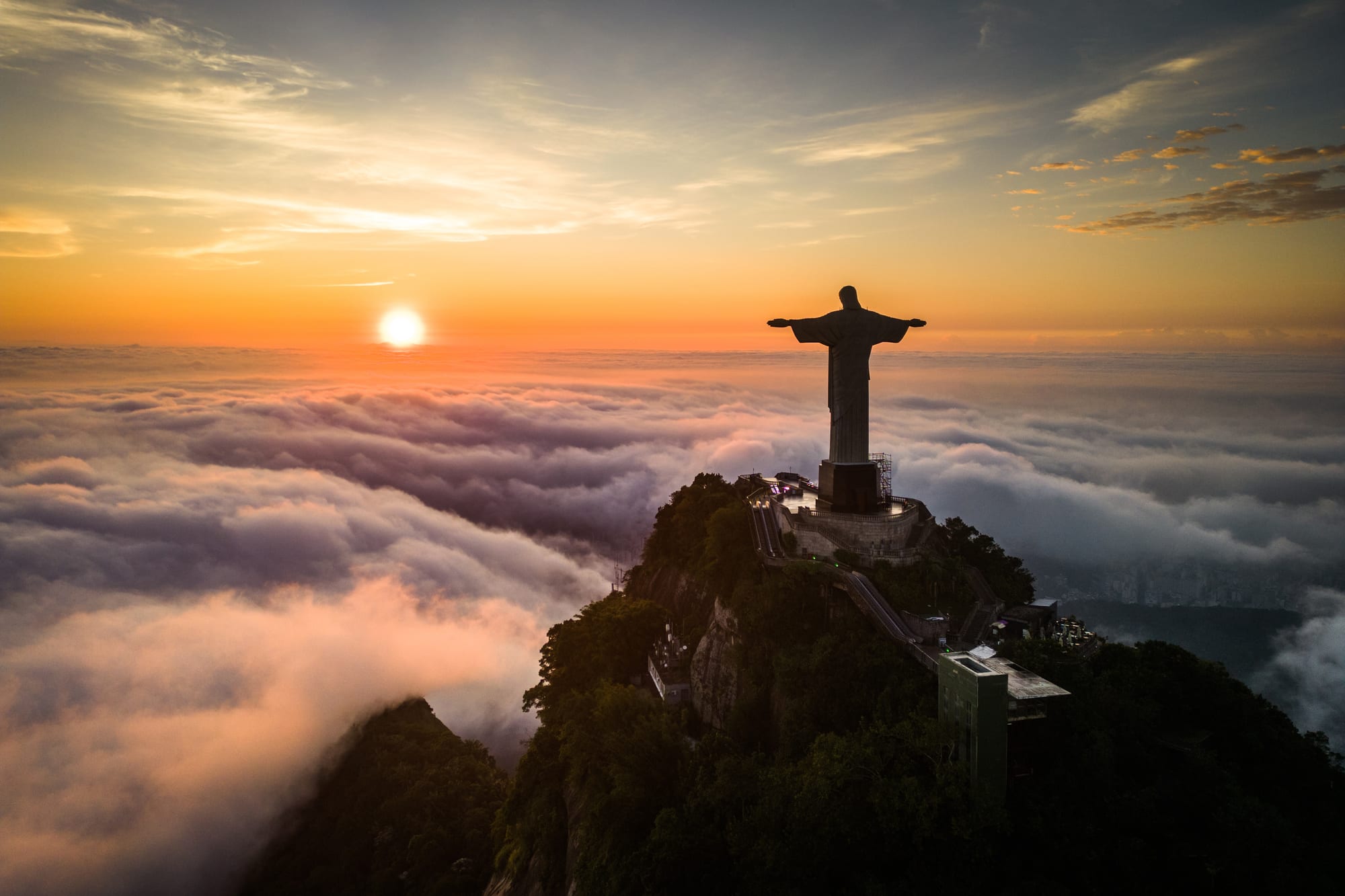
Christ the Redeemer stands on Corcovado because Rio de Janeiro's Catholics put it there. In 1920 a lay group, the Catholic Circle of Rio, launched a campaign for a great statue of Christ on the mountain above the city. They were worried by what they saw as the "Godlessness" of Brazilian society. Since 1889 Brazil had been a republic, and since 1891 it had no official religion. The statue was a way for the church to put its faith back in the most visible place in what was then the country's capital.
Ordinary believers paid for most of it through donations. A Brazilian engineer, Heitor da Silva Costa, designed and built it, the French sculptor Paul Landowski shaped the figure, and the Romanian sculptor Gheorghe Leonida carved the face. Work ran from 1922 to 1931, and the statue was inaugurated on 12 October 1931. Its arms are spread wide as a symbol of peace, and over the following decades it grew from a religious monument into the image of Rio and of Brazil itself.
An idea older than the republic
The first proposal came seven decades earlier. In the mid-1850s a Vincentian priest, Pedro Maria Boss, suggested a Christian monument on Corcovado to honour Princess Isabel, the daughter of Emperor Pedro II, who acted as regent of Brazil. The princess liked the idea. In 1888, the year she signed the Golden Law abolishing slavery, there was talk of a statue honouring her as "the Redeemer", and she declined: any monument, she said, should honour the true Redeemer of humankind, with an image of the Sacred Heart of Jesus.
Then the political ground shifted. In 1889 the monarchy fell and Brazil became a republic. The republic's first constitution, in 1891, separated church and state and gave all religions equal standing in law. A state-backed statue of Christ on the capital's skyline was no longer on the cards, and the plan was dropped.
A Catholic campaign for the centenary
The idea returned in 1920, as Brazil approached the hundredth anniversary of its independence from Portugal in 1822. The Catholic Circle of Rio organised a Monument Week to gather signatures and donations, and the money came mostly from Brazilian Catholics rather than the government. In effect, the church answered the secular republic not by asking the state for a symbol but by building one itself.
Several designs were considered: a Christian cross, a Christ holding a globe, and a pedestal representing the world. The first plan was a large Christ with a globe in one hand and a cross in the other. In the end the organisers chose a figure with arms spread wide, read as an image of peace and of welcome. The final design was worked up by Heitor da Silva Costa together with the artist Carlos Oswald.
Not everyone approved. In March 1923 Brazil's Baptists, in the official journal of their national convention, called the project a monument to the "idolatry" of the Roman church and argued that the money would be better spent on charity. Today Protestants from around the world visit the statue, but in the 1920s it was a statement of one church's place in Brazilian life.
Concrete, soapstone and a face from Paris
Silva Costa spent 1924 to 1927 in Europe finalising the plans and worked with Landowski, a Paris sculptor of Polish descent. Landowski brought in Leonida, who made the face. The engineers studied the models and decided that a cross-shaped figure with long outstretched arms would be better built in reinforced concrete, designed by the French engineer Albert Caquot, than in steel. The outside was covered in a mosaic of soapstone, a soft stone chosen because it lasts well and is easy to work.
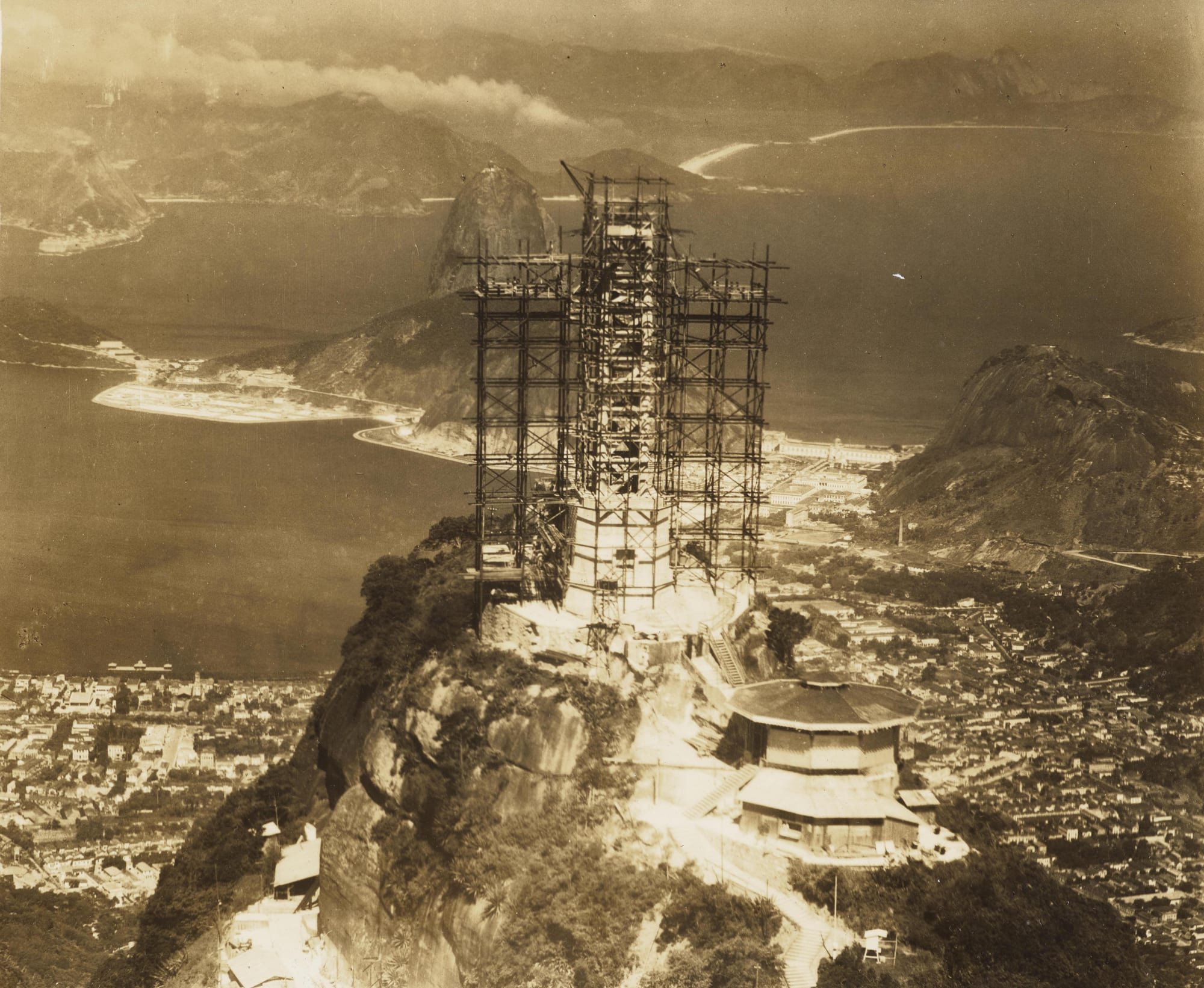
The concrete frame rose inside a cage of scaffolding before being covered in its outer skin of soapstone.
The head, the first part finished, was made in the Barro Vermelho district of São Gonçalo, across the bay, and served as the model for the rest of the figure. The finished statue is 30 metres (98 feet) tall, standing on an 8-metre (26-foot) pedestal, with arms 28 metres (92 feet) across. It is the largest Art Deco sculpture in the world. Construction took nine years and cost the equivalent of 250,000 US dollars at the time.
The opening on 12 October 1931 fell on the feast of Our Lady of Aparecida, Brazil's patron saint. The plan was for the radio pioneer Guglielmo Marconi to switch on the floodlights remotely from Rome, some 9,200 kilometres (5,700 miles) away. Bad weather got in the way, and the lights were turned on at the site instead.
Why Corcovado
The mountain chose itself. Corcovado, meaning "hunchback", is a granite peak of about 700 metres (2,300 feet) rising just west of the old city centre, and it can be seen from great distances across Rio. Long before the statue, its lookout was a favourite outing for the imperial elite. The statue faces east, towards Guanabara Bay, with its back to the Tijuca Forest, so the figure seems to open its arms over the whole city.
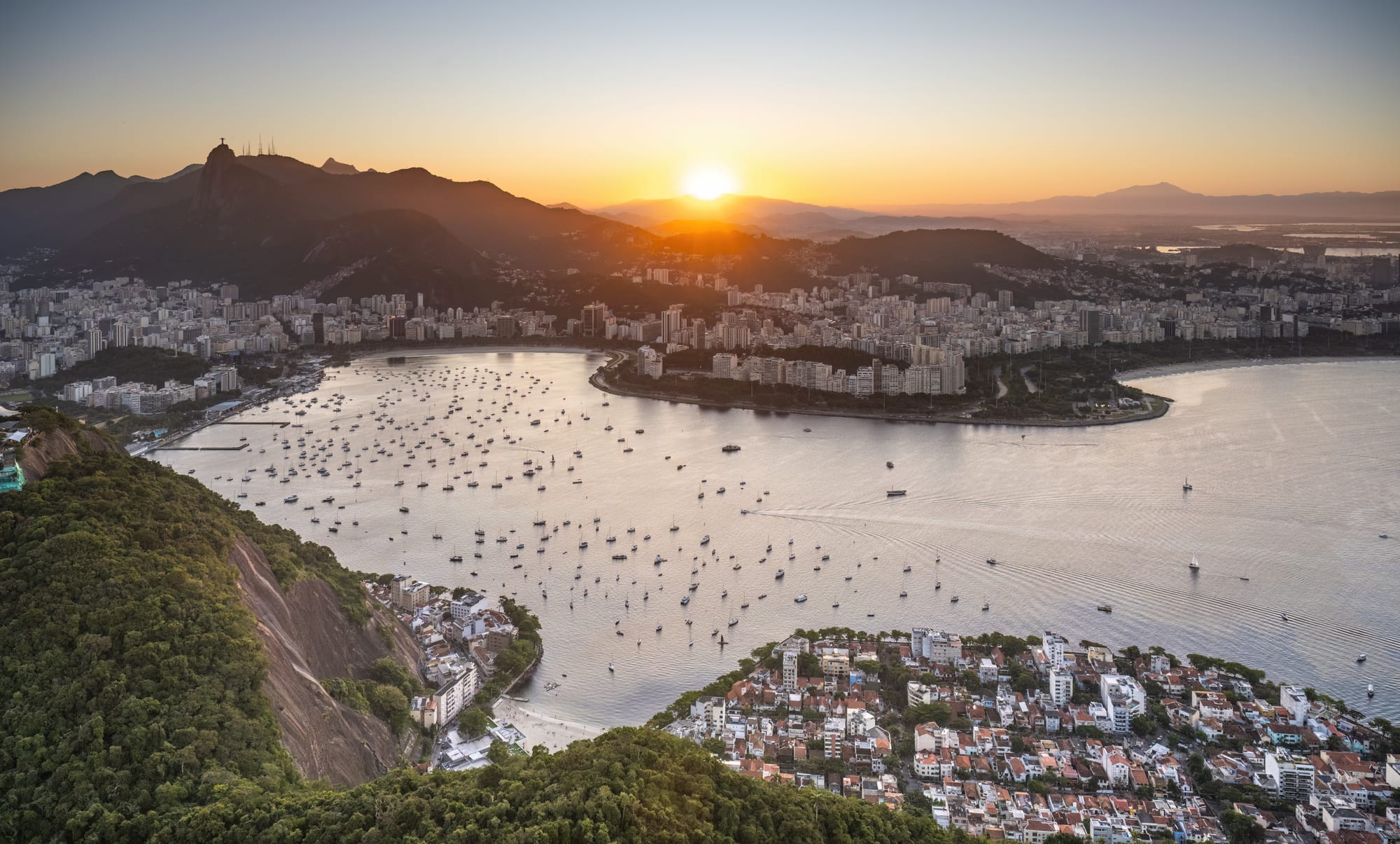
The peak and its statue can be seen from great distances across the city.
From church monument to national icon
The statue remains a Catholic sanctuary. In the 1930s the federal government granted the Archdiocese of Rio the right to manage it, and in October 2006, for its 75th anniversary, a chapel dedicated to Our Lady of Aparecida was consecrated beneath it, where baptisms and weddings are held. Brazil has the largest Catholic community of any country, though the share of Brazilians who call themselves Catholic fell from 90 per cent in 1970 to about 57 per cent in the 2022 census.
Yet the figure long ago outgrew its religious purpose. In 2007 it was voted one of the New 7 Wonders of the World, an informal popular poll that UNESCO declined to endorse, and in 2012 UNESCO included it within the World Heritage listing of Rio's landscape between the mountains and the sea. It has been lit green and yellow for the national football team and appears in Brazilian and foreign films and songs.
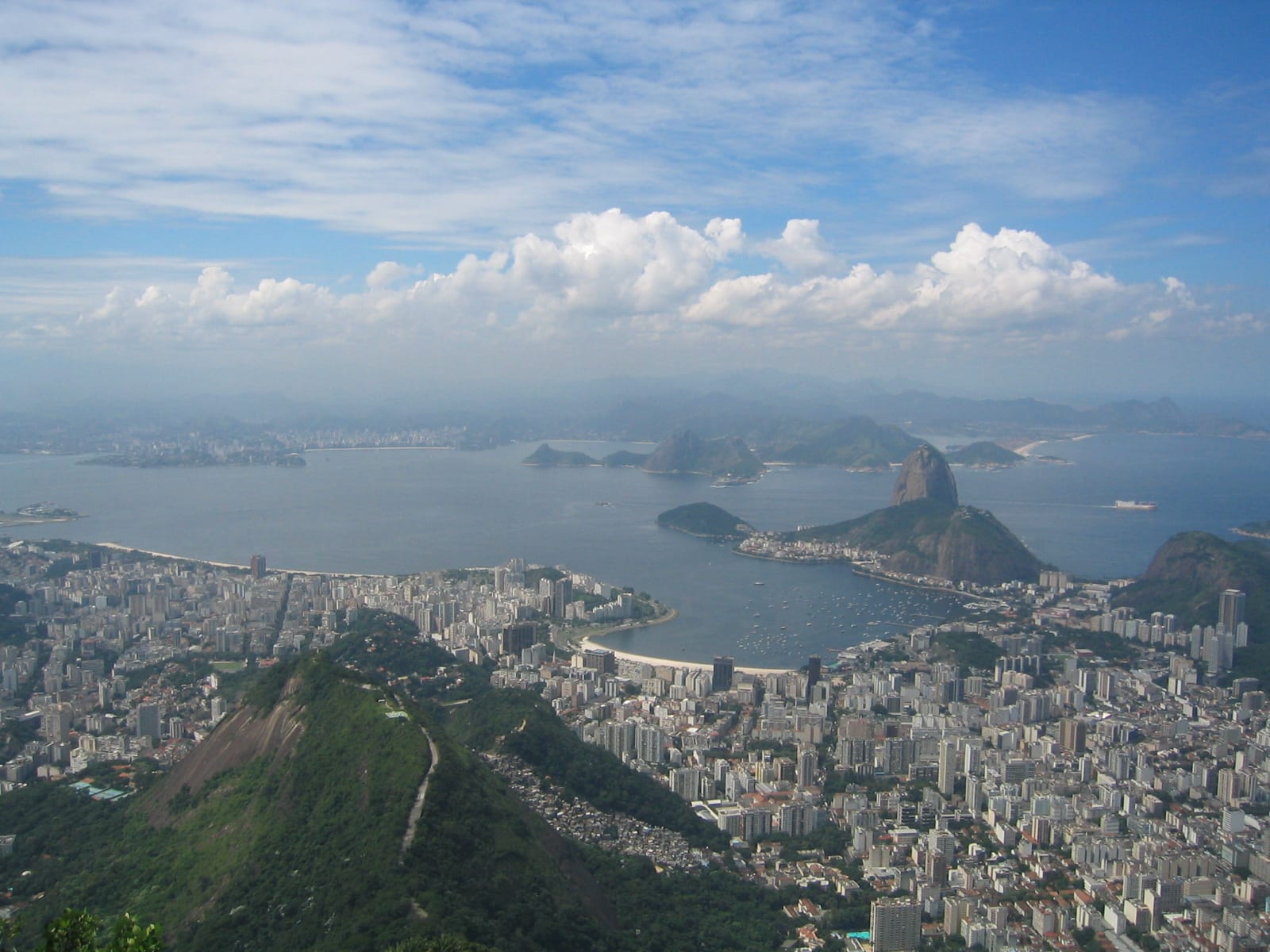
This is the panorama the statue looks out over: the beaches, the bay and the neighbourhoods of the southern city.
Keeping it standing is a constant task. Lightning struck in February 2008, damaging the fingers, head and eyebrows, and again in January 2014, damaging a finger on the right hand. A four-month restoration in 2010 used more than 60,000 pieces of stone from the original quarry. The pale original soapstone is now scarce, so each repair leaves the statue a little darker. Clouds often wrap the summit, and the view from the platform is clearest on sunny days.