Attractions & Natural Wonders · Australia
Why does Australia have so many deadly animals?
Long isolation, a snake family built around venom and tropical seas give Australia its fearsome list, yet antivenom means very few people die.
By Globeway Editorial · 13 October 2026
The short answer
Australia's reputation rests on a few real facts. It is the only continent where venomous snakes outnumber harmless ones, and its venomous animals range from spiders, scorpions and stonefish to jellyfish, octopuses, cone snails and even the platypus. Three things explain the list. Tens of millions of years of isolation gave the continent a fauna found nowhere else. Its land snakes are dominated by the elapids, a family of front-fanged snakes built around venom. And its long tropical north shares warm seas and rivers with some of the most dangerous creatures in the Indo-Pacific.
What the reputation leaves out is how rarely these animals kill. Snakebite claims roughly one or two lives a year in Australia, down from about 13 a year in the 1920s, and no one is known to have died from a Sydney funnel-web bite since antivenom arrived in 1981. Good first aid, antivenom and warning systems have turned a continent of dangerous animals into one where deaths from them are uncommon.
A continent that went its own way
Australia was once part of Gondwana, a southern supercontinent that also included South America, Africa, India and Antarctica. Gondwana began to break up about 140 million years ago, and around 50 million years ago Australia separated from Antarctica. It then drifted in relative isolation until its tectonic plate collided with Asia in the Miocene epoch, after which animals of Asian origin could establish themselves.
That long separation is why so much of Australia's wildlife is unique. Marsupials, which raise their young in a pouch, filled many of the roles taken by placental mammals elsewhere.
A kingdom of front-fanged snakes
The most venomous Australian snakes, among them the inland taipan (also called the fierce snake), the eastern brown snake, the taipan and the eastern tiger snake, all belong to the Elapidae, the family that also includes cobras and mambas. Elapids have permanently erect, hollow fangs at the front of the mouth, and most have venom that attacks the nervous system; some Australian species also wreck the blood's ability to clot. Australia's land elapids form their own branch of the family together with the sea snakes, separate from the cobras of Asia and Africa, and 33 species of sea snake live in Australia's northern waters.
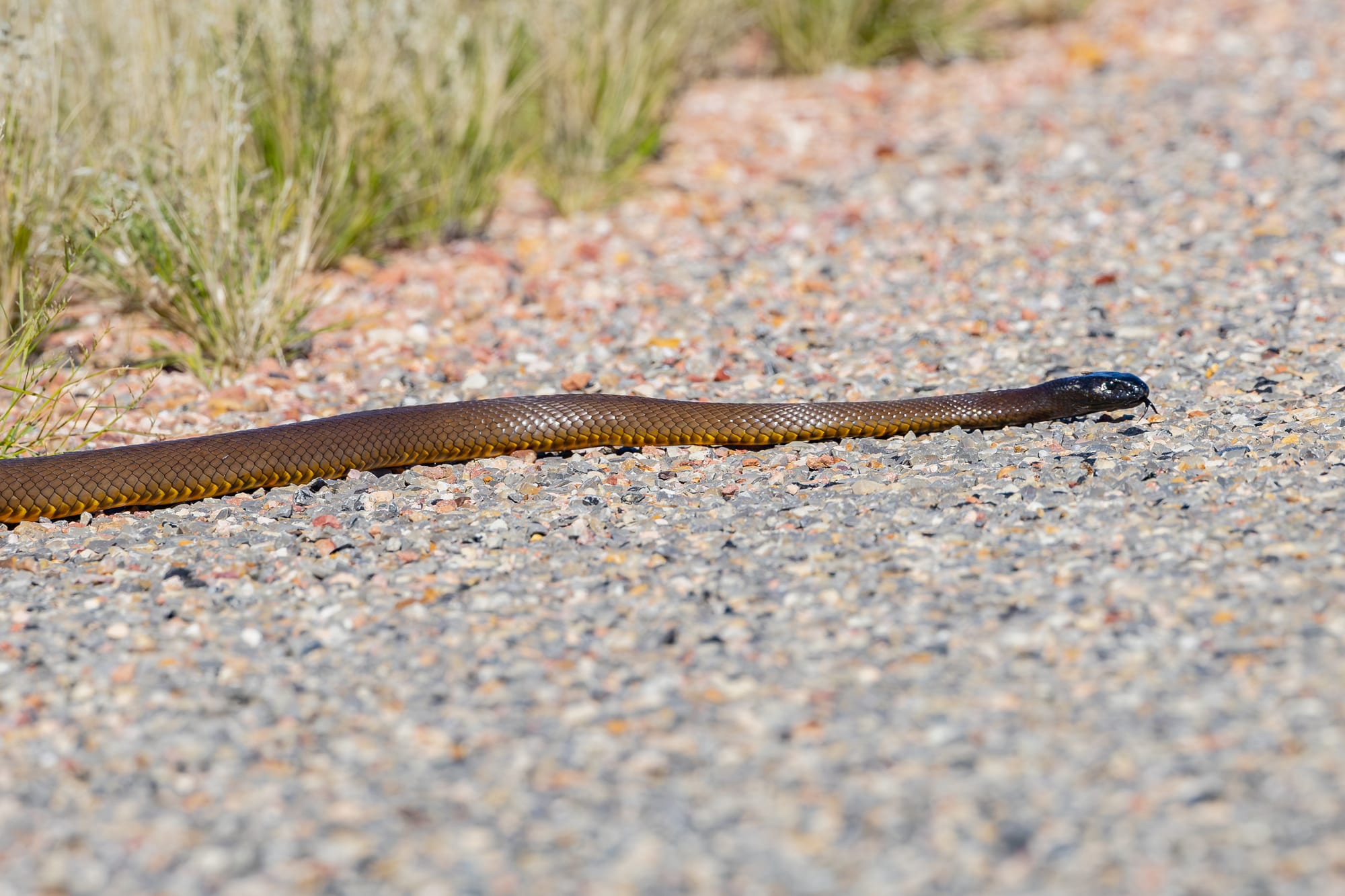
Based on tests on laboratory mice, the inland taipan is widely regarded as the most venomous snake in the world.
Their venom is shaped by what they eat. The inland taipan is a specialist hunter of mammals, and its venom is particularly adapted to killing warm-blooded prey quickly; a single bite is estimated to carry enough to kill more than 100 adult humans. Yet it lives in remote, semi-arid country near the Queensland–South Australia border and is shy and usually placid. Most confirmed bites have been to snake handlers, zookeepers and researchers, and since a specific antivenom was introduced no death has been conclusively blamed on it.
The real danger comes from more common snakes that live near people. The eastern brown snake has killed more Australians than any other species, and between 2005 and 2015 brown snakes as a group caused 15 of the 19 snakebite deaths in the country.
A spider deadly to primates
Australia's most feared spider, the Sydney funnel-web, is usually found within about 100 kilometres (62 miles) of Sydney. Bites from the Sydney funnel-web group have caused 13 documented deaths, seven of them children, and wandering males looking for mates are implicated in most if not all of them. There is at least one recorded case of a small child dying within 15 minutes.
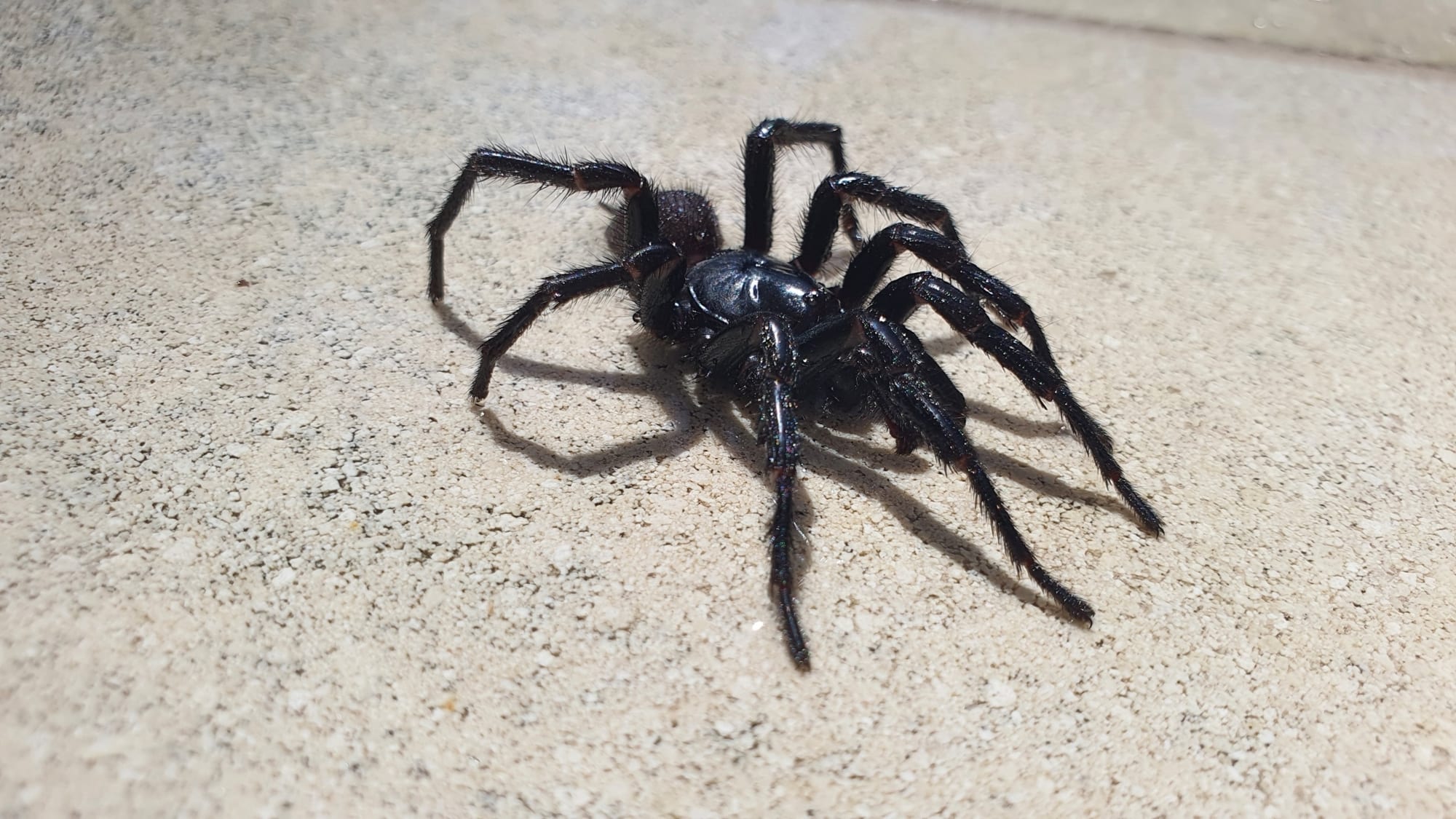
The female's venom was thought to be only about a sixth as potent to humans as the male's.
The twist is that the venom is extremely toxic to primates, including humans, but appears fairly harmless to many other animals. Since an antivenom developed by Struan Sutherland's team at the Commonwealth Serum Laboratories in Melbourne became available in 1981, there have been no recorded deaths. The redback spider, long feared too, is no longer thought to be life-threatening: the lack of deaths since 1956 was once credited to its antivenom, which has since been shown to work no better than a placebo.
Tropical waters, shared with Asia
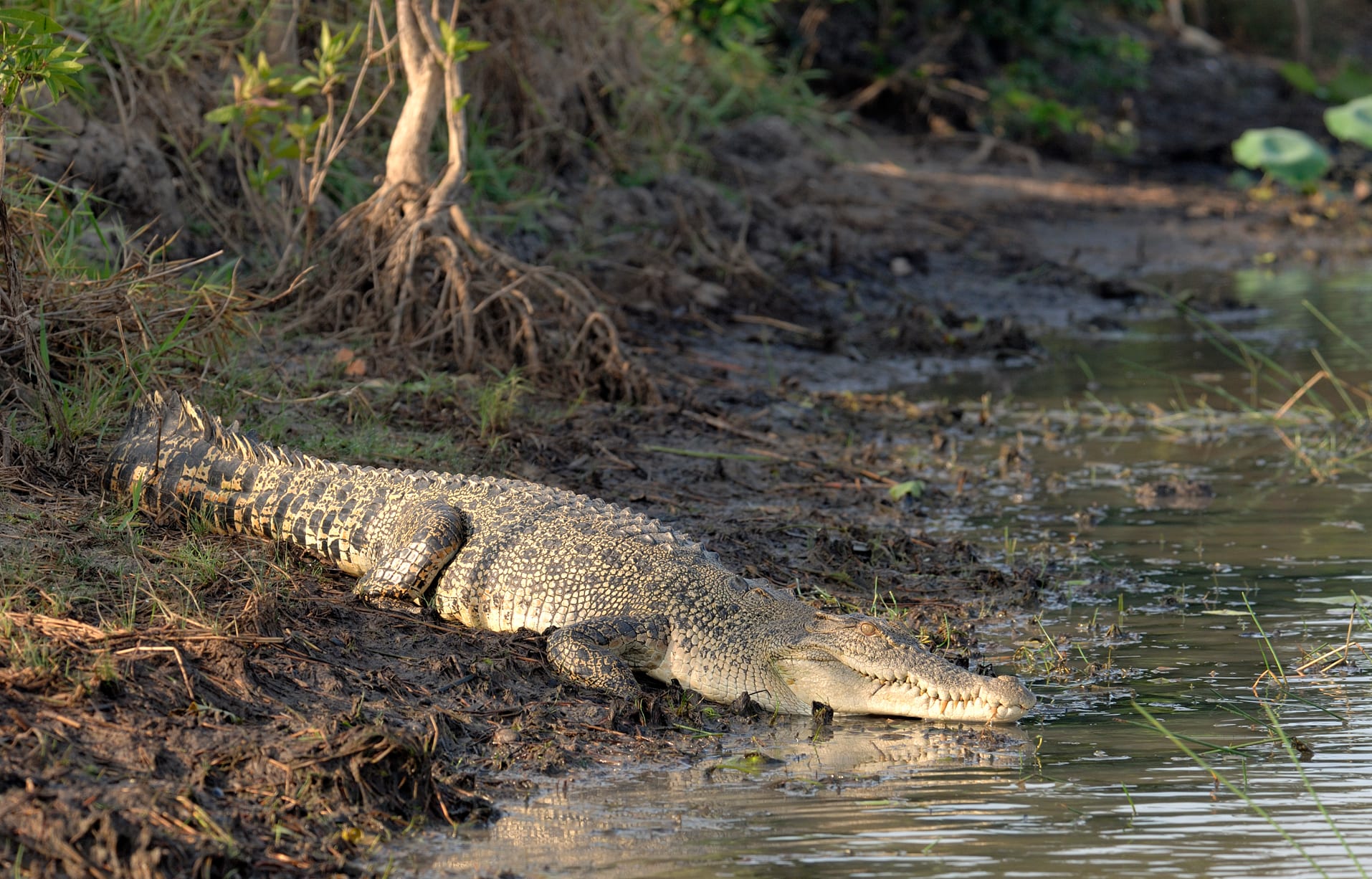
Many of Australia's most dangerous animals are not uniquely Australian at all; they belong to the warm Indo-Pacific. The saltwater crocodile ranges from India's east coast across South-East Asia to northern Australia, where an estimated 100,000 to 200,000 adults now live after hunting cut the northern population by 95 per cent by 1971. One or two fatal attacks are reported in Australia each year, a low figure that may owe much to warning signs at rivers, lakes and beaches.
The deadliest box jellyfish are largely confined to the tropical Indo-Pacific. In Australia most deaths are caused by the largest species, Chironex fleckeri, which has caused at least 64 deaths since the first report in 1883; after a severe sting the heart can stop within two minutes. The thumbnail-sized Irukandji jellyfish has been confirmed to have killed two people, both in 2002. Even so, in parts of the Malay Archipelago box jellyfish kill far more people than in Australia. The blue-ringed octopus is found from Japan to Australia, and the stonefish, ten species of cone snail and 11 venomous stingrays add to the list.
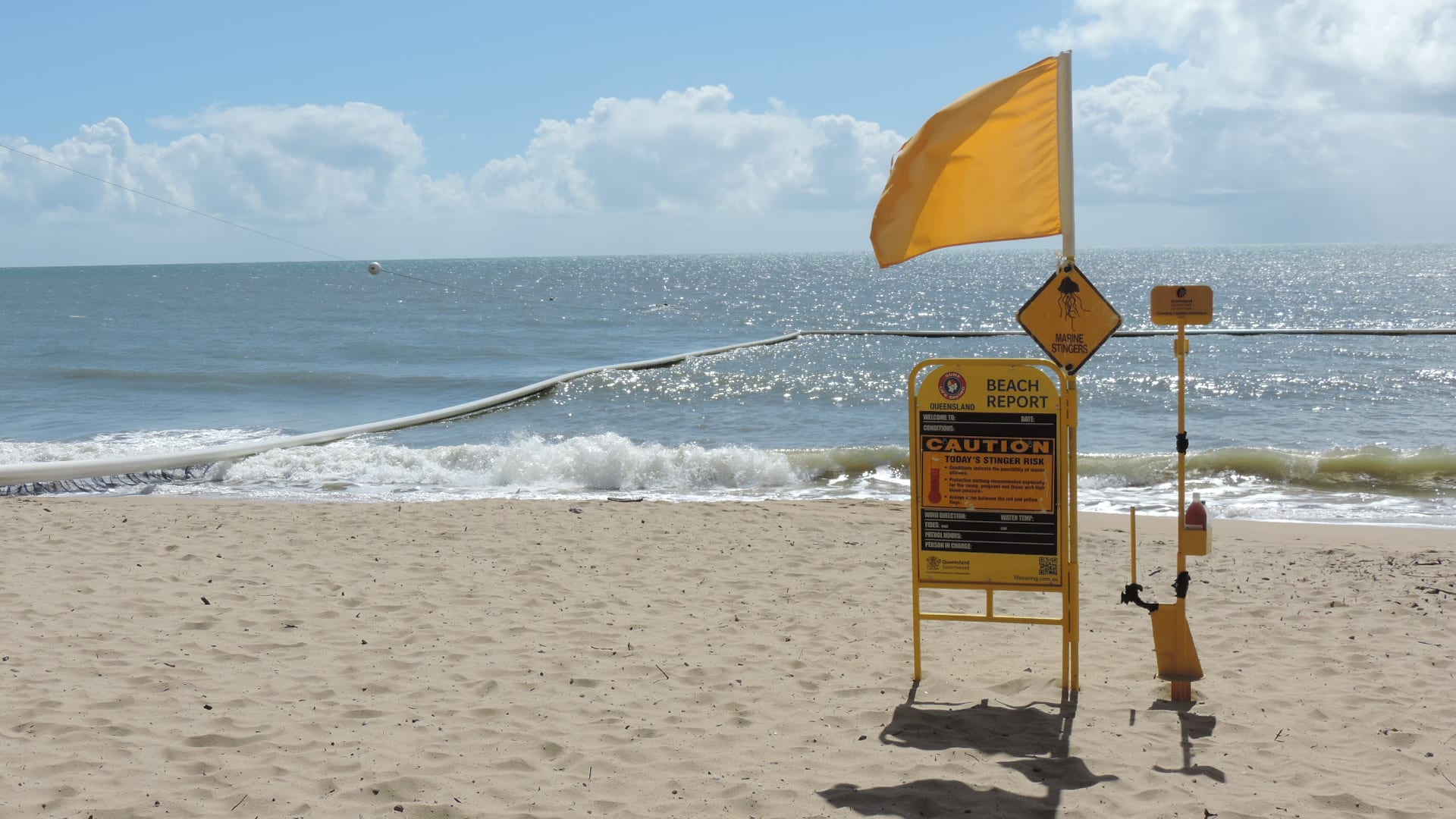
Nets keep jellyfish away from swimming areas, and vinegar is kept on beaches for first aid.
Dangerous, but rarely deadly
What turned the danger into a manageable risk was medicine and caution. Wide access to antivenom and good medical care has cut snakebite deaths to a few a year, even though between 3 and 18 people in every 100,000 are bitten annually. Australian first aid for snakebite relies on pressure immobilisation, firmly bandaging and keeping still the bitten limb, because the main danger comes from neurotoxic elapid venom. Beaches carry vinegar and stinger nets, crocodile country is signposted, and most victims of Irukandji stings recover: of 62 people treated in 1996, nearly half went home within six hours.
Compare the global picture: worldwide, snakebite envenoms 1.8 to 2.7 million people a year and kills tens of thousands, by some estimates more than 100,000. Australia has an unusual number of animals that could kill a person. Very few of them actually do.