History · Marshall Islands
Why does Bikini Atoll still stand empty?
Nuclear tests left caesium in Bikini's soil that its food plants absorb; a 1970s homecoming failed, and cleanup has stalled over standards and money.
By Globeway Editorial · 13 October 2026
The short answer
Between 1946 and 1958 the United States set off 23 nuclear devices at Bikini Atoll, after moving its 167 inhabitants away with a promise that they could come home. The tests, above all the vast Castle Bravo explosion of 1954, left the islands contaminated with radioactive material, particularly caesium-137. Bikini's coral soil is poor in potassium, so its plants soak up caesium in its place, and the coconuts, breadfruit and pandanus that islanders live on carry the radiation into anyone who eats them.
The islanders did try to return. About 100 went back in 1972 after they were told it was safe, but within six years scientists found sharply rising caesium in their bodies, and everyone was evacuated again in 1978. Since then cleanup plans have stalled over standards and money. Today the atoll is looked after by a handful of caretakers and visited by divers and scientists, while the Bikini people, more than 5,000 of them by 2016, live scattered across the Marshall Islands and the United States.
1946 | The 167 people of Bikini leave for Rongerik Atoll in March; the first two atomic tests follow in July. 1948 | After near-starvation on Rongerik and a stay on Kwajalein, the community moves to tiny Kili Island. 1954 | Castle Bravo, the largest American nuclear test, is detonated at Bikini. 1958 | The last of 23 tests at the atoll. 1968 | President Lyndon B. Johnson promises the Bikini people they can go home. 1972 | About 100 islanders return to Bikini Island. 1978 | The 178 people then living on the atoll are evacuated a second time. 2010 | UNESCO lists Bikini Atoll as a World Heritage Site.
"Everything is in God's hands"
Bikini is a ring of 23 islands around a lagoon of about 229 square miles, part of the Marshall Islands, which the United States had taken from Japan during the Second World War. In February 1946 Commodore Ben Wyatt, the American military governor, asked the atoll's 167 people to leave temporarily so that the United States could test atomic bombs for "the good of mankind and to end all world wars". After what was described as confused and sorrowful deliberation, their leader, King Juda, agreed with words that translate as "Everything is in God's hands."
They believed they would soon be home. Instead they were taken to Rongerik, an uninhabited atoll one-sixth the size of Bikini, where by 1947 they were starving. After six months on Kwajalein they chose Kili Island, where 184 of them landed in November 1948. Kili covers just 0.36 square miles and has no lagoon; heavy surf for much of the year made fishing and canoe voyaging, the centre of Bikini life, almost impossible.
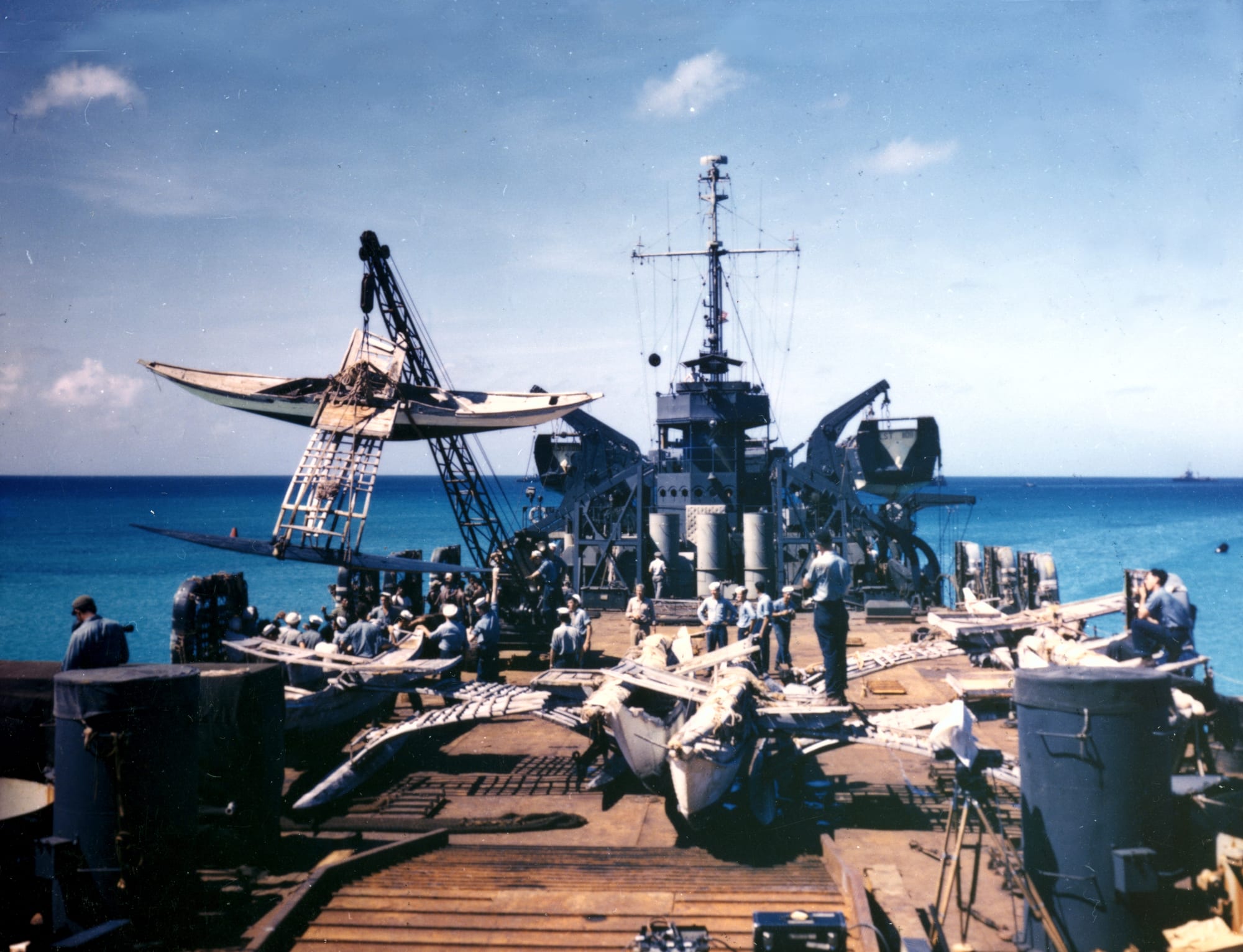
The whole community left in a single week in March 1946, taking their belongings and whatever building materials they could save.
Twelve years of tests
The first series, Operation Crossroads, began in July 1946 with two bombs aimed at a fleet of target warships moored in the lagoon. The second, Baker, was set off underwater and drenched the ships in radioactive water; Glenn Seaborg, the longest-serving chairman of the Atomic Energy Commission, later called it "the world's first nuclear disaster". A third test was cancelled because the target ships could not be decontaminated.
Testing resumed in 1954, ending any hope of an early return. Castle Bravo, the biggest American test of all, yielded 15 megatons, two and a half times what its designers had predicted and about 1,000 times the power of the Hiroshima bomb. It left a crater 6,500 feet across and 250 feet deep, and its fallout of pulverised coral fell on the inhabited atolls of Rongelap and Utirik. More tests followed in 1956 and 1958. Together they left the islands contaminated with enough radioactivity, above all caesium-137, to poison food grown in the soil.
Coconuts that carry caesium
Caesium sits in the same chemical family as potassium, which plants need and take up eagerly. Ordinary soil is full of potassium, but Bikini's coral soil has very little, so its plants absorb caesium in a very similar way instead. The radioactivity passes straight into the coconuts, pandanus and breadfruit that were the staples of island life.
That chemistry wrecked the first homecoming. In 1968, on scientific advice that radiation had fallen far enough, President Johnson promised the Bikini people they could go back. Debris was cleared and coconuts were replanted, but the Atomic Energy Commission found that coconut crabs were still too radioactive to eat. Three extended families, about 100 people, moved back in 1972 anyway. Later tests found contaminated wells, then strontium-90 in the well water above American limits, and finally an 11-fold rise in the caesium-137 in the residents' bodies, linked to the coconut milk they drank. In September 1978 the 178 people on the atoll were evacuated again.
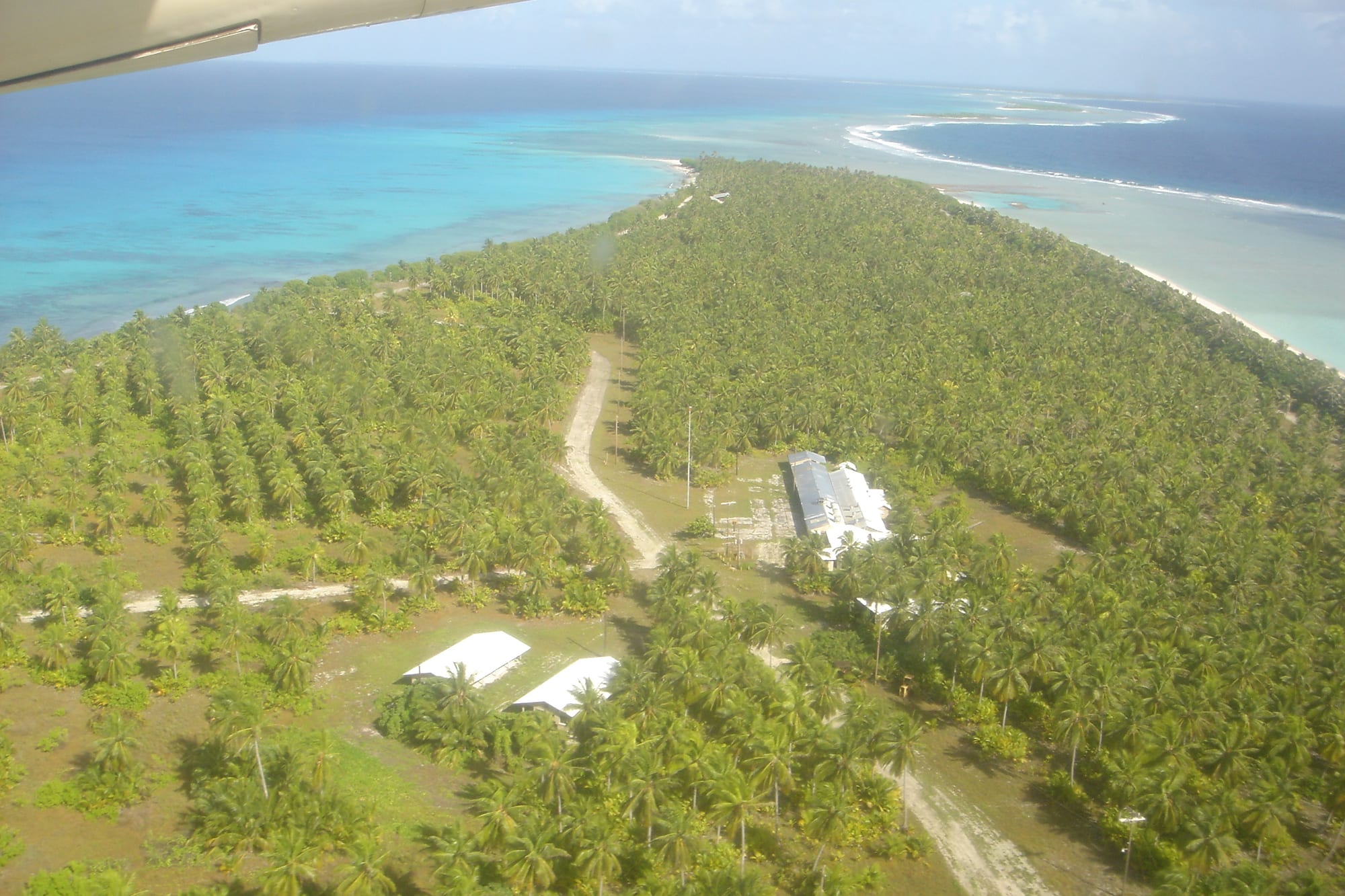
After the tests, Bikini and Eneu islands were replanted with coconuts in a square grid, each tree 30 feet from the next. Visitors are still advised not to eat the atoll's plants or wildlife.
Standards, money and time
Compensation followed: 75 million dollars in 1986 under the Compact of Free Association with the United States, and 90 million more in 1988 specifically for cleanup. Work on a hotel, docks and roads began. Then, in 1995, the Bikini council learned that a US Environmental Protection Agency standard required radiation to be cut to 15 millirems a year, far below the 100 millirems the Department of Energy had used. The cost of cleanup rose sharply and the effort stalled. In 1998 an advisory group of the International Atomic Energy Agency recommended that Bikini Island should not be permanently resettled.
Conditions are improving. A 2012 assessment by Lawrence Livermore National Laboratory found caesium-137 falling considerably faster than expected, and scientists say that scraping off the topsoil and adding potassium fertiliser could bring doses very close to the 15-millirem standard. The islanders want the topsoil removed, but lack the money: a trust fund that held 59 million dollars in 2017 had fallen to about 100,000 dollars by March 2023, and a state of emergency was declared on Kili that year.
There is also a human obstacle. Of the 5,400 Bikini islanders counted in 2016, only 25 had lived on the atoll in 1946. Virtually no one alive has made a life there, while Kili itself, rising barely 10 feet (3 metres) above the sea, was swamped by waves at least five times between 2011 and 2015, spoiling its wells. In 2015 the Bikini council even asked to use its funds to move its people again, this time outside the Marshall Islands.
Bikini today
UNESCO named Bikini a World Heritage Site in 2010 as a symbol of the dawn of the nuclear age, citing the warships sunk in the lagoon in 1946 and the giant Bravo crater. The lagoon, left largely undisturbed for decades, now teems with sea life, sharks included, and in 2017 Stanford University scientists reported marine life apparently thriving in the crater. In seasons when trips run, small groups of experienced divers reach it on live-aboard boats between May and October to explore the wreck of the aircraft carrier USS Saratoga and the Japanese battleship Nagato. Ashore, four to six caretakers keep watch over islands whose owners are still waiting to go home.
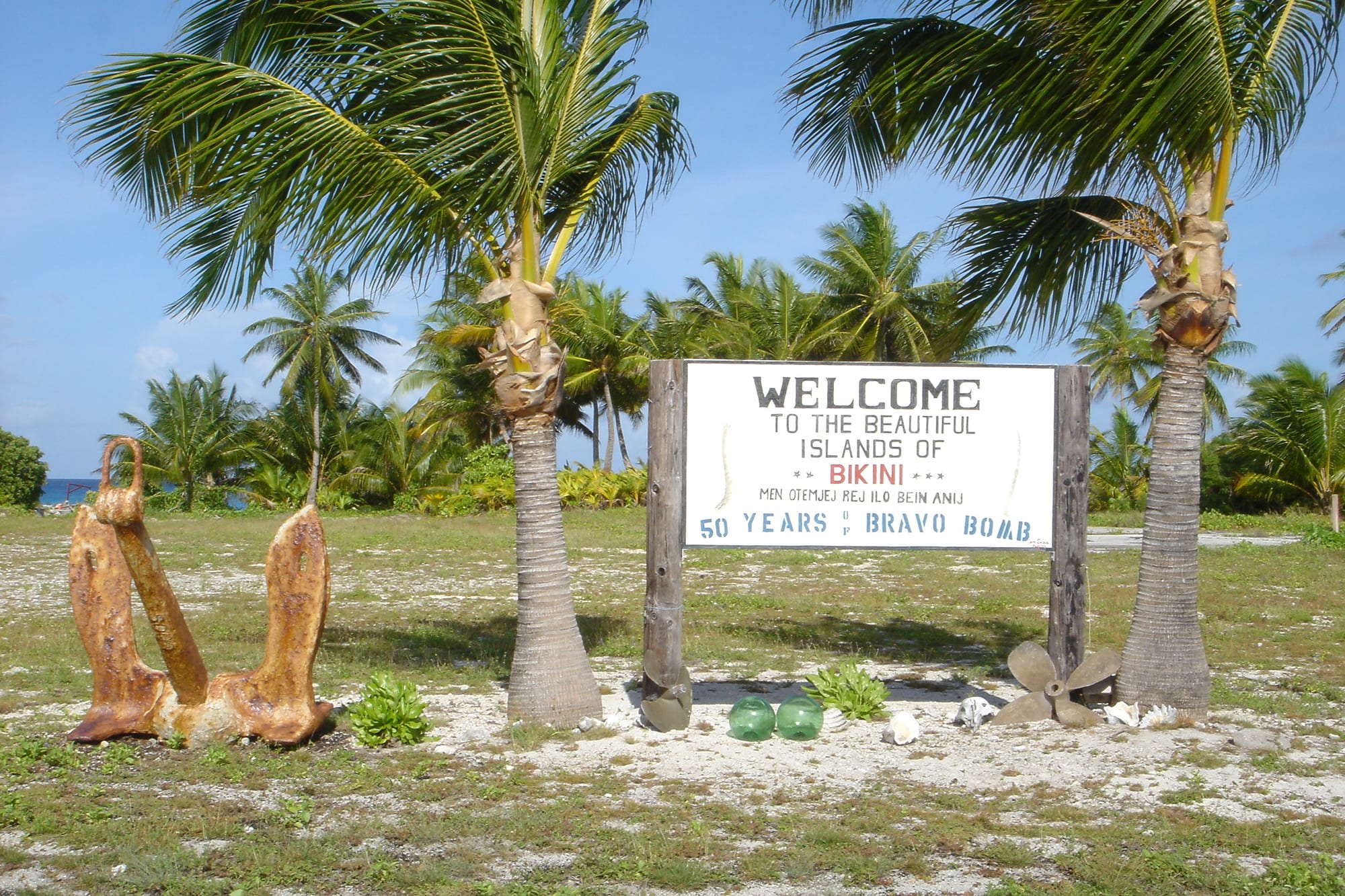
The Marshallese line on the sign, "Men otemjej rej ilo bein anij", is the phrase King Juda spoke when he agreed to leave: everything is in God's hands.