Daily Life · Finland
Why does Finland have a sauna for every two people?
For centuries the sauna was where Finns washed, healed, gave birth and even lived, and modern housing simply built one into almost every home.
By Globeway Editorial · 13 October 2026
The short answer
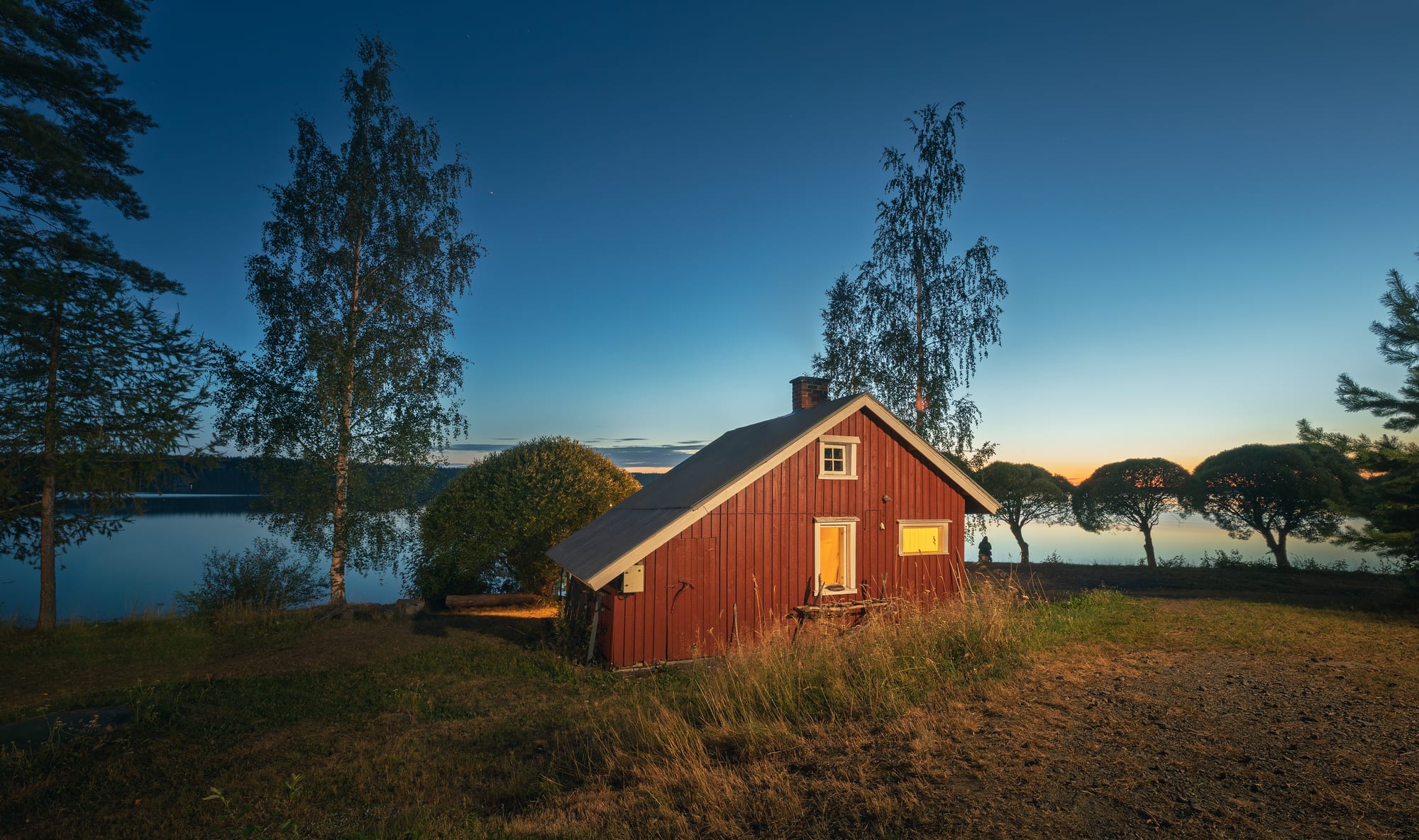
Because for most of Finnish history the sauna was not a luxury but the most useful room a household had. It was the cleanest, warmest space on a farm, so people washed there, nursed the sick there, gave birth there and laid out their dead there, and new settlers often lived in the sauna until the main house was built. Finland had what that required: plenty of wood to build and heat one, and space to put it.
When Finns moved into towns and apartment blocks in the 20th century, they took the habit with them. Builders added shared saunas to apartment buildings and then, from the late 1960s, private saunas inside the flats themselves. No one knows the exact total: official statistics record about 2 million, and estimates run from 2.8 to 3.2 million, for a population of about 5.6 million. That is roughly one sauna for every two people, and on the higher estimates even more.
A pit, a pile of hot stones and a lot of wood
The earliest Finnish saunas date from the Bronze Age, about 1500 to 900 BC. They were pits dug into the ground with a heap of stones at the bottom. Once the stones were hot, the pit was covered with poles and hides, birch bark or turf, and water poured on the stones filled it with steam. For centuries afterwards every Finnish sauna was a savusauna, or smoke sauna: a log room with no chimney, in which a pile of stones called a kiuas was heated by burning large amounts of wood for about six to eight hours. The smoke was then let out, and a well-heated smoke sauna gave warmth for up to 12 hours.
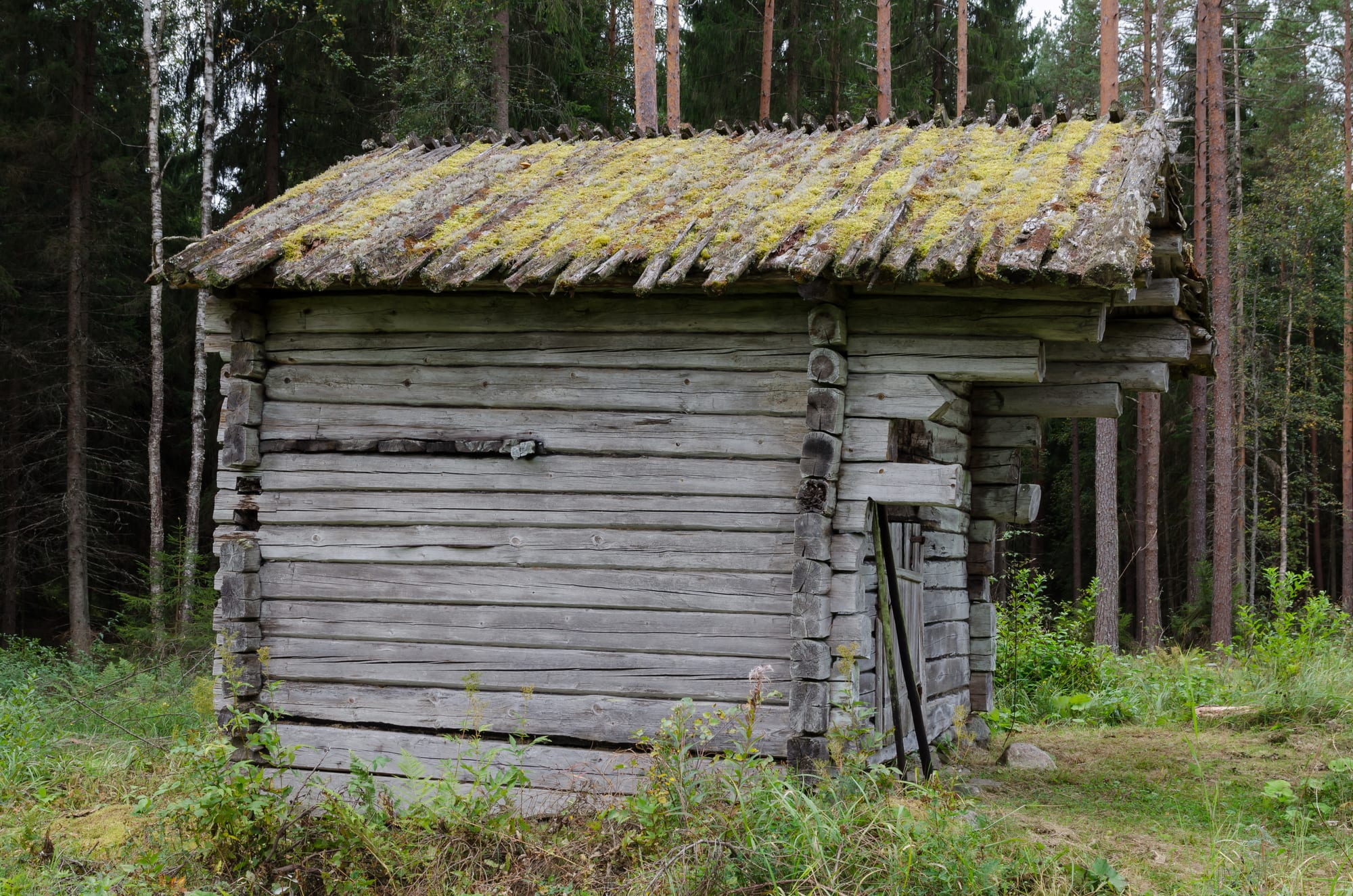
Smoke saunas were cheap, simple to build and durable, and the smoke itself helped to disinfect them. Unlike many more densely populated parts of Europe, Finland had the wood needed to build and heat a sauna in abundance.
The word sauna is an ancient Finnish word for both the bath and the building, and it is the best-known Finnish word in many other languages. A professor opening the Academy of Turku in 1640 already remarked that all Finns were diligent sauna-goers.
The cleanest room in the house
Because a sauna could be kept clean and heat water, it was used for far more than bathing. The sick were treated there, women gave birth there in an almost sterile room, and the newborn had its first wash there. The dead were washed in a cold sauna. In western Finland, malt was made in it. On a new farm the sauna was often the first building put up and served as the family's home until the farmhouse was finished.
It also carried a spiritual weight. The steam that rises when water hits the stones has its own word, löyly, which is never used for ordinary steam; its original sense was "spirit, breath, soul", and related words in Hungarian and Khanty still mean soul. In Finnish folk belief the sauna was a place of renewal and healing but also close to the other world, and after the arrival of Christianity people blessed themselves as they entered. A sauna elf, the saunatonttu, was believed to live there and to punish anyone who swore, argued or behaved badly; an old saying holds that one should behave in the sauna as in church. As a place to give birth it was considered safe from hostile supernatural forces, and folk poems survive about women in labour in great distress because they could not reach one.
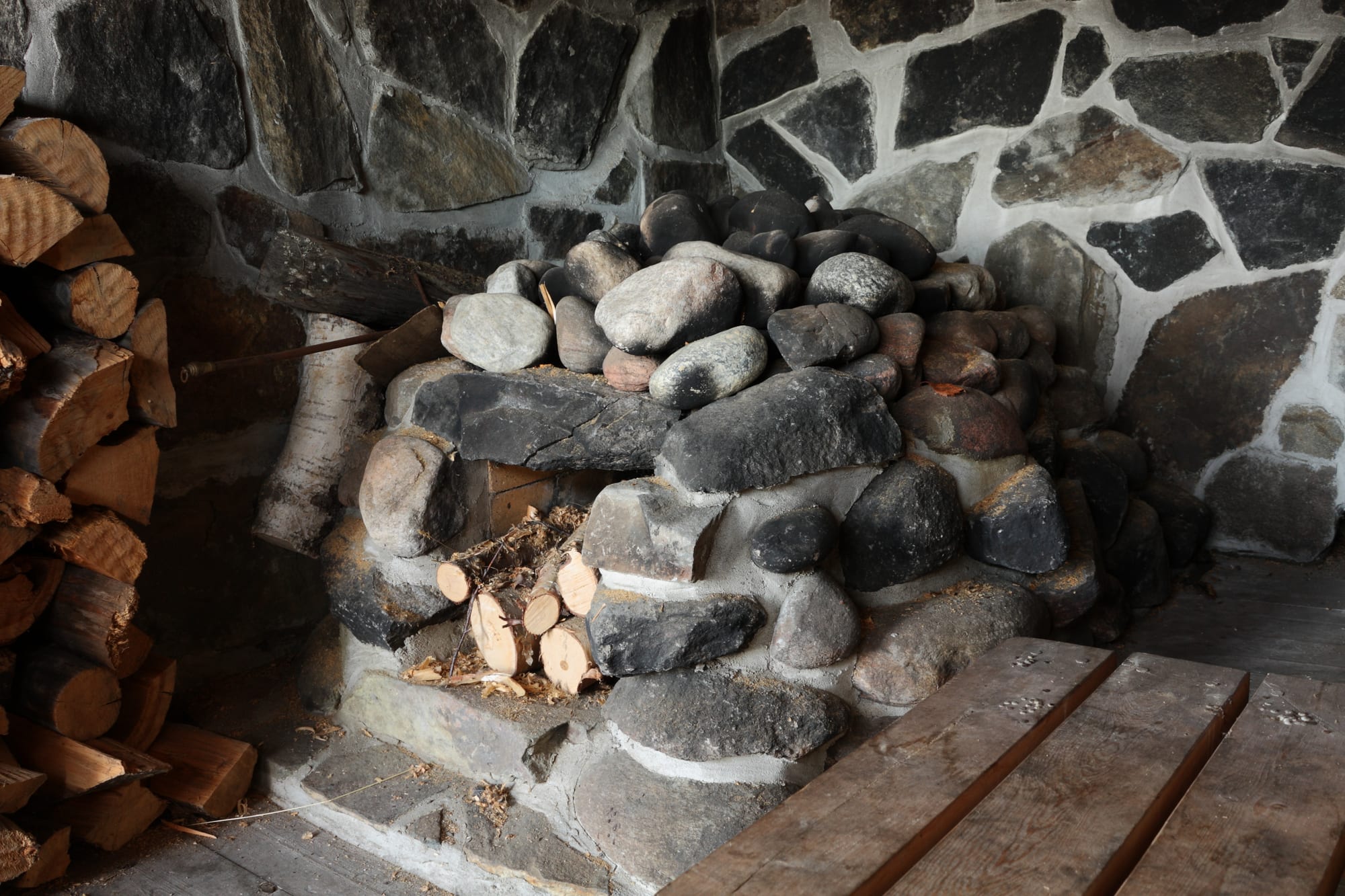
A smoke sauna stove is heated once, before bathing begins, and stores its heat in hundreds of kilos of stone. Only about 25,000 smoke saunas remain in use in Finland today, around one per cent of the total.
From public bathhouses to a sauna in every flat
The modern explosion in numbers came with the move to towns. From the 19th century, Finnish towns opened public saunas, because private ones would not fit on small urban plots and tightening fire regulations made them expensive. In 1907 Helsinki alone had 49 public saunas and bathhouses. They began to disappear quickly from the 1950s, replaced at first by shared sauna sections in apartment buildings, many of them built in the 1960s and 1970s, and then, from the late 1960s, by saunas inside individual flats. Swimming halls built in the same decades added more.
Technology made this possible. Industrialisation brought the wood-burning metal stove with a chimney, and the electric sauna stove, introduced in 1938 by Metos in Vaasa and in use in homes from the 1950s, needs no flue or open fire, which made a sauna practical in a city flat. New apartment blocks now usually come with a sauna in each home. By 2015, about 1.6 million of the roughly 2 million registered saunas in Finland were part of a home. Many families have another at their summer cottage, where life tends to revolve around the sauna and a lake to cool off in.
A weekly ritual, and a national one
The habit is still strong. A study in late 2022 found that about half of Finns take a sauna at least once a week, and Saturday is the traditional sauna day. A typical session runs at 80 to 110 °C, cycling between the hot room and a cool-off in a shower, a lake, or in winter a hole cut in the ice. Saunas before holidays carry ritual weight too: the Christmas Eve sauna and the midsummer sauna, decorated with rowan or birch branches, are long-standing customs.
The sauna is also treated as an equaliser. No titles or hierarchies are used inside, even in the military. Saunas are found in corporate headquarters and the Parliament House, and when Finnish peacekeepers served in Eritrea, a sauna was one of the first buildings they put up. In December 2020 UNESCO inscribed sauna culture in Finland on its list of the intangible cultural heritage of humanity.
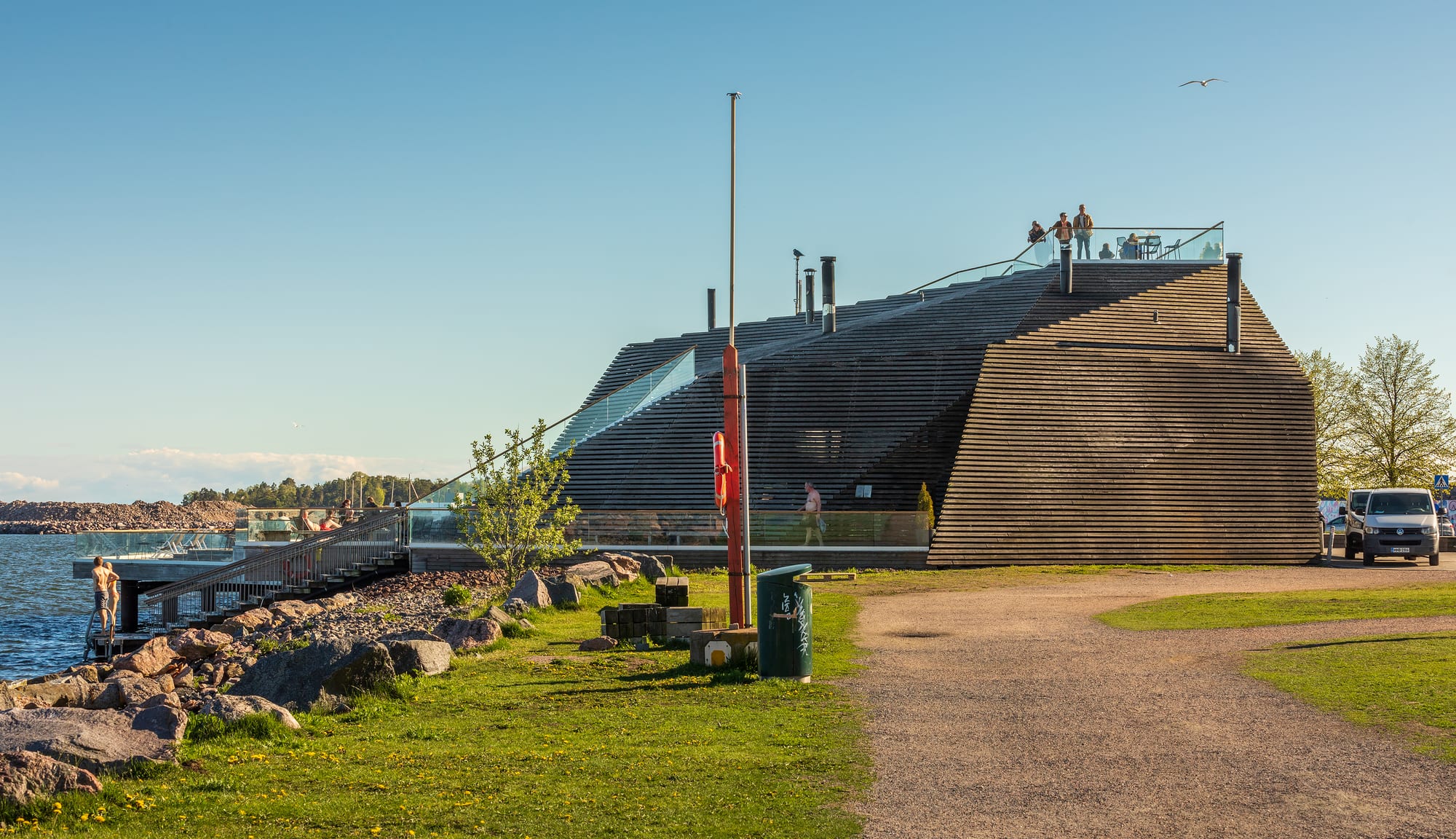
Public saunas, which dwindled as private ones spread, have found a new following since the 2000s as city culture has been valued afresh. Tampere's Rajaportti sauna, first opened in 1906, is still a public sauna and has been placed under protection as a heritage building.