History · Puerto Rico
Why does Puerto Rico belong to the United States but not vote for president?
Presidents are chosen by electors from the states, and Puerto Rico is a territory, not a state, so its 3.2 million American citizens have no electoral votes.
By Globeway Editorial · 13 October 2026
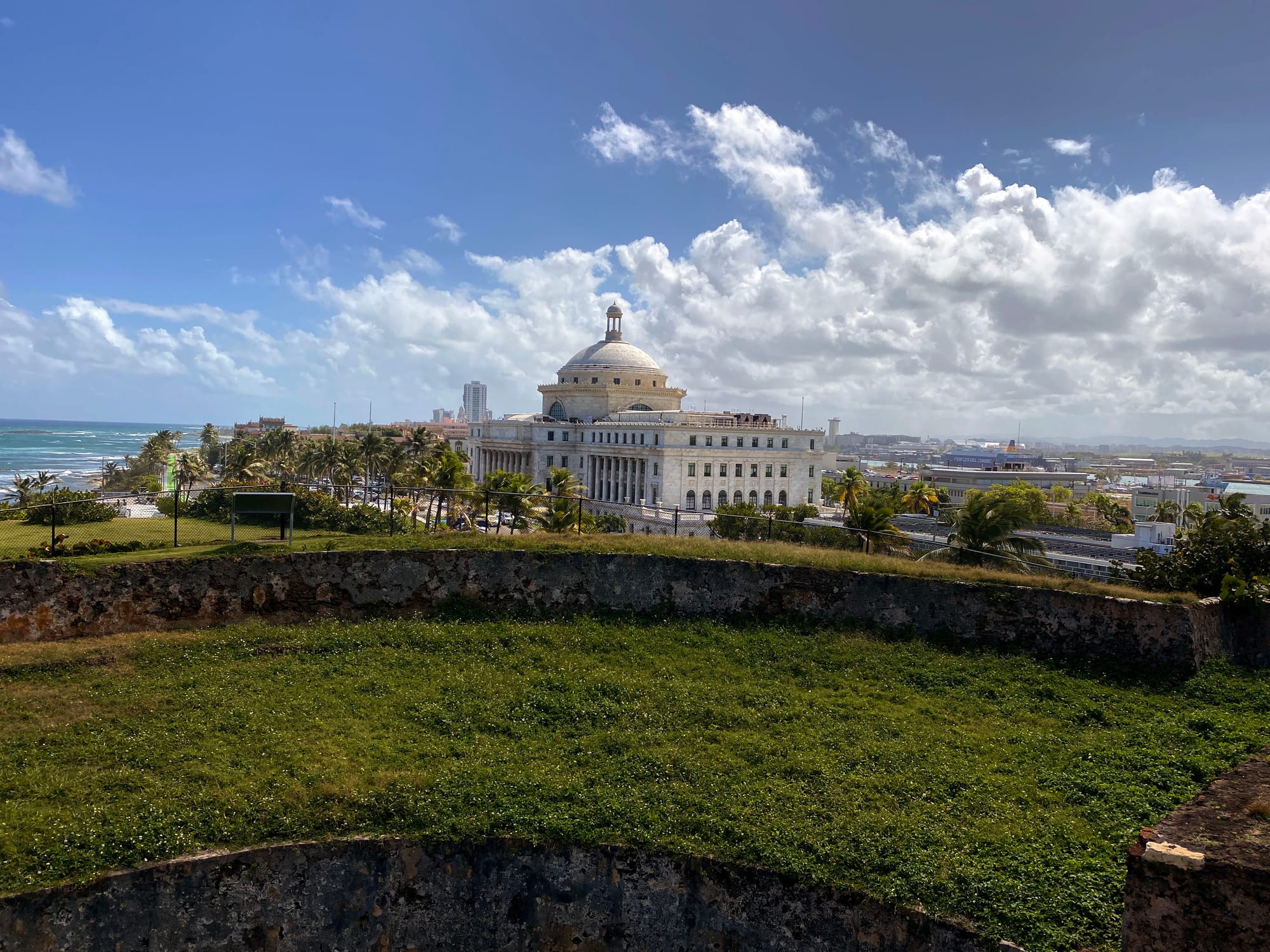
The short answer
Americans do not elect their president directly. The Constitution says the president is chosen by electors appointed by "the several States", and a 1961 amendment added the District of Columbia. Puerto Rico is neither. It is an unincorporated territory of the United States: under American sovereignty, but not a state, and so it has no electors in the Electoral College. Its people have been United States citizens since 1917, yet those living on the island cannot vote in the presidential election.
It is a matter of residence, not of who someone is. Puerto Rico's voters take part in the Democratic and Republican primaries that pick each party's candidate, and any Puerto Rican who moves to one of the 50 states can register and vote for president there. The same citizen who moves back to the island loses that vote. The island also has no voting members of Congress, only a Resident Commissioner who can speak but not vote on the floor of the House.
Taken in a war
Puerto Rico was a Spanish colony for four centuries. In 1898 the United States went to war with Spain over Cuba, and the conflict spread to Spain's other islands. American troops landed on Puerto Rico on 25 July 1898, and fighting there continued until an armistice on 13 August. Under the Treaty of Paris that followed, Spain gave up Puerto Rico, Guam and the Philippines to the United States.
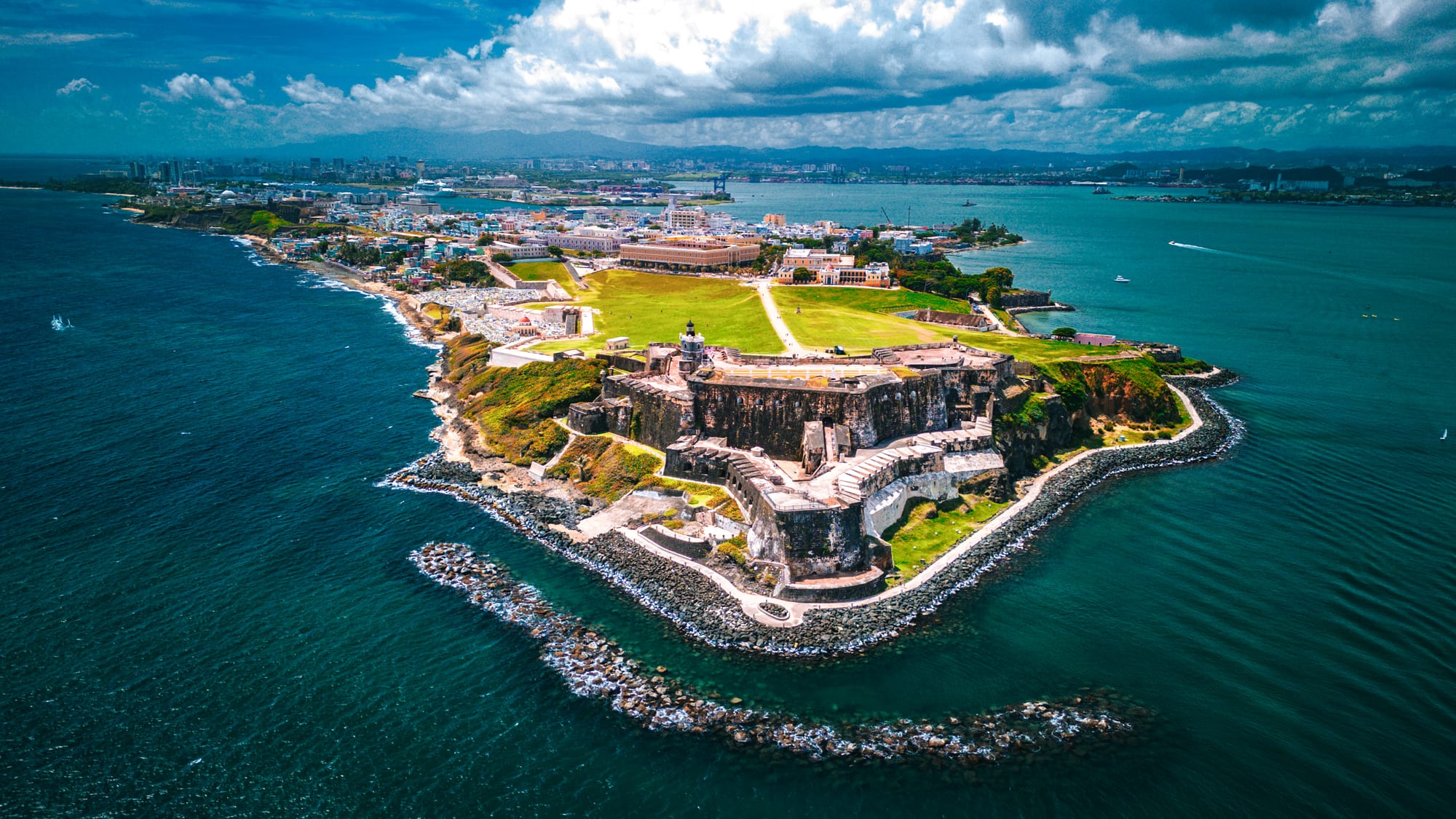
The American flag replaced the Spanish one over El Morro on 18 November 1898.
Cuba was set on a path to independence. Puerto Rico was kept. Congress gave it a civil government under the Foraker Act of 1900, which let the American president appoint the governor and the Executive Council that served as the upper house of the legislature.
Belonging to, but not part of
The awkward question of what the new possessions actually were went to the Supreme Court in a series of 1901 decisions known as the Insular Cases. The justices invented a distinction. Incorporated territories, such as Alaska and Hawaii, were destined for statehood and the Constitution applied there in full. Unincorporated territories, such as Puerto Rico, Guam and the Philippines, were not, and only the rights the court considered fundamental applied. In the court's own phrase, Puerto Rico was "a territory appurtenant and belonging to the United States, but not a part of the United States".
That formula still defines the island's position. It is why the right to a jury trial was ruled not to be guaranteed there, and why Congress has been able to treat Puerto Rico differently in federal programmes. The decisions are now widely regarded as having rested on the racist ideas of their time. In 2022 Justice Neil Gorsuch wrote that they "have no foundation in the Constitution and rest instead on racial stereotypes", but they have not been overturned.
Citizens by act of Congress
In March 1917, as the United States moved towards entering the First World War, Congress passed the Jones–Shafroth Act. It gave the island a bill of rights and a fully elected legislature, and made anyone born in Puerto Rico on or after 11 April 1899 an American citizen. Not everyone wanted it. Luis Muñoz Rivera, the island's Resident Commissioner in Washington, argued that imposing citizenship would interfere with Puerto Ricans' hopes of independence.
That citizenship rests on an act of Congress rather than on the Constitution itself. Puerto Ricans serve in the armed forces whenever service is compulsory on the mainland, and all residents pay federal taxes, though for various reasons only some owe federal income tax. What they do not get is a say in choosing the government that makes those rules. Lawsuits arguing that citizens in Puerto Rico have a constitutional right to vote for president, brought again and again by the lawyer Gregorio Igartúa, have all failed, because the Constitution gives electors to states. The 23rd Amendment of 1961, which gave the District of Columbia electors, did not mention the territories.
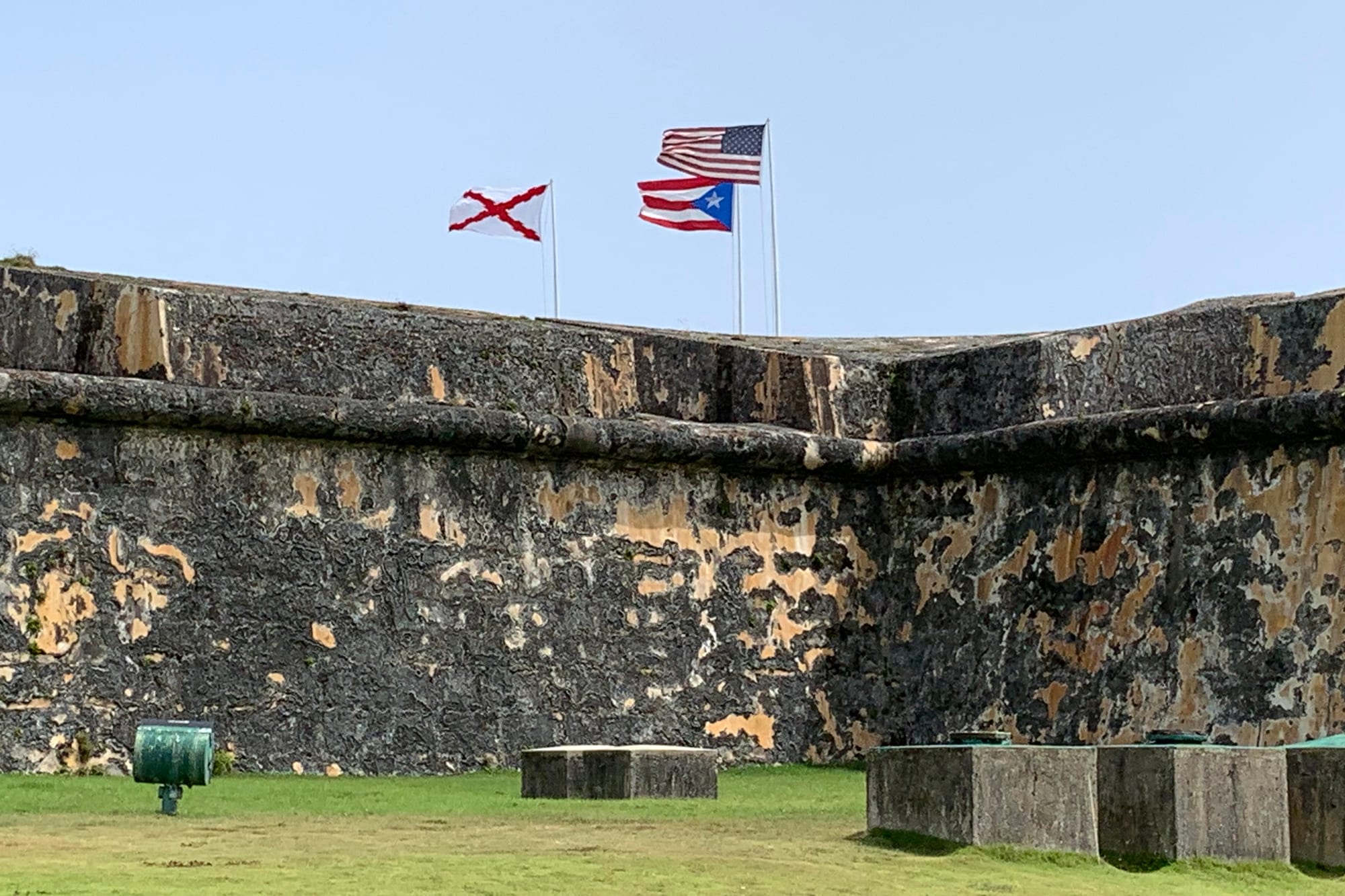
El Morro's flagpoles customarily fly all three, a reminder of four centuries under Spain and more than a century under the United States.
A commonwealth, not a state
In 1950 Congress allowed Puerto Rico to write its own constitution, which took effect on 25 July 1952. The island became the Commonwealth of Puerto Rico, in Spanish the Estado Libre Asociado, or Free Associated State. It runs its own internal affairs with an elected governor and legislature, and in 1953 the United Nations removed it from its list of non-self-governing territories.
But the label changed less than it suggested. The US secretary of the interior said at the time that the new constitution would not alter the island's political relationship with the United States. Puerto Rico remains subject to the Territorial Clause of the Constitution, which gives Congress power over federal territory, and ultimate authority over the island still rests with Congress and the president.
Statehood, independence or neither
Puerto Ricans have voted on their status many times, and the results have shifted. In 1967 the commonwealth option won a clear majority. In 1993 it won a plurality, but not a majority. Since 2012 every status vote has favoured statehood: 61.2 per cent in a two-part ballot in 2012, 97 per cent in 2017 on a turnout of about 23 per cent after opponents boycotted it, 52.5 per cent in a straight yes-or-no vote in 2020, and nearly 59 per cent in 2024.
None of these referendums binds Congress, which alone can admit a new state. The most recent serious attempt, the Puerto Rico Status Act, passed the House of Representatives in 2022 but was never taken up by the Senate. Island politics still divide largely along these lines: the Popular Democratic Party favours keeping and improving the commonwealth, the New Progressive Party wants statehood, and the Puerto Rican Independence Party seeks independence.
- 25 July 1898
American troops land on Puerto Rico during the Spanish–American War.
- 1900
The Foraker Act sets up a civil government run largely from Washington.
- 1901
The Supreme Court's Insular Cases define Puerto Rico as an unincorporated territory.
- 2 March 1917
The Jones–Shafroth Act makes Puerto Ricans US citizens.
- 25 July 1952
The Commonwealth constitution takes effect.
- 1961
The 23rd Amendment gives Washington, DC, presidential electors, but not the territories.
- 2022
The Puerto Rico Status Act passes the House but stalls in the Senate.