Culture & Customs · Switzerland
Why does Switzerland have four national languages?
Switzerland grew by joining regions that already spoke different languages, and in 1848 and 1938 it chose to make all four equal rather than impose one.
By Globeway Editorial · 13 October 2026
The short answer
Switzerland was never a country built around one language. It grew over centuries out of a league of small German-speaking states that gradually gained, conquered or allied with neighbouring lands where people spoke French, Italian and Romansh, a language descended from the Latin of Roman times. Those language borders were already ancient when the lands joined, and they largely held.
When the modern Swiss federal state was created in 1848, its constitution declared German, French and Italian three equal national languages instead of forcing one on everyone. Romansh, spoken by only a small minority in the mountains of the canton of Graubünden, was added as the fourth in 1938 by popular vote, partly as an answer to Italian nationalists who claimed it was just a dialect of Italian. The Swiss often describe their country as a Willensnation, a "nation of volition", held together by will rather than by a shared language.
Where Latin survived and where it did not
The language map of Switzerland was drawn in the centuries after Rome fell. Two Germanic peoples settled the area. In the north and east, the Alemanni settled the plateau from the 5th century and the Alpine valleys later, and the east became Alemannic, German-speaking territory. In the west, the Burgundians settled near Lake Geneva in about 443 and built a kingdom, but they did not impose their Germanic language on the Gallo-Roman population they ruled. The west kept its Romance speech, the Franco-Provençal dialects, which have since largely given way to standard French.
In the early Middle Ages the border between the two roughly followed the river Aare; it later drifted west. Today it runs from the Jura Mountains in the north along lakes Biel, Neuchâtel and Morat, through the bilingual cantons of Fribourg and Valais, down to the Italian border near Zermatt. The Swiss call it, half joking, the Röstigraben, the "rösti ditch", after rösti, a fried potato dish from the canton of Bern seen as typical of German-Swiss cooking.
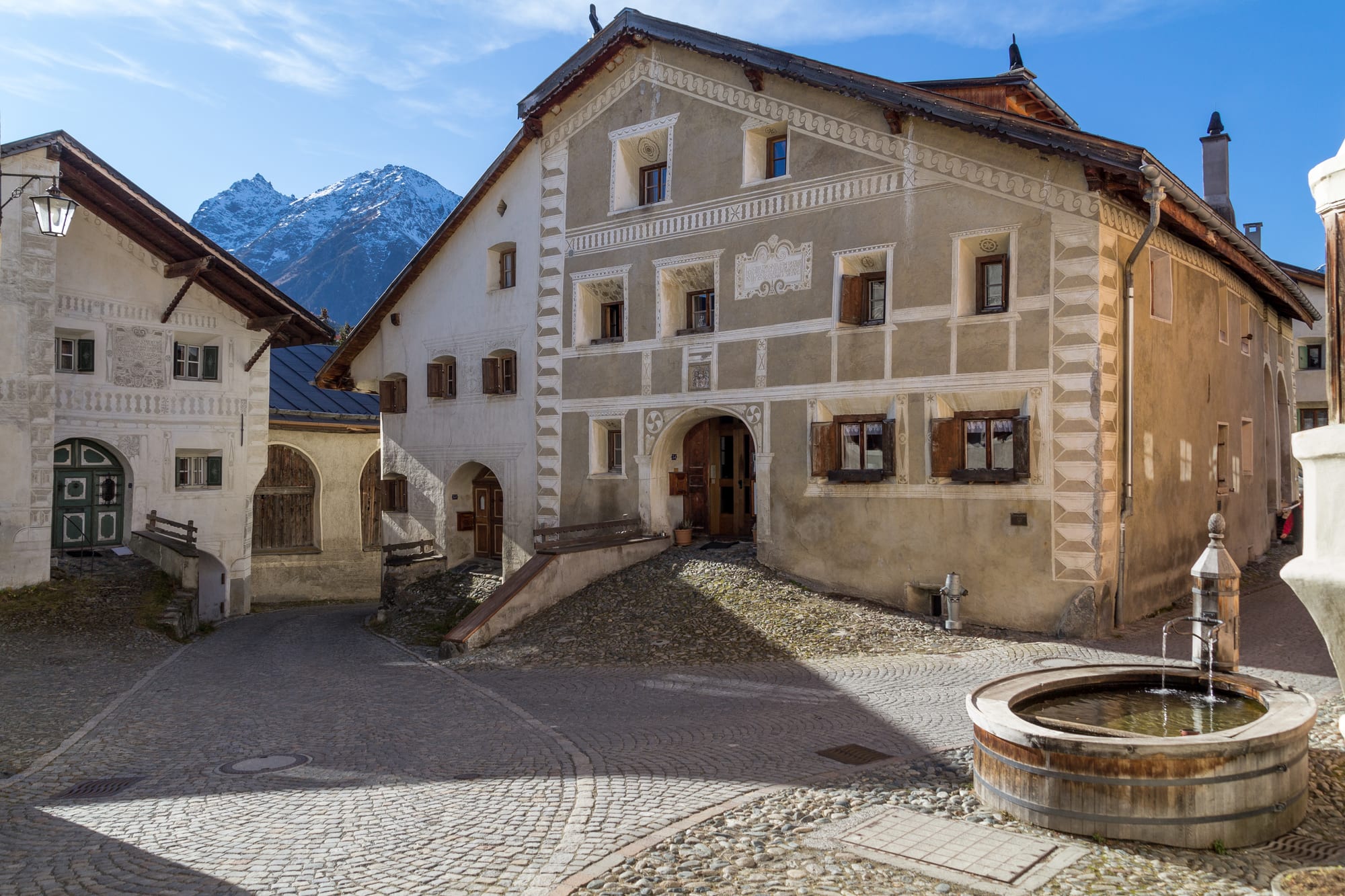
In the south-east, the Romans conquered the mountains of today's Graubünden in 15 BC, and the spoken Latin of their soldiers, merchants and officials replaced the local languages by the 5th or 6th century. That became Romansh. Over the following centuries German pushed into its valleys: the northern areas were German-speaking by the 12th century, and after a fire virtually destroyed the city of Chur in 1465, the German-speaking craftsmen who came to rebuild it made German its majority language.
A German-speaking league that grew
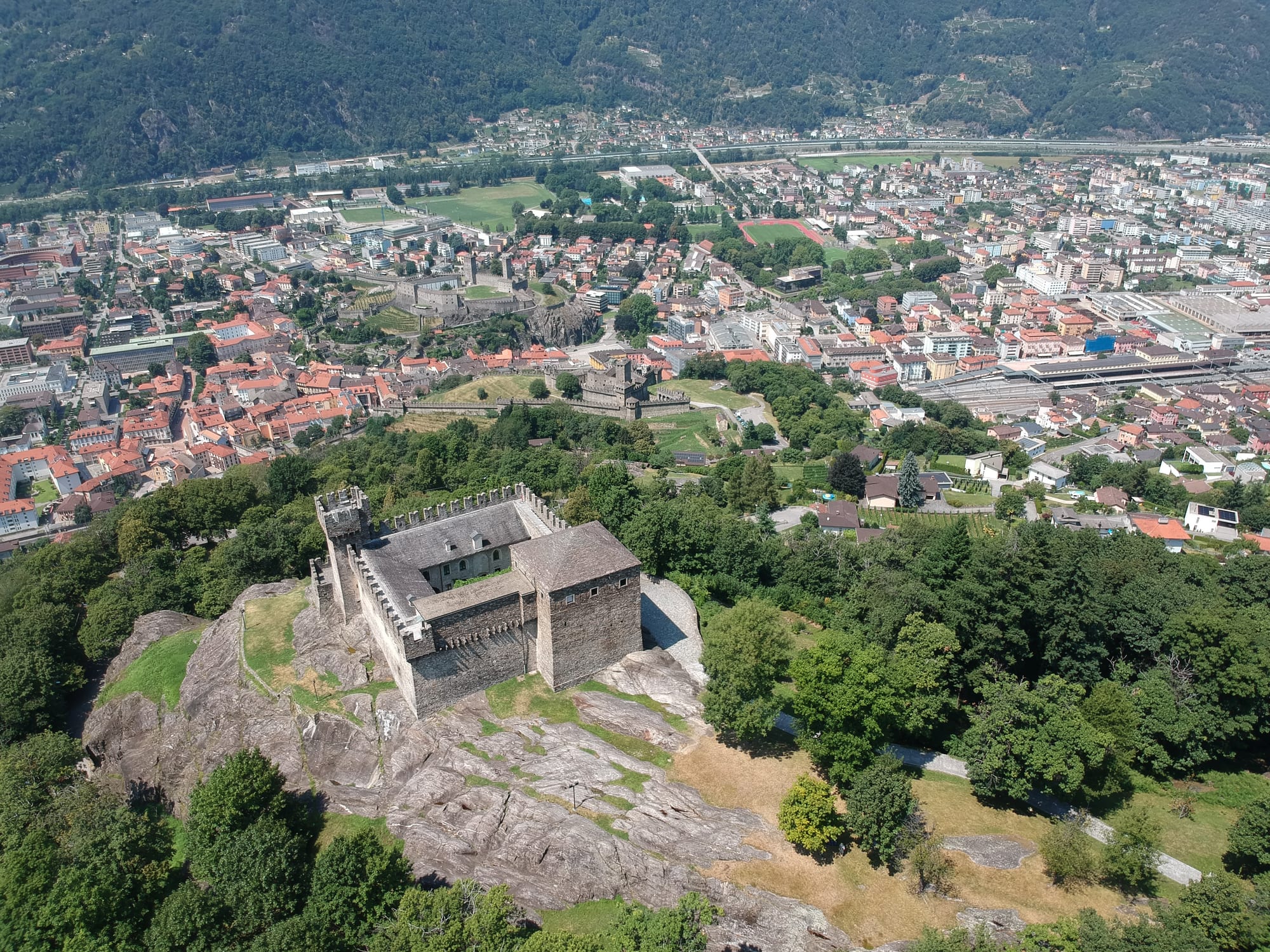
The Old Swiss Confederacy that formed in the late Middle Ages was a loose alliance of small German-speaking states, or cantons, inside the Holy Roman Empire. As it grew stronger it took over lands that spoke other languages. Led by Uri, it pushed south over the Alps and by 1515 had conquered Ticino. In 1536 Bern and Fribourg conquered the French-speaking Vaud. These new lands were not equal members: they were ruled as subject territories by the cantons that had taken them.
The equality that later defined Switzerland came from outside. In 1798 French revolutionary armies overran the country, claiming to liberate places such as Vaud, and set up the Helvetic Republic. For subject lands such as Vaud and Ticino, the short-lived republic brought freedom from rule by other cantons. In 1803 Napoleon's Act of Mediation made Vaud, Ticino and Graubünden full cantons with equal rights, and in 1815 the French-speaking Geneva and Neuchâtel and the bilingual Valais joined, giving Switzerland its present borders.
Equal by law: 1848 and 1938
After a short civil war in 1847, Switzerland became a federal state with a new constitution in 1848, and that constitution declared German, French and Italian its three equal national languages. No single language was placed above the others.
Romansh had to wait. It was finally recognised as the fourth national language in 1938, after a referendum. The timing mattered. The vote came during the "spiritual national defence", a campaign in the years before the Second World War to stress Switzerland's special status as a multinational country, with one Swiss identity spanning its cultural differences and four languages. Italian nationalists had argued that Romansh was merely a dialect of Italian, an argument that could support a claim to parts of Graubünden; making it a national language answered that claim.
At first the status was largely symbolic. Only in 1996, after another referendum, did Romansh become a partial official language of the federal government: Romansh speakers can write to federal authorities in their own language and receive an answer in it.
How four languages work in practice
Switzerland does not expect everyone to speak all four. Instead it follows a "territorial principle": each canton decides which national languages are official on its own ground. German is the only official language in 17 cantons, French in Geneva, Vaud, Neuchâtel and Jura, and Italian in Ticino. Bern, Fribourg and Valais are officially bilingual in German and French, and Graubünden is trilingual in German, Romansh and Italian.
The numbers are very unequal. In 2020, 62.3 per cent of the population spoke German at home, 22.8 per cent French, 8 per cent Italian and only 0.5 per cent Romansh. In the federal parliament, the National Council has simultaneous translation between German, French and Italian, while members of the Council of States are expected to understand at least German and French. Learning at least one other national language at school is considered important.
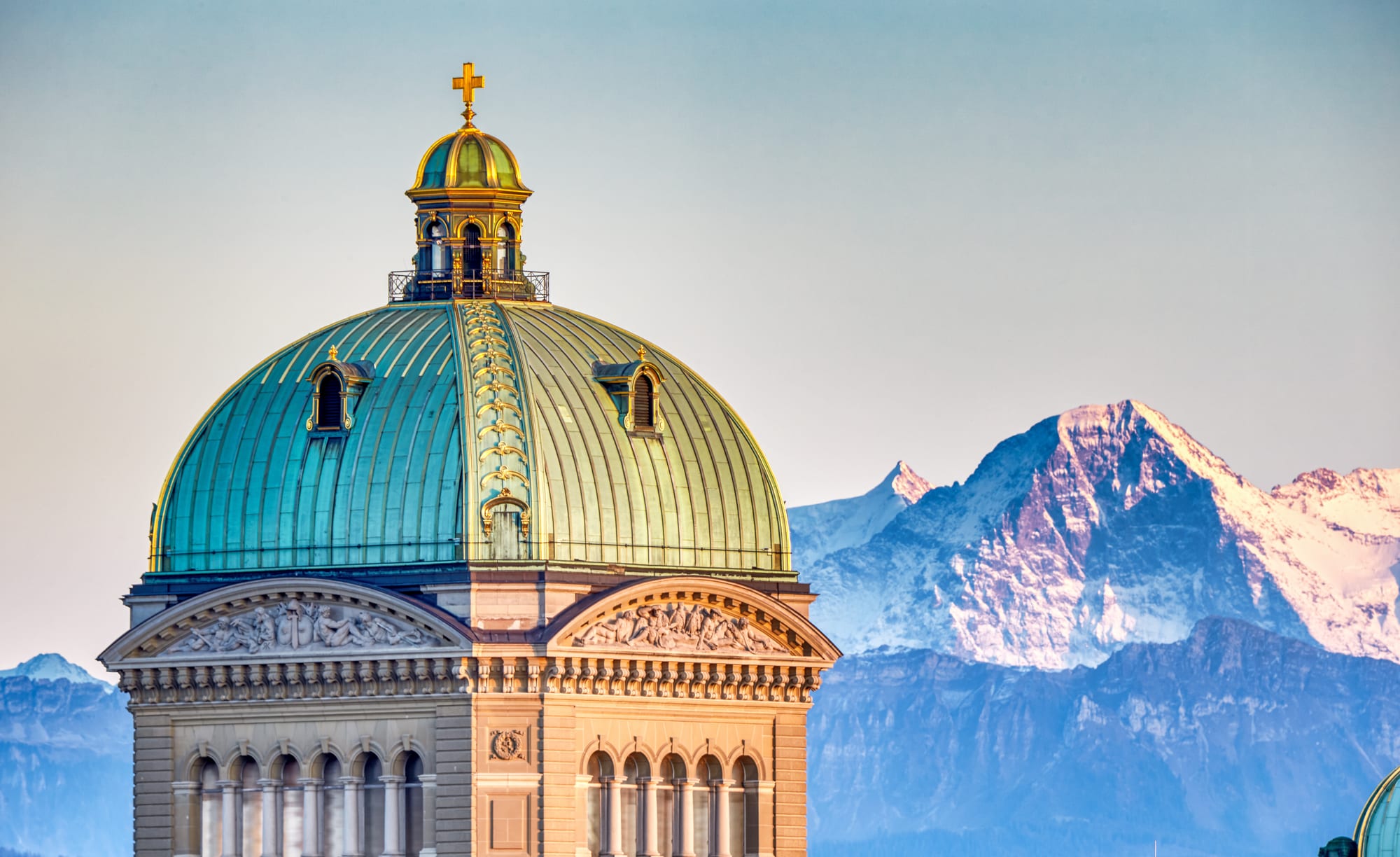
To avoid favouring any one language, Switzerland often falls back on Latin. Its coins and stamps say Helvetia, its internet domain .ch and car code CH come from Confoederatio Helvetica, the Swiss Confederation, and the Federal Palace carries the inscription Curia Confoederationis Helveticae. Many national foundations have Latin names too, such as Pro Helvetia and Pro Natura.
The language borders still show up in politics, and referendum results often split along the Röstigraben, although since the 2010s the gap between cities and the countryside has come to matter more. And when Swiss from different language regions meet, many now find it easiest to talk to one another in a fifth language: English.