Attractions & Natural Wonders · Uganda
Why does Uganda's Bwindi forest hold half the world's mountain gorillas?
Mountain gorillas survive in just two forests, and Bwindi, old, rugged and protected since 1932, is home to almost half of them.
By Globeway Editorial · 13 October 2026
The short answer
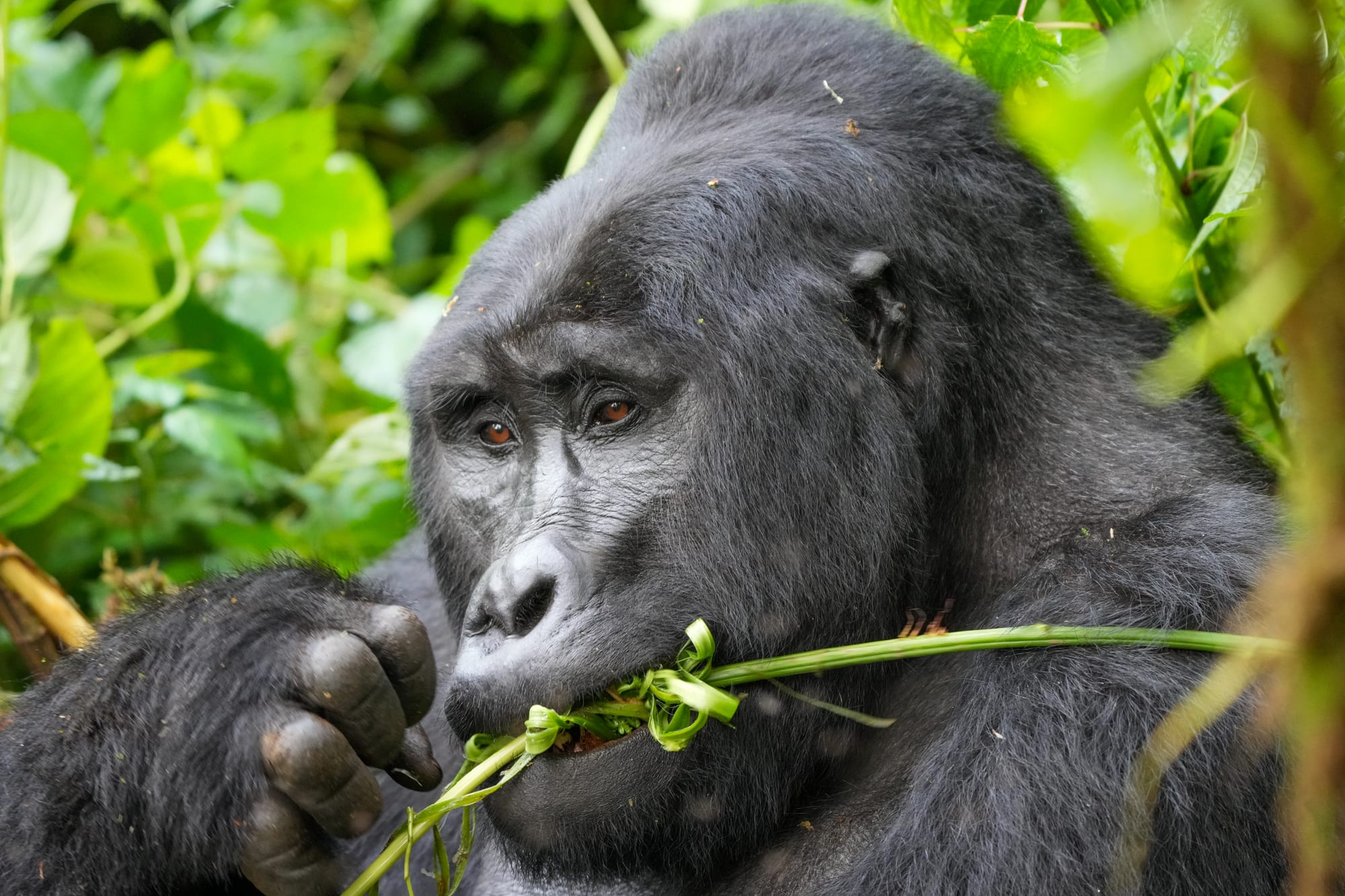
Strictly, it holds almost half, not quite half. A census in 2018 counted 459 mountain gorillas in 36 groups in Bwindi Impenetrable National Park, plus 16 solitary animals, while the world total was estimated in 2019 at 1,063.
The reason the share is so large is that mountain gorillas now survive in only two places. One population lives on the Virunga volcanoes, shared by Uganda, Rwanda and the Democratic Republic of the Congo. The other lives entirely in Bwindi, a steep, ancient forest in south-western Uganda that has been protected in one form or another since 1932. With only two homes left, each holds a large slice of the species, and Bwindi's population has been growing.
Two islands of forest
Mountain gorillas are one of two subspecies of the eastern gorilla, the largest living primate. They have been separated from their lowland relatives, Grauer's gorillas, for roughly 10,000 years. Today they live in cool, misty mountain forest along the Albertine Rift, on the western branch of Africa's Great Rift Valley.
Both of their remaining forests are surrounded by farmland. Shifting agriculture, grazing and logging have broken up and degraded the land around them, and in the late 1960s more than half of the protected Virunga area in Rwanda was cleared to grow a cash crop, pyrethrum. Gorilla numbers fell sharply. By 1981 a census found only 254 gorillas left in the Virungas.
The two populations are now cut off from each other, and from the rest of their kind. Some primatologists even argue that the Bwindi gorillas are a separate, as yet unnamed subspecies. Genome studies show that the recent decline has led to extensive inbreeding among mountain gorillas.
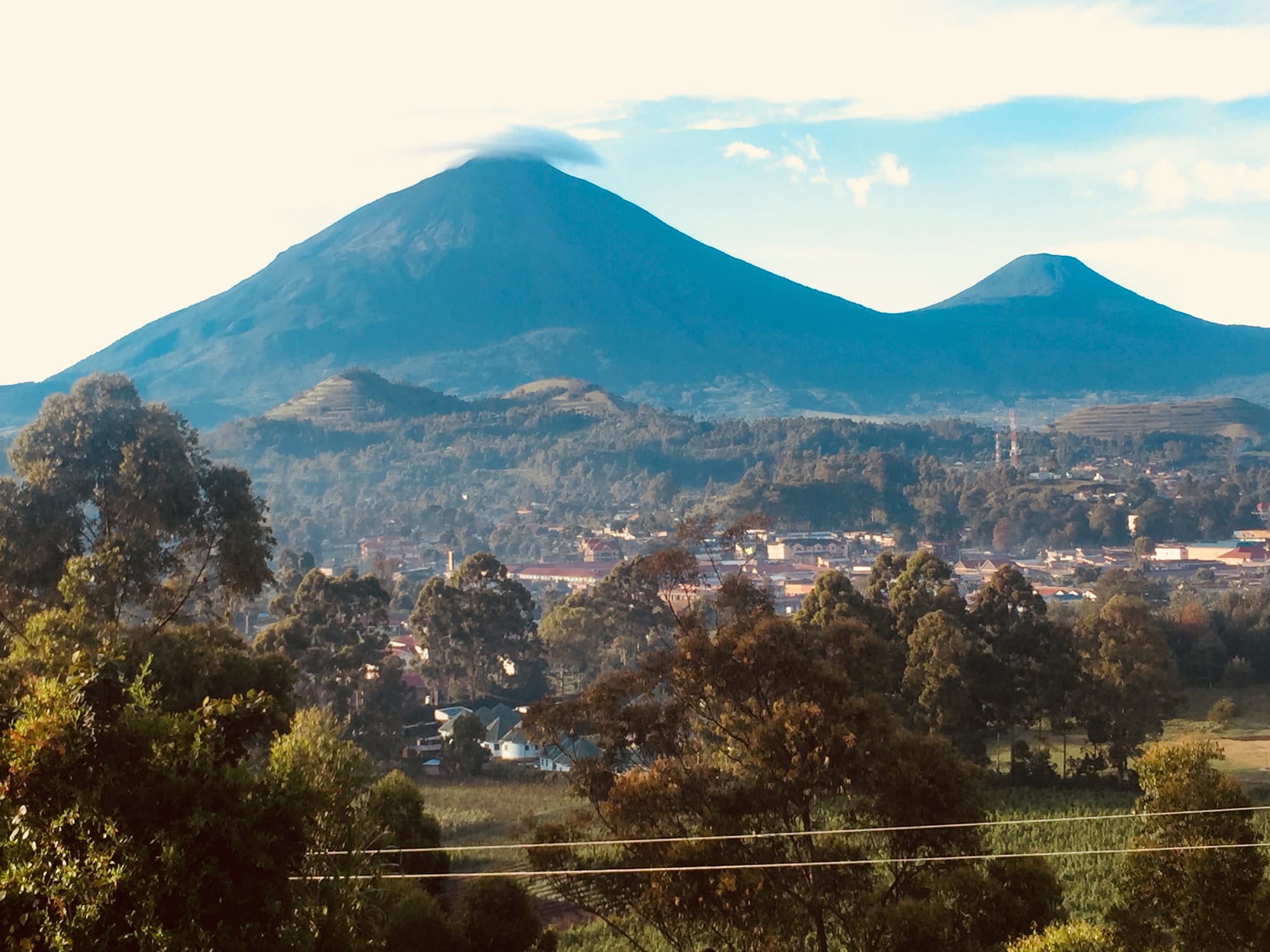
The other half of the world's mountain gorillas live on these volcanoes, divided between Mgahinga in Uganda, Volcanoes National Park in Rwanda and Virunga National Park in the Democratic Republic of the Congo. Uganda's share of the Virungas is small: Mgahinga holds only around 30 gorillas.
An old forest that is hard to get into
Bwindi's name, Impenetrable, is a fair description. The park covers about 321 square kilometres of hills and narrow valleys, can be reached only on foot, and ranges from 1,190 to 2,607 metres above sea level, with 60 per cent of it above 2,000 metres.
It is also very old, and it may have been a refuge for plants and animals during the ice ages of the Pleistocene. That long history helps explain why it is one of the richest forests in East Africa, with about 120 species of mammals, more than 350 birds and more than 1,000 flowering plants. Its forest spans both lowland and mountain types, and the wide range of heights and habitats adds to its variety.
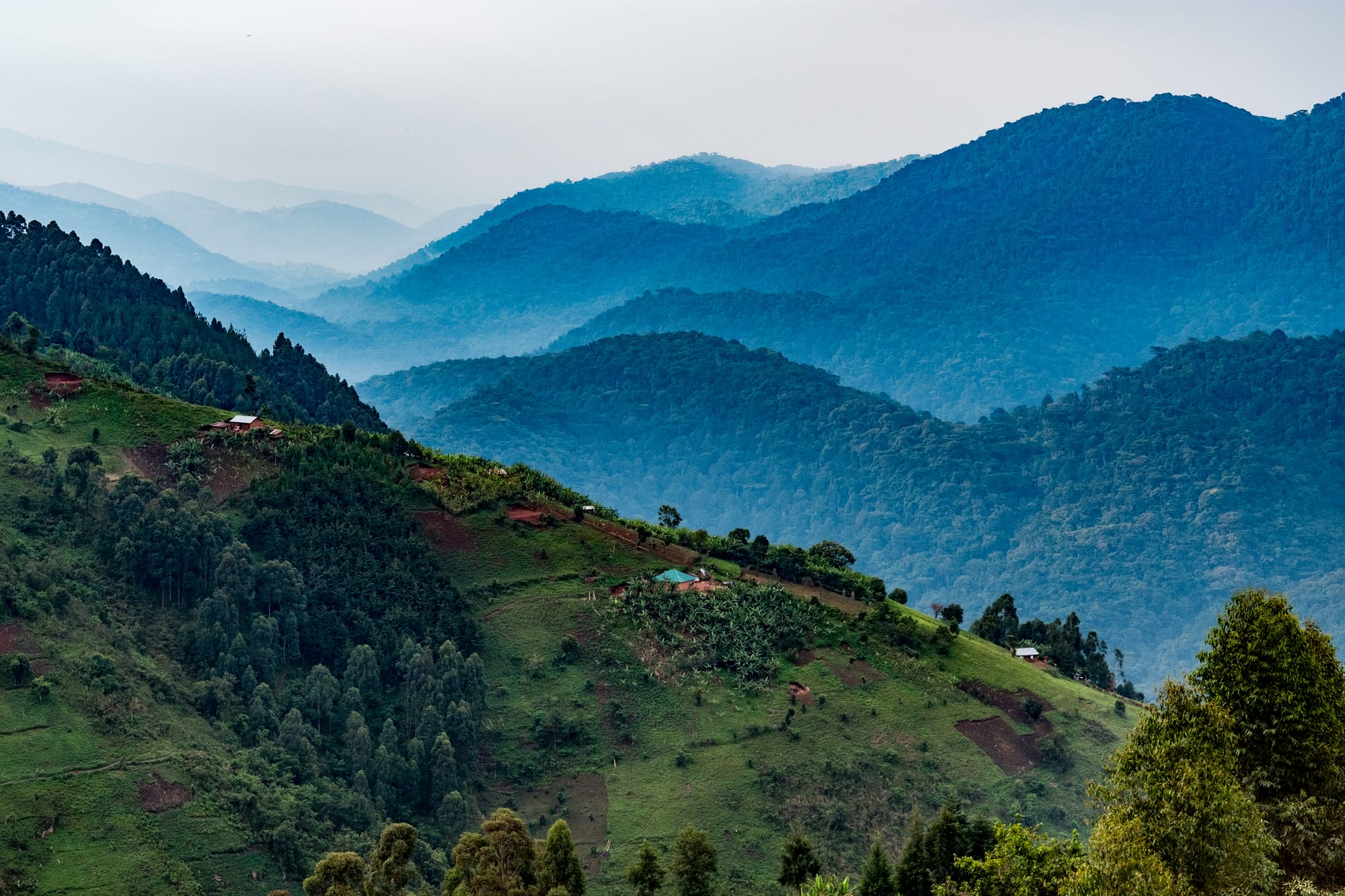
The edge of the park is sharp. The land around it holds more than 300 people per square kilometre, many of them among the poorest in Uganda, and nine in ten depend on growing their own food. Fields run right up to the trees.
Protected for almost a century
Bwindi survived as forest largely because it was protected early, long before gorilla tourism existed.
- 1932
Two blocks of the forest are made Crown Forest Reserves.
- 1964
The reserve becomes an animal sanctuary, specifically to protect its mountain gorillas.
- 1991
It becomes Bwindi Impenetrable National Park, and access for local people ends.
- 1993
Gorilla tracking opens to tourists in April.
- 1994
Bwindi is inscribed as a UNESCO World Heritage Site.
- 2018
A census counts 459 gorillas in 36 groups, plus 16 living alone.
The price of that protection fell partly on the Batwa, a hunter-gatherer people who had lived in the forest for generations, fishing, gathering wild yams and honey and visiting ancestral sites. They were evicted when the national park was created and, unlike neighbouring farmers, received no compensation. The loss of access caused resentment among other communities too: fires were deliberately lit and threats made against the gorillas.
The answer was to give neighbours a stake in the forest. Agreements now allow some controlled harvesting of resources inside the park, a share of tourism revenue goes to local communities, and a trust fund supports community development. Tension between the park and its neighbours has since eased.
Why the number keeps rising
Bwindi's gorilla count has climbed from an estimated 300 in 1997 to 320 in 2002, 340 in 2006 and 459 in 2018. Counting gorillas in such steep, dense forest is difficult, so each figure is an estimate.
Part of the growth comes from habituation, in which a gorilla group is visited calmly and repeatedly until it behaves normally around people. Computer models show that habituated groups grow faster than others, because field staff guard them more closely and vets treat them for snares and respiratory illness. Tourism pays for much of this, and visits led by rangers double as regular checks on each group.
There is a catch. Gorillas catch human diseases easily, and respiratory infections are thought to cause around a fifth of sudden deaths. Visitors are meant to stay seven metres away, and researchers recommend that some groups are never habituated, as insurance in case a human illness spreads.
Today the park's gorillas are managed in four sectors, Buhoma, Ruhijja, Rushaga and Nkuringo, by the Uganda Wildlife Authority. Bwindi also holds 426 chimpanzees, counted for the first time in 2025, along with elephants, many monkeys and a remarkable variety of birds and butterflies. Tour groups are accompanied by an armed guard, a measure introduced after an armed group crossing from the Democratic Republic of the Congo attacked the park headquarters in 1999.