Attractions & Natural Wonders · United States
Why is Death Valley the hottest place on Earth?
A deep, narrow trough below sea level, walled in by mountains and starved of rain, traps and reheats desert air until summer days pass 120°F.
By Globeway Editorial · 13 October 2026
The short answer
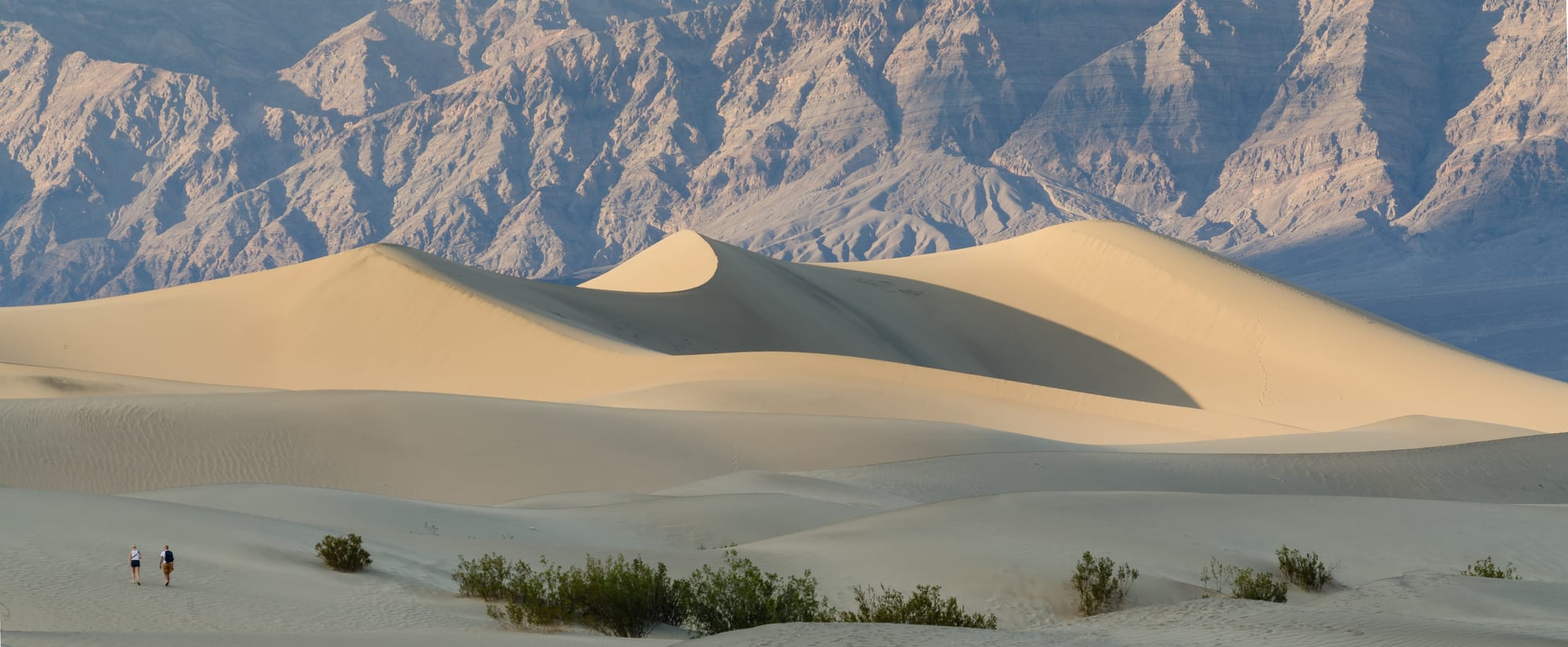
Death Valley gets so hot because its shape works like an oven. It is a long, narrow basin that sinks below sea level and is walled in by high, steep mountains. Sunshine pours through the clear, dry air onto bare, dark ground; the hot air that rises off the valley floor is trapped by the walls and recycled back down; and four mountain ranges between the valley and the Pacific strip almost all the moisture from incoming air, so there are few clouds and almost no rain to cool things off. Air sinking to the valley's low floor is also squeezed, which warms it further.
That combination gives Death Valley the highest air temperature ever officially recorded: 134°F (56.7°C) at Furnace Creek on 10 July 1913. The title comes with caveats. Many meteorologists doubt that 1913 reading, and by other measures Ethiopia's Dallol is hotter on average across the year and Iran's Lut Desert has the hottest ground. But for the heat of a summer day, measured the standard way in shaded air, no place on Earth has reliably beaten Death Valley.
A trough between mountain walls
Geologically, Death Valley is a graben: a block of land that has dropped down between two mountain ranges, the Amargosa Range to the east and the Panamint Range to the west. The result is extreme relief. Badwater Basin, on the valley floor, lies 282 feet (86 metres) below sea level, the lowest point in North America. Telescope Peak, in the Panamint Range above it, rises to 11,043 feet (3,366 metres).
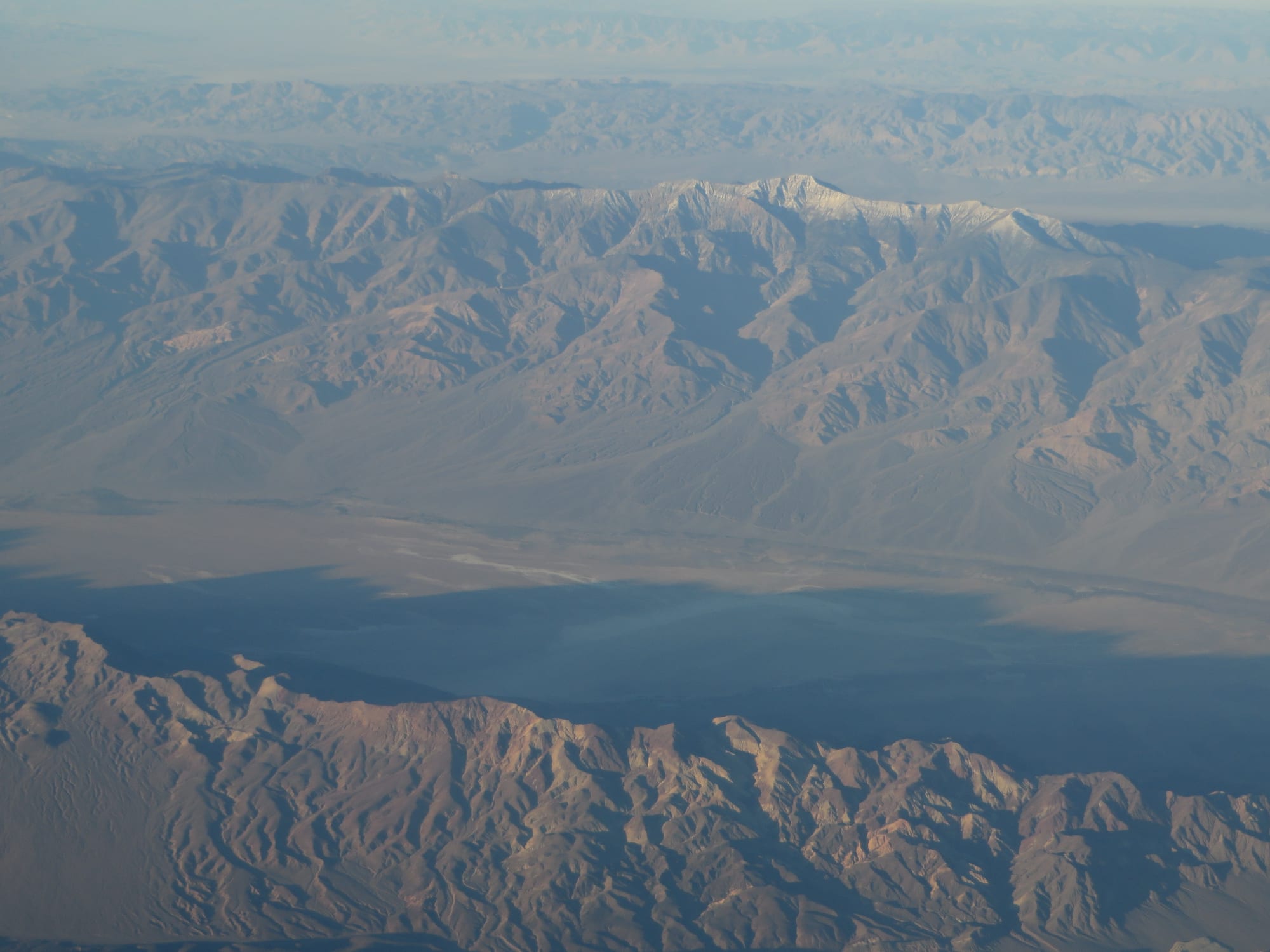
From the floor of the basin to the top of Telescope Peak is a climb of more than 11,000 feet. Walls this steep and high hem the valley's air in.
Those walls are the heart of the matter. Warm air normally rises, spreads out and cools. In Death Valley it rises, meets the steep walls and is recycled back down to the floor, where it is heated again. The valley's north–south orientation adds to the effect, because it runs across the prevailing west-to-east winds rather than along them, so fresh air does not flush the heat out.
Four mountain ranges and no rain
The second ingredient is dryness. Moisture moving inland from the Pacific has to cross four major mountain ranges, including the Sierra Nevada and the Panamint Range, before it reaches Death Valley. Each time air is forced up a range it cools, its moisture condenses, and rain or snow falls on the western slopes. By the time the air descends into the valley, there is little water left in it. This is called a rain shadow, and Death Valley sits in a fourfold one.
The numbers show how extreme it is. The valley averages 2.36 inches (60 millimetres) of rain a year. In 1929, 1953 and 1989 no rain was recorded at all, and from 1931 to 1934 only 0.64 inches (16 millimetres) fell in 40 months. Rain that does fall from the occasional storm often evaporates before it reaches the ground, a trailing curtain called virga.
Dryness matters for heat in two ways. Clear skies let the sun beat down with almost nothing in the way, especially in midsummer when it stands nearly overhead. And the valley floor of soil, rock and sand is dark and sparsely vegetated, so it soaks up that sunlight, heats intensely and warms the air above it.
Squeezed, sinking, superheated air
The third ingredient is the air's own descent. As the air sinks to the floor of a valley that lies below sea level, it is compressed by the weight of the atmosphere above, and compression heats it further. Masses of superheated air blow through the valley, pushing temperatures to extremes.
Nights bring little relief. In summer the overnight low may fall only to between 82 and 98°F (28 and 37°C). In the 1991–2020 period, the average July high was 117°F (47.4°C) and the average July low 91°F (32.8°C). July 2024 was the hottest month ever recorded there, with a daily mean of 108.5°F (42.5°C) across the whole month.
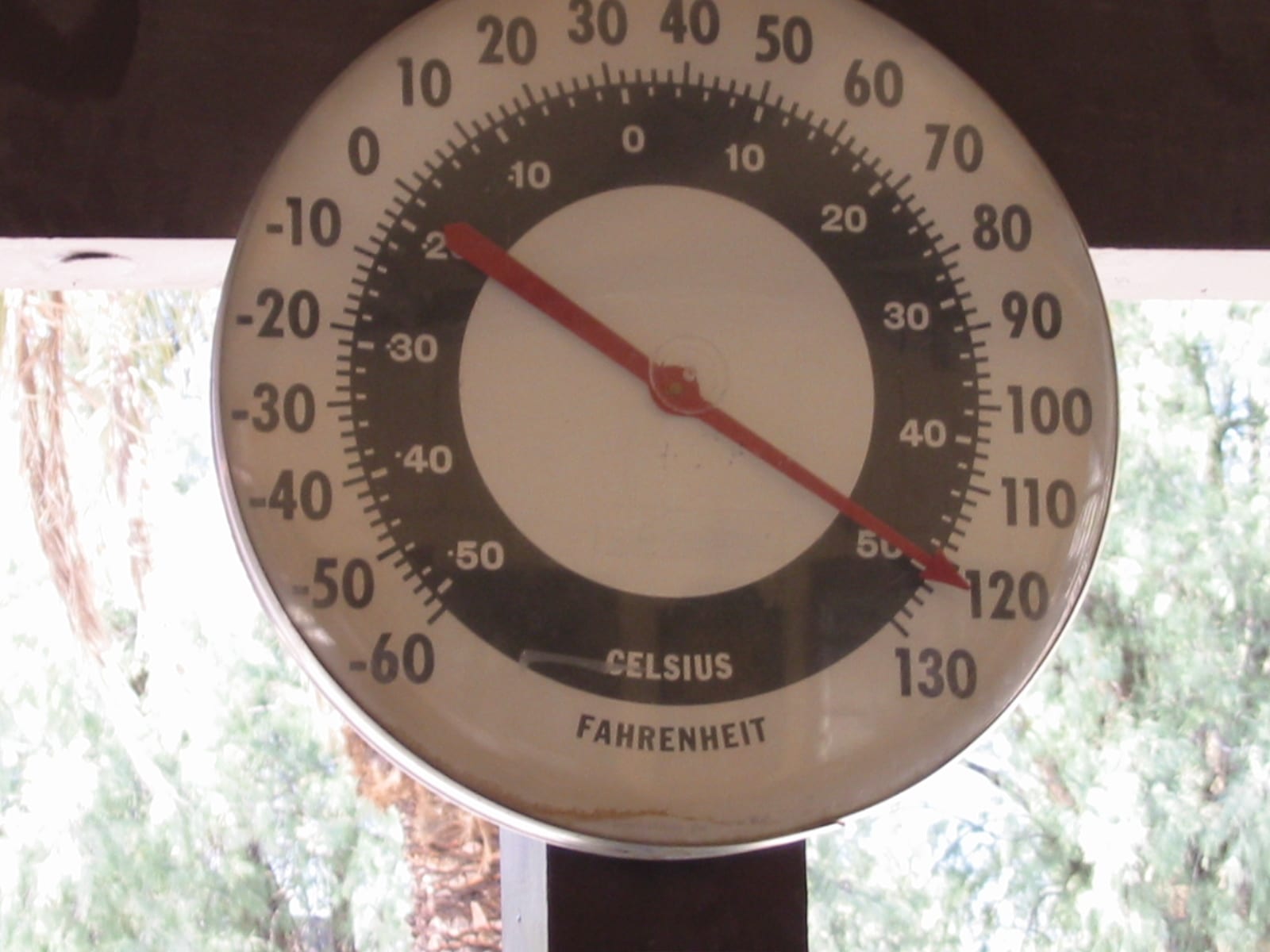
Furnace Creek, formerly Greenland Ranch, is where the valley's most famous readings were taken.
A record under question
The famous 134°F reading was taken at Greenland Ranch, a farm founded by a borax company and later renamed Furnace Creek Ranch, during a heat wave in which five days in a row reached 129°F (54°C) or more. For decades it was not even the world record. That belonged to a reading of 136°F (57.8°C) taken at ʽAziziya, in Libya, in 1922. In January 2012 the World Meteorological Organization (WMO) threw out the Libyan figure, after an investigation concluded that an inexperienced observer had probably misread a new instrument. Death Valley inherited the title.
The scrutiny then turned on 1913. As early as 1949 Dr Arnold Court suggested that a sandstorm might have blown superheated material against the thermometer's shelter. The weather historians Christopher Burt and William Taylor Reid have called the reading a myth, at least 4 to 5°F too high, and a 2026 peer-reviewed study in the Bulletin of the American Meteorological Society concluded that it was about 14°F too high, which would invalidate it. The WMO has so far stood by the record, saying it would investigate if new evidence surfaced.
Even if 1913 were struck off, Death Valley would keep a share of the crown. The next-highest accepted reading, 129.2°F (54.0°C), is a three-way tie between Furnace Creek on 30 June 2013, Mitribah in Kuwait in 2016 and Tirat in Mandatory Palestine in 1942. Furnace Creek has since recorded 129.9°F (54.4°C) in August 2020 and July 2021, readings still awaiting validation.
Other ways to be hottest
Which place is hottest depends on what is measured. Records are based on air temperature in the shade, because ground and satellite readings have proved less reliable. Measured by the ground itself, the Lut Desert in Iran is hotter: in 2005 a NASA satellite recorded its sand at 159.3°F (70.7°C), the highest land surface temperature known. Measured across a whole year, Dallol, in Ethiopia's Danakil Depression, holds the record for the highest average temperature of any inhabited place, about 94.3°F (34.6°C) between 1960 and
- Death Valley's winters, by contrast, are mild: its coldest recorded
temperature is 15°F (−9°C).
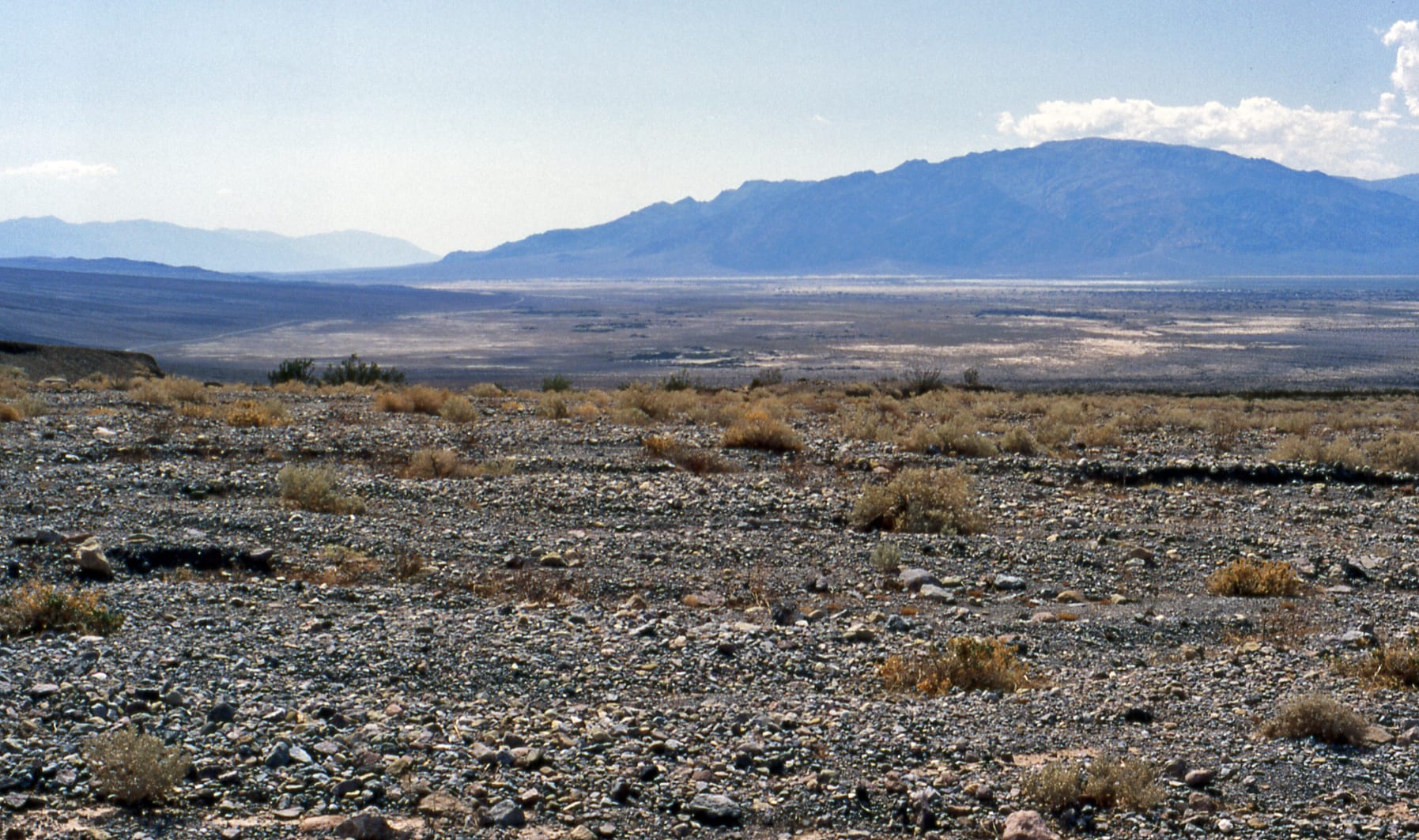
Fans like this are built by flash floods that rush out of the canyons, carrying everything from clay to boulders.
So the honest answer is that Death Valley is the hottest place on Earth in the sense most people mean: the place where the air on a summer afternoon gets hotter than anywhere else that has been reliably measured. The Timbisha, who have lived in the valley for at least a thousand years, know it by a name of their own, Tümpisa.