Culture & Customs · Israel
Why is Jerusalem holy to three religions?
Jews revere it as the site of their Temple, Christians as the place of Jesus's death and resurrection, and Muslims as the goal of Muhammad's Night Journey.
By Globeway Editorial · 13 October 2026
The short answer
Each of the three faiths that trace their roots to Abraham places some of its most important events in Jerusalem. For Jews it is the city where the Temple, the centre of Jewish worship, stood on the hill now called the Temple Mount; it has been the holiest city in Judaism for about 3,000 years. For Christians it is where Jesus taught, was crucified, was buried and, they believe, rose from the dead. For Muslims it is the place to which Muhammad was carried on his Night Journey before ascending to heaven, and the first direction of Muslim prayer.
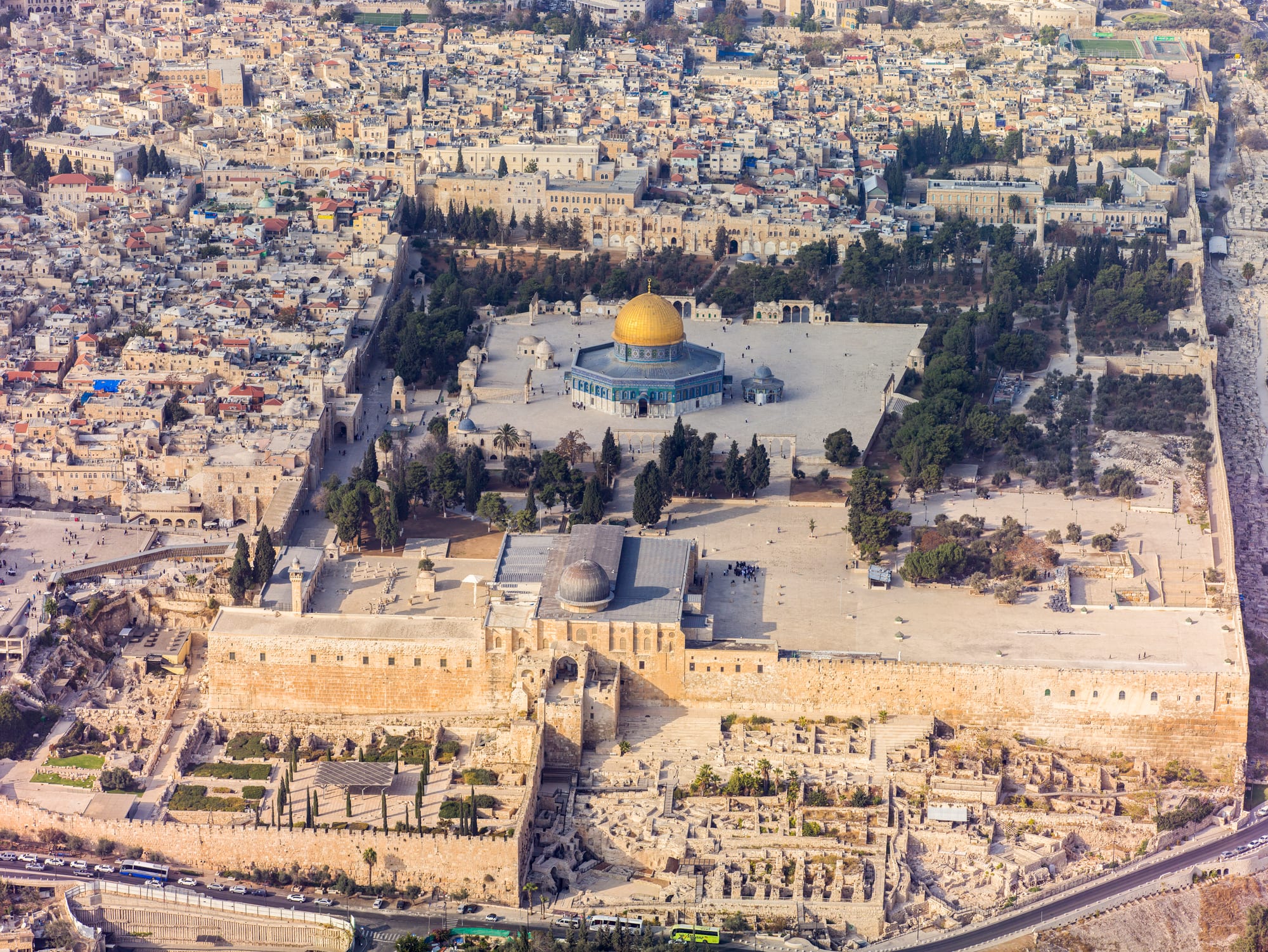
The three histories overlap physically. Jews, Christians and Muslims all honour Abraham, and Muslims regard David, Solomon and Jesus as prophets. The holiest site in Judaism and the third holiest in Islam are the same walled platform, and the church that marks Jesus's tomb stands nearby, all inside an Old City of just 0.9 square kilometres.
The hill of the Temple
Jerusalem's sanctity in Judaism begins with a hill. Jewish tradition identifies it as Mount Moriah, where the Book of Genesis says Abraham was ready to sacrifice his son Isaac, and the sages of the Talmud taught that the creation of the world began from a rock at its summit, the Foundation Stone. According to the Hebrew Bible, King Solomon built the First Temple there, completed in 930 BC. The Babylonians destroyed it in 587 or 586 BC. A Second Temple was built in 516 BC, lavishly renovated by King Herod, and destroyed by the Romans in 70 CE.
The Temple was never rebuilt, but the city stayed at the centre of Jewish life. Jerusalem appears 669 times in the Hebrew Bible, Jews everywhere pray facing it, and the Temple Mount remains the holiest site in Judaism. Many Jews will not walk on the Mount itself, for fear of entering by accident the place where the Holy of Holies, the Temple's innermost chamber, once stood.
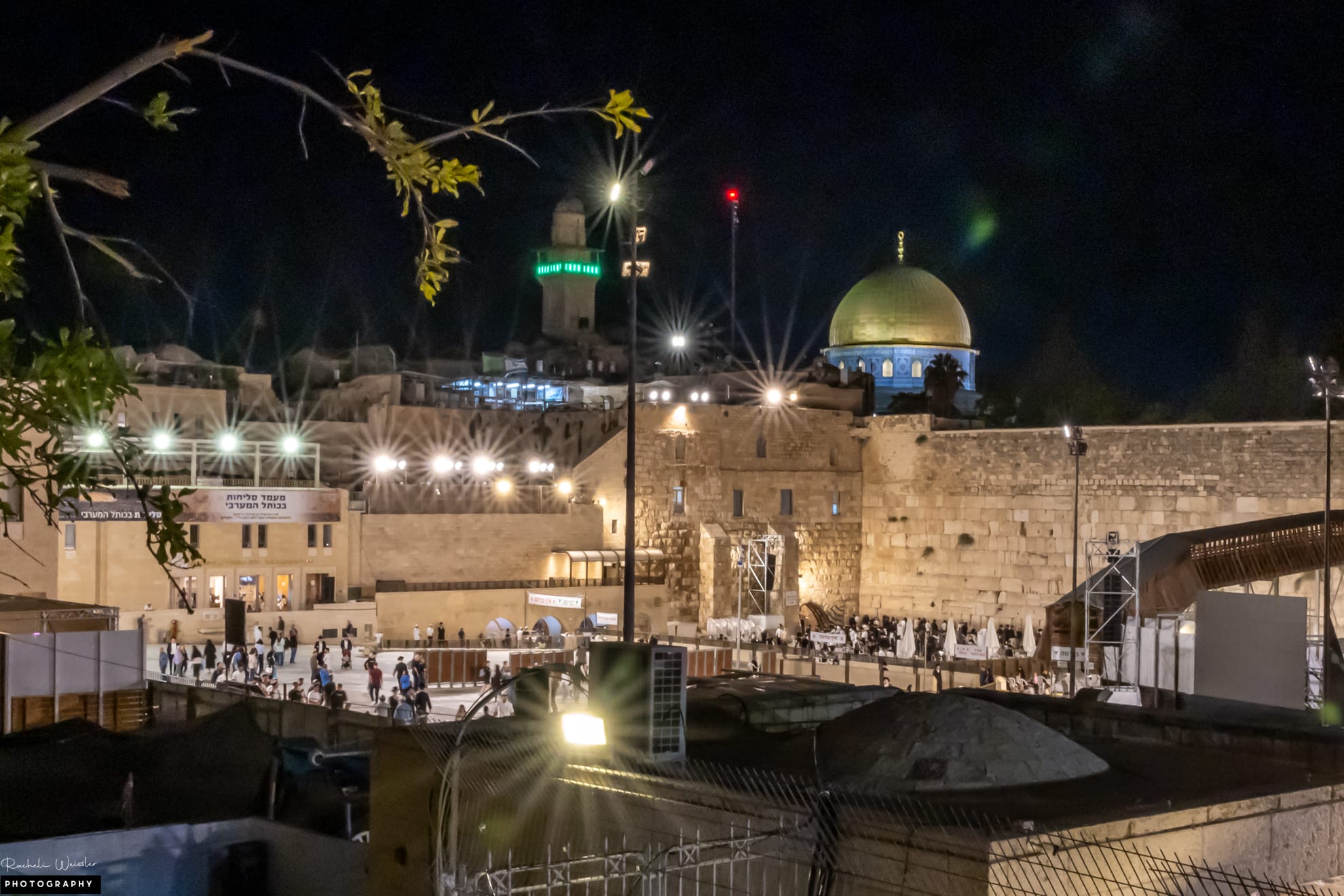
Instead they pray below it. The Western Wall is part of the retaining wall that Herod built around 19 BC to enlarge the platform. Its lowest courses of huge stones are Herodian, and because the Holy of Holies is thought to have stood just above and behind it, it is the holiest place where Jews are permitted to pray.
Where Christianity began
Christianity inherited the Hebrew Bible, so the Temple's story is part of its own. But Jerusalem matters to Christians above all because of Jesus. According to the Gospels he was presented at the Temple as a baby, preached and healed in its courts, and in his last days ate the Last Supper in an upper room in the city, was arrested in the garden of Gethsemane, tried, crucified at Golgotha and buried nearby. Christians believe he rose from the dead there, which is why Jerusalem is often called the cradle of Christianity.
The Church of the Holy Sepulchre, regarded as the holiest site in Christianity, is believed by tradition dating to the 4th century to contain both the site of the crucifixion and the tomb. The Roman emperor Hadrian had built a temple to Aphrodite over the spot around 135 AD; the emperor Constantine, who had legalised Christianity, had the tomb uncovered around 325 AD and a church built. That church was destroyed in 1009 and rebuilt by 1048, and the tomb itself is now enclosed in a 19th-century shrine called the Aedicule.
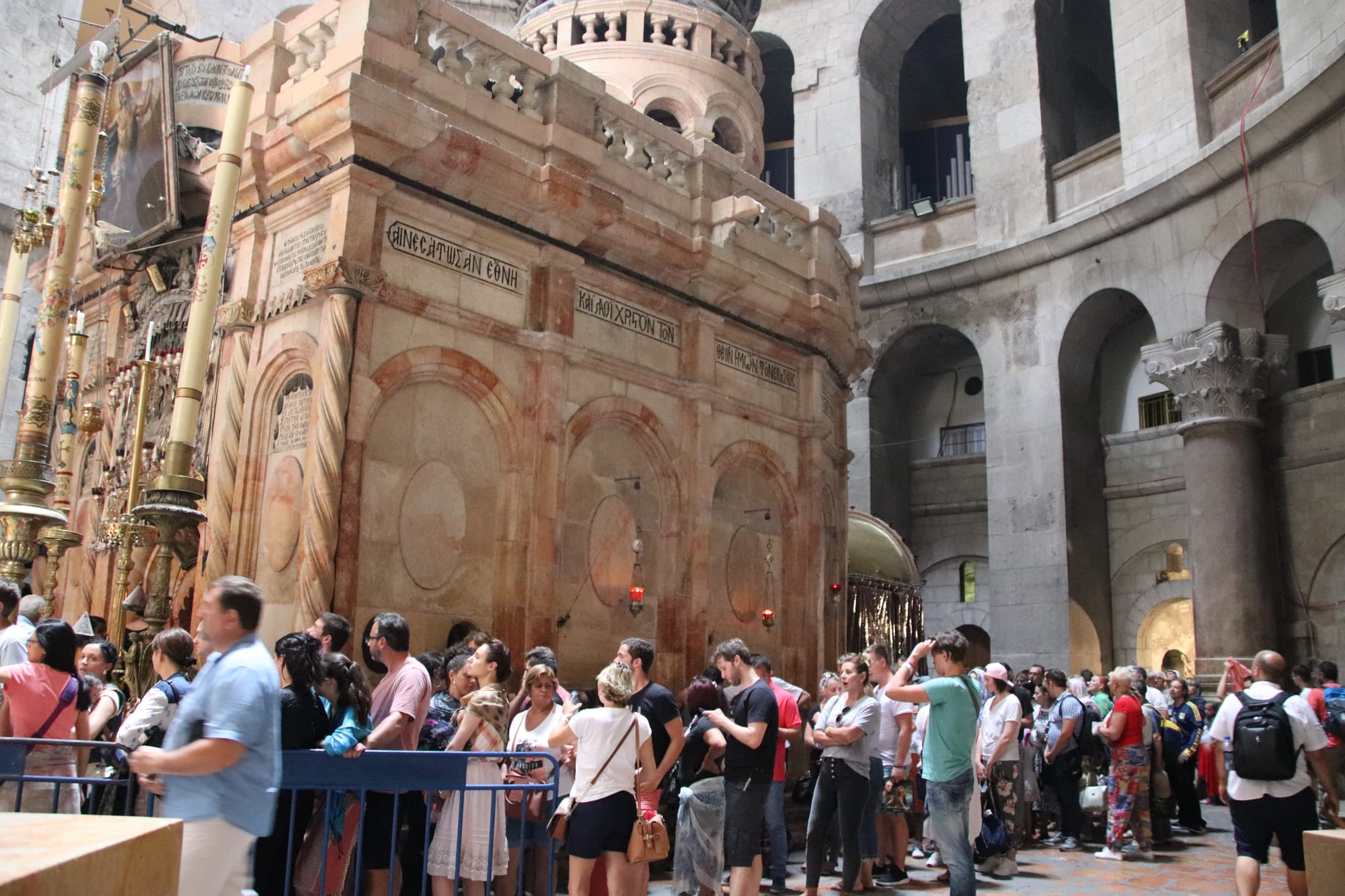
Several churches lay claim to the building. Its parts are shared among the Roman Catholic, Greek Orthodox, Armenian Apostolic, Coptic, Syriac and Ethiopian Orthodox churches under the Status Quo, an understanding between the communities dating from 1757. In the Middle Ages, Christians thought of Jerusalem as the centre of the world, and many European maps placed it, and the east, at the top.
The farthest mosque
In Islam, Jerusalem is the third holiest city after Mecca and Medina. Muslims believe that one night, traditionally dated to 621, Muhammad was carried on a winged steed, Buraq, from the Sacred Mosque in Mecca to al-Aqsa, "the farthest place of prayer", where he prayed before ascending to heaven. The Qur'an does not name the city, but later Islamic tradition places the farthest mosque in Jerusalem, on the site of the old Temple.
Jerusalem was also the first qibla, the direction Muslims face in prayer. Islamic tradition holds that Muhammad led prayers towards it for about 15 or 16 months after he moved from Mecca to Medina, when he was directed to turn towards the Kaaba in Mecca instead. And many of the prophets Muslims honour, among them Abraham, David, Solomon and Jesus, are tied to the city.
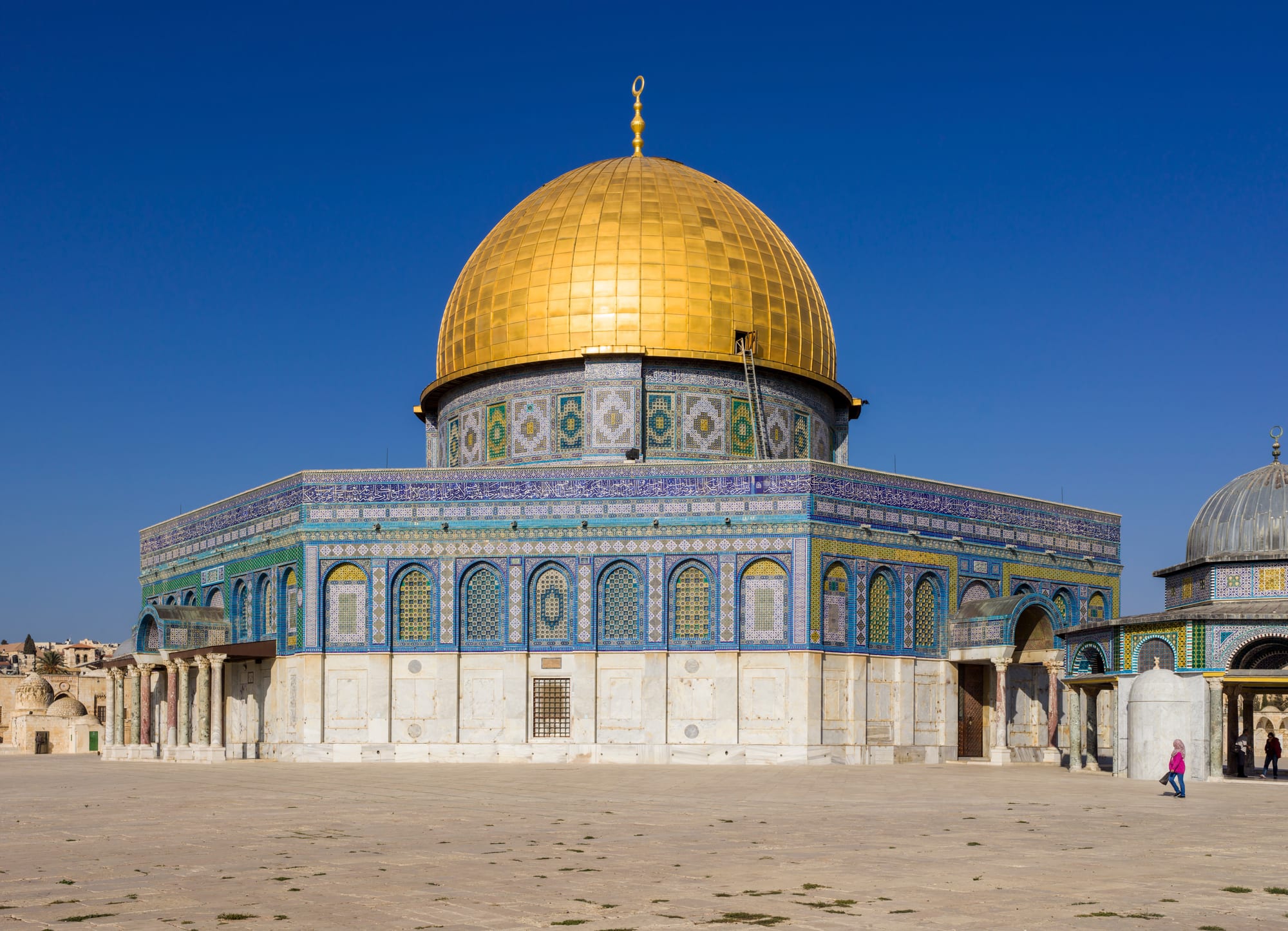
Muslims call the platform the Noble Sanctuary, or Haram al-Sharif. The Umayyad caliph Abd al-Malik built the Dome of the Rock over the Foundation Stone in 691–692, making it the oldest surviving work of Islamic architecture; its significance comes from the belief that the Night Journey is connected with the rock at its centre. The al-Aqsa Mosque, the main congregational prayer hall, stands at the platform's southern end.
One small city, shared and disputed
Jerusalem is holy to other faiths too: the Mandaeans, for example, believe that their chief prophet, John the Baptist, was born there. But it is the overlap of the three great faiths that has made the Old City so precious and so contested. Its walls were built by the Ottoman sultan Suleiman the Magnificent between 1535 and 1542, and it is traditionally divided into Muslim, Christian, Armenian and Jewish quarters.
The Old City was taken by Jordan in the 1948 Arab–Israeli War and by Israel in the Six-Day War of 1967; Israel later annexed East Jerusalem, a step the UN Security Council declared null and void, and the international community regards East Jerusalem as part of occupied Palestinian territory. On the Temple Mount, an arrangement known as the status quo applies: Muslims pray there, and Israel enforces a ban on prayer by non-Muslims. The Old City and its walls became a UNESCO World Heritage Site in 1981, on a proposal from Jordan.