History · South Korea
Why is Korea divided?
A line drawn in 1945 as a temporary occupation boundary hardened into two rival states, then a war that ended in an armistice but never a peace treaty.
By Globeway Editorial · 13 October 2026
The short answer
Korea is divided because of decisions taken at the end of the Second World War. Japan had ruled Korea since 1910. When Japan collapsed in August 1945, the United States and the Soviet Union agreed to split the peninsula into two temporary occupation zones at the 38th parallel of latitude, with Soviet forces in the north and American forces in the south. The plan was for an international trusteeship that would lead to a single independent Korea.
That plan failed as the Cold War began. In 1948 two separate states were founded, the Republic of Korea in the south and the Democratic People's Republic of Korea in the north, each claiming to be the rightful government of the whole peninsula. In 1950 North Korea invaded the South. Three years of war, which drew in a US-led United Nations force and China, killed millions and ended in 1953 with an armistice, not a peace treaty. The ceasefire line, guarded by the Demilitarized Zone, has divided Korea ever since.
A line drawn in a hurry
Korea had been unified for more than a thousand years when Japan, after its war with Russia, made the Korean Empire a protectorate in 1905 and annexed it in 1910. At the Cairo Conference in 1943, the American, British and Chinese leaders declared that "in due course" Korea would become free and independent, and President Franklin Roosevelt proposed a period of international trusteeship first.
The end came faster than expected. On 8 August 1945 the Soviet Union declared war on Japan and its troops advanced rapidly into northern Korea. Anxious that they might take the whole peninsula, the US government assigned two young officers, Dean Rusk and Charles Bonesteel, to define an American zone. Working on extremely short notice with a National Geographic map, they chose the 38th parallel because it cut the country roughly in half while placing the capital, Seoul, under American control. No experts on Korea were consulted. Rusk later said that had he known Korean history he would "almost surely" have chosen a different line: forty years earlier, Japan and Russia had discussed dividing Korea along the same parallel.
To American surprise, the Soviet Union accepted at once. The line put about 16 million Koreans in the American zone and 9 million in the Soviet one, and it was written into General Order No. 1 for the surrender of Japan.
Two occupations, two Koreas
The two zones quickly went separate ways. In the north the Soviets introduced Kim Il Sung, who had spent the last years of the war with Soviet forces, and made him leader of a provisional government in 1946, which redistributed land and nationalised key industries. In the south the US military government, which had no Korean speakers among its officers in late 1945, refused to recognise the People's Republic of Korea that Koreans had proclaimed in Seoul. The staunch anti-communist Syngman Rhee became the south's most prominent politician.
In December 1945 the Allies agreed on a trusteeship of up to five years, but it provoked strong Korean opposition, and a US–Soviet joint commission that met in 1946 and 1947 made no progress as Cold War hostility grew. From May 1946 crossing the 38th parallel without a permit was illegal. The United States took the question to the United Nations, which called for free elections; the Soviet Union boycotted the vote, and elections went ahead in the south only, on 10 May 1948. Many Koreans saw this as a prelude to permanent division, and an uprising on Jeju Island against it was violently suppressed.
The Republic of Korea was proclaimed on 15 August 1948, with Rhee as president. The Democratic People's Republic of Korea followed on 9 September, with Kim Il Sung as premier. The Soviet Union backed the North, the United States the South, and each government claimed sovereignty over all of Korea.
- 1910
Japan annexes Korea.
- 10 August 1945
US officers propose the 38th parallel as the boundary of the occupation zones.
- December 1945
The Allies agree on a trusteeship of up to five years.
- 15 August 1948
The Republic of Korea is founded in the south.
- 9 September 1948
The Democratic People's Republic of Korea is founded in the north.
- 25 June 1950
North Korea invades the South and the Korean War begins.
- 27 July 1953
The armistice is signed and the Demilitarized Zone is created.
The war that fixed the border
Neither side accepted the division as permanent, and from 1948 their armies fought a series of bloody skirmishes along the border. On 25 June 1950 North Korean forces invaded the South in an attempt to unify the peninsula under communist rule, and soon overran 90 per cent of it. A US-led United Nations force counter-attacked and in October crossed the 38th parallel with the aim of unifying Korea under the South. China, which had warned it would intervene, sent its forces in and drove them back. By 1951 the front had settled near the parallel where the war began.
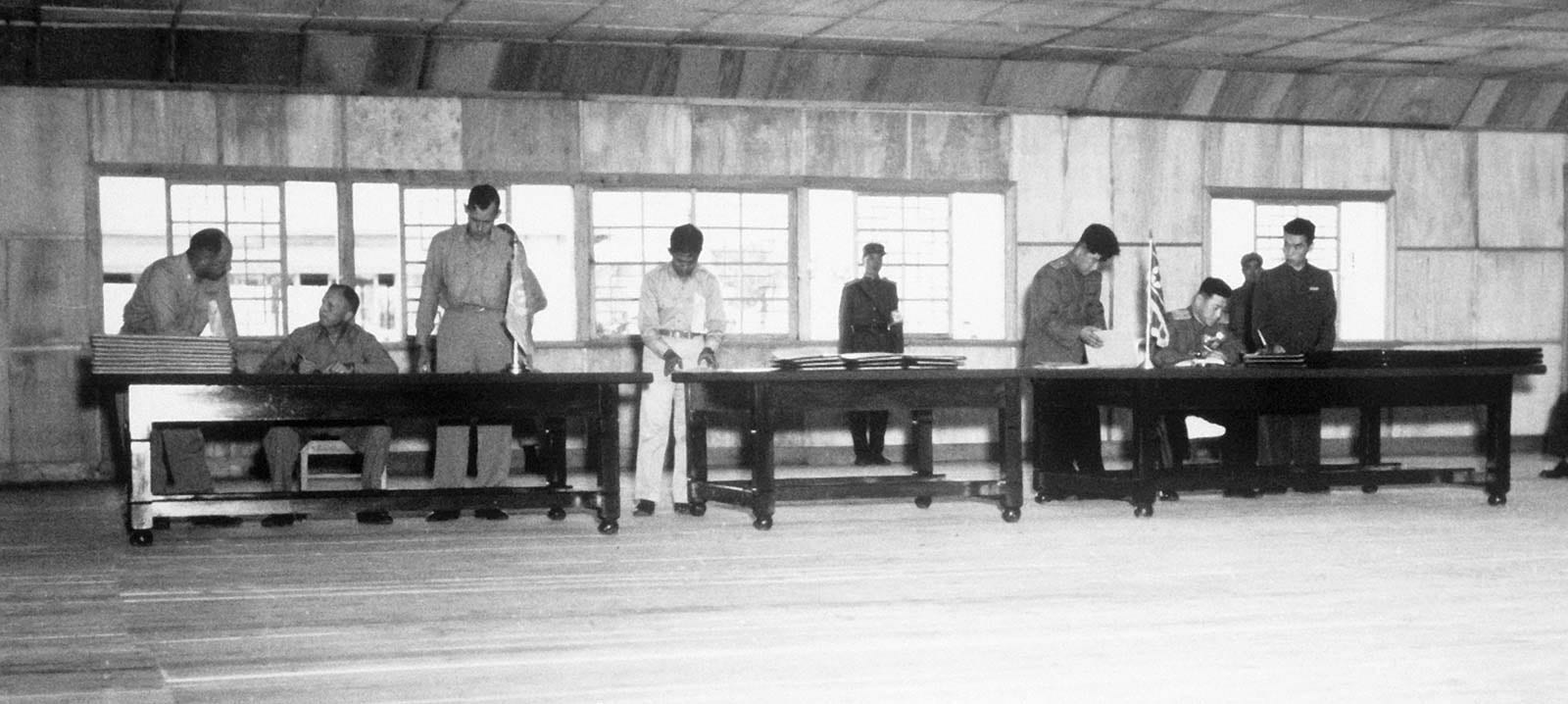
South Korea never signed the armistice: President Rhee refused to accept that Korea had not been unified by force.
Two more years of negotiation followed, much of it at the village of Panmunjom. The armistice, signed on 27 July 1953, drew the new border along the front line rather than the parallel, so it crosses the 38th parallel at an angle. Each side pulled back 2 kilometres, creating the Demilitarized Zone, 250 kilometres long and about 4 kilometres wide. The war had caused around one million military deaths and an estimated 1.5 to 3 million civilian deaths. A conference in Geneva in 1954 failed to agree on a unified Korea, and no peace treaty has ever been signed.
Why the division has lasted
Since 1953 the two states have remained formally in conflict, with large armies on either side of the DMZ and a lasting alliance between South Korea and the United States. Clashes along the zone killed over 500 South Korean, 50 American and 250 North Korean soldiers between 1953 and 1999. Talks have come and gone without lasting progress. In April 2018 the leaders of both Koreas met in the DMZ and signed the Panmunjom Declaration, which called for the reunification of Korea and a formal end to the war. In October 2024, however, North Korea amended its constitution to label South Korea a "hostile state", days after destroying roads that connected the two, and in March 2026 it removed the constitutional clause calling for reunification.
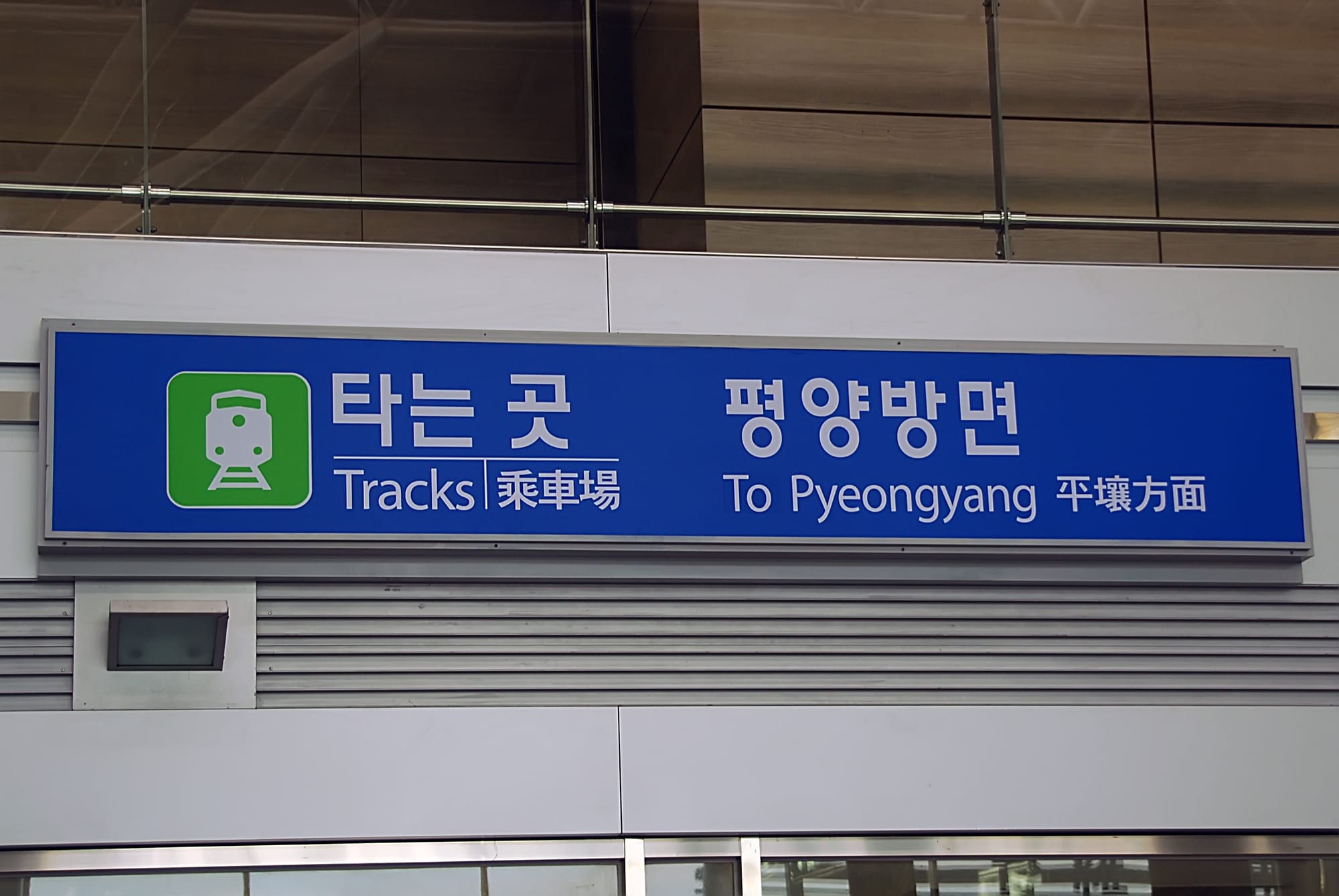
The line through Dorasan once linked the railways of North and South Korea. The connection northward is not in regular service, and the station is largely a symbol of hopes for reunification.
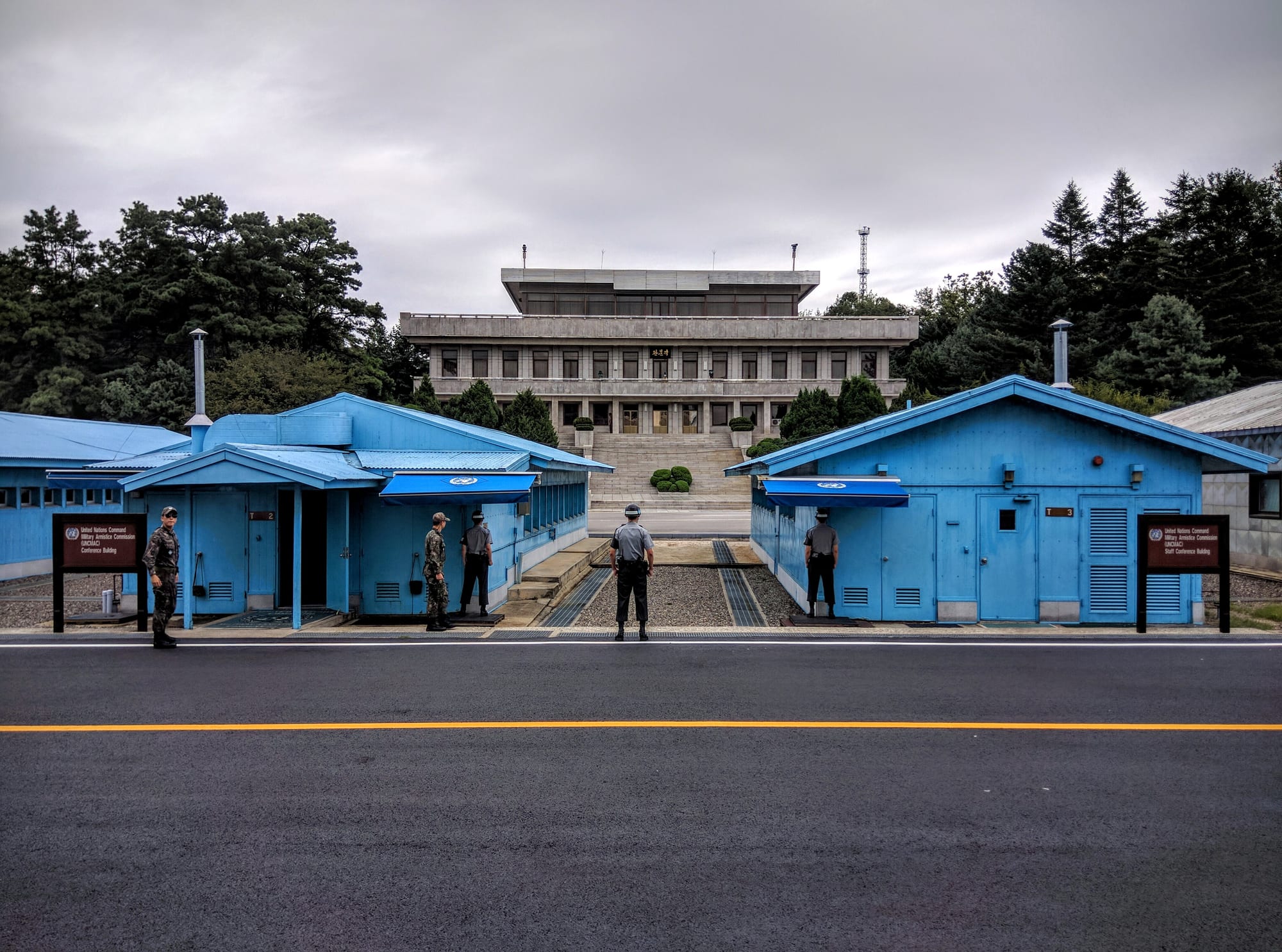
The human cost is still felt. The division separated more than 10 million families, who were cut off from relatives on the other side of the armistice line. At Imjingak, near the city of Paju, a park built in 1972 for people unable to return to their hometowns because of the division now receives about 1.2 million visitors a year. The blue huts of the Joint Security Area, straddling the line itself, remain one of the last physical traces of the Cold War.