History · Laos
Why is Laos the most bombed country per person in history?
A secret air war over a neutral kingdom, fought to cut the Ho Chi Minh Trail, left nearly a ton of bombs for every person and millions that never exploded
By Globeway Editorial · 13 October 2026
The short answer
Between 1964 and 1973 the United States dropped more than 2 million tons of bombs on Laos, nearly as much as American bombers dropped on Europe and Asia in the whole of the Second World War (2.1 million tons). Laos had a small population, so the load came to what The New York Times described as "nearly a ton for every person in Laos". No country in history has been bombed more heavily relative to the number of people living in it.
The bombing happened because Laos, though officially neutral, sat in the middle of the Vietnam War. North Vietnam ran its main supply route to the south, the Ho Chi Minh Trail, through eastern Laos, and Laos had its own civil war between the royal government and the communist Pathet Lao, who were allied with North Vietnam. American aircraft bombed the trail and supported the royal government and a CIA-backed army, and they did it in secret, because both the United States and North Vietnam had signed up to Laotian neutrality. Most of the bombs were cluster bombs, and tens of millions of them never went off.
A neutral country with a war running through it
Laos became independent from France in 1953 as a kingdom, and the Geneva Conference of 1954 established its neutrality. That neutrality was fiction almost from the start. North Vietnamese troops, working with the Pathet Lao, moved into eastern Laos in 1958 and 1959 and began building the Ho Chi Minh Trail, a network of roads and tracks that ran mostly through Laos to carry men and supplies into South Vietnam.
A second agreement, the Declaration on the Neutrality of Laos, was signed in Geneva on 23 July 1962. It required all foreign troops to leave. By the October deadline North Vietnam had repatriated only a token 40 of an estimated 2,000 military technicians, and its forces stayed in the east of the country. The United States, meanwhile, had been training Hmong fighters since 1961 to disrupt North Vietnamese operations, and their "Secret Army", led by the Hmong general Vang Pao of the Royal Lao Army, fought the Pathet Lao and the North Vietnamese in the north.
Because each side was breaking an agreement it had signed, neither wanted to admit what it was doing. The fighting in Laos became known among CIA officers and Hmong veterans as the "Secret War".
- 1953
Laos becomes independent as a kingdom within the French Union
- 1959
North Vietnamese and Pathet Lao forces occupy eastern Laos; the Ho Chi Minh Trail takes shape
- 1962
The Declaration on the Neutrality of Laos is signed in Geneva
- 1964
American bombing of Laos begins
- 1969
The Plain of Jars, heavily bombed for five years, is largely deserted
- 1973
The bombing ends after the Paris Peace Accords
- 1975
The Pathet Lao take power and found the Lao People's Democratic Republic
The secret air war
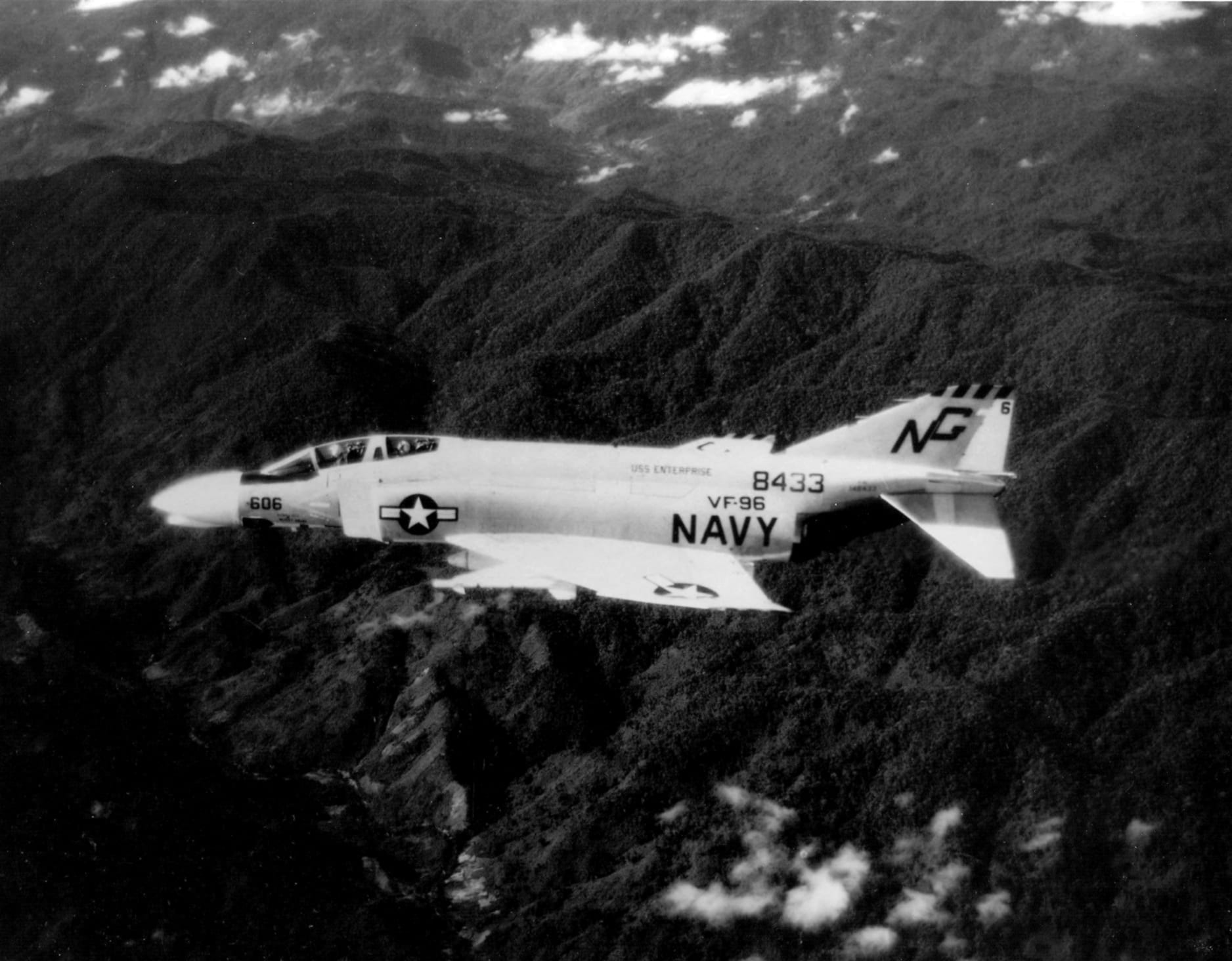
Operation Barrel Roll, the main American air campaign in Laos, ran from March 1964 to March 1973. It began with just two bombing sorties a week and grew from there. It was one of the most closely held secrets of the American war in Southeast Asia, and the American ambassador in Vientiane approved every target. In the south, the panhandle where the Ho Chi Minh Trail ran, the war was mainly an air campaign, because political limits kept the trail safe from a ground assault out of South Vietnam.
The tonnage built up in unexpected ways. Until 1968, most American jet fighter-bomber sorties in Barrel Roll were flown by aircraft returning to bases in Thailand from Rolling Thunder raids on North Vietnam with bombs still on board. It has been reported that between 1964 and 1973 areas held by the North Vietnamese and Pathet Lao were hit by an average of one B-52 bomb-load every eight minutes, 24 hours a day.
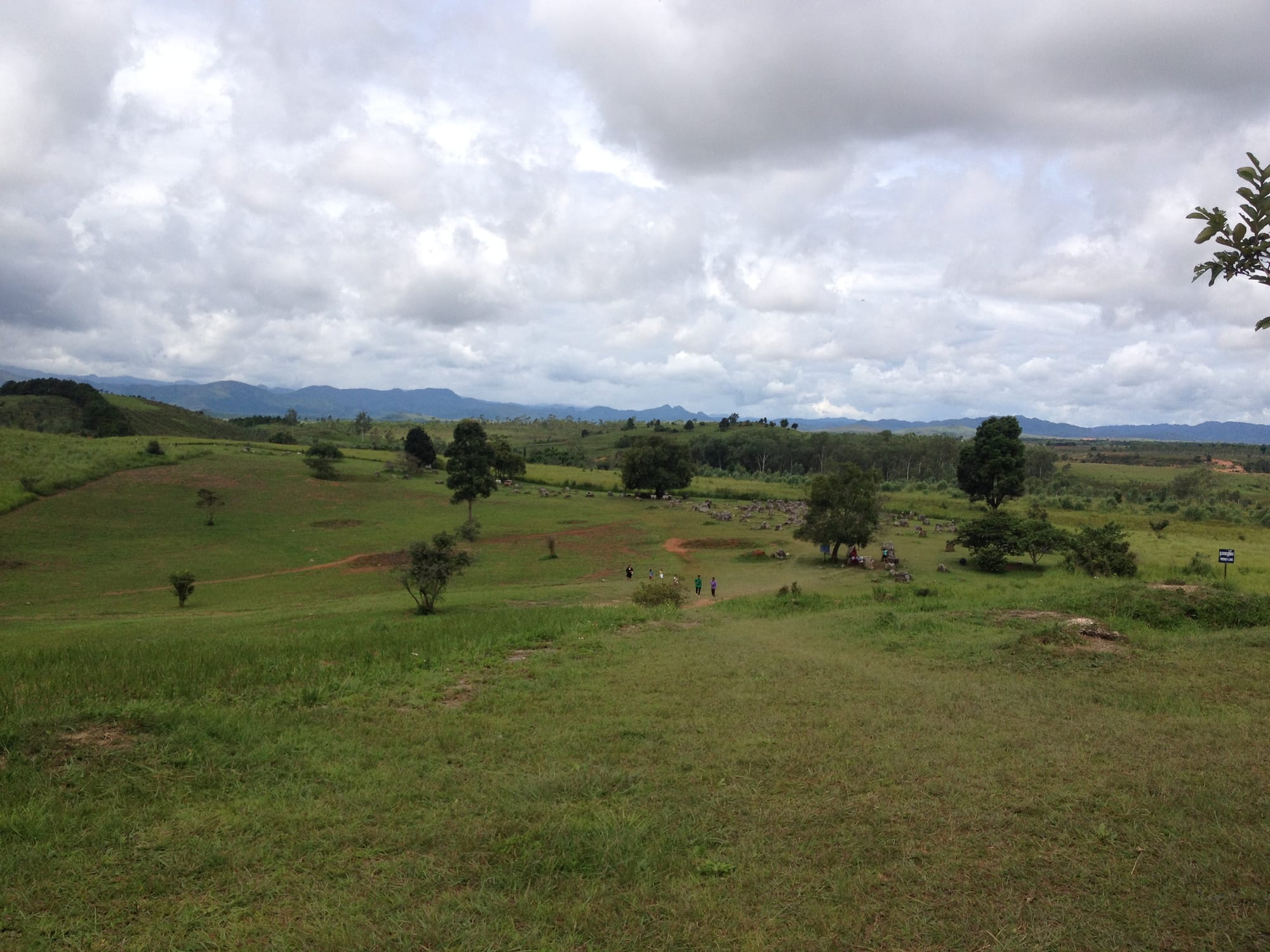
The Plain of Jars, a high plateau in Xiangkhouang province that was fought over again and again, was bombed heavily from May 1964 to the summer of 1969, and by September 1969 it was largely deserted. Xiangkhouang became the most heavily bombed province in the country. By October 1973, 378,800 people were living as displaced persons in government-held areas.
What "most bombed per person" means
The record is a ratio: the weight of bombs dropped measured against the number of people living there. What sets Laos apart is how much fell on how few people. Between 1965 and 1973 alone, the United States dropped 2,756,941 tons of ordnance on 113,716 sites in Laos in 230,516 sorties.
Much of it was cluster bombs. Each canister burst open in the air and scattered hundreds of bomblets, which Laotians call "bombies", each about the size of a tennis ball. Estimates of how many were dropped on Laos range from about 270 million to 288 million. Around 30 per cent failed to explode, and estimates of the unexploded bombs left behind range from 75 to 80 million.
A war that has not finished killing
The bombing stopped in 1973, when the United States withdrew under the Paris Peace Accords, and the Pathet Lao took power in December 1975. The bombs did not stop. According to a Laotian government survey of 2017, explosive ordnance killed 29,522 people and injured 21,048 during the war and since, and unexploded ordnance still kills or maims around 50 people a year. Around half of those killed or injured since the war have been children.
Around 30 per cent of Laos is considered heavily contaminated, and ten of its eighteen provinces have been described as "severely contaminated". From 1996 to 2009 more than a million items were destroyed, freeing 23,000 hectares of land, yet estimates of how long full clearance will take have run to a century or more. Unexploded bombs slow farming and building: unexploded bombs had to be removed along the route of the Boten–Vientiane railway before it could be built. Around the Plain of Jars, villagers have long reused war scrap, even turning metal from unexploded bombs into spoons sold as souvenirs.
Laos turned its experience into diplomacy. It became a strong advocate of the Convention on Cluster Munitions, the treaty banning the weapons, and hosted the first meeting of its member states in November 2010.
Seeing the legacy today
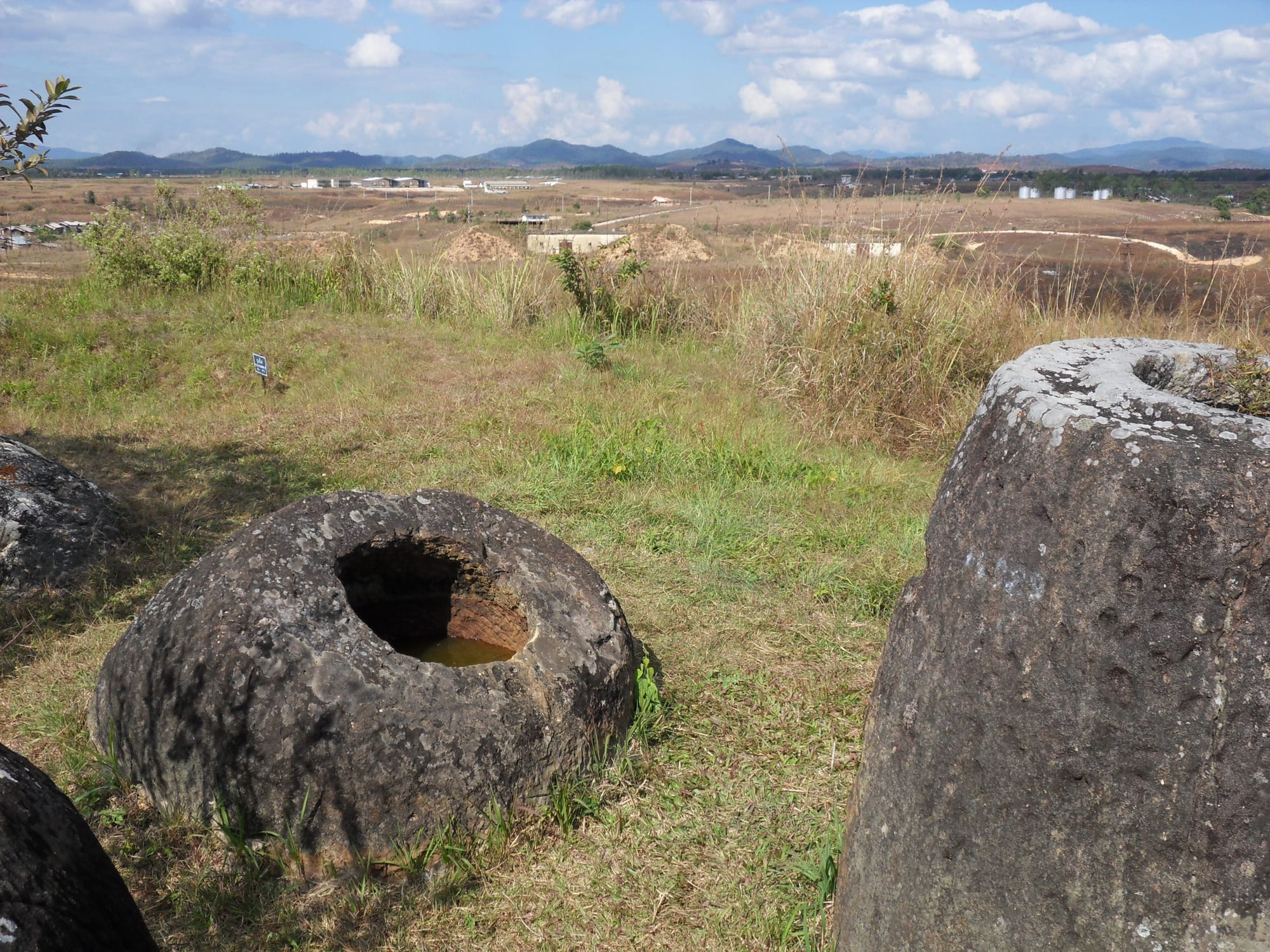
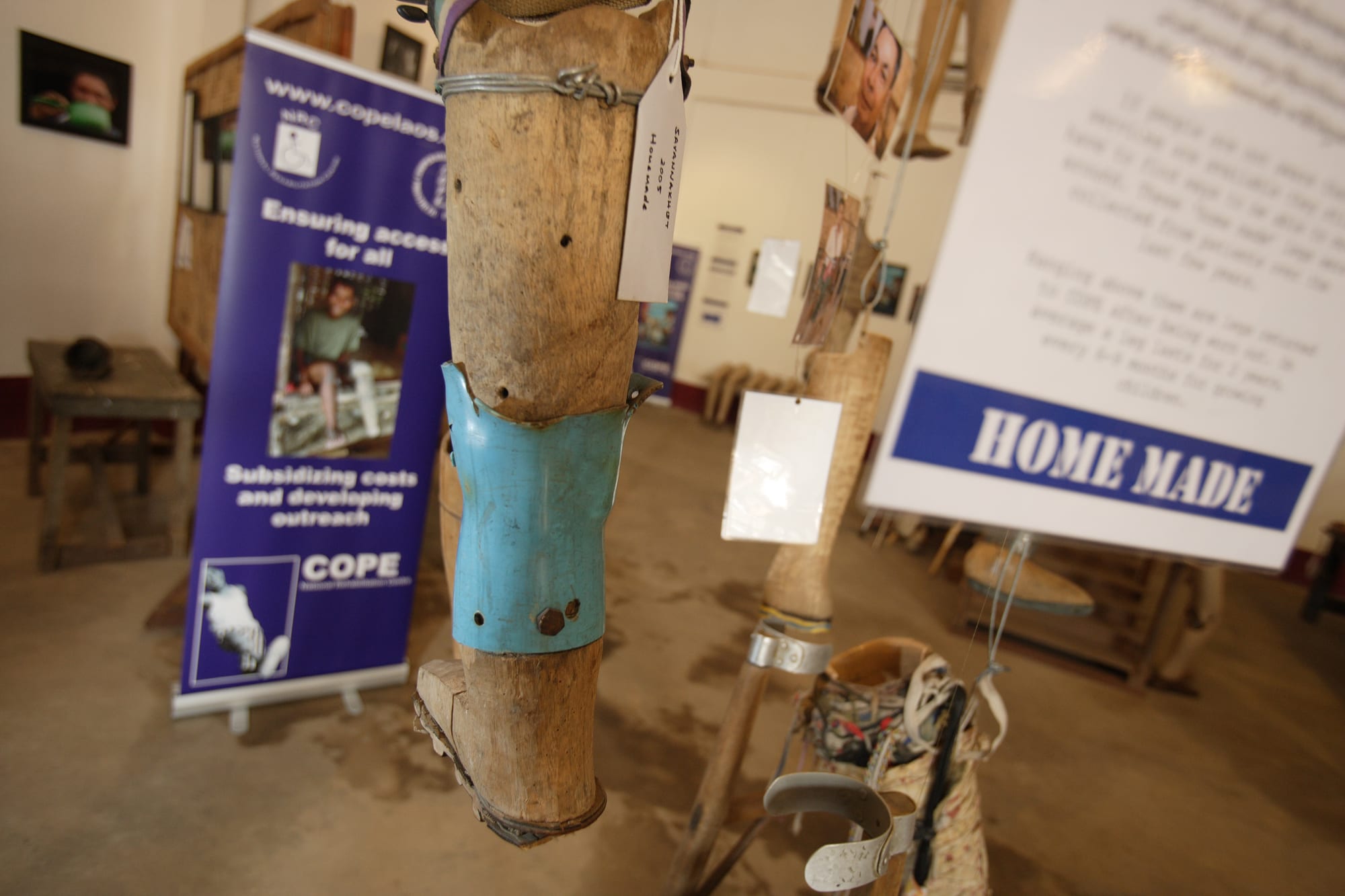
The legacy is most visible on the Plain of Jars near Phonsavan, a landscape of more than 2,100 Iron Age stone jars that is now a UNESCO World Heritage Site. Between 2004 and 2005 the Mines Advisory Group, working with UNESCO, cleared unexploded bombs from the three most visited sites, and further clearance in 2007 opened four more; visitors keep to the cleared paths, past bomb craters that still dent the grass. In Vientiane, the COPE visitor centre, which displays spent ordnance alongside artificial limbs, shows the human cost.