History · Samoa
Why is Samoa a whole day ahead of American Samoa?
In 2011 Samoa skipped a Friday to jump to the Asian side of the date line, leaving its American neighbour 64 km away a full calendar day behind.
By Globeway Editorial · 13 October 2026
The short answer
Samoa and American Samoa are islands of the same archipelago, only about 64 kilometres (40 miles) apart, but the International Date Line now runs between them. Samoa keeps time at UTC+13, thirteen hours ahead of Coordinated Universal Time, while American Samoa keeps UTC−11. The clocks on both sides show the same hour, but the calendars are a day apart: when it is Sunday lunchtime in Apia, Samoa's capital, it is Saturday lunchtime in Pago Pago.
It was not always so. For more than a century both groups shared the American date. Then, at the end of Thursday 29 December 2011, Samoa jumped straight to Saturday 31 December, deleting Friday 30 December from its calendar, so that its working week would line up with New Zealand, Australia and Asia, its most important partners. American Samoa, a territory of the United States whose main trading partner is the US mainland, had every reason to stay where it was.
A line drawn by choice, not by treaty
The date line is the boundary where one calendar day gives way to the next. Cross it heading west and the date jumps forward a day; cross it heading east and it falls back. It roughly follows the 180° meridian through the empty middle of the Pacific, but it zigzags wherever island nations have chosen a side.
No treaty fixes it. The International Meridian Conference of 1884, which made Greenwich the starting point for longitude, explicitly refused to settle time zones, calling them outside its purview. In practice each country decides which date it keeps, and the line drawn on maps simply records those decisions. That is why it can be moved by a government announcement, and why it has been moved several times.
1844 | The Philippines removes Tuesday 31 December 1844 to join its Asian trading partners on the western side. 1867 | Alaska, colonised by Russian settlers from Siberia, switches from the Asian to the American date. 1892 | The Samoan Islands switch from the Asian date to the American date, under pressure from American traders. 1899 | The Tripartite Convention splits the islands between Germany and the United States. 1962 | Western Samoa becomes independent from New Zealand on 1 January. 1994 | Kiribati deletes Saturday 31 December 1994 so the whole country shares one date. 2011 | Samoa deletes Friday 30 December and returns to the western side of the line.
How the islands first moved east, in 1892
Until 1892 the whole Samoan archipelago sat on the western, or Asian, side of the line, its clocks set four hours ahead of Japan. Through the 19th century, though, American trading and whaling ships became important to the islands' economy; the first known American trading vessel called in 1821. In 1892 American traders persuaded King Malietoa Laupepa to adopt the American date instead, three hours behind California. The switch was made by living one day twice: Monday 4 July 1892, American Independence Day, was repeated.
Seven years later the islands were divided. After a long contest between Germany, Britain and the United States, the Tripartite Convention of 1899 gave the western islands to Germany and the eastern islands, including the deep natural harbour of Pago Pago on Tutuila, to the United States. New Zealand troops seized German Samoa in 1914, and it was governed from Wellington until independence on 1 January 1962 as Western Samoa, which renamed itself simply Samoa in 1997. Through all of this, both halves kept the American date they had shared since 1892.
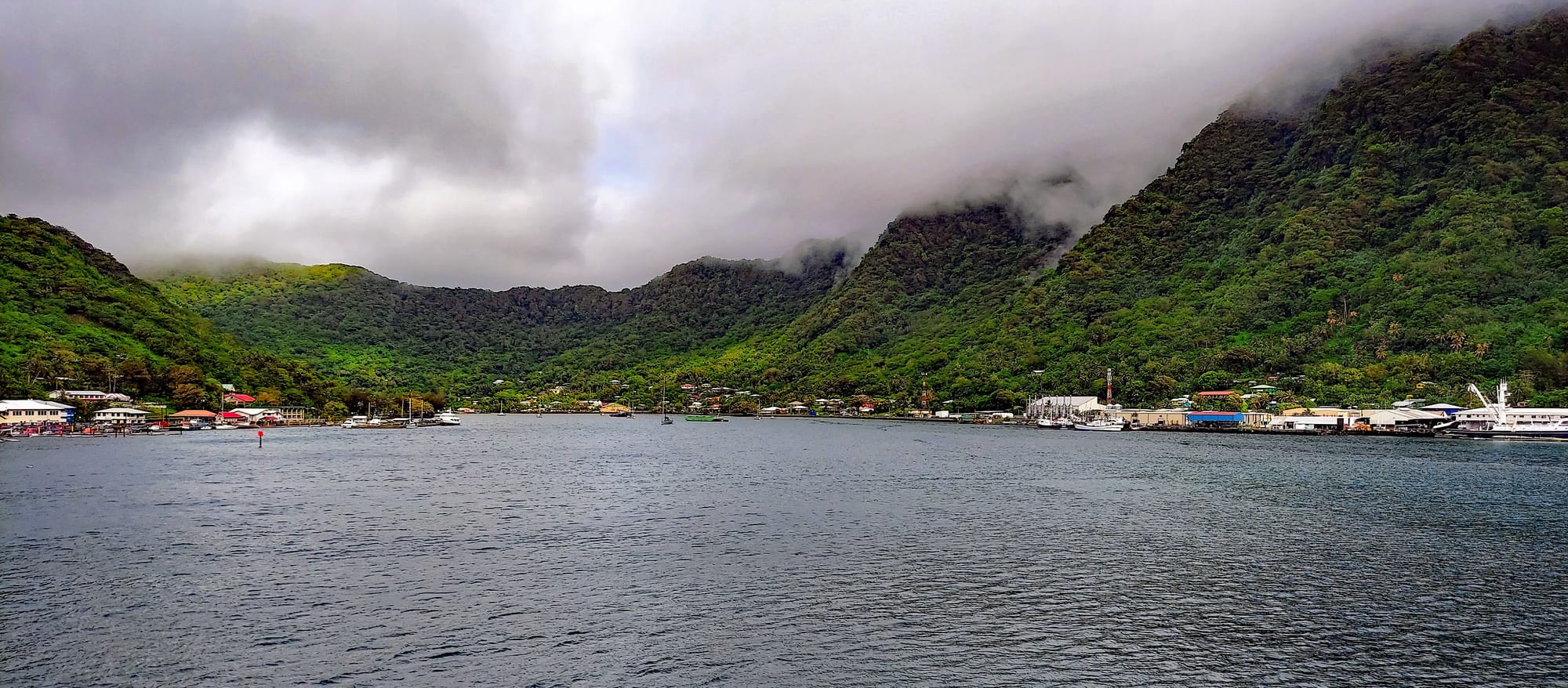
The sheltered harbour drew the United States Navy to Tutuila in the late 19th century as a coaling station for steamships. Today American Samoa's economy still faces east: canned tuna is its main export, and the US mainland is its largest trading partner.
The Friday that never happened in Samoa
By the 2000s the logic of 1892 had turned around for independent Samoa. New Zealand and Australia had become its biggest trading partners and home to large Samoan communities, and on the American date Samoa was almost a full day behind them: a Friday in Apia was already Saturday in Auckland, and Monday morning in Sydney was still Sunday in Samoa. Prime Minister Tuilaepa Sailele Malielegaoi said the change was meant to make business easier with New Zealand, Australia, China and the rest of Asia.
So Samoa moved its standard time from UTC−11 to UTC+13. Thursday 29 December 2011 was followed directly by Saturday 31 December, and the date line was redrawn to run east of the country, through the narrow stretch of sea between Samoa and American Samoa. Tokelau, a New Zealand territory to the north whose transport and communications run through Samoa, made the same jump.
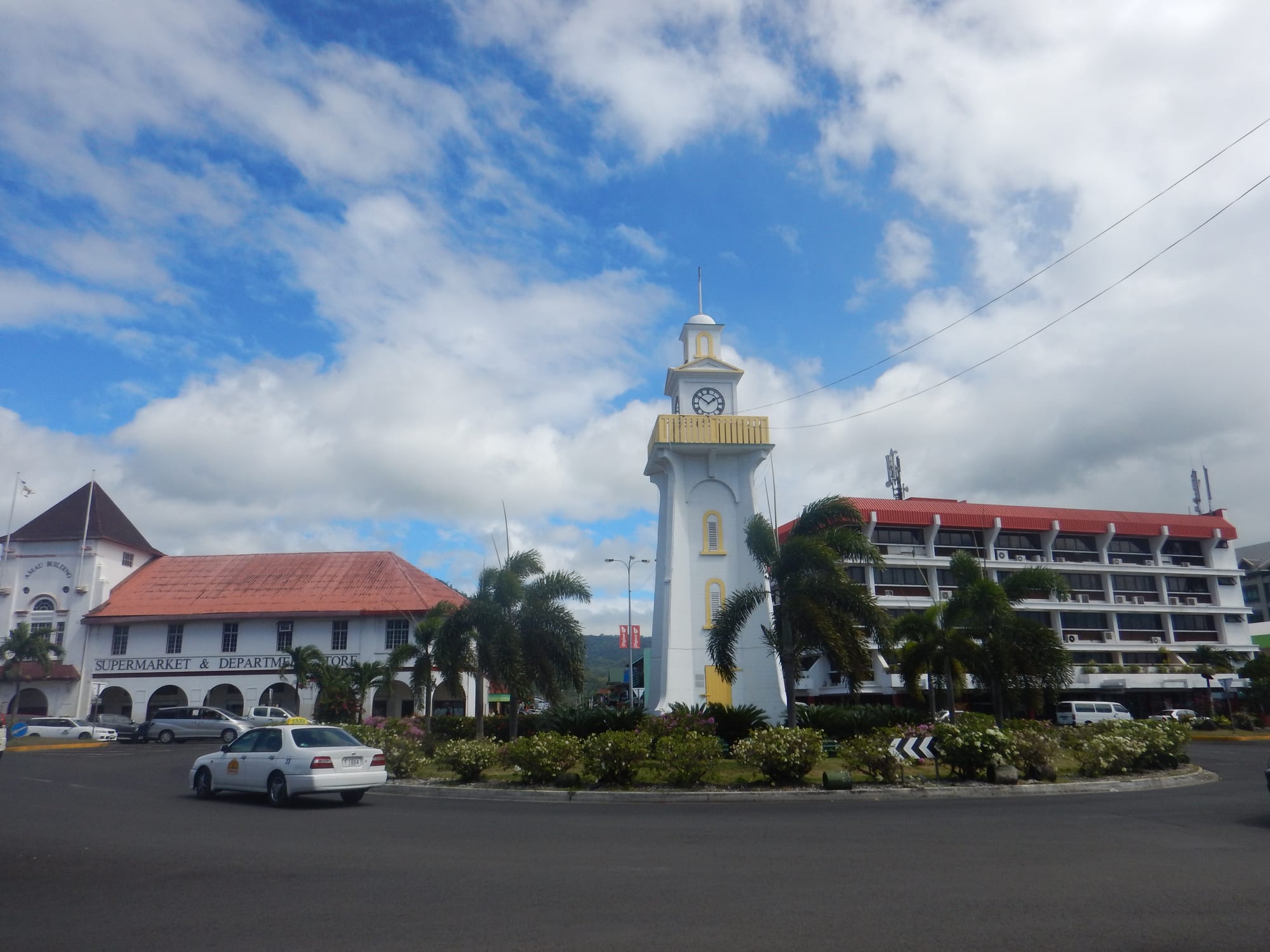
Because the two time zones are exactly 24 hours apart, the hands on Apia's clocks and Pago Pago's agree; only the date differs.
Exactly 24 hours, most of the time
The gap has not always been a neat day. Samoa used daylight saving time from 2010, and from 2012, when its summer schedule matched New Zealand's, it ran 25 hours ahead of American Samoa during those months, since American Samoa never changes its clocks. When Samoa dropped daylight saving in 2021, the difference settled at exactly 24 hours all year.
Being just west of the line also makes Samoa one of the first places on Earth to greet each new day, along with Tonga, Tokelau and parts of Kiribati. American Samoa, a short hop east, is among the last. The sunrise itself takes no notice: the same dawn reaches American Samoa a few minutes before it reaches Samoa, yet the two places give it different dates. Christmas, likewise, comes to Samoa a day before it comes to its neighbour.
Crossing between them today
The two Samoas remain closely linked by family, language and culture, and ferries run between the port of Apia and American Samoa. A trip from west to east goes back a day on the calendar; a trip from east to west goes forward one, so a traveller heading from Apia to Pago Pago can arrive on the day before the one on which the journey began.