Attractions & Natural Wonders · Australia
Why is the Great Barrier Reef turning white?
Marine heatwaves make corals expel the algae that colour and feed them, and bleaching has come back again and again since 2016.
By Globeway Editorial · 13 October 2026
The short answer
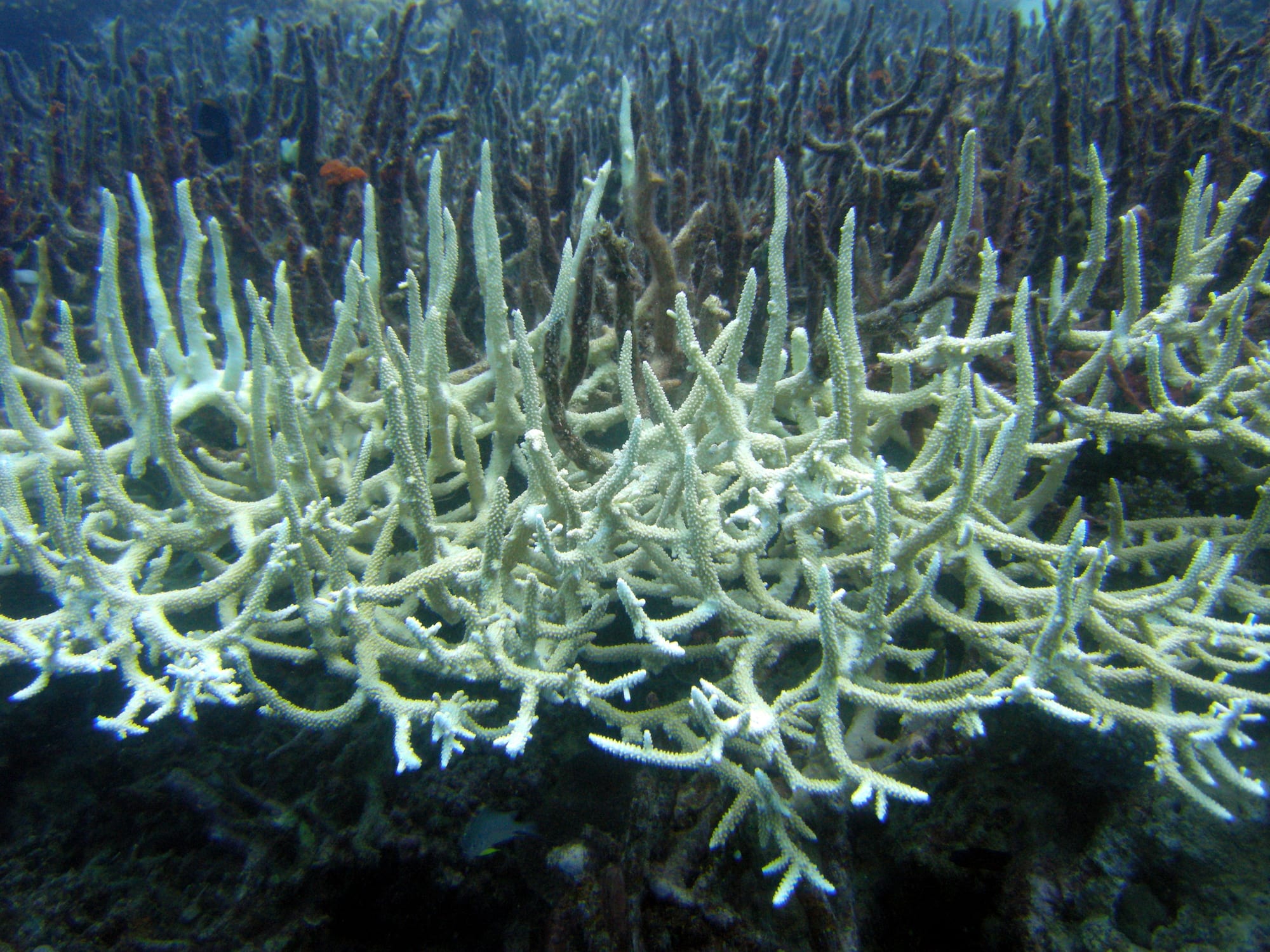
The Great Barrier Reef turns white when its corals bleach. A reef-building coral is an animal that lives in partnership with tiny single-celled algae, called zooxanthellae, which live inside its tissues, give it its colour and feed it through photosynthesis. When the water stays too hot for too long, the partnership breaks down and the coral expels the algae. Its tissues turn see-through, and the white limestone skeleton beneath shows through.
The main cause is rising ocean temperatures driven by climate change. Mass bleaching on the reef used to be rare; now it comes every few years, with the fifth extensive event since 2016 beginning in 2024. A bleached coral is not yet dead. If the water cools in time, the algae can return; if the heat lasts, the coral starves, and much of it dies.
A partnership that feeds the reef
The Great Barrier Reef is the world's largest coral reef system: more than 2,900 individual reefs and 900 islands stretching for over 2,300 kilometres off the coast of Queensland, built by billions of tiny animals called coral polyps. The clear tropical water they live in is poor in nutrients, so food is hard to come by.
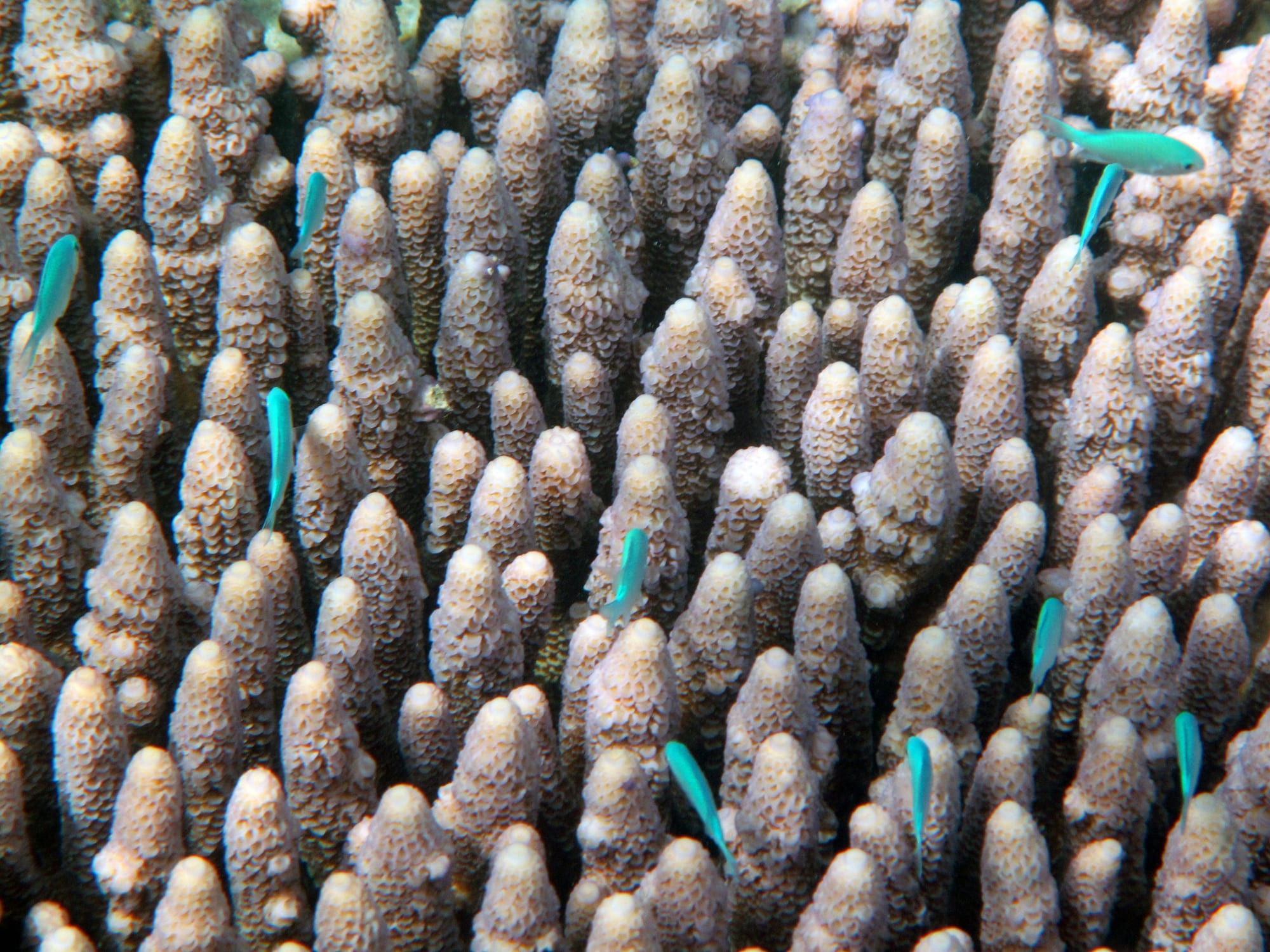
The brownish colour of healthy coral comes largely from the pigments of the algae living inside it.
The zooxanthellae solve that problem. By day they turn sunlight into food and pass the products to their host, supplying up to 90 per cent of the coral's energy needs. In return the coral gives them the carbon dioxide and ammonium they need for photosynthesis. Their pigments give many corals their typical yellowish and brownish colours.
Stress breaks the deal. Changes in temperature, light, salinity or nutrients can all trigger bleaching, but heat is the big one. When corals endure prolonged high temperatures, the algae begin releasing toxic compounds, and the coral consumes or expels them to protect itself. Without the algae the coral loses most of its food supply. It can survive a short disturbance, but if the heat continues it begins to starve and becomes more vulnerable to disease. When the polyps die, algae take over the bare skeletons and block new coral from growing, and over time the skeletons erode.
From rare events to a regular threat
Bleaching was recorded on the reef in 1980, 1982, 1992 and 1994, but the first major event came in 1998, when 42 per cent of its reefs bleached to some extent. In 2002 the figure was 54 per cent. Both followed marine heatwaves, and 1998 also saw the first globally recognised bleaching event, during a strong El Niño, the periodic warming of the Pacific.
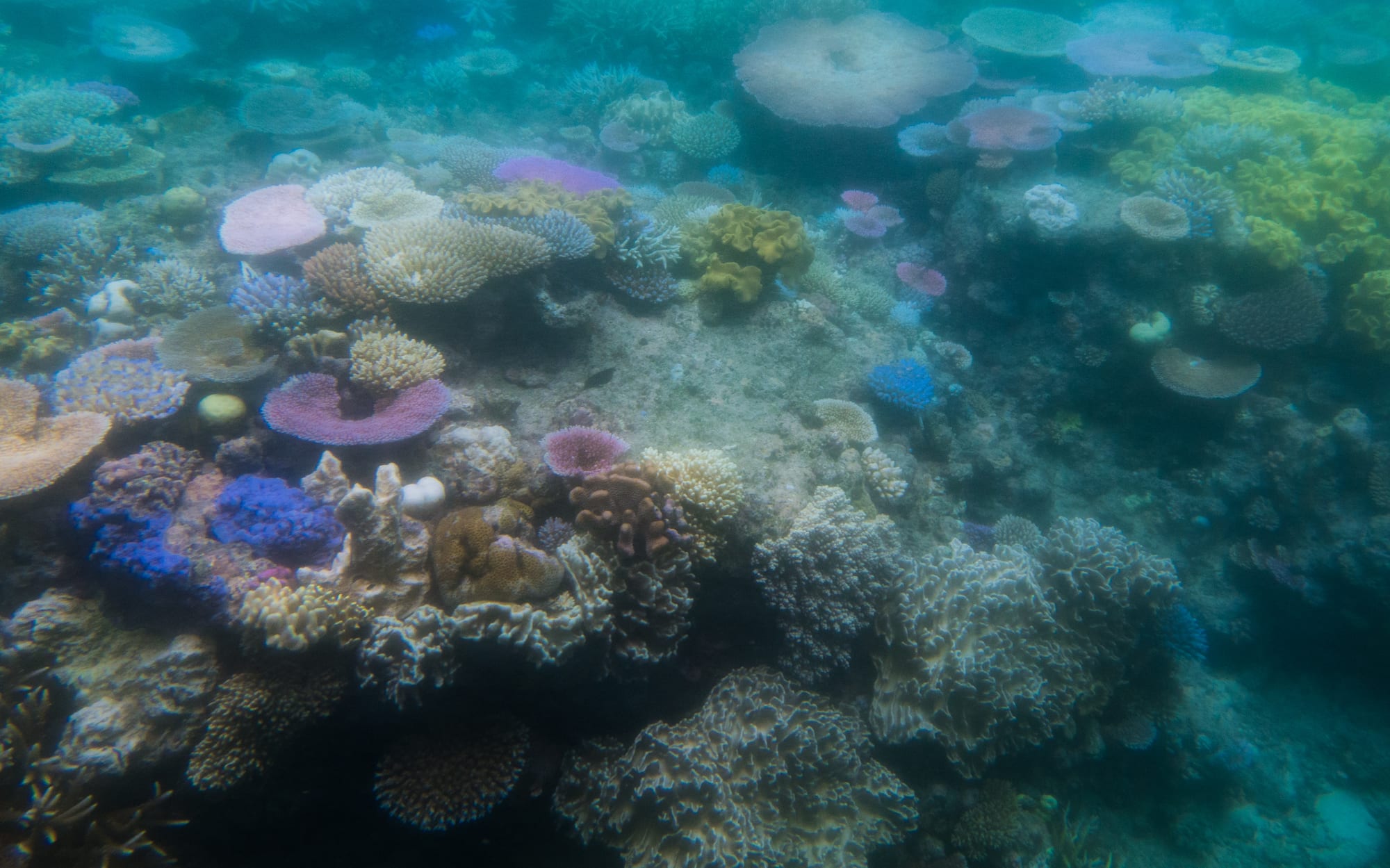
Bleaching rarely hits every coral on a reef equally.
Then the pace quickened. In 2016 heat stress caused severe and widespread bleaching on the reef, killing between 29 and 50 per cent of its coral; near Port Douglas, more than half of the bleached corals died. It struck again in 2017. Many mature breeding corals died in those two years, so fewer young corals followed. Mass bleaching returned in 2020 and again in the summer of 2021–22, when it affected 91 per cent of reefs and became the first mass bleaching on the reef to happen during La Niña, the cooler counterpart of El Niño.
Mass bleaching on the Great Barrier Reef
- 1998
The first major event: 42 per cent of reefs bleach to some extent.
- 2002
54 per cent of reefs bleach.
- 2016
Severe, widespread bleaching kills 29 to 50 per cent of the reef's coral.
- 2017
Bleaching returns the following summer.
- 2020
Another mass bleaching event.
- 2022
Bleaching affects 91 per cent of reefs, the first such event in a La Niña year.
- 2024
The fifth extensive bleaching since 2016 begins, part of the fourth global event.
The worst global bleaching on record
The reef's latest crisis is part of something worldwide. In April 2024 the US National Oceanic and Atmospheric Administration (NOAA) confirmed a fourth global bleaching event, which had begun in February 2023. By April 2025, 84 per cent of the world's reefs had been exposed to bleaching-level heat, the most extensive bleaching in recorded history. 2024 was Earth's hottest year on record, and much of that heat went into the oceans.
On the Great Barrier Reef, the Australian Institute of Marine Science (AIMS) reported that more than a third of the live hard coral around Lizard Island and Cooktown, in the northern reef, had been killed: the largest annual drop in nearly 40 years of records. The scale was so great that NOAA's Coral Reef Watch added three new levels to its bleaching alert scale.
Other pressures, and the chance of recovery
Heat is not the only enemy. A study of coral loss between 1985 and 2012 found that coral cover had fallen by 50.7 per cent, but that bleaching accounted for only about a tenth of that decline; the rest came roughly equally from tropical cyclones and from outbreaks of the coral-eating crown-of-thorns starfish. Polluted runoff makes those outbreaks worse: one study found that doubling the chlorophyll in the water raises the survival of the starfish's larvae tenfold. More carbon dioxide in the air is also making seawater more acidic, which weakens the reef's structure.
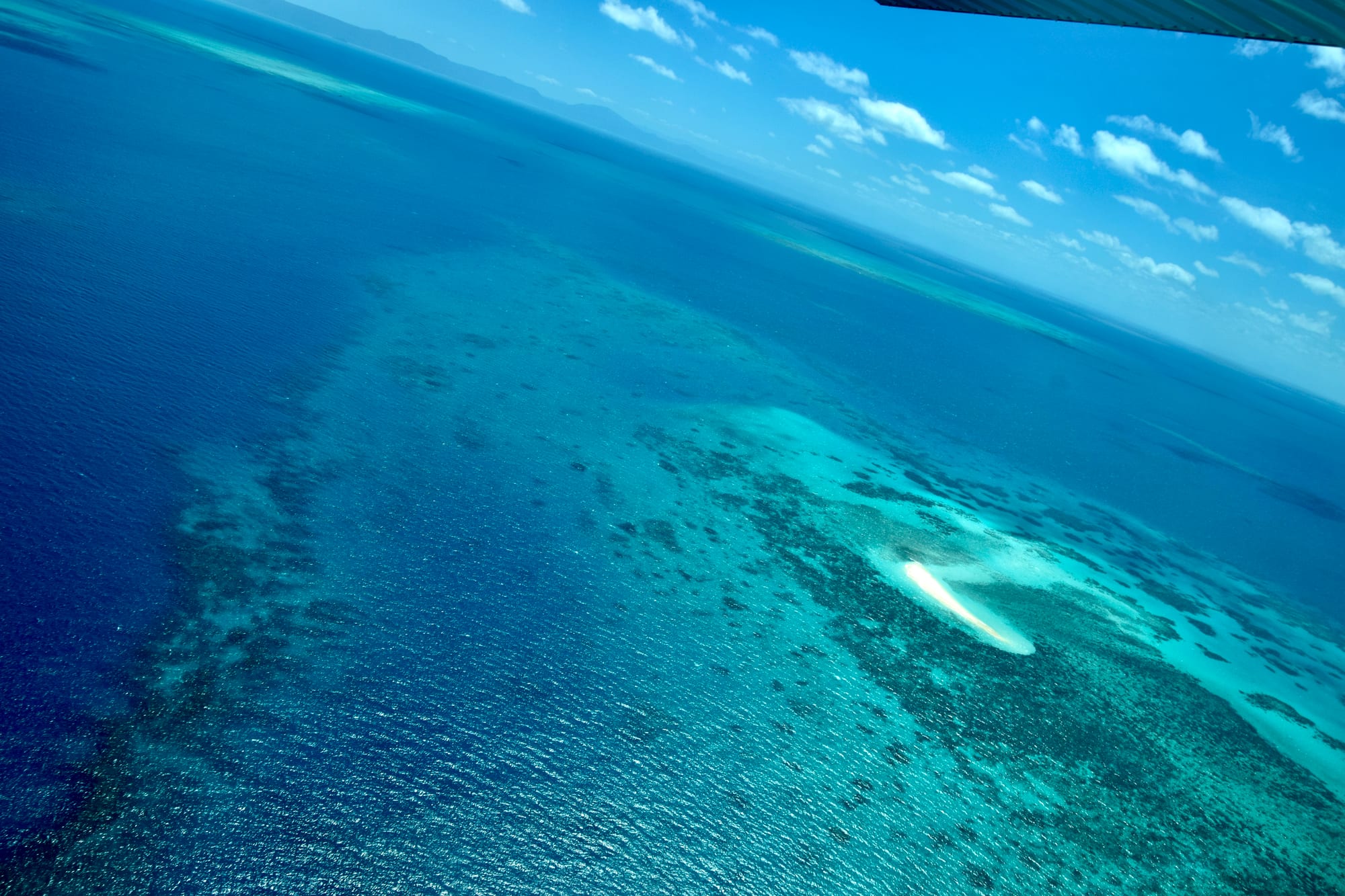
The reef covers about 344,400 square kilometres, so bleaching often hits some areas far harder than others.
Reefs can bounce back. In 2022 the northern and central parts of the reef had the highest coral cover since monitoring began, in AIMS's greatest recovery in 36 years, and corals in the Keppel Islands recovered strongly after bleaching in 2006. The problem is time. Scientists estimate that mass bleaching now comes faster than reefs can recover or adjust. Projections suggest bleaching three times a decade on the reef if global warming is held to 1.5 °C, and every other year at 2 °C. The Great Barrier Reef Marine Park Authority considers climate change the greatest threat the reef faces. In 2023 Australia promised UNESCO a combined investment of A$4.4 billion to protect it, but how fast the world cuts its emissions will decide how often the water gets hot enough to turn the reef white.