Attractions & Natural Wonders
Why is the sea salty?
Rain dissolves minerals from rock, rivers and undersea vents deliver them to the ocean, and evaporation lifts out only the water, leaving the salt behind.
By Globeway Editorial · 13 October 2026
The short answer
The sea is salty because, for billions of years, water has been dissolving minerals out of the Earth's rocks and carrying them into the ocean, where they stay. On land, rain picks up a little carbon dioxide from the air, becoming very weakly acidic, and slowly breaks down rock. Rivers carry the dissolved minerals to the sea. More arrives from below: volcanoes and hot springs on the sea floor, called hydrothermal vents, release chloride and other elements from the planet's interior. The two most plentiful ingredients, sodium and chloride, are the components of ordinary table salt.
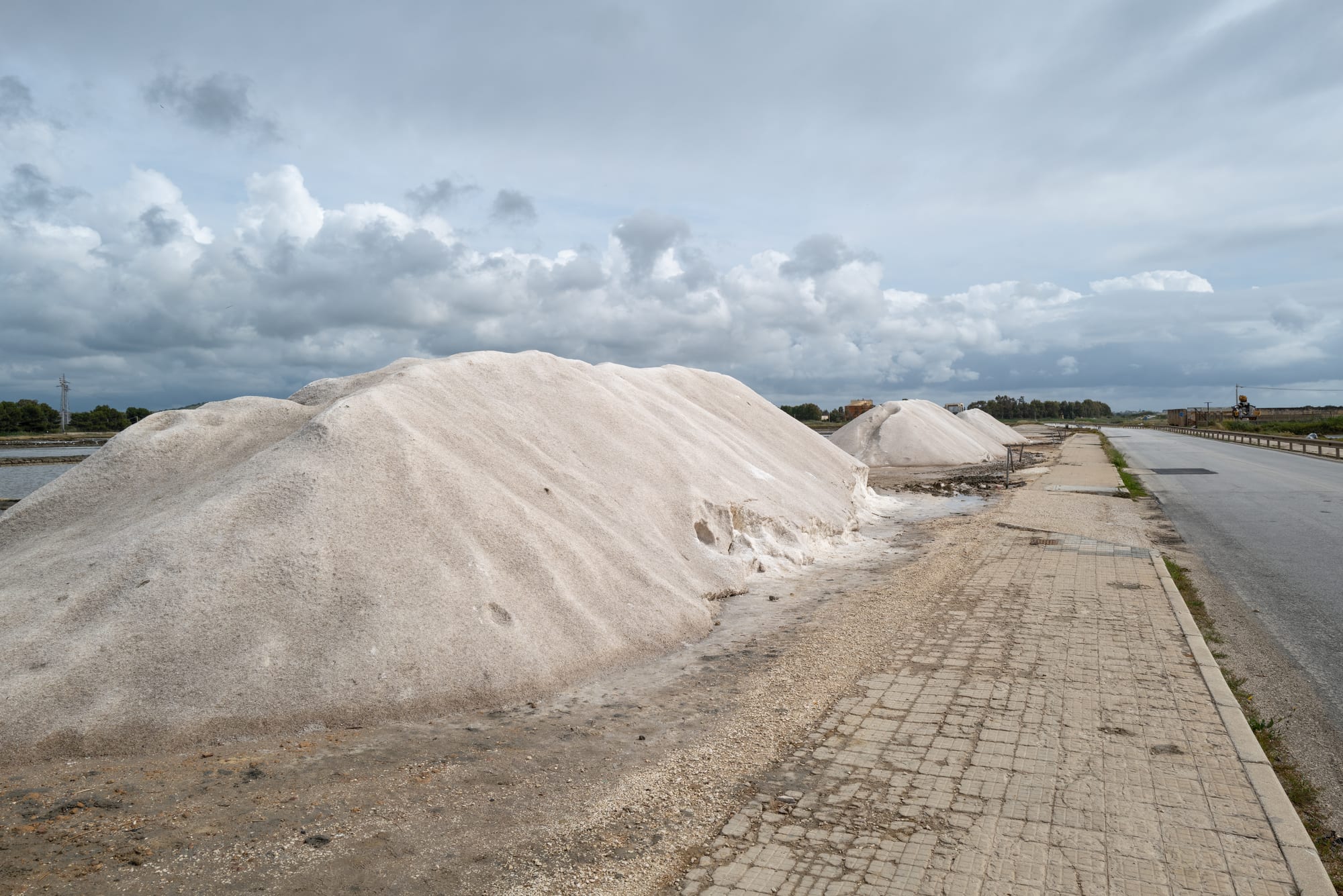
The salt builds up because of evaporation. The sun lifts water off the ocean as pure vapour, which falls again as fresh rain, but the dissolved minerals cannot evaporate and are left behind. The result is that every kilogram of seawater holds about 35 grams (1.2 ounces) of dissolved salts, a salinity of about 3.5 per cent. That figure has stayed remarkably stable for billions of years, because salt is also constantly being removed again.
Rain, rock and rivers
The first scientific explanation came from the English astronomer Edmond Halley in 1715. He proposed that rain washed salt and other minerals out of the ground and rivers carried them to the sea, where they became more concentrated as more arrived over time. He noticed that lakes with no outlet to the ocean, such as the Dead Sea and the Caspian Sea, tend to be salty, which fitted his idea. He called the process "continental weathering".
Chemical weathering is the slow reaction of rock with water, oxygen and carbon dioxide. When rainwater combines with carbon dioxide it forms carbonic acid, a weak acid that dissolves limestone and, given time, even very resistant minerals. The products are carried away in solution as charged particles called ions.
Rivers taste fresh because the amounts are tiny. Rivers and lakes range from less than 0.01 grams of dissolved salts per kilogram of water to a few grams, against about 35 in the sea. The ocean is where those small amounts accumulate.
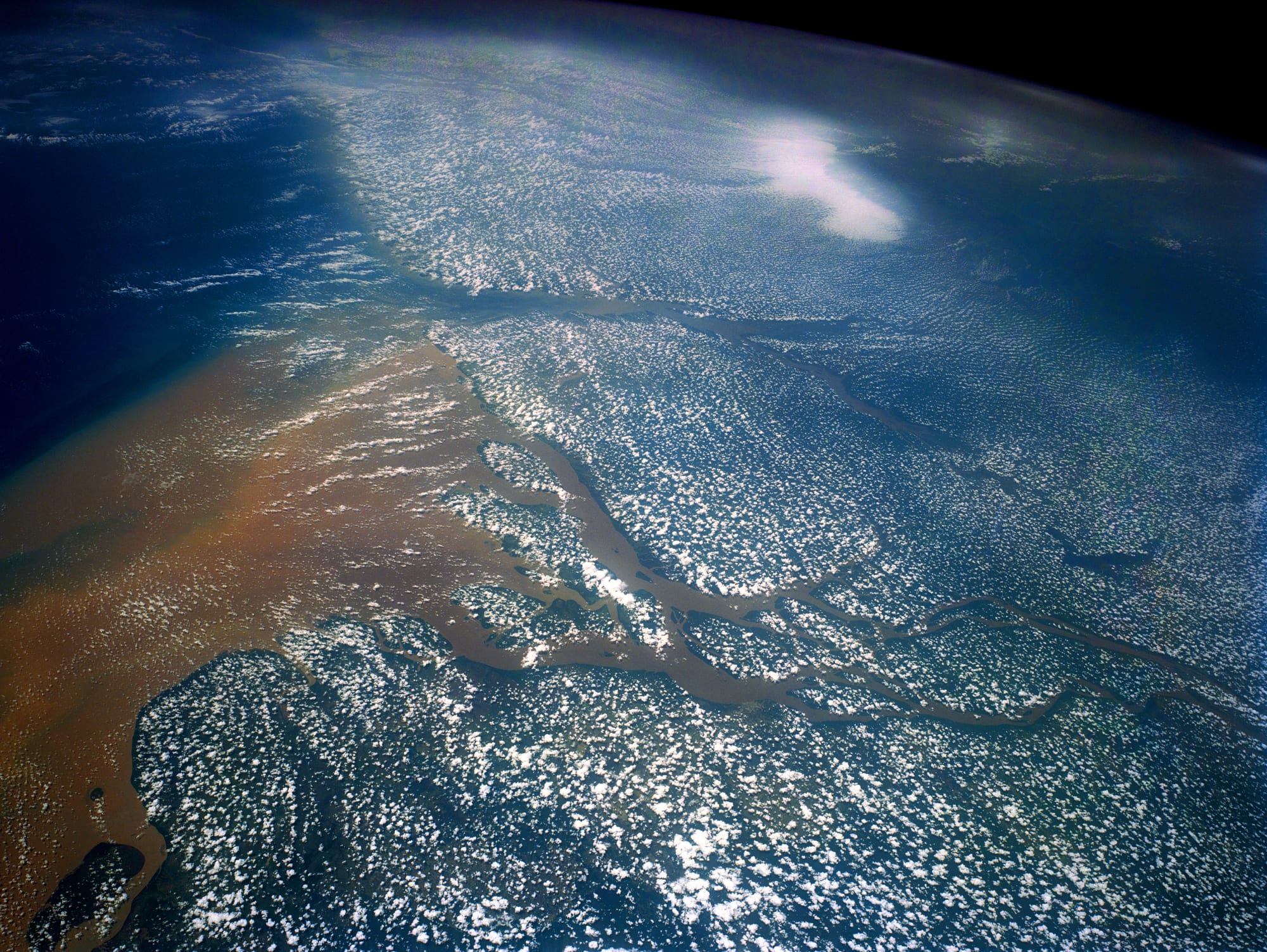
Besides the visible mud, rivers carry minerals dissolved from rocks across their basins, too dilute to taste but enough, over geological time, to keep supplying the ocean.
Why the sea is mostly sodium chloride
Halley's theory was only partly right. River water is not simply weak seawater: its most common dissolved ion is bicarbonate, nearly half of all its dissolved material, while in seawater bicarbonate makes up only 0.14 per cent. The difference lies in how long each ingredient stays in the ocean, its residence time. Calcium, for example, is quickly taken out of the water to form carbonate minerals, while sodium and chloride remain in solution for very long periods. Over time the ingredients that linger come to dominate.
The chloride also has another origin. It comes largely from deep inside the Earth, released as hydrochloric acid gas along with other gases from volcanoes and hydrothermal vents. Sodium, meanwhile, was leached out of the ocean floor when the oceans first formed. Today the most abundant dissolved ions in seawater are sodium, chloride, magnesium, sulfate and calcium.
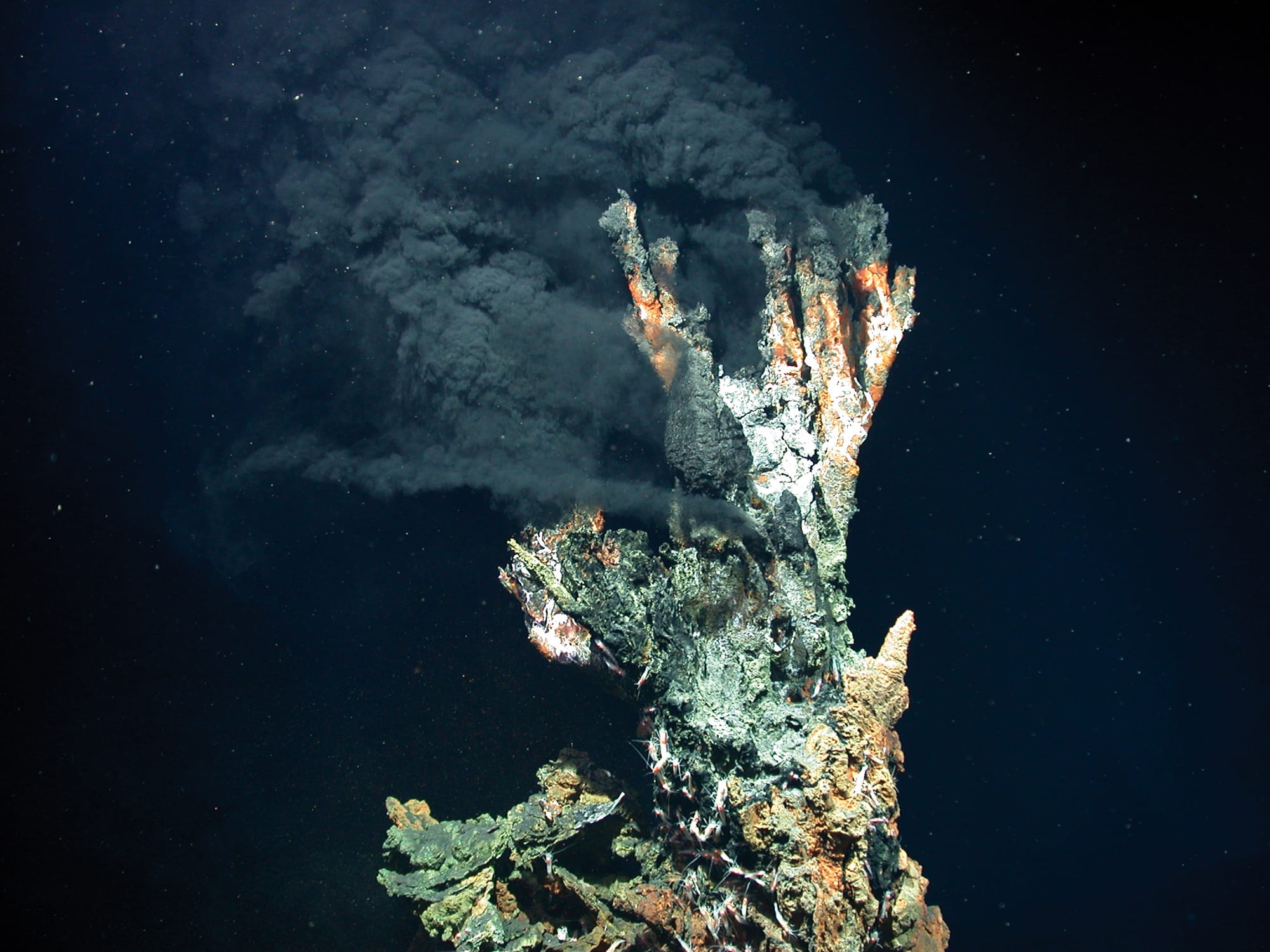
Vents like this one discharge water heated to as much as 464 °C (867 °F), delivering a wide range of elements from the Earth's crust into the surrounding ocean.
Evaporation: the sea's one-way filter
The ocean is the source of about 86 per cent of all the water that evaporates on Earth. Every molecule of water that leaves takes nothing with it, so the sea keeps its salt while sending fresh water back to the land. Freezing does something similar: sea ice holds much less salt than the water it forms from, leaving the water around it saltier.
The balance between evaporation and fresh water explains why salinity varies from place to place. Most seawater lies between 31 and 38 grams per kilogram. The Red Sea, with almost no rain, no significant rivers, a narrow link to the Indian Ocean and evaporation as high as 2,050 millimetres a year, averages about 40, making it one of the saltiest seas in the world. The Baltic, fed by some two hundred rivers, has surface waters of only 0.3 to 0.9 per cent salt, close to fresh. Cut off from the ocean entirely, the Dead Sea reached a salinity of 34.2 per cent in 2011, nearly ten times that of the ocean.
Why the oceans are not getting saltier
If rivers add salt every year, it might seem that the sea should grow ever saltier. In 1899 the Irish geologist and physicist John Joly used that reasoning to calculate the age of the oceans, dividing their salt by the rate at which rivers deliver it. He arrived at 80 to 100 million years, a fraction of their true age.
What he missed is that salt also leaves. Ocean salinity has most likely been stable for billions of years because the ocean loses about as much as it gains. Salt is buried in sediments with the water trapped between their grains, reacts with the volcanic basalt of the sea floor, and is laid down as thick beds of salt and gypsum, called evaporites, where seas are cut off and dry out. The most significant of these formed between about 5.96 and 5.33 million years ago, when the Mediterranean was sealed off from the Atlantic and dried out almost completely, before the Atlantic flooded back in through the Strait of Gibraltar.
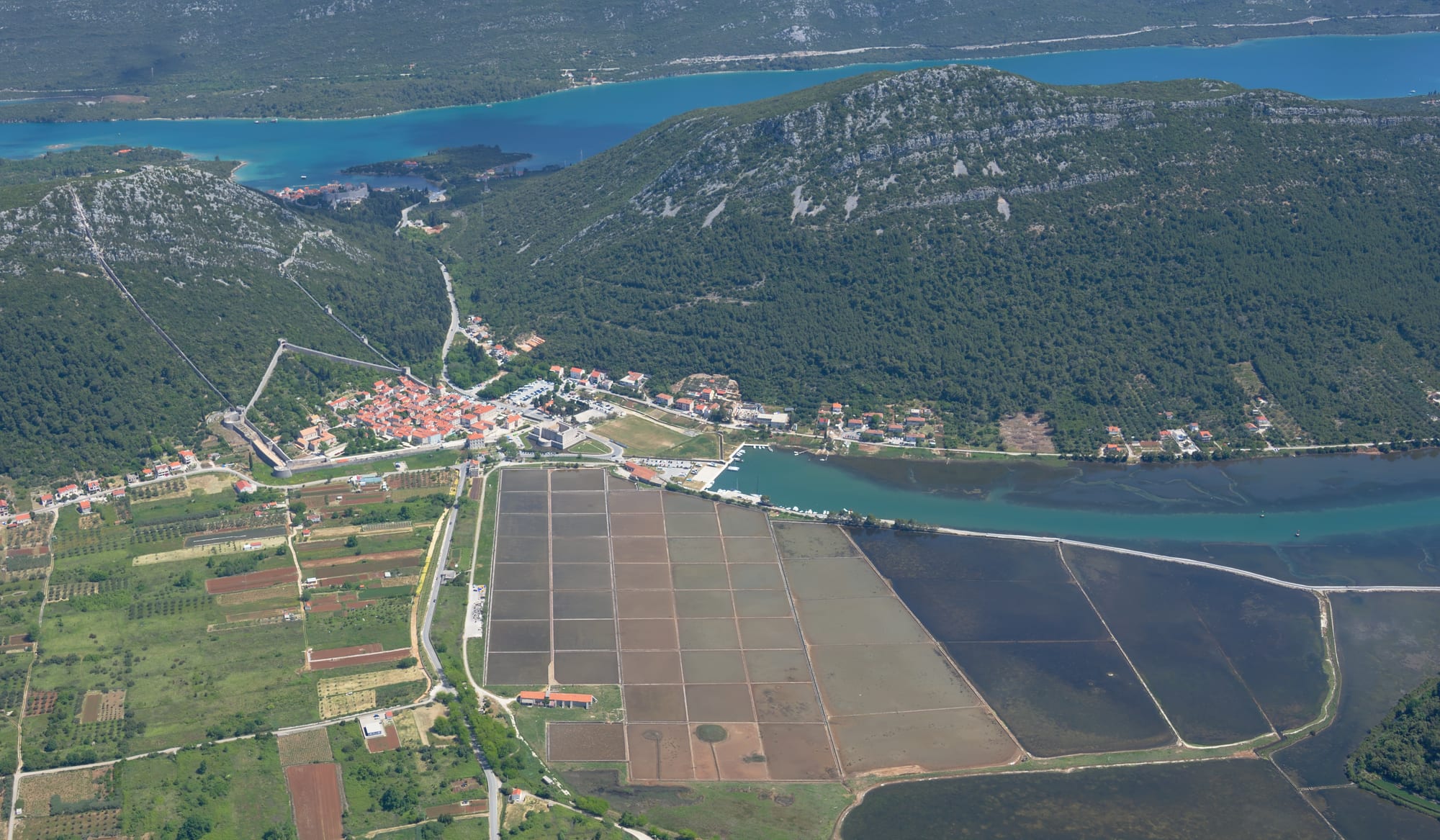
Saltworks copy nature's method, letting the sun evaporate shallow ponds of seawater. Ston's walls were built partly to guard its saltworks, which once earned the Republic of Dubrovnik 15,900 ducats a year.