History · Hong Kong
Why was Hong Kong British for 156 years?
An island seized in an opium war, a peninsula ceded after another, and a 99-year lease whose expiry in 1997 decided the fate of the whole territory
By Globeway Editorial · 13 October 2026
The short answer
Britain took Hong Kong Island in January 1841, during the First Opium War, a conflict that began when China tried to stamp out the opium that British merchants were selling there. It wanted a harbour of its own off the south China coast, and the 1842 Treaty of Nanking handed the island over "in perpetuity". The colony grew in two more steps: the tip of the Kowloon peninsula was ceded in 1860, and in 1898 a much larger area, the New Territories, was leased for 99 years.
That lease is why British rule lasted 156 years and not longer. It was due to run out on 30 June 1997, and by then most of Hong Kong's land and over half its people lay in the leased area, so the colony could not survive being cut in two. The People's Republic of China refused to extend the lease or accept the old treaties, and in 1984 Britain agreed to hand back the whole territory. It did so at midnight on 1 July 1997. The 156 years include almost four in which Britain did not rule at all: Japan occupied Hong Kong from December 1941 to 1945.
An island taken in a war over opium
In the 1830s the Qing government of China decided to suppress the opium trade, which was Britain's single most profitable commodity trade of the 19th century. In March 1839 the imperial commissioner Lin Zexu confined the foreign merchants in Canton (Guangzhou) and cut off their supplies until they surrendered their stock: 20,283 chests of opium, destroyed in public. Britain's government did not dispute China's right to ban the drug, but objected to the way the ban was enforced, demanded compensation and sent a fleet.
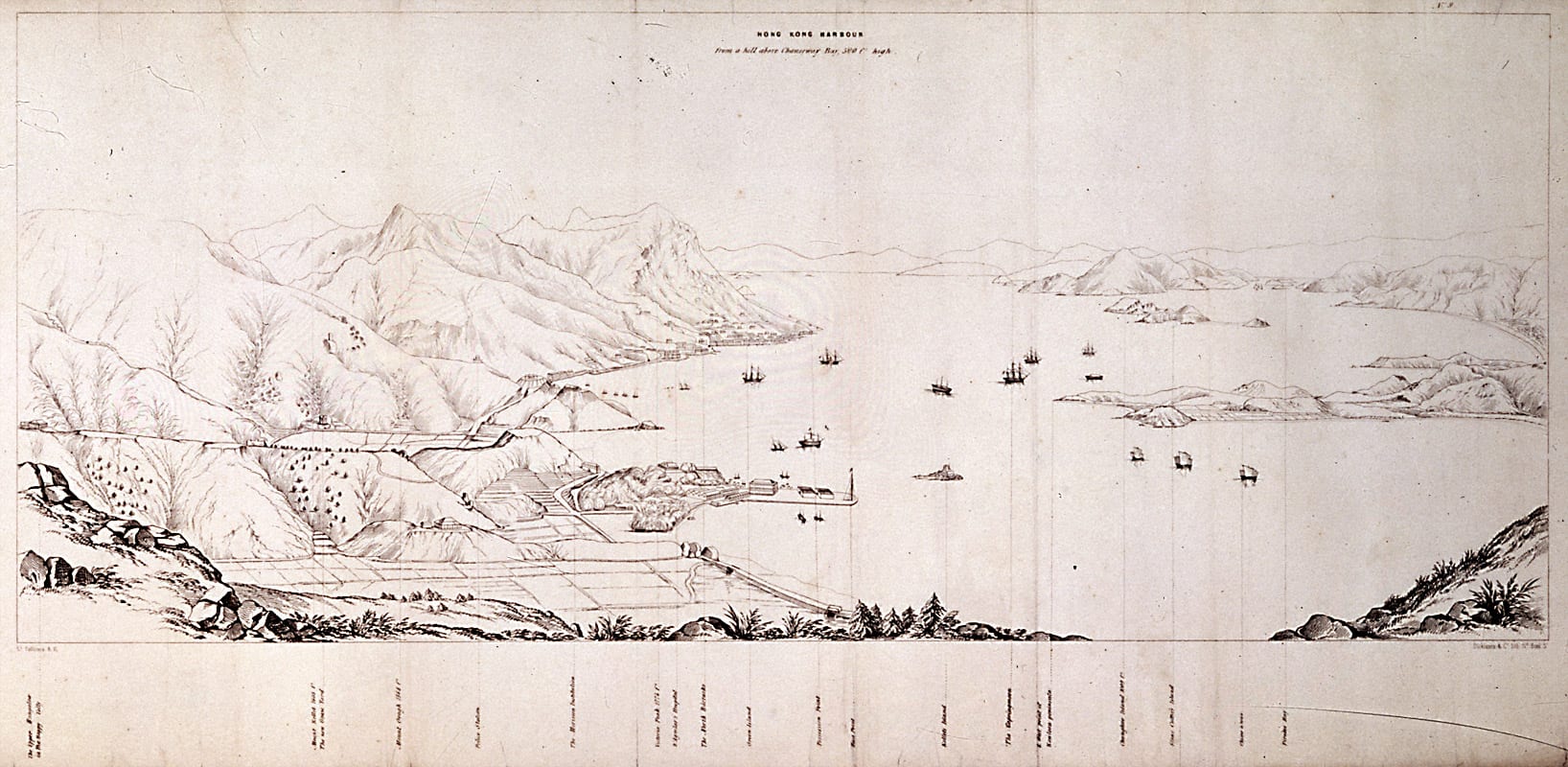
The Foreign Secretary, Lord Palmerston, wanted a base on the Chusan Islands near Shanghai. The British envoy on the spot, Charles Elliot, chose Hong Kong Island instead, valuing its harbour as a base for the British traders of Canton. On 26 January 1841 British forces raised the Union Jack at Possession Point. The island then had about 7,450 inhabitants, mostly Tanka fishermen and Hakka charcoal burners in a few coastal villages.
The Treaty of Nanking, signed on 29 August 1842, confirmed the cession, opened five Chinese ports to British trade and made China pay 27 million dollars in compensation and war costs. China would later call it one of the first "unequal treaties", the agreements imposed on it by foreign powers in the 19th century.
Ceded twice, then leased
The colony expanded in the wake of further conflict. In the Second Opium War Britain and France captured the Taku Forts and occupied Beijing, and the 1860 Convention of Peking ceded the Kowloon peninsula south of today's Boundary Street, and Stonecutters Island, also in perpetuity. The flat land across the harbour was valued as a military training and resting ground.
The third step was different in kind. In 1898, after China's defeat by Japan, the European powers scrambled for footholds on the Chinese coast: Germany leased Jiaozhou Bay, Russia leased Port Arthur, France leased Guangzhouwan. Britain, worried above all about defending its isolated island, pressed for more land around it. By then the powers had agreed that outright annexation of Chinese territory was no longer acceptable, so on 9 June 1898 the Convention for the Extension of Hong Kong Territory leased the land north of Boundary Street up to the Sham Chun River, with its surrounding islands, rent-free for 99 years. Under British law at the time, 99 years was the longest lease allowed. The British negotiator, Sir Claude MacDonald, chose it because he thought it was "as good as forever".
- 1839
Lin Zexu forces British merchants to surrender their opium in Canton
- 26 January 1841
British forces occupy Hong Kong Island
- 1842
The Treaty of Nanking cedes the island to Britain "in perpetuity"
- 1860
The Convention of Peking cedes southern Kowloon
- 1898
The New Territories are leased for 99 years
- 1941–1945
Japan occupies Hong Kong for three years and eight months
- 1984
The Sino-British Joint Declaration sets the terms of the handover
- 1 July 1997
Sovereignty passes to the People's Republic of China
Why a lease decided the fate of the whole territory
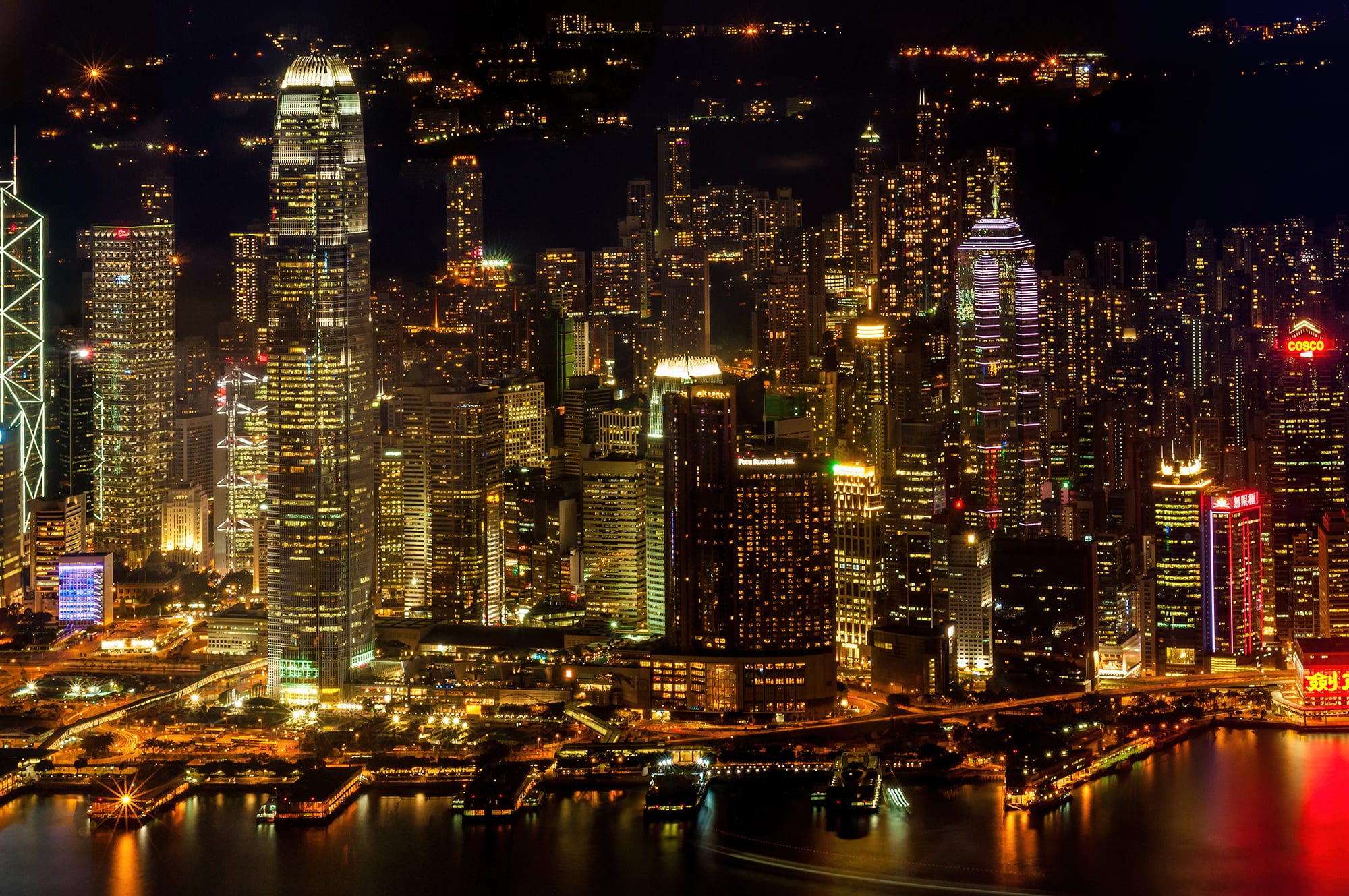
Forever turned out to be shorter than MacDonald imagined. In the 20th century the city spilled out of its old boundaries, and new towns grew in the New Territories until the leased land made up 86.2 per cent of the colony and held more than half its people. Its farmland and large new developments were part of the same city as Kowloon and Hong Kong Island, and handing back only the leased land was seen as impractical.
China, for its part, did not recognise the old treaties at all. In 1972 its representative at the United Nations wrote that Hong Kong and Macau belonged to "the category of questions resulting from the series of unequal treaties" imposed on China. In March 1979 the governor, Murray MacLehose, raised the future of the New Territories leases with Deng Xiaoping in Beijing and suggested that British administration might continue after 1997. The visit made it clear that China intended to resume sovereignty.
When Margaret Thatcher visited Beijing in September 1982 she insisted the treaties remained valid. Deng would not compromise on sovereignty; Thatcher later said he told her bluntly: "I could walk in and take the whole lot this afternoon". Britain then sought to keep administering Hong Kong under Chinese sovereignty, and Deng rejected that too. The Sino-British Joint Declaration, signed by Thatcher and the Chinese premier Zhao Ziyang on 19 December 1984, settled it: the whole territory would pass to China on 1 July 1997, the day after the lease expired.
Midnight, 1 July 1997
The deal rested on a formula, "one country, two systems", originally devised with Taiwan in mind. Hong Kong would become a Special Administrative Region of China, and its capitalist system and way of life would remain unchanged for 50 years, until 2047, under a mini-constitution called the Basic Law.
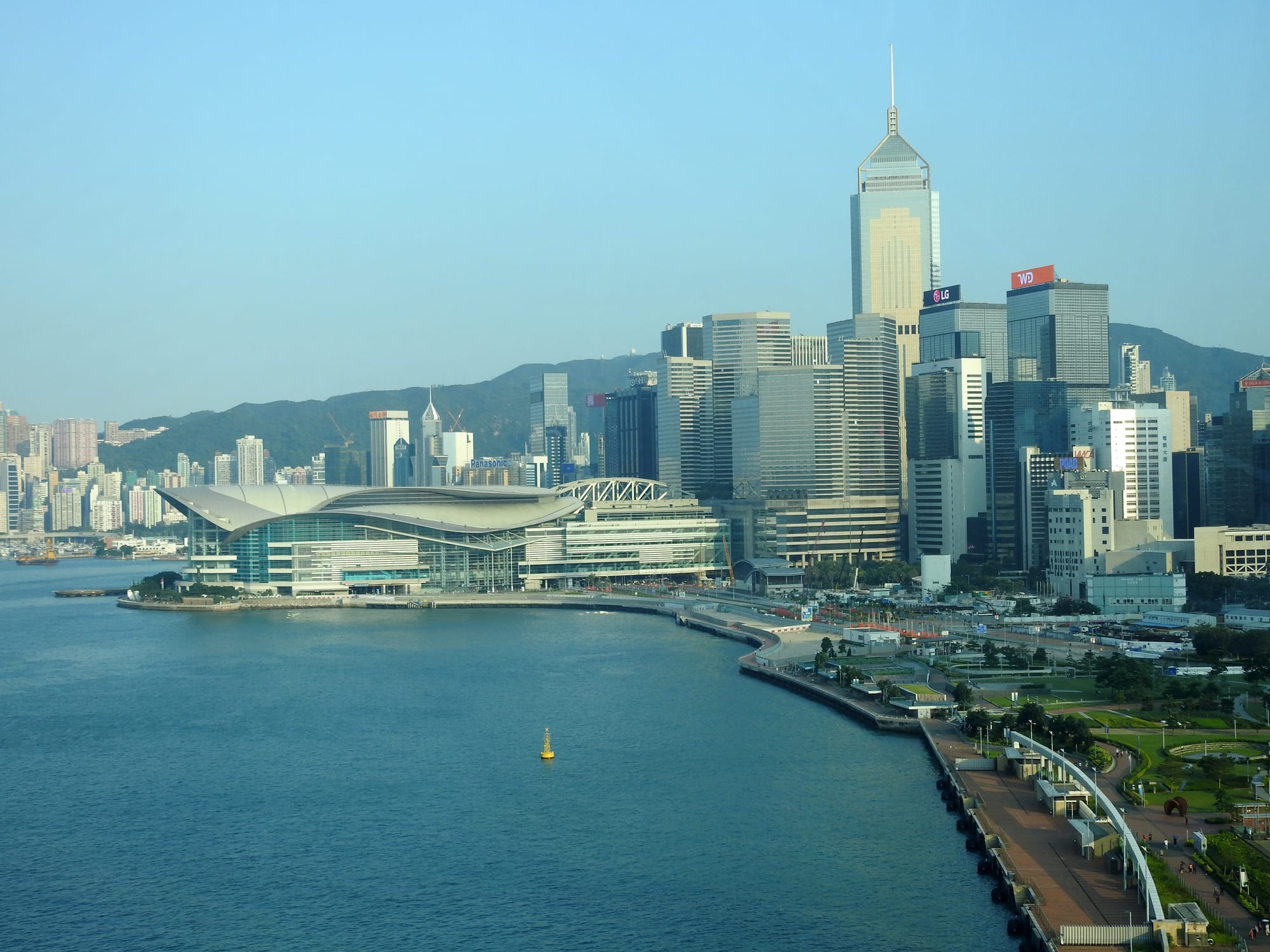
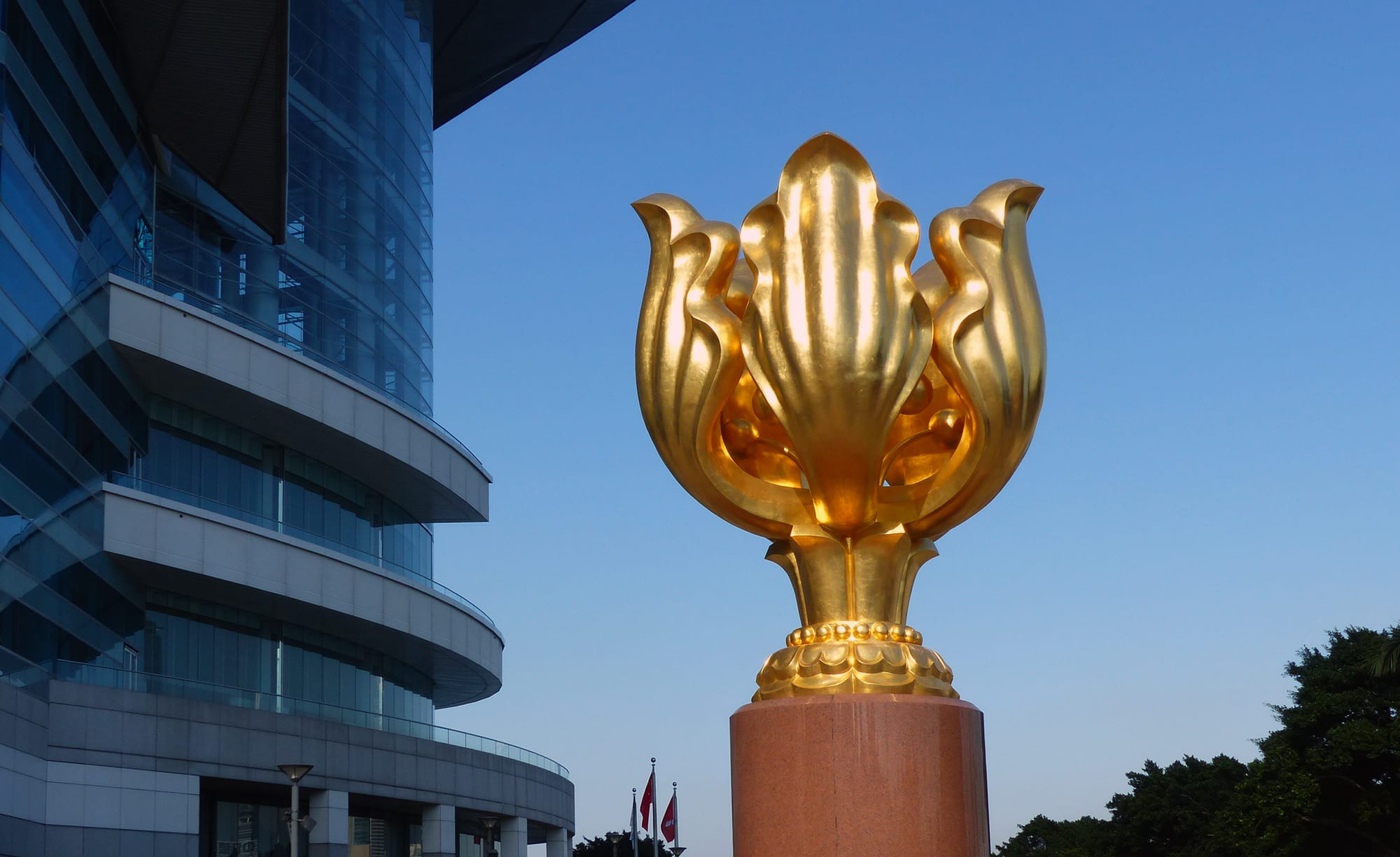
The handover ceremony took place on the night of 30 June 1997 in the new wing of the Hong Kong Convention and Exhibition Centre in Wan Chai. Charles, Prince of Wales, read a farewell on behalf of Queen Elizabeth II, alongside the new prime minister, Tony Blair, and the last governor, Chris Patten; China was represented by President Jiang Zemin and Premier Li Peng, with Tung Chee-hwa as Hong Kong's first Chief Executive. At midnight, sovereignty changed hands. With about 6.5 million people, Hong Kong held 97 per cent of the population of all Britain's dependent territories and was its last major colony.
The colonial years left a city distinct from the mainland: English common law, its own currency and courts, roads named after British royals and governors, and a population built up by waves of refugees from China. Since 2020 a National Security Law imposed by Beijing, and a further local security law passed in 2024, have sharply curtailed the political freedoms and civil liberties that the handover arrangements had promised.