History · Japan
Why was Kyoto spared the bombing of the Second World War?
Kyoto was on the shortlist for the first atomic bomb. One American official, Secretary of War Henry Stimson, struck it off and kept it off.
By Globeway Editorial · 13 October 2026
The short answer
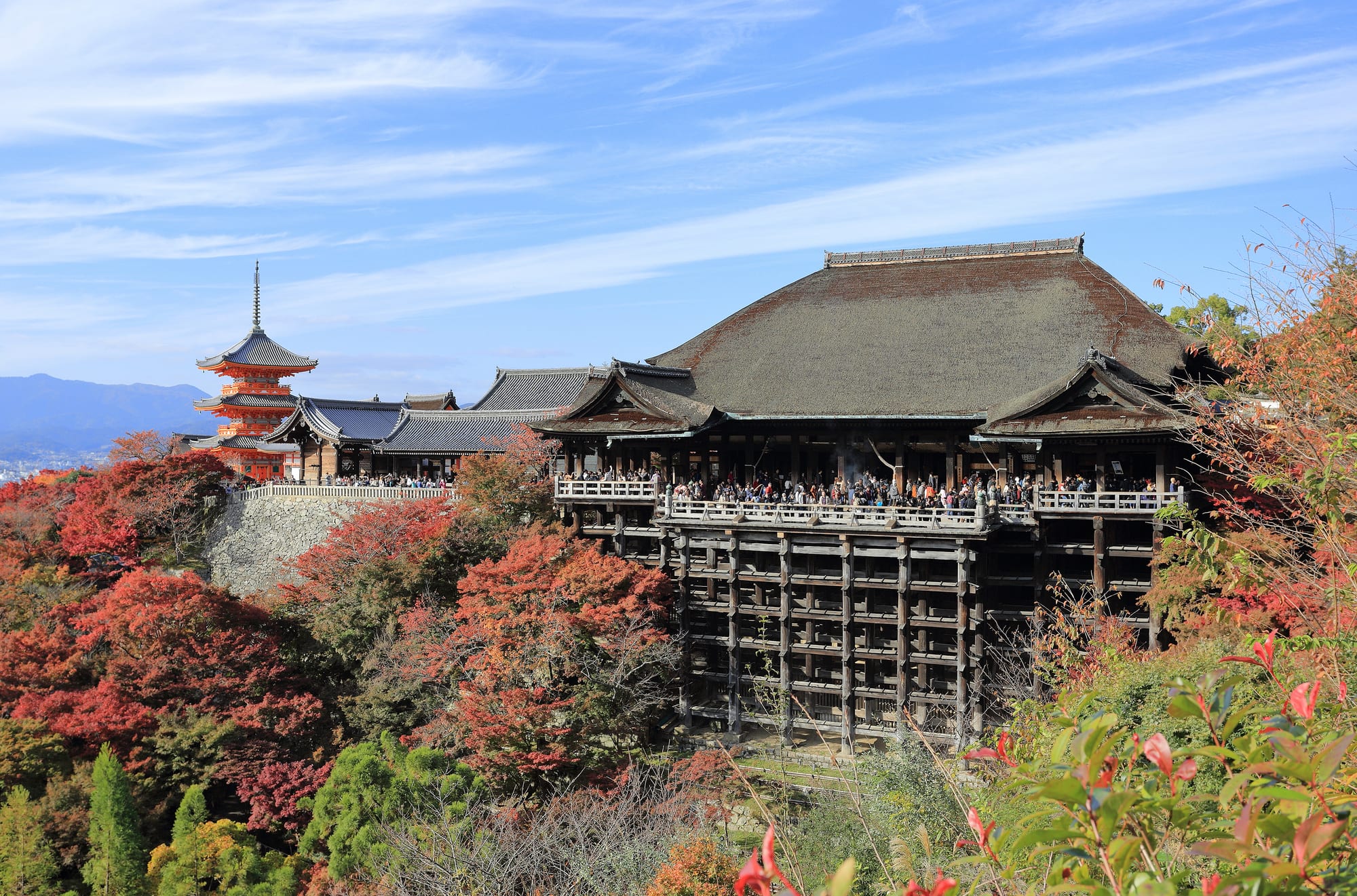
Kyoto was spared because one man insisted on it. In 1945 American planners put the city on the shortlist of targets for the first atomic bomb, and for a while it was a leading candidate. Henry L. Stimson, the US Secretary of War, objected. He argued that destroying Japan's ancient imperial capital, a city of immense religious and cultural importance, would be a wanton act that could leave the Japanese bitter towards the United States for generations. President Harry Truman agreed, and on 25 July 1945 Nagasaki was put on the target list in Kyoto's place.
Kyoto had also been largely left out of the firebombing raids that burned much of urban Japan, partly on the same cultural grounds. Small raids still caused casualties, but the city came through the war with most of its prewar temples, shrines and wooden townhouses intact. The popular story that Stimson saved it because he had honeymooned there is a myth.
A target chosen for its importance
In April 1945 General Leslie Groves, head of the Manhattan Project, formed a Target Committee of air force officers and scientists to recommend where the new weapon should be used. It met in Washington and at Los Alamos between April and May and named five candidate cities: Kokura, Hiroshima, Yokohama, Niigata and Kyoto. A target had to be a large city with an important objective, a place where the blast would do effective damage, and one unlikely to have been attacked by August 1945.
That last criterion mattered. The chosen cities were deliberately left off the firebombing lists so that the damage from an atomic bomb could be measured accurately; on 3 July the Joint Chiefs of Staff placed Hiroshima, Kokura, Niigata and Kyoto off limits to bombers. Kyoto, a major industrial centre with more than a million people, met the military criteria. The committee also weighed psychological effect, and its notes argued that Kyoto's people, being "more highly intelligent", would be "better able to appreciate the significance of the weapon".
To the Japanese, Kyoto was much more than a city. Chosen in 794 as the seat of the imperial court by Emperor Kanmu, and laid out on the model of the Chinese capital Chang'an, it remained Japan's capital until the court moved to Tokyo after the Meiji Restoration. It is sometimes called the thousand-year capital.
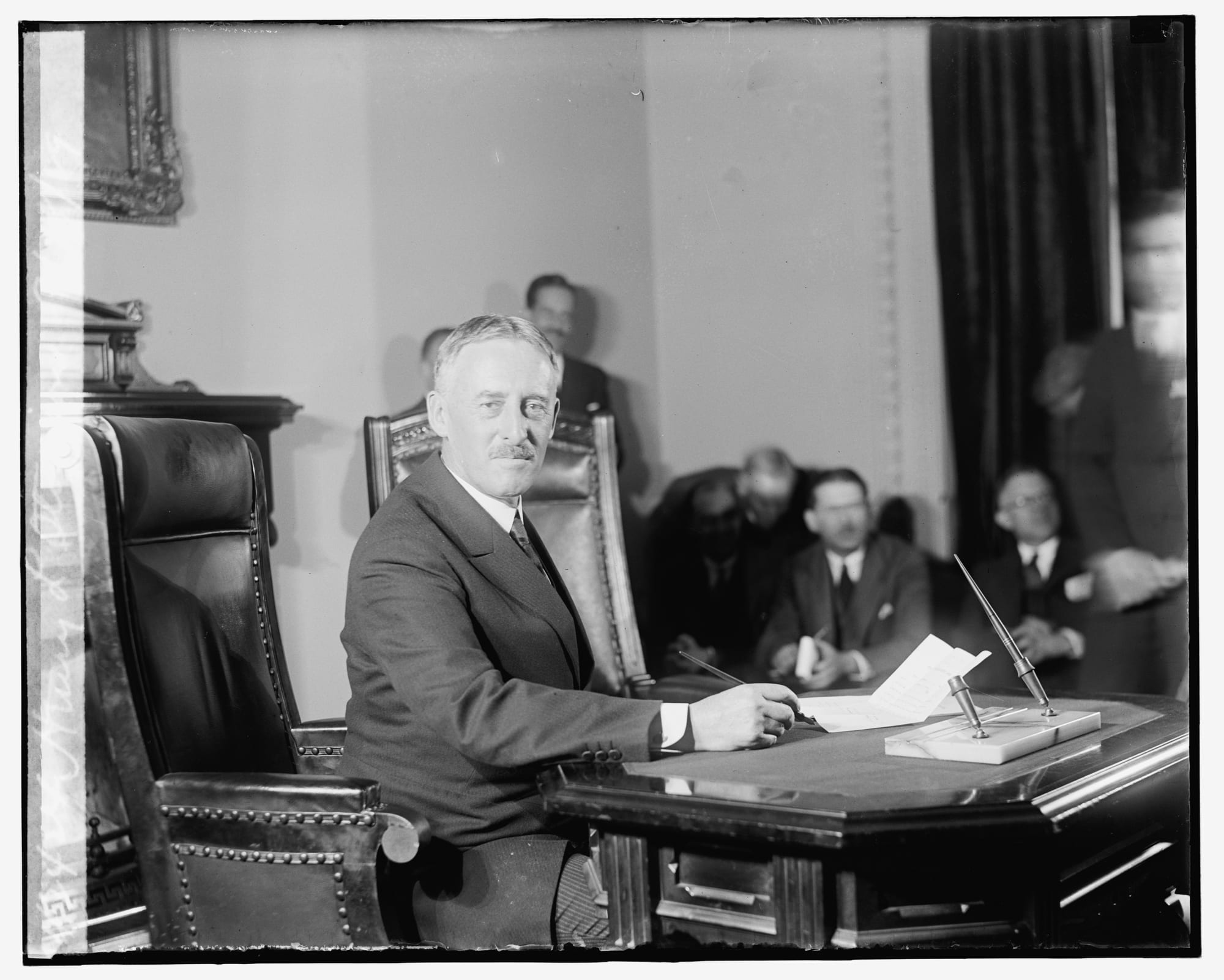
Stimson held the post of governor-general from 1927 to 1929 and was then appointed Secretary of State. He returned as Secretary of War in 1940 and took direct control of the atomic bomb project.
One man's veto
As Secretary of War, Stimson oversaw Groves and had the final word on how the bomb would be used. On 30 May 1945 he asked Groves to remove Kyoto from the list because of its historical, religious and cultural significance. Groves pointed to its military and industrial importance. Stimson did not budge. At a meeting of the Interim Committee, the panel advising on the bomb, on 1 June, he declared that there was "one city that they must not bomb without my permission and that was Kyoto."
He then took the matter to Truman, who agreed, and Kyoto was dropped, at first only temporarily. In July Groves tried to put it back, sending a message to Stimson while he was at the Potsdam Conference with Truman. Stimson again refused and reported that the president concurred; after that, there was no more talk of Kyoto. On 25 July Nagasaki, a major military port and shipbuilding centre, was added in its place, and the orders issued that day named Hiroshima, Kokura, Niigata and Nagasaki.
- April 1945
General Groves forms the Target Committee.
- May 1945
Kyoto is one of five cities nominated as targets.
- 30 May 1945
Stimson asks Groves to remove Kyoto from the list.
- 1 June 1945
Stimson tells the Interim Committee that Kyoto must not be bombed without his permission.
- 3 July 1945
Kyoto and three other target cities are placed off limits to ordinary bombers.
- 25 July 1945
Nagasaki replaces Kyoto; orders for the attack are issued.
- 6 and 9 August 1945
Atomic bombs destroy Hiroshima and Nagasaki.
Why Stimson cared
Stimson knew Kyoto personally. He passed through briefly in 1926 and spent a night there in 1929, during his years as governor-general of the Philippines, and the city's ancient culture had impressed him. But his diary shows a political argument as well as a personal one. He worried that annihilating such an important cultural site would create lasting hostility among the Japanese, which could push Japan towards the Soviet Union after the war. At Potsdam he recorded that Truman agreed "with the utmost emphasis" that the bitterness caused by "such a wanton act" might make it impossible to reconcile the Japanese to the United States rather than to the Russians.
Truman himself wrote in his diary on 25 July that the bomb could not be dropped on the old capital or the new, meaning Kyoto and Tokyo.
The famous honeymoon story comes from the American diplomat and Japan scholar Edwin O. Reischauer, who wrote in his autobiography that Stimson had admired Kyoto since honeymooning there. There is no evidence for it. Stimson married in 1893, more than 30 years before either of his visits, and there is no record of him ever giving that reason. Reischauer was himself often credited with saving Kyoto, a claim he firmly rejected, naming Stimson as the only person who deserved the credit.
What being spared meant
Kyoto's escape was not complete. Small-scale air raids caused casualties, and after the surrender the US Sixth Army and I Corps had their headquarters in the city. But it avoided the fate of the 64 Japanese cities devastated by firebombing, and its escape had a cost elsewhere: Nagasaki, the city that took its place on the list, was destroyed by the second atomic bomb on 9 August. Over the following months the two bombings killed between 150,000 and 246,000 people, most of them civilians.
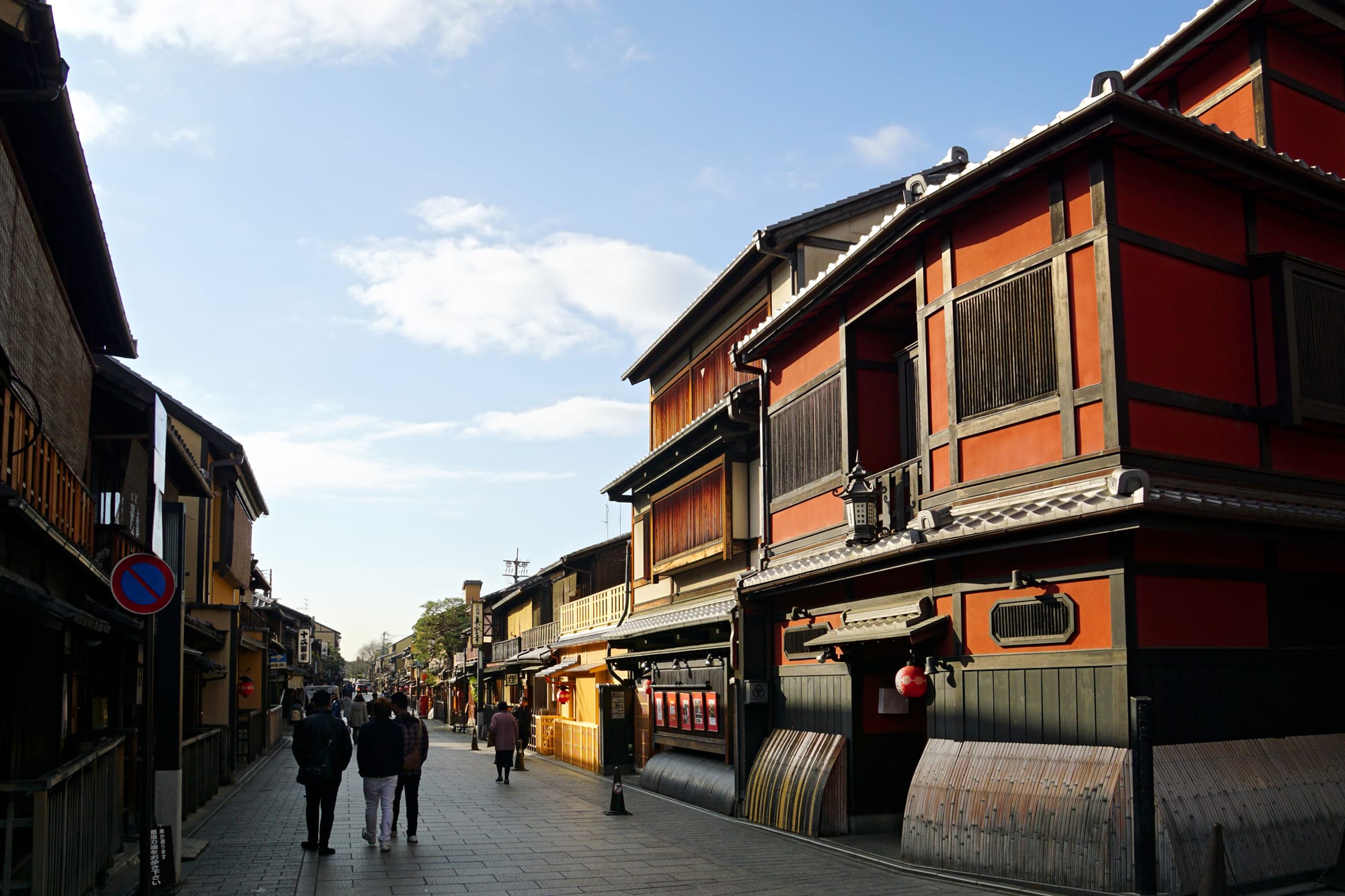
Because the city was not burned, Kyoto is one of the few Japanese cities that still has an abundance of prewar buildings, including the traditional wooden townhouses known as machiya.
The result is the Kyoto visitors see today. The city holds roughly 2,000 temples and shrines, and in 1994 seventeen historic monuments in and around the city were inscribed together as a UNESCO World Heritage Site. Its greatest threat since the war has been ordinary modernisation, which continues to replace old buildings with new ones such as the vast Kyoto Station complex.