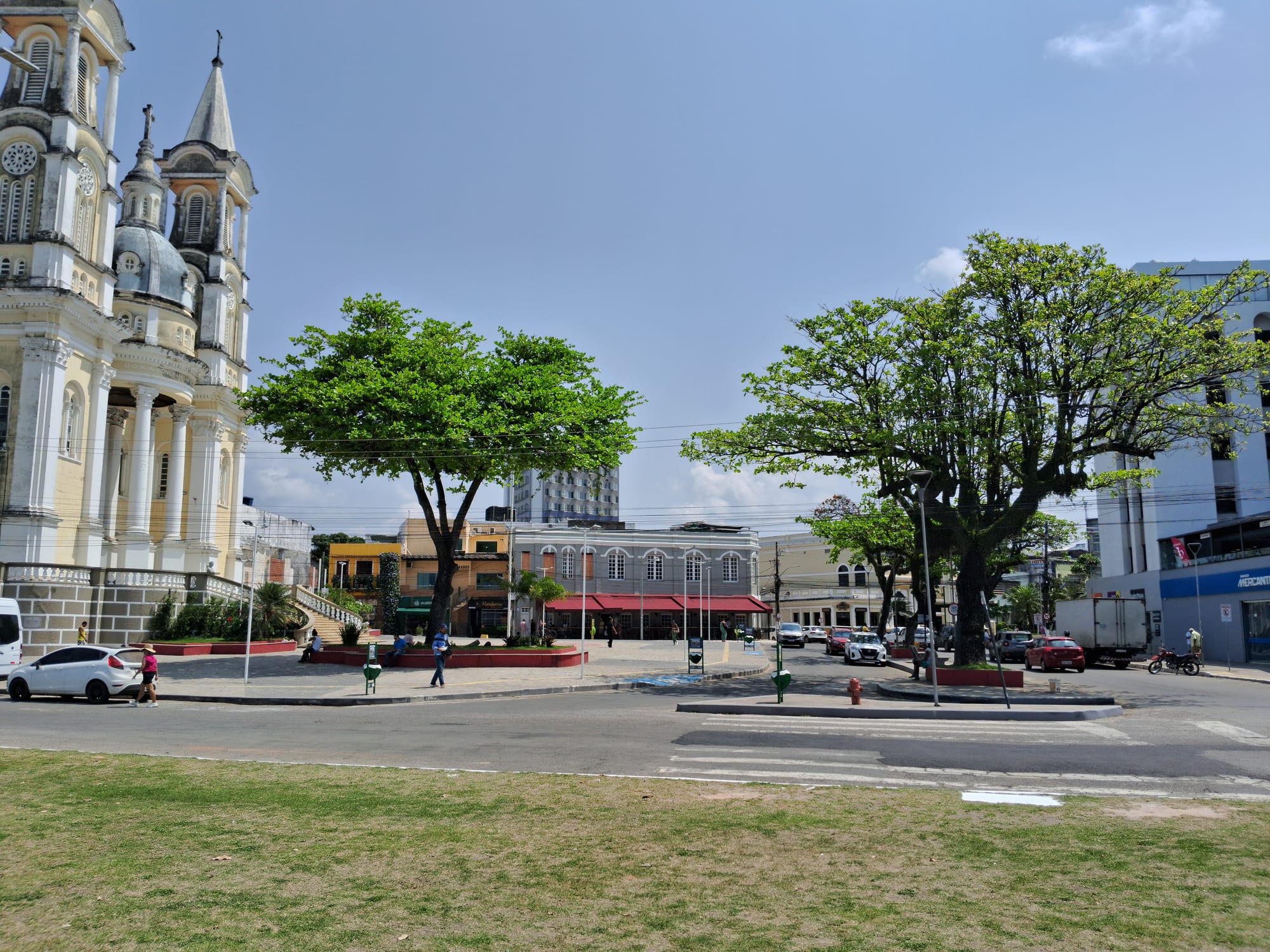
The pale towers of São Sebastião cathedral at the left of a tree-shaded square with low buildings and a street in the historic centre

Bahia, Brazil

Ilhéus

The cathedral of São Sebastião and the main square in the historic centre of Ilhéus. (Leandro M800 / Wikimedia Commons · CC0)

A port city of about 180,000 people on the southern coast of Bahia, founded in 1534 and made rich by cocoa from the 19th century until the late 1980s. The cocoa barons' mansions, the cathedral and the bars of its historic centre are the setting of Jorge Amado's novels, and long beaches run north and south of the Pontal bay, where the Cachoeira river meets the sea.

Neighbourhoods

  • Centro
    • First-time visitors
    • Historic district
    • Best for food

    The old town on the point between the sea and the Pontal bay, with the cathedral, the 16th-century church of São Jorge, the cocoa barons' mansions, Bar Vesúvio and the streets of Jorge Amado's Gabriela. Shops and everyday commerce fill the lanes by day, and the squares are the evening gathering place.

    Open in Maps
  • Cidade Nova and the Avenida
    • Beaches
    • Close to everything

    The seafront along Avenida Soares Lopes, with the city beach, a wide promenade, bars and the city's main hotels, a short walk north of the historic centre.

    Open in Maps
  • Pontal
    • Beaches
    • Quiet and residential
    • Airport

    The district across the bay on the southern spit, reached by a long bridge, with the airport, the Pontal beach facing the city and residential streets of houses and apartment blocks.

    Open in Maps
  • The southern beaches
    • Beaches
    • Nature

    South of Pontal the coast road passes a string of beaches — Praia dos Milionários, Cururupe and others — backed by coconut groves and cocoa country, with beach bars, pousadas and, further on, the Tupinambá village of Olivença.

    Open in Maps
  • The northern beaches
    • Surfing
    • Day trips

    North of the port the road to Itacaré runs behind a series of quieter beaches and lagoons, less built-up and popular with weekend drivers.

    Open in Maps

Things to do

Famous landmarks

  • Catedral de São Sebastiãolandmark

    The neoclassical cathedral on Praça Dom Eduardo, inaugurated in 1967 after about 36 years of building, with a dome rising 48 metres and towers that dominate the historic centre and the city's skyline from the sea.

    Open in Maps
  • Igreja de São Jorge dos Ilhéuslandmark

    The city's oldest church, built in 1556, on a corner of Rua Conselheiro Dantas in the old town, with a museum of sacred art founded in 1970.

    Open in Maps
  • Palácio Paranaguálandmark

    The neoclassical palace built between 1898 and 1907 as the seat of the city government, a symbol of the cocoa era's wealth.

    Open in Maps
  • Bataclanattraction

    A former cabaret of the cocoa boom opened in the 1920s and featured in Jorge Amado's novels, restored behind its original façade and now a cultural centre and restaurant.

    Open in Maps
  • Casa de Cultura Jorge Amadomuseum

    A cultural centre in the Jorge Amado block of the historic centre, devoted to the writer and the cocoa civilisation he described.

    Open in Maps

Beaches

  • Praia dos Milionáriosbeach

    The best-known beach south of the city, with coconut palms and a row of beach bars.

    Open in Maps
  • Praia da Avenidabeach

    The city beach along Avenida Soares Lopes, used more for walking, running and evening football than for swimming.

    Open in Maps
  • Praia do Pontalbeach

    The sheltered beach across the bay in the Pontal district, looking back at the historic centre.

    Open in Maps
  • Praia de Cururupebeach

    A beach south of the city where a river meets the sea, the site of the 16th-century Battle of the Swimmers, in which Tupiniquim warriors driven into the sea by Mem de Sá's campaign fought Tupinambá allies of the Portuguese.

    Open in Maps

Cocoa and chocolate

  • Cocoa farm visitsattraction

    Working cocoa farms in the forest around Ilhéus and Itabuna open for tours that follow the fruit from the shaded trees through fermentation and drying to chocolate.

    Open in Maps
  • Chocolate factoriesattraction

    Several small chocolate makers in the city and the surrounding farms have shops and tasting rooms, part of the region's revival through fine chocolate.

    Open in Maps

Short trips from the city

  • Olivençaattraction

    A district south of the city, home of the Tupinambá de Olivença, with a mineral-water spa and beaches; the surrounding Indigenous territory was declared Tupinambá land in November 2025.

    Open in Maps
  • Itacaréattraction

    The surf town about 70 km north where the Contas river meets the sea, with forest-backed beaches reached by trails.

    Open in Maps
  • Una Biological Reservepark

    A biological reserve of Atlantic forest about 45 km south protecting the golden-headed lion tamarin, the maned sloth and other threatened species.

    Open in Maps
  • Itabunaattraction

    The larger commercial city of the cocoa region about 25 km inland, with the state university on the road between the two cities.

    Open in Maps

Seasonal events

  • Festa de São Sebastião and the Puxada do MastroJanuary

    In Olivença the feast of São Sebastião is marked by the hauling of a ceremonial mast through the village to the music of drum groups, a rite in which Jesuit influence reshaped an Indigenous ritual.

  • CarnivalFebruary or early March

    Street blocos and trio elétrico trucks along the seafront and in the centre in the Bahian style.

Eat and drink

Long-standing places and food districts in Ilhéus. Hours, ratings and directions come from your maps app, always current.

Ilhéus classics

  • Bar Vesúviorestaurant

    The bar on the cathedral square opened in 1919 by two Italians and made famous by Jorge Amado's Gabriela, Cravo e Canela, still serving Bahian food and drinks to visitors who come for the novel.

    Open in Maps
  • Praia dos Milionários beach barsneighborhood

    The barracas on the sand serve moqueca, fried fish, grilled shrimp and cold beer under the coconut palms.

    Open in Maps

Food districts

  • Avenida Soares Lopes seafrontneighborhood

    Bars, restaurants and ice-cream parlours along the city beach promenade, busy in the evening.

    Open in Maps
  • Historic centre cafésneighborhood

    Cafés and chocolate shops in the old streets around the cathedral serve hot chocolate, cocoa-pulp juice and sweets made from local beans.

    Open in Maps

Experience Ilhéus

History

Ilhéus began in 1534 as São Jorge dos Ilhéus, the seat of one of the hereditary captaincies into which the Portuguese crown divided Brazil, granted to Jorge de Figueiredo Correia. The first settlers planted sugar and clashed with the Tupiniquim, who rose against the grant; Mem de Sá's violent repression ended in the Battle of the Swimmers on the beach at Cururupe, one of the founding events of the region. For two centuries the town remained small and poor, a minor port overshadowed by Salvador, with a church of São Jorge from the 1500s as its chief monument.

Cocoa changed everything. First planted at Ilhéus in 1752, the crop found its ideal home in the humid forests behind the coast, and in the 19th century land grants for cocoa drew migrants from Sergipe and drought refugees from the sertão to clear land and plant. The coronéis do cacau, the cocoa colonels, built fortunes and mansions, fought over land with gunmen, and gave Ilhéus mansions, a port begun in 1924, a cathedral begun in the early 1930s, cabarets, casinos and the bars that Jorge Amado — who spent his childhood in the city — immortalised in Terras do Sem-Fim and Gabriela, Cravo e Canela.

The boom ran out after 1989, when the witches' broom fungus reached the region and within little more than a decade had spread to almost all the plantations, cutting production drastically, ruining farmers and emptying the countryside. The city turned to the port, the state university shared with Itabuna, and tourism built on the beaches and the Amado connection. A slow recovery through resistant cloned trees and fine chocolate has given cocoa a second, smaller life.

Culture & Customs

Ilhéus is Jorge Amado's city. The novelist, born in 1912 on a farm in Ferradas, then part of Ilhéus, set his early books among the colonels, gunmen and migrants of the cocoa boom, and Gabriela, Cravo e Canela, his 1958 novel of a cook and a bar owner in the Ilhéus of the 1920s, made the Bar Vesúvio, the Bataclan cabaret and the cathedral square known across Brazil and beyond through its television adaptations. The city trades on the connection with a house museum and signs marking the novels' locations, and residents take an easy pride in it.

The wider culture is that of the Bahian coast: Catholic feasts and Candomblé, capoeira on the beaches, forró and axé in the bars at Carnival, and a strong Afro-Brazilian presence inherited from the plantations. The Tupinambá de Olivença, whose territory south of the city was declared Indigenous land of permanent Tupinambá possession in November 2025, keep their own ceremonies, crafts and a long memory of the colonial wars, and their struggle is part of the region's present as much as its past.

Cocoa shapes identity too. The cacau civilisation of farms, colonels and migrants is remembered in museums and farm tours, and the region's reinvention as a producer of fine chocolate has given the city a new generation of small makers. Football is followed through the big Bahian clubs, and the evening promenade along the seafront is the city's shared ritual.

Daily Life

About 180,000 people live in the municipality, which stretches along the coast and far into the cocoa forest. The centre, the seafront districts and Pontal hold the middle-class apartment blocks and the hotels; the hillsides and outer districts to the north and west hold poorer neighbourhoods that grew with the migrations of the boom and the flight from the countryside after the fungus struck. Itabuna, about 25 km inland, is the larger commercial city, and the two form a single urban region with the state university, UESC, on the road between them.

The economy rests on the port, which ships cocoa and other goods, on public services and the university, on trade and on tourism. Cocoa remains important even at a fraction of its old volume — in 2020 Ilhéus produced more than any other municipality in Bahia — with a growing trade in beans for fine chocolate. Unemployment and informal work are high, as elsewhere in the north-east.

The day begins early and slows in the heat of the afternoon. Lunch is the main meal, often at a per-kilo buffet, and the seafront fills in the evening with walkers, footballers and families at the kiosks. Weekends mean the southern beaches. Housing on the hillsides, sanitation and crime in the outer districts are the issues that run through local politics.

Food

Cocoa gives Ilhéus a table unlike the rest of Bahia. The fresh pulp of the fruit is pressed into a sweet, sharp juice, fermented into a liqueur or boiled down into mel de cacau, cocoa honey, which appears in sauces and desserts; and the chocolate made from the region's beans, from bars to hot chocolate and brigadeiros, is sold in cafés and shops in the centre and on the farms. Moqueca and bobó de camarão are the restaurant standards, as everywhere on the coast, and fish, shrimp and crab come from the bay and the rivers.

Street food follows Salvador: acarajé fried in dendê and filled with vatapá and shrimp from the baianas' trays in the squares, tapioca pancakes, and pastéis. The beach bars at Milionários and the southern beaches serve fried whole fish with farofa and rice, grilled lobster in season and coconut water from the groves behind the sand.

Drink is cold beer, caipirinhas with local fruit, and in the historic centre the Bar Vesúvio, which has served since 1919 and lives on the Gabriela trade. The cocoa region's sweets — cocoa-pulp jam, chocolate with Brazil nut or cupuaçu — make the usual gifts to take home.

Planning tools

Budget

Ilhéus is inexpensive by Brazilian coastal standards, with simple pousadas and hotels along the seafront, cheap per-kilo lunches and beach-bar meals. Cocoa farm tours and trips to the reserve or Itacaré are the main extras. Prices rise in the January and July holidays and at Carnival.

Daily Budget Midrange
USD 80–170 (seafront or beach pousada, moqueca dinners, cocoa farm tour, a hire car for the coast)
Daily Budget Shoestring
USD 30–55 (hostel or simple pousada, buffet and beach-bar lunches, city buses)

Stay in the centre or on the seafront for the sights, or at the southern beaches for the sea; a hire car makes the farms and the coast easy.

Best Time to Visit

The city is warm all year, with the hottest days from December to February. Rain is spread through the year, though showers rarely last, and humpback whales winter off the coast of Brazil in the southern winter.

Suggested Number of Days

Two days cover the historic centre, a beach and a cocoa farm. Adding the reserve to the south and the surf coast to the north stretches a visit to three to five days.

First Visit
2 days
With Surroundings
3–5 days

Transportation

The historic centre is walked. City buses run along the seafront, to Pontal and to the southern beaches, and app taxis and taxis are plentiful and cheap. A hire car is the easiest way to reach the cocoa farms, the northern beaches and Itacaré; the coastal roads are paved but potholed in places.

Use app taxis at night rather than walking between the centre and the seafront hotels; check the tide before swimming at the river-mouth beaches.

Airport & Station Connections

Ilhéus's airport is in the Pontal district, about 3 km from the centre across the bridge, with flights from Salvador, São Paulo and Belo Horizonte; it is the gateway for Itacaré and the southern coast. Buses run from the bus station, west of the centre, to Salvador, Itabuna and other cities. The BR-415 and the coast roads connect the city to Itabuna, the interior and Canavieiras to the south.

Walkability

The historic centre is small, flat and easy to walk, and the seafront promenade runs north from it for a couple of kilometres. Pontal and the beaches are too far to walk and are reached by bus or taxi. Shade is scarce in the middle of the day.

Safety

Ilhéus has the crime problems common to Bahian cities, with violence concentrated in peripheral neighbourhoods and robbery and phone theft the main risks for visitors, especially at night on empty streets of the centre and on deserted beaches. The tourist areas are generally calm by day.

Use app taxis at night in Salvador rather than walking between districts, carry little to Carnival, and trek in the Chapada with a local guide. In Ilhéus keep phones out of sight in the centre after dark, avoid empty beaches, and leave nothing in parked cars. Check current official travel advice before travelling.

Climate

Tropical, hot and humid all year, with sea breezes along the coast and heavy, short showers spread through the year. There is no dry season to speak of; the cocoa forest inland is wetter still. Summer in this southern-hemisphere city is December to February.

Summer
hot and humid, 25–32°C, with sunny days and occasional storms
Winter
warm, 21–28°C, with frequent showers

Local Customs

A relaxed Bahian city where greetings are warm, dress is casual and beachwear belongs on the beach. The cocoa past and Jorge Amado are points of pride, and locals enjoy showing visitors the places from the novels. Candomblé and Catholic devotion coexist, and the Tupinambá of Olivença ask visitors to respect their village and ceremonies.

A 10 per cent service charge is usually added to restaurant bills; the legal drinking age is 18; ask before photographing people, especially in Indigenous and religious settings.

Common Payment Methods

The currency is the Brazilian real. Cards, contactless payment and the Pix system are accepted in most hotels, restaurants and shops, though Pix needs a Brazilian account. ATMs are found in the centre and at the airport; beach bars and small vendors often prefer cash.