💰 Budget
Magog is cheaper than Mont-Tremblant or Quebec City but prices rise in July and August, during the autumn colours and at ski weekends, when inns and chalets book out. Restaurants on rue Principale are moderately priced, and the lake, beaches, trails and the abbey cost little. Federal and provincial sales taxes are added at the till.
- Daily Budget Midrange
- USD 160–290 (inn or auberge, bistro dinners, a lake cruise or lift ticket, a hire car)
- Daily Budget Shoestring
- USD 65–110 (campsite or hostel-style room, bakery and market food, beach and trail days, intercity bus)
Visit midweek in summer or autumn for lower prices, and some Quebec restaurants let diners bring their own wine, which cuts the cost of dinner.
📅 Best Time to Visit
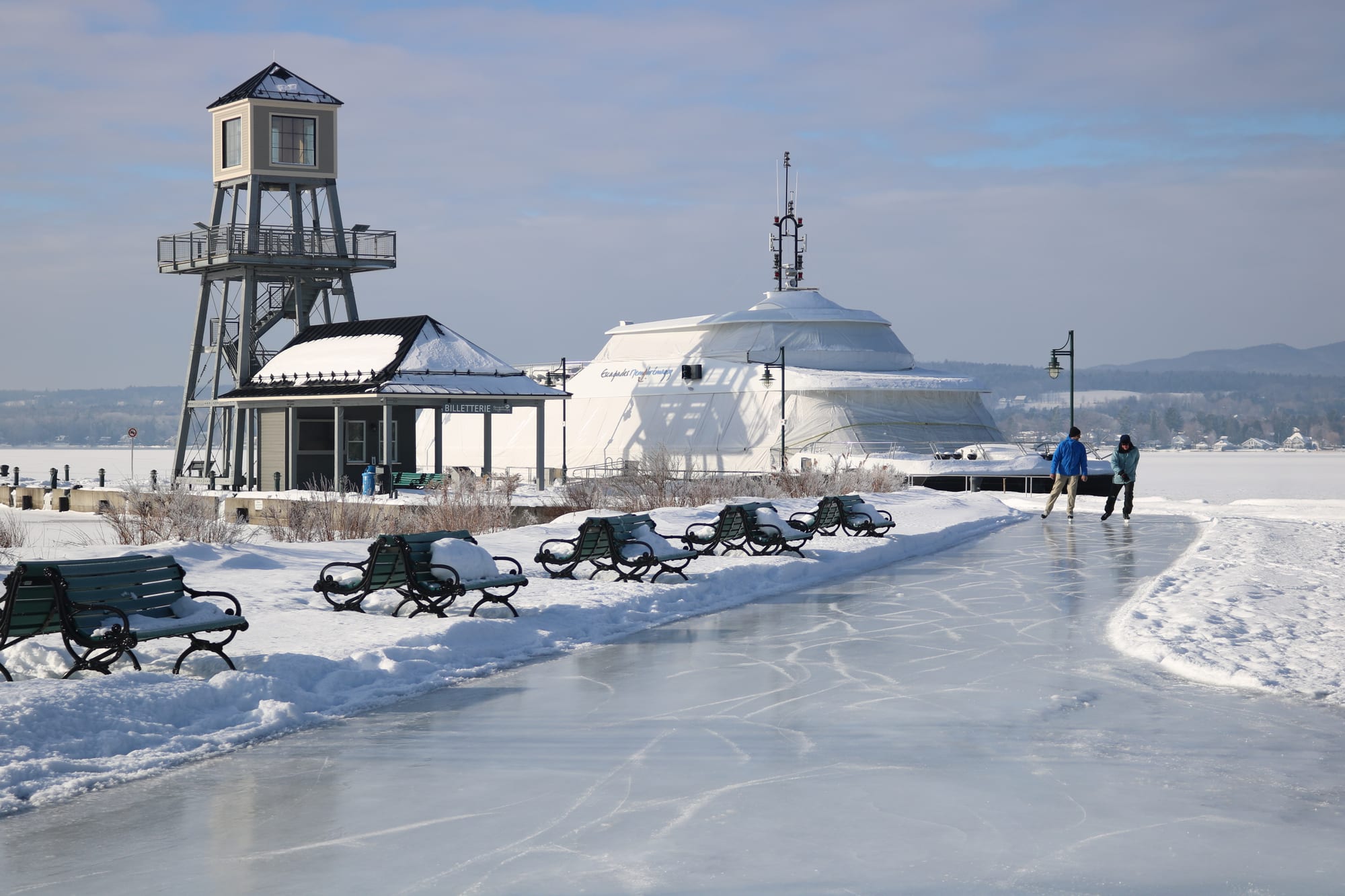
June to early September for the beaches, cruises and terraces, late September to mid-October for the colours on Mont Orford, which draw heavy weekend traffic, and January to March for skiing and the skating trail. Spring is sugar-shack season but also mud and black flies; late October and November are quiet and grey.
⏳ Suggested Number of Days
The town and its lakeshore take a day or two. Allow three or four to add the mountain, the abbey and the villages around the lake, and longer in winter for skiing.
- First Visit
- 1–2 days
- With Surroundings
- 3–4 days
🚆 Transportation
The town centre and the waterfront are walkable, but the mountain, the abbey and the lake villages need a car; Autoroute 10 passes just north of Magog. Intercity buses stop in town on the Montreal–Sherbrooke route. Cycling is popular on local paths and the quieter roads around the lake, and bike hire is available in summer.
Parking near the beaches fills on hot summer weekends; the waterfront is a short walk from the main street car parks.
🛬 Airport & Station Connections
Magog is about 120 km east of Montreal, about an hour by car on Autoroute 10, and about 25 km south-west of Sherbrooke. Intercity buses run daily from Montreal. The nearest airports are Montreal–Trudeau and, across the border, Burlington, Vermont; the Derby Line–Stanstead border crossing into Vermont is about 35 km away.
🚶 Walkability
Rue Principale, the waterfront park and the beaches lie close together and are easy on foot. Everything else — Orford, the abbey, the villages — is a drive. Pavements can be icy from December to March.
🛡️ Safety
Magog is a safe small town with little crime. The hazards are natural: cold water and sudden wind on the lake, winter driving and black ice on Autoroute 10 and the mountain roads, ticks in long grass in summer and heavy traffic on autumn weekends.
Wear a life jacket on the water, use winter tyres, which are compulsory in Quebec from 1 December to 15 March, and check for ticks after walks. Check current official travel advice before travelling.
🌦️ Climate
Humid continental, with warm summers and long, snowy winters; the hills around Orford get more snow than the lakeshore, and the lake freezes most winters.
- Summer
- warm, around 25°C by day in July, with cooler nights and occasional thunderstorms
- Winter
- cold, around -6°C by day in January and much colder at night, with regular snowfall
🤝 Local Customs
Magog is strongly French-speaking, though most people in shops and restaurants manage English; a greeting in French is appreciated. Tipping of about 15 per cent is expected in restaurants and bars. Some restaurants are 'apportez votre vin', so diners bring their own wine. Visitors to the abbey are expected to keep quiet in its church.
The legal drinking age in Quebec is 18; some wine and beer is sold in grocery stores, while spirits are sold through the SAQ.
💳 Common Payment Methods
The currency is the Canadian dollar. Cards and contactless payment are accepted almost everywhere, including the abbey shop and most farm stands. Bank ATMs are on rue Principale. US dollars are sometimes accepted near the border but at a poor rate.