History
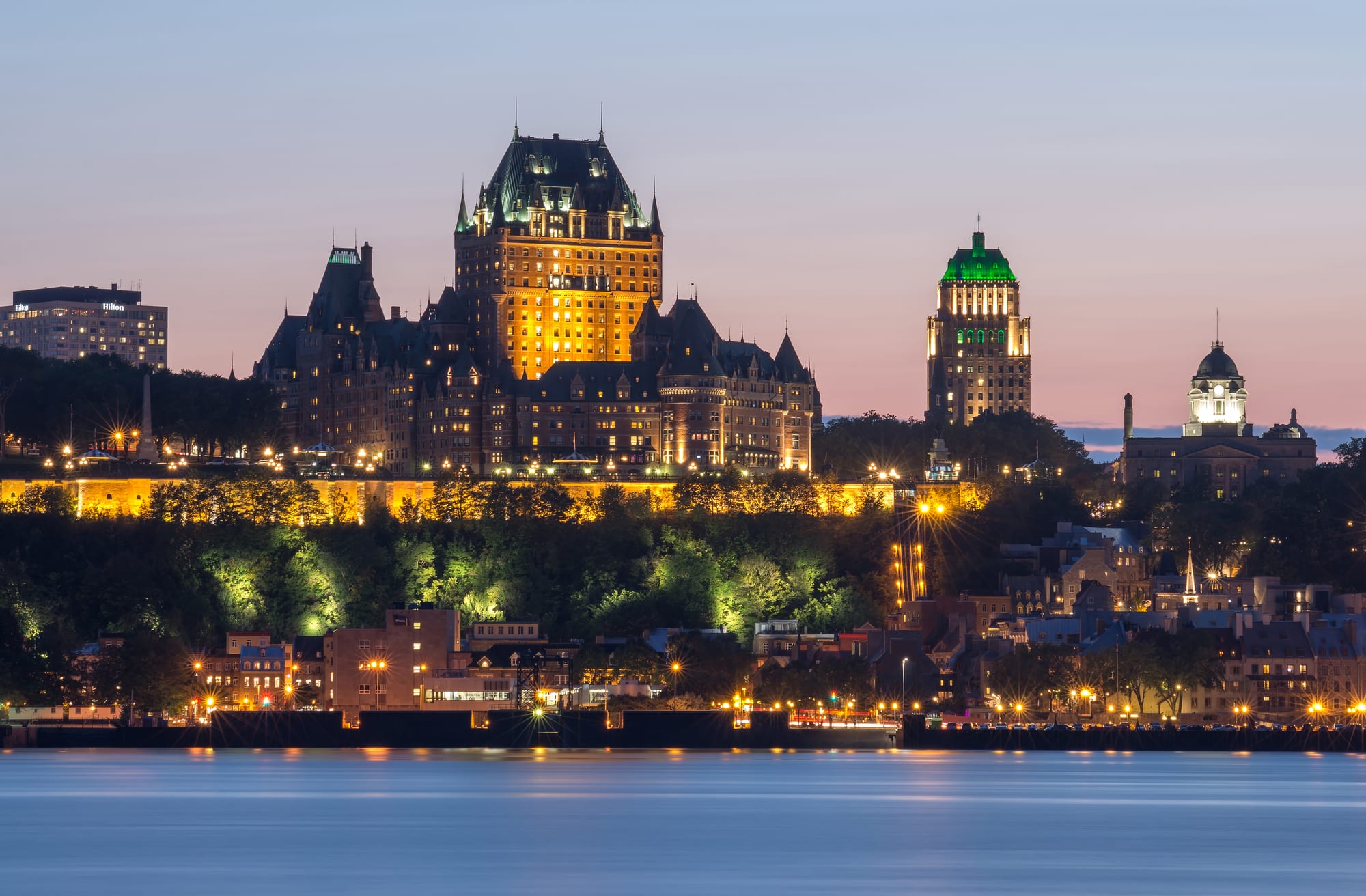
Iroquoian villagers farmed the St Lawrence valley when Jacques Cartier planted a cross at Gaspé in 1534 and visited Stadacona and Hochelaga, on the sites of Quebec City and Montreal, the following year; by the time the French returned, those villages had vanished. Samuel de Champlain founded Quebec City in 1608 and Ville-Marie, later Montreal, was founded in 1642. New France grew slowly on the fur trade, alliances with the Wendat, Innu and Algonquin, wars with the Haudenosaunee, and a seigneurial farm system whose long, narrow lots still mark the riverbanks.
British forces took Quebec City after the Battle of the Plains of Abraham in 1759, and France ceded the colony in 1763. The Quebec Act of 1774 kept French civil law and the Catholic Church's position. The colony became Lower Canada in 1791, saw the Patriote rebellions of 1837–38, and entered Confederation as the province of Quebec in 1867, a largely rural, Church-led society while English-speaking businessmen dominated Montreal's economy.
The Quiet Revolution of the 1960s secularised education and health, built Hydro-Québec into a state power company and fostered a new Québécois identity. Montreal hosted Expo 67 and the 1976 Summer Olympics, while the FLQ's kidnappings led to the October Crisis of 1970. The Parti Québécois took power in 1976 and passed the Charter of the French Language in 1977. Referendums on sovereignty in 1980 and 1995 were both defeated, the second by a margin of about one percentage point, and the question of Quebec's place in Canada remains a live political theme.