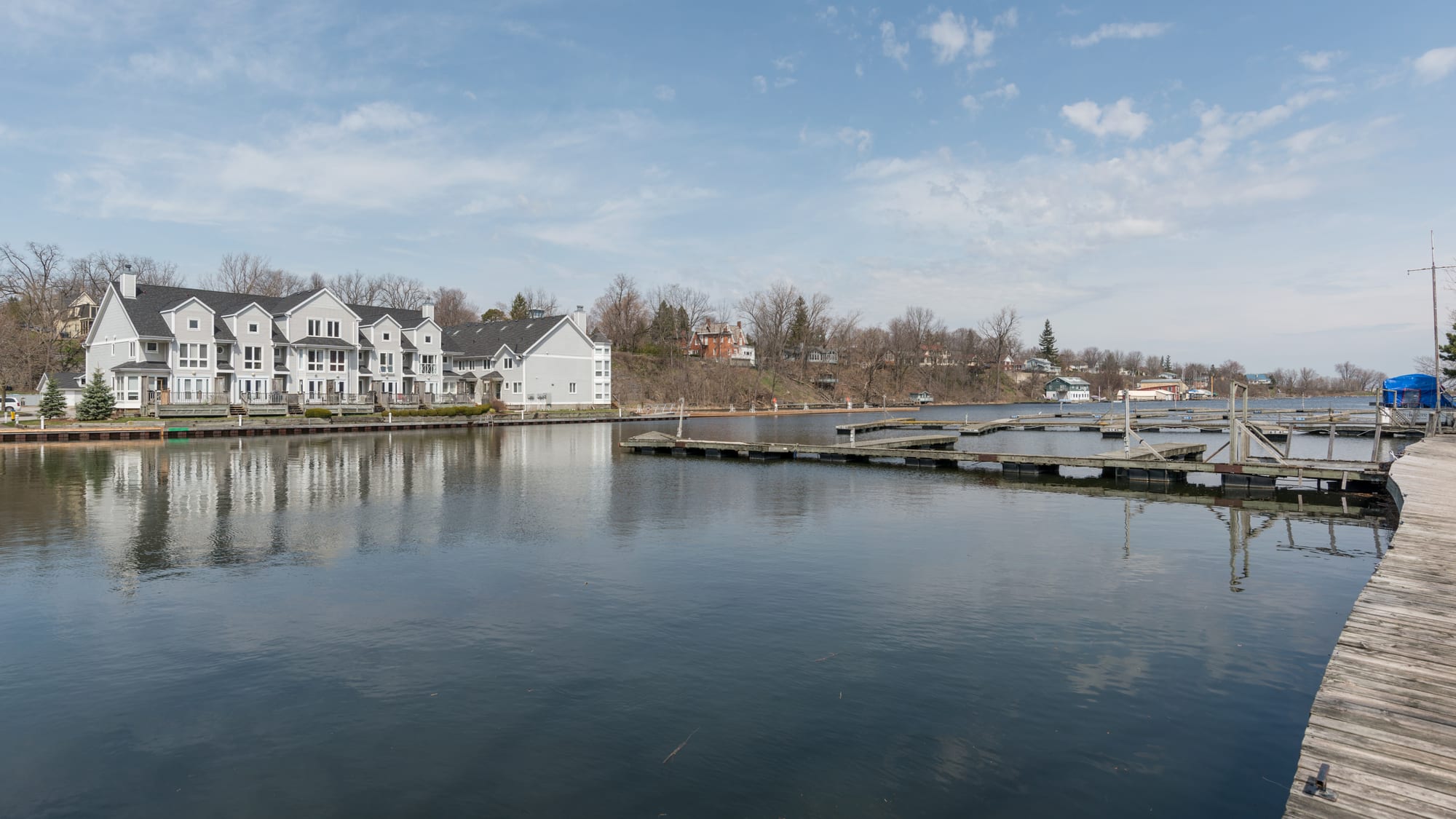
Calm water of Picton Harbour with wooden docks, white waterfront houses and bare spring trees under a blue sky

Ontario, Canada

Picton

Picton Harbour on Picton Bay, an arm of the Bay of Quinte, in early spring. (DXR / Wikimedia Commons · CC BY-SA 4.0)

The main town of Prince Edward County, a near-island of farmland and limestone shore in Lake Ontario, east of Toronto. Loyalist settlers founded it in the 1780s, it grew as the county town and a canning centre, and today its Victorian Main Street and small harbour on Picton Bay serve as the base for the County's wineries, Sandbanks beaches and summer visitors.

Neighbourhoods

  • Main Street and the town centre
    • First-time visitors
    • Historic district
    • Best for food

    Picton's long Main Street runs from the harbour up through a Victorian shopping street of brick storefronts, the Regent Theatre of 1918, cafés and galleries to the Shire Hall and churches. Most of the town's restaurants, inns and shops are on or just off it, and it is the one part of the County that works on foot.

    Open in Maps
  • The harbour and Picton Bay
    • Quiet and residential
    • Boating

    Below the town centre, a sheltered inlet off the Bay of Quinte with a marina, a waterfront walk and older houses on the slopes. It is calm and residential, a short walk from Main Street, and the place to see the town from the water.

    Open in Maps
  • Bloomfield
    • Antiques and galleries
    • Close to Sandbanks

    A village about 8 km west of Picton on the road to Sandbanks, with a main street of older houses now holding galleries, antique shops, boutiques and bicycle hire. Many visitors heading for the beaches stay here.

    Open in Maps
  • Wellington
    • Beaches
    • Wine country

    A lakeshore village about 18 km west of Picton with its own beach on Lake Ontario, a Saturday farmers' market and many of the County's wineries in the fields around it. Quieter than Picton, with the lake at the end of every side street.

    Open in Maps
  • Waupoos and the east
    • Wine and cider
    • Quiet and residential

    The rural eastern end of the County along County Road 8 — orchards, cideries, vineyards and farm stands near the shore of Smith Bay. There is no village centre to speak of; people come for the farms and the views.

    Open in Maps

Things to do

Landmarks and museums

  • Regent Theatrelandmark

    A theatre on Main Street that opened in 1918 for vaudeville and films, a rare example of an Edwardian opera house, now run by a foundation for films, plays and live shows.

    Open in Maps
  • Macaulay Heritage Parkmuseum

    A heritage site in Picton with a restored historic house, gardens, a cemetery and a museum in a converted church.

    Open in Maps
  • Picton Harbourattraction

    The sheltered inlet at the foot of Main Street, with a marina, a waterfront path and views across Picton Bay towards the Bay of Quinte.

    Open in Maps

Trails and viewpoints

  • Millennium Trailtrail

    A flat rail trail of almost 50 km that starts in Picton and crosses the County through Bloomfield and Wellington to Carrying Place, used by cyclists and walkers.

    Open in Maps
  • Macaulay Mountain Conservation Areapark

    Trails for walking, mountain biking and birdwatching on the outskirts of town, with Birdhouse City, a group of birdhouses built to resemble century homes.

    Open in Maps

Short trips from the town

  • Sandbanks Provincial Parkpark

    About 15 km west of Picton on Lake Ontario, with long sandy beaches and the largest bay-mouth barrier dune system in the world; one of the most popular parks in Ontario.

    Open in Maps
  • Lake on the Mountain Provincial Parkviewpoint

    A small lake sitting about 60 metres above the Bay of Quinte on the road to the Glenora ferry, with a viewing platform over the bay and the ferries.

    Open in Maps
  • Glenora Ferrytransit hub

    A free year-round ferry across the Bay of Quinte from Glenora to Adolphustown, about 10 km east of Picton, the short way to Kingston and a pleasant crossing in itself.

    Open in Maps
  • Prince Edward Point National Wildlife Areapark

    The south-eastern tip of the County, a concentration point for birds migrating over the Great Lakes, with a bird observatory that monitors the migrations.

    Open in Maps
  • Wellington beachbeach

    Wellington Rotary Beach, the village beach on Lake Ontario and the northernmost of the Sandbanks beaches, separated from the provincial park by a canal to Wellington Harbour.

    Open in Maps
  • Bellevilleattraction

    The city across the Bay of Quinte, about 30 km north-west by road, with the nearest VIA Rail station and most of the area's larger shops and services.

    Open in Maps

Seasonal events

  • Maple in the Countylate March

    A one-weekend festival backed by several of the County's maple sugar shacks, with maple-themed meals and live entertainment.

  • Prince Edward County Jazz FestivalAugust

    Concerts at venues around the County, run by the Prince Edward County Arts Council and drawing some of Canada's most prolific jazz musicians.

  • Picton FairSeptember

    The County's traditional agricultural fair, held in early September at the fairgrounds just outside town, with livestock shows, baking competitions and a midway.

Eat and drink

Long-standing places and food districts in Picton. Hours, ratings and directions come from your maps app, always current.

County classics

  • Prince Edward County wineriesneighborhood

    Dozens of small wineries, concentrated in Hillier in the west of the County, grow Pinot Noir and Chardonnay over limestone; many have tasting rooms.

    Open in Maps
  • Black River Cheesemarket

    A cheese factory at Milford, on the Black River south of Picton, making local cheddar, mozzarella and speciality cheeses.

    Open in Maps
  • Waupoos cider and orchardsneighborhood

    The eastern end of the County grows apples, and its cideries pour ciders alongside the fruit stands along County Road 8.

    Open in Maps

Food districts and markets

  • Main Street restaurantsneighborhood

    Picton's dining is strung along Main Street — bakeries, cafés, pubs and a handful of restaurants that build menus around County produce and wine.

    Open in Maps
  • Wellington Farmers' Marketmarket

    A Saturday-morning market on Wellington's main street with vegetables, fruit, baking, cheese and preserves from County farms.

    Open in Maps

Experience Picton

History

Prince Edward County was settled in the 1780s by United Empire Loyalists who had left the new United States after the American Revolution, taking up land along the Bay of Quinte granted by the Crown. Two villages grew on opposite sides of Picton Bay, Hallowell Bridge and Picton, the second named, like the bay, after Sir Thomas Picton, the British general killed at Waterloo. They were incorporated as one town in 1837, and Picton became the county seat.

The 19th century made it a port and a farming centre, first for grain, especially barley, and later for fruit and vegetables. Canning followed: 75 canning factories operated in the County between 1882 and 1996, and at one time it supplied a third of all the canned produce in Canada. In the Second World War an airfield near Picton housed an RAF bombing and gunnery school; the Army trained there after the war, as Camp Picton from 1960, and the base closed in 1969.

Picton lost its separate municipal status in 1998, when all the County's townships and villages amalgamated into a single municipality, the County of Prince Edward, with its council in the Shire Hall in Picton. Over the following two decades the County reinvented itself as a wine and holiday destination, and Picton's Main Street, long a quiet rural high street, filled with restaurants, galleries and inns. The old airfield now houses businesses and hosts events, and housing costs and the pressure of summer visitors are much debated.

Culture & Customs

Picton's identity is Loyalist and rural at heart. Family names from the 1780s are still on mailboxes, the Loyalist Parkway runs through the town, and the County's history is told at Macaulay Heritage Park, a restored house and a museum in a converted church. Onto that has been grafted a newer culture of winemakers, chefs, artists and weekenders from Toronto and Ottawa, many of whom have moved here for good, and the two groups mix at the fair, the farmers' markets and the Regent Theatre, opened on Main Street in 1918 for vaudeville and films, which now hosts plays, musicals and art films; the County's jazz festival follows in August.

The arts are strong for a town of its size. The County has a studio and gallery tour, a juried art show and a summer music festival, and galleries and craft shops occupy former shops and barns in Picton and Bloomfield. Sport is small-town Ontario: minor hockey through the winter at the arena, sailing and fishing on the bay in summer, and cycling everywhere. The County's annual events follow the farm year — maple syrup in March, the fair in September, wine events in autumn.

Manners are informal and friendly, with a rural reserve: people wave from cars on back roads, chat in queues and expect visitors to drive slowly, respect farm gates and private shoreline. Before Loyalist settlement the area was home to the Mississauga, who left a burial ground on Waupoos Island, and the Tyendinaga Mohawk Territory lies to the north, across the Bay of Quinte.

Daily Life

Picton is the largest community in Prince Edward County, which has about 25,700 people as a whole and many more in summer. The County is known for its large retirement community, and the shortage of homes for the young families and seasonal workers who keep the restaurants and wineries running is a pressing local issue. Short-term rentals, conversions of houses into inns and the rise in prices since the pandemic are argued over at council meetings and in the local paper.

Agriculture is still the base of the economy — dairy, grain, apples and now grapes — alongside tourism, which employs people in the inns, restaurants, wineries and shops from May to October, and a few larger employers: the cement plant and the port on Picton Bay, the hospital, the County offices and schools. Many residents commute to Belleville or work from home for employers in Toronto or Ottawa.

The day runs on a farm clock in winter and a visitor clock in summer. Main Street is busy from late morning, the harbour fills with boats, and the roads to Sandbanks jam on hot Saturdays. From November the town goes quiet, many businesses shorten their hours, and the County returns to itself: hockey, curling, church suppers and the long wait for maple season.

Food

The County's cooking is built on what grows on it. Apples are a long-standing crop, and Waupoos and the eastern shore, the centre of the County's cider industry, sell them in autumn alongside local ciders. Black River Cheese near Milford makes local cheddar, mozzarella and speciality cheeses. Dairy, sweetcorn and other vegetables come from the same farms that once fed the canning factories, and the fair in September is where the County's bakers show off their pies and butter tarts, a classic Canadian pastry.

Wine is the newer story. The first commercial vinifera vineyard was planted in 1993, and the County now holds dozens of small wineries, mostly in Hillier in the west, where limestone and a cool climate suit Pinot Noir and Chardonnay. Craft breweries, distilleries and cideries fill out the list, and tastings are the main activity for many visitors between beach days.

Picton itself eats along Main Street. Bakeries and cafés open early for cyclists, pubs serve fish and chips and burgers, and the restaurants that have opened since the 2000s cook farm-to-table menus of County lamb, lake fish, vegetables and cheese with local wine lists. Bloomfield and Wellington have their own bakeries and bistros, and the Saturday farmers' market in Wellington sells vegetables, honey, preserves and baking straight from the growers.

Planning tools

Budget

Picton is small-town Ontario with resort pricing in summer. Inns and rented cottages are expensive and often fully booked from June to September and on autumn weekends, and restaurants charge Toronto prices for County produce. Spring and late autumn are much cheaper. A car is almost essential, so hire and fuel are part of the budget. Ontario adds 13 per cent sales tax at the till.

Daily Budget Midrange
USD 180–320 (inn or cottage, restaurant dinners, winery tastings, a hire car)
Daily Budget Shoestring
USD 80–130 (campsite or budget motel room, bakery and market food, cycling the Millennium Trail, beach days)

Book summer and autumn-weekend rooms months ahead, and visit midweek for lower rates and quieter beaches.

Best Time to Visit

Late June to early September for the beaches and the busiest winery season, though Sandbanks is crowded at weekends. September and early October are often the best weeks — warm days, the grape harvest, fewer people and autumn colour. Spring brings the bird migration at Prince Edward Point. From November to April many shops and restaurants shorten their hours, and the beaches are empty and cold.

Suggested Number of Days

Picton itself takes a day; most people stay two or three to add the beaches and wineries. Allow three or four to cover the County's eastern and western ends at an easy pace, longer if cycling.

First Visit
2–3 days
With Surroundings
3–4 days

Transportation

Prince Edward County is spread out and has little public transport beyond a limited bus link to Belleville, so visitors drive. Highway 33, the Loyalist Parkway, is the main road through Picton, and county roads fan out to the villages and shore. Cycling is popular on the flat Millennium Trail and the quiet county roads, with bike hire in Picton and Bloomfield. Taxis are limited, and ride-hailing is thin.

Sandbanks commonly reaches capacity by 10 am in summer; arrive early or go on a weekday.

Airport & Station Connections

Picton is about 160 km east of Toronto, reached by Highway 401 and then south via Trenton or Belleville, and about 60 km by road from Kingston by Highway 33 and the free Glenora ferry. The nearest VIA Rail station is in Belleville, about 30 km north-west; the nearest major airports are Toronto Pearson and Ottawa.

Walkability

The town centre is easy on foot — Main Street runs from the harbour up through the shops, with gentle hills. Beyond the town, distances are rural: Bloomfield is 8 km away, Sandbanks about 15 km, Wellington about 18 km. Pavements can be icy in winter.

Safety

Picton and the County are safe, with low crime. The real risks are on the water and the roads: Lake Ontario is cold even in summer, county roads are unlit and busy with cyclists, and winter brings ice and snow. Ticks carrying Lyme disease are present in long grass and woods.

Swim at supervised beaches, check for ticks after walks, and drive slowly on county roads at dusk. Check current official travel advice before travelling.

Climate

Humid continental, softened by Lake Ontario on every side. Summers are warm and humid, autumn is long and mild, and winters are cold with snow and lake winds, though a little milder than inland Ontario.

Summer
warm and humid, typically in the mid-20s °C by day in July, the hottest month, with cooler evenings on the shore
Winter
cold, mostly below 0°C in January, the coldest month, with snow and raw winds off the lake

Local Customs

Tipping of about 15–20 per cent is expected in restaurants and at winery tastings where a tasting fee is charged. The County is proud of its farms and Loyalist roots and wary of being treated as a weekend playground, so courtesy to residents, farm staff and shopkeepers goes a long way. Drinking alcohol is not allowed on beaches or in public parks.

The legal drinking age in Ontario is 19; wine bought at a winery can be taken away but not opened in the car or in public, and many farms ask visitors not to photograph private houses or pick fruit without buying.

Common Payment Methods

The currency is the Canadian dollar. Cards and contactless payment are accepted almost everywhere, including most wineries and farm stands, but some roadside stands and market stalls take only cash. There are bank ATMs on Main Street in Picton and in Wellington.