💰 Budget
Yangzhou is noticeably cheaper than Shanghai, Suzhou or Hangzhou for hotels and meals. Garden and lake tickets are the main daily expense for a sightseeing visit. Teahouse breakfasts and the old city's snack stalls keep food costs low.
- Daily Budget Midrange
- USD 100–200 (mid-range hotel, Huaiyang restaurant dinners, garden and lake tickets, taxis)
- Daily Budget Shoestring
- USD 30–55 (hostel or budget hotel, teahouse breakfasts and noodle shops, buses and a shared bike)
Visit the gardens on weekdays and arrive at the lake early; prices for hotels rise sharply during the national holidays in early May and early October.
📅 Best Time to Visit
Late March to May, when the willows and blossom are out and the weather is mild, and again from late September to November. Summers are hot and humid with a rainy season in June and July; winters are chilly and damp but the gardens are quiet.
⏳ Suggested Number of Days
One full day covers the main gardens and the lake; two allow the old city, the museums and a teahouse breakfast at an easy pace. Add a day or two for Zhenjiang across the river or the canal towns to the north.
- First Visit
- 1–2 days
- With Surroundings
- 3–4 days
🚆 Transportation
The old city and the lake are close together, and most visitors walk or take short taxi rides. City buses are frequent and cheap, shared bikes are everywhere, and sightseeing boats run on the lake and the old canal. There is no metro. Ride-hailing through Chinese apps is the simplest way to reach the railway stations and the airport.
Set up a Chinese payment app before arriving; buses and bike hire are paid by phone and drivers rarely carry change.
🛬 Airport & Station Connections
Yangzhou Taizhou International Airport is about 30 kilometres from the city centre, in Jiangdu; most international visitors arrive through Shanghai or Nanjing. High-speed trains stop at Yangzhou East and Yangzhou stations, with frequent services to Nanjing; the journey from Shanghai Hongqiao typically takes under two hours. Long-distance coaches link the city with Zhenjiang, Nanjing and other cities in Jiangsu.
🚶 Walkability
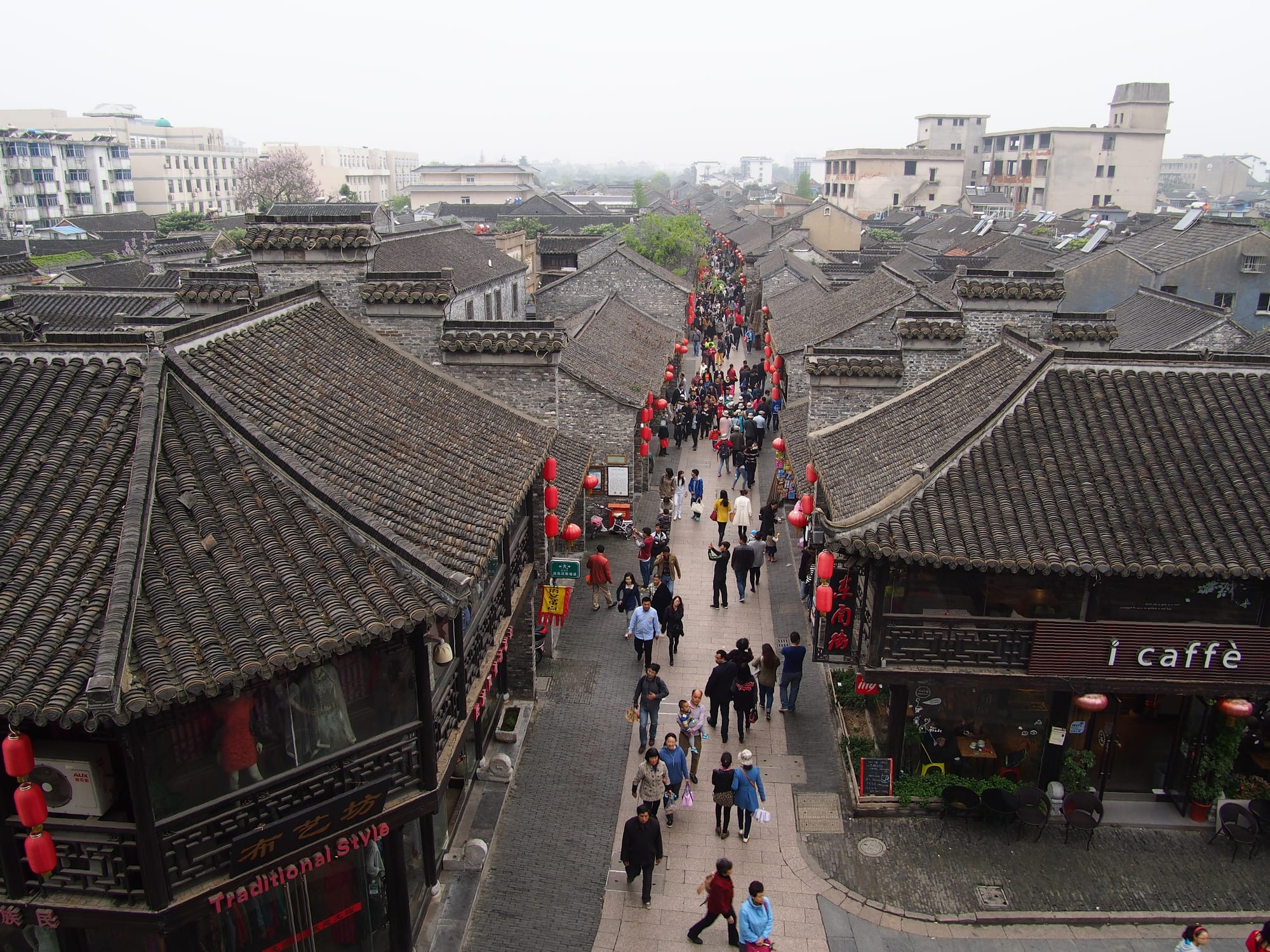
The old city is flat, compact and made for walking: Dongguan Street, the Ge Garden, the He Garden and the canal banks are all within a kilometre or two of each other, and the lake gate is about twenty minutes on foot from the old city's north side. Pavements are generally good, though electric scooters use them freely. Summer heat makes midday walking tiring.
🛡️ Safety
Yangzhou is a safe, orderly city with little street crime. The main hazards are traffic — scooters on pavements and vehicles that do not stop at crossings — and heat in summer. Petty theft is uncommon but possible in crowded spots like Dongguan Street on holiday weekends.
Look both ways even on green lights, keep valuables inside bags in holiday crowds, and carry the passport, which hotels must register. Check current official travel advice before travelling.
🌦️ Climate
A humid subtropical climate with four distinct seasons. The plum rains arrive in June, summer is hot and sticky, autumn is dry and clear, and winter is cold enough for occasional snow but rarely severe.
- Summer
- hot and humid — July, the warmest month, averages about 28°C, with plum rains from mid-June to mid-July
- Winter
- cold and damp — January averages around 3°C, with grey skies and the occasional light snowfall
🤝 Local Customs
Tipping is not practised. Breakfast is an institution: morning tea in a teahouse, often lasting an hour or more, is how older residents start the day and a proper way to meet friends. Yangzhou is also known for its bathhouse culture, with evening soaks and foot treatments a normal part of the week. People are courteous and unhurried, and curious about foreign visitors, who are still fairly few.
Dress is casual but tidy; cover shoulders in temples and ask before photographing people, monks or the tomb of Puhaddin, which is an active Muslim site. Drinking is social and moderate, and toasts at a table are returned.
💳 Common Payment Methods
The currency is the renminbi (yuan). Payment is overwhelmingly by phone through WeChat Pay or Alipay, both of which now accept foreign cards; foreign bank cards are taken at larger hotels but rarely in shops or restaurants. ATMs at the major banks dispense cash on international cards, and small notes are useful for market stalls.