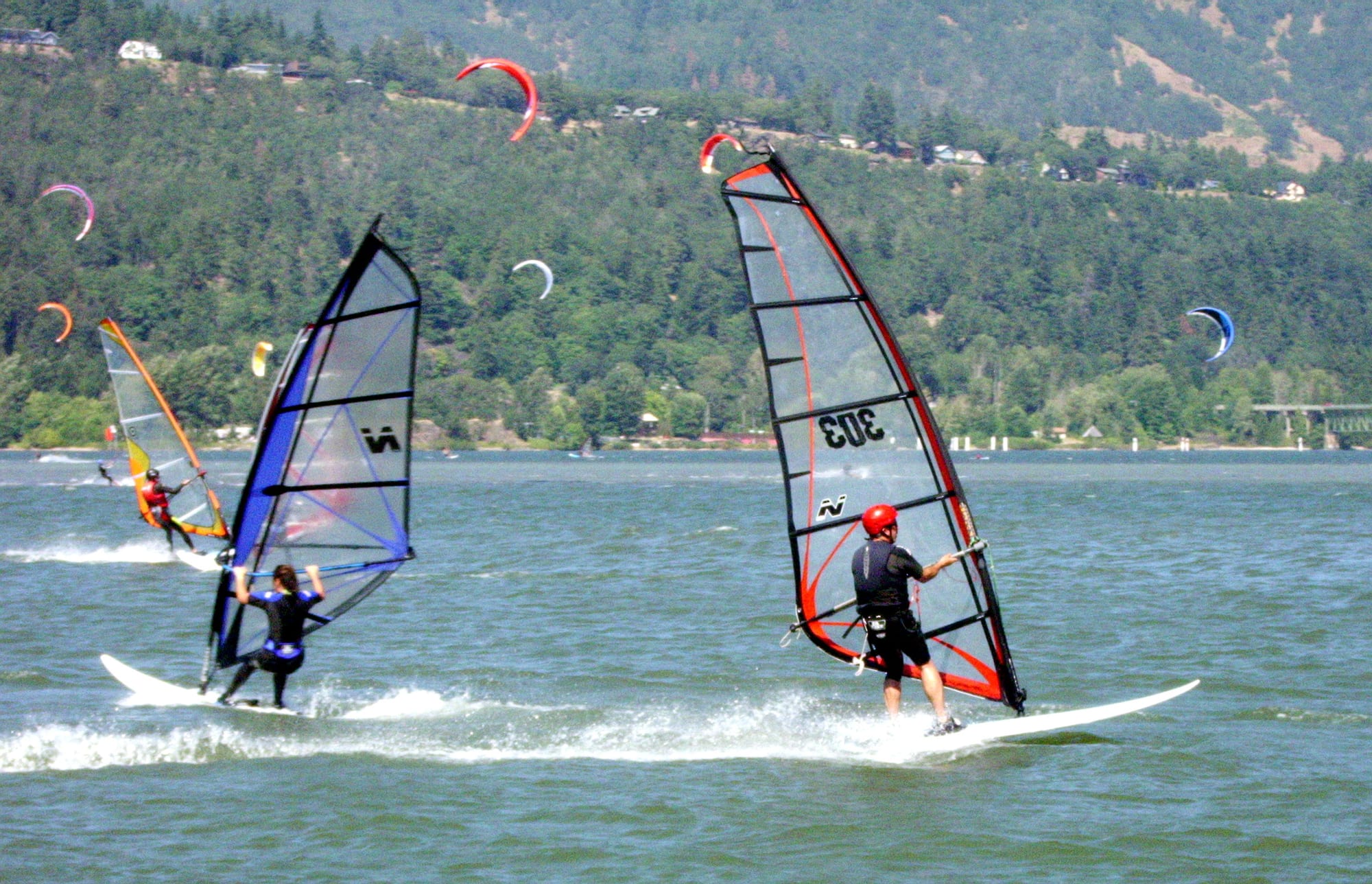
Windsurfers and kiteboarders on the green Columbia River, with forested hills on the Washington shore behind

The Pacific Northwest, United States

Hood River

Windsurfing and kiteboarding on the Columbia River at Hood River, with the Washington shore beyond. (EncMstr / Wikimedia Commons · CC BY-SA 3.0)

A small Oregon town on the Columbia River Gorge, where the Hood River joins the Columbia about an hour east of Portland. Built on fruit orchards that still fill the valley behind it, it became one of the world's best-known centres of windsurfing and later kiteboarding, and now mixes farming, breweries and outdoor sport with Mount Hood on its horizon.

Neighbourhoods

  • Downtown
    • First-time visitors
    • Best for food
    • Shopping

    A few blocks of early 20th-century brick buildings on a slope above the river, with outdoor shops, cafés, restaurants and brewpubs. Steep streets and stairways climb from here to the residential Heights.

    Open in Maps
  • The waterfront
    • Watersports
    • Breweries
    • Families

    The flat land between the railway and the Columbia, reshaped by the port into parks, a sandy beach, launch sites for windsurfers and kiteboarders, and newer buildings with breweries and offices. On windy summer afternoons the river is filled with sails and kites.

    Open in Maps
  • The Heights
    • Quiet and residential
    • Local life

    The upper town on the bench above downtown, with houses, local shops, taquerías and everyday services along its main street, and views of Mount Adams across the river.

    Open in Maps
  • The Hood River Valley
    • Orchards
    • Wine and cider
    • Mountain views

    The farming valley stretching south towards Mount Hood, with the small communities of Odell and Parkdale among pear, apple and cherry orchards, farm stands, wineries and cideries.

    Open in Maps

Things to do

On the river

  • Columbia River Gorgeviewpoint

    The canyon cut by the Columbia through the Cascade Range, whose strong summer winds funnelling up the river made Hood River a centre of windsurfing and kiteboarding.

    Open in Maps
  • Hood River Bridgelandmark

    The narrow steel toll bridge of 1924 that crosses the Columbia to White Salmon and Bingen in Washington.

    Open in Maps

Museums and rides

  • Western Antique Aeroplane and Automobile Museummuseum

    A large collection of vintage aircraft and cars at the town's airfield, which holds an annual fly-in.

    Open in Maps
  • Mount Hood Railroadattraction

    A heritage railway built in 1906 to carry fruit and timber, which runs excursion trains from the town up the valley through the orchards.

    Open in Maps

Trails and viewpoints

  • Historic Columbia River Highway State Trailtrail

    Restored sections of the scenic highway built between 1913 and 1922, closed to cars and used by walkers and cyclists, including the stretch east of town through the Twin Tunnels towards Mosier.

    Open in Maps
  • Hood Riverpark

    The glacier-fed river that gives the town its name, flowing down from Mount Hood to meet the Columbia at the edge of town.

    Open in Maps

Short trips from the town

  • Mount Hoodviewpoint

    Oregon's highest mountain, a glaciated volcano south of the valley, with ski areas, hiking trails and the historic Timberline Lodge on its slopes.

    Open in Maps
  • Multnomah Fallsviewpoint

    The tallest waterfall in Oregon, dropping in two tiers beside the old highway in the western part of the gorge.

    Open in Maps
  • White Salmonattraction

    A small town on the bluff across the river in Washington, a base for rafting and kayaking on the White Salmon River.

    Open in Maps

Seasonal events

  • Blossom FestApril

    A celebration of the orchards in bloom, with farms, wineries and fruit stands across the valley welcoming visitors.

  • Harvest FestOctober

    An autumn festival celebrating the valley's fruit harvest.

Eat and drink

Long-standing places and food districts in Hood River. Hours, ratings and directions come from your maps app, always current.

Breweries

  • Full Sail Brewingrestaurant

    A brewery founded in the town in 1987, one of Oregon's early microbreweries, with its brewery, pub and tasting room together downtown.

    Open in Maps
  • pFriem Family Brewersrestaurant

    A brewery and tasting room on the waterfront, known for Belgian-inspired beers.

    Open in Maps

Orchards and farm stands

  • The Fruit Loopmarket

    A signed driving route of about 35 miles through the valley linking farm stands, U-pick orchards, wineries, cideries and lavender farms.

    Open in Maps
  • Downtown restaurantsneighborhood

    Cafés, bakeries, Mexican restaurants and bistros using valley fruit and produce.

    Open in Maps

Experience Hood River

History

The Columbia River Gorge was home to Chinookan-speaking peoples, among them the Wasco and Wishram, who traded and fished for salmon at the falls and rapids along the river. The Lewis and Clark Expedition passed through in 1805. American settlers followed, and the town grew up where the Hood River enters the Columbia; it was founded by Nathaniel and Mary Coe, gained a post office in 1868 and was incorporated in 1895.

Fruit made the town. Settlers found that the valley's soils and climate suited fruit, and apples, pears and cherries became its crops; the county now leads the world in Anjou pear production. The Mount Hood Railroad, built in 1906, carried fruit and timber down the valley. Japanese farmers had settled in the valley by the late 19th century; during the Second World War they were removed to internment camps, and in 1944 the local American Legion post removed the names of Japanese American soldiers from the county's honour roll, a decision that drew national criticism and was later reversed.

Windsurfers later discovered the reliable summer winds funnelled through the gorge, and the town became one of the world's best-known windsurfing centres, followed by kiteboarding. The Columbia River Gorge National Scenic Area was created in 1986, and outdoor-gear businesses, breweries and technology companies have since joined the orchards in the town's economy.

Culture & Customs

Hood River's identity is outdoor and athletic. In summer, sailboards and kites fill the river, and many residents moved here for the wind, the mountain or the trails. Mountain biking, skiing on Mount Hood, river kayaking and rock climbing are all part of local life, and aerospace firms, among them a maker of unmanned aircraft, are based in the area.

Farming remains just as important. The valley's orchards shape the calendar, from blossom in April to harvest in the autumn, and the large Latino community, rooted in the fruit industry, is a major part of town life, with Spanish heard widely. The Japanese American farming community's history in the valley is also remembered locally.

The town has a strong beer and cider culture, and its taprooms are gathering places for locals and visitors alike. The atmosphere is friendly, relaxed and informal, with many residents working remotely or in seasonal jobs and a strong sense of pride in the gorge and its landscape.

Daily Life

About 8,300 people live in the town at the 2020 census, and around 24,000 in Hood River County. Fruit farming and packing, tourism, health care, outdoor recreation businesses and technology firms are the main employers.

Housing is the biggest local concern. The town's popularity with second-home owners, remote workers and short-term rentals has pushed prices far above most farm workers' and service workers' incomes, and seasonal farm labour housing is a long-running issue. Traffic on summer weekends and access to crowded trailheads are other debates.

The rhythm is seasonal. Summer brings windsurfers from around the world and full campsites; autumn is harvest; winter is quieter, with skiers driving up to the mountain. On any windy afternoon, people check the forecast and head for the water after work. Children grow up skiing, swimming and biking, and the high school, the hospital and the farm stands are the shared ground between long-time families and newcomers.

Food

The Hood River Valley is known above all for its pears, Anjou in particular, along with apples and cherries, and the Fruit Loop route through the valley links farm stands, U-pick orchards and cideries. Pear and apple ciders, dried fruit, jams and pies are sold across the valley, and lavender and berries add to the summer harvest.

Beer is the town's other speciality. Full Sail Brewing, founded in 1987, was one of Oregon's craft brewing pioneers, and a number of breweries now operate in town, from small taprooms to larger producers. The gorge's varied climate also supports a growing wine industry on both sides of the river, with tasting rooms in the valley and across the bridge.

Mexican food is part of daily eating in the town, with taquerías and panaderías serving the farming community. Restaurants downtown and on the waterfront lean towards casual dining, often cooking with valley produce.

Planning tools

Budget

Hood River is a popular summer resort and rooms are the biggest expense, highest on windy summer weekends and during the festivals. Food and beer are mid-priced. Lessons and equipment hire for windsurfing and kiteboarding add a lot to a visit; walking, cycling and fruit stands cost little.

Daily Budget Midrange
USD 220–420 (mid-range lodging, sit-down meals, a watersports lesson or wine tasting, fuel)
Daily Budget Shoestring
USD 90–150 (campground or budget motel, taquerías and brewpub meals, own car or bus)

Trailheads in the gorge often need a parking pass; check before driving.

Best Time to Visit

June to September brings the warm weather and the strong winds that draw windsurfers and kiteboarders. April and May are blossom season in the valley, and September and October bring the harvest, with fruit stands at their fullest and autumn colour in the gorge. Winter is cold and grey, with snow and ice storms, but Mount Hood's ski areas are close.

Suggested Number of Days

The town and the river take a day or two. Three or four days allow time for the surrounding valley, the wider gorge and the mountain. Visitors who come for the wind often stay for a week or more.

First Visit
1–2 days
With Surroundings
3–4 days

Transportation

A car is the easiest way to explore the valley and the gorge. Columbia Area Transit runs buses to Portland and through the gorge, and a local service around town. Cycling is popular on the old highway trail and the valley roads, though the hills are steep.

Interstate 84 through the gorge can close for snow, ice, rock falls or wildfire, and strong crosswinds affect high vehicles; check road conditions before driving.

Airport & Station Connections

Portland International Airport is about an hour west by car along Interstate 84 through the gorge. Gorge buses link the town with Portland. Amtrak trains stop across the river at Bingen in Washington, reached over the Hood River Bridge.

Walkability

Downtown is compact and walkable, but steep; the waterfront is a short walk downhill across the railway and the interstate. The Heights is a climb up stairways or steep streets. The valley, the trailheads and the mountain need a car or a bicycle.

Safety

Crime is low. The risks are outdoors: the Columbia is wide, cold and fast, with commercial barges and strong winds, and the gorge has rock falls, steep trails, ice storms and summer wildfires.

Wear a life jacket and a wetsuit on the river and take lessons before windsurfing or kiteboarding, carry water on summer hikes and follow fire and road closure notices. Check current official travel advice before travelling.

Climate

Hood River sits where the wet western climate meets the dry interior: it gets far less rain than Portland but more than towns further east. Summers are warm, sunny and windy; winters are cool and damp, with occasional snow and freezing rain blown through the gorge.

Summer
warm, dry and windy — July afternoons are usually in the low to mid 80s °F
Winter
cool and damp — January days around 40°F, nights near freezing, with occasional snow and ice storms

Local Customs

Dress is casual and outdoorsy, and many residents spend their spare time on the water, on a bike or on the mountain. Tipping is expected, roughly 18–20 per cent in restaurants. Oregon has no sales tax. At farm stands and U-pick orchards, follow the farm's rules and stay out of the rows that are not open.

The legal age for buying alcohol is 21. Cannabis is legal for adults in Oregon but may not be used in public or taken out of the state.

Common Payment Methods

The currency is the US dollar. Cards and contactless payment are accepted almost everywhere, and ATMs are found downtown. Some farm stands prefer cash.