History
The coast was home to peoples who grew wealthy on salmon, shellfish and cedar: Coast Salish nations such as the Duwamish and Suquamish around Puget Sound, the Makah whalers at Cape Flattery, the Chinook traders at the mouth of the Columbia and the Tillamook on the Oregon shore. They built plank houses and carved canoes, and held potlatch feasts at which wealth was given away. Inland, the Yakama, Nez Perce, Cayuse and Umatilla lived on the plateau, and the Klamath of southern Oregon preserve stories of the eruption of Mount Mazama, which formed Crater Lake about 7,700 years ago.
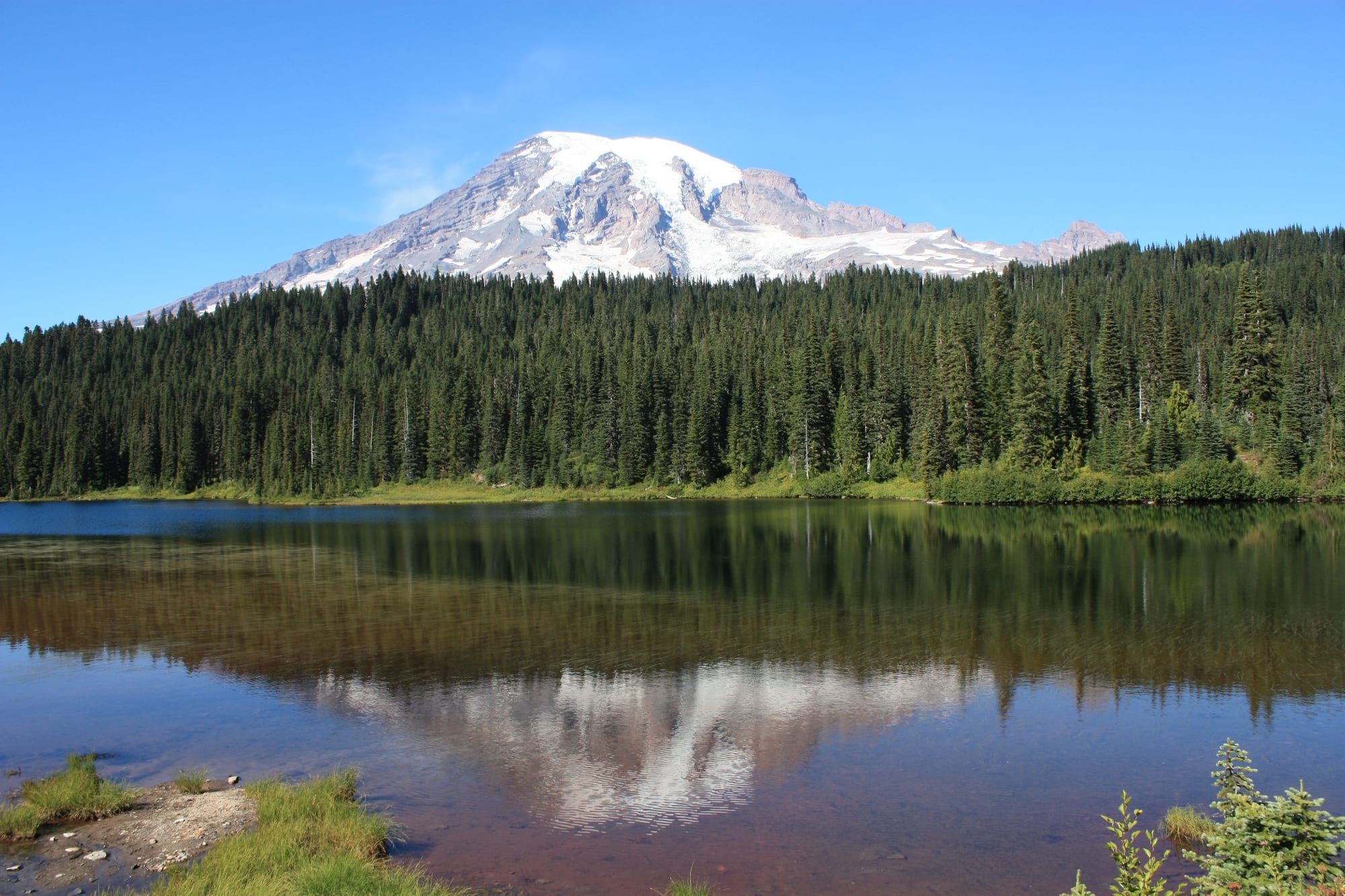
Spanish and British explorers charted the coast in the late 18th century; George Vancouver named Mount Rainier and Puget Sound in 1792, the same year the American Robert Gray sailed into the Columbia River. Lewis and Clark wintered at Fort Clatsop near its mouth in 1805–06, and fur traders founded Astoria in 1811. Britain and the United States shared the region until the Oregon Treaty of 1846 fixed the border at the 49th parallel, after thousands of settlers had come west on the Oregon Trail. A dispute over the San Juan Islands, the so-called Pig War of 1859, was settled by arbitration in 1872. Treaties in the 1850s took most Native land while promising fishing rights, which a 1974 federal court decision finally upheld. Oregon became a state in 1859, with a constitution that tried to exclude Black settlers, and Washington in 1889.
Seattle boomed as the supply town for the Klondike gold rush in 1897. Boeing was founded there in 1916, and dams on the Columbia in the 1930s brought cheap power. In 1942 Japanese Americans, starting on Bainbridge Island, were removed and interned. Mount St Helens erupted in 1980, killing 57 people, and from the 1980s Microsoft, Amazon and Starbucks turned Seattle into a global business centre.