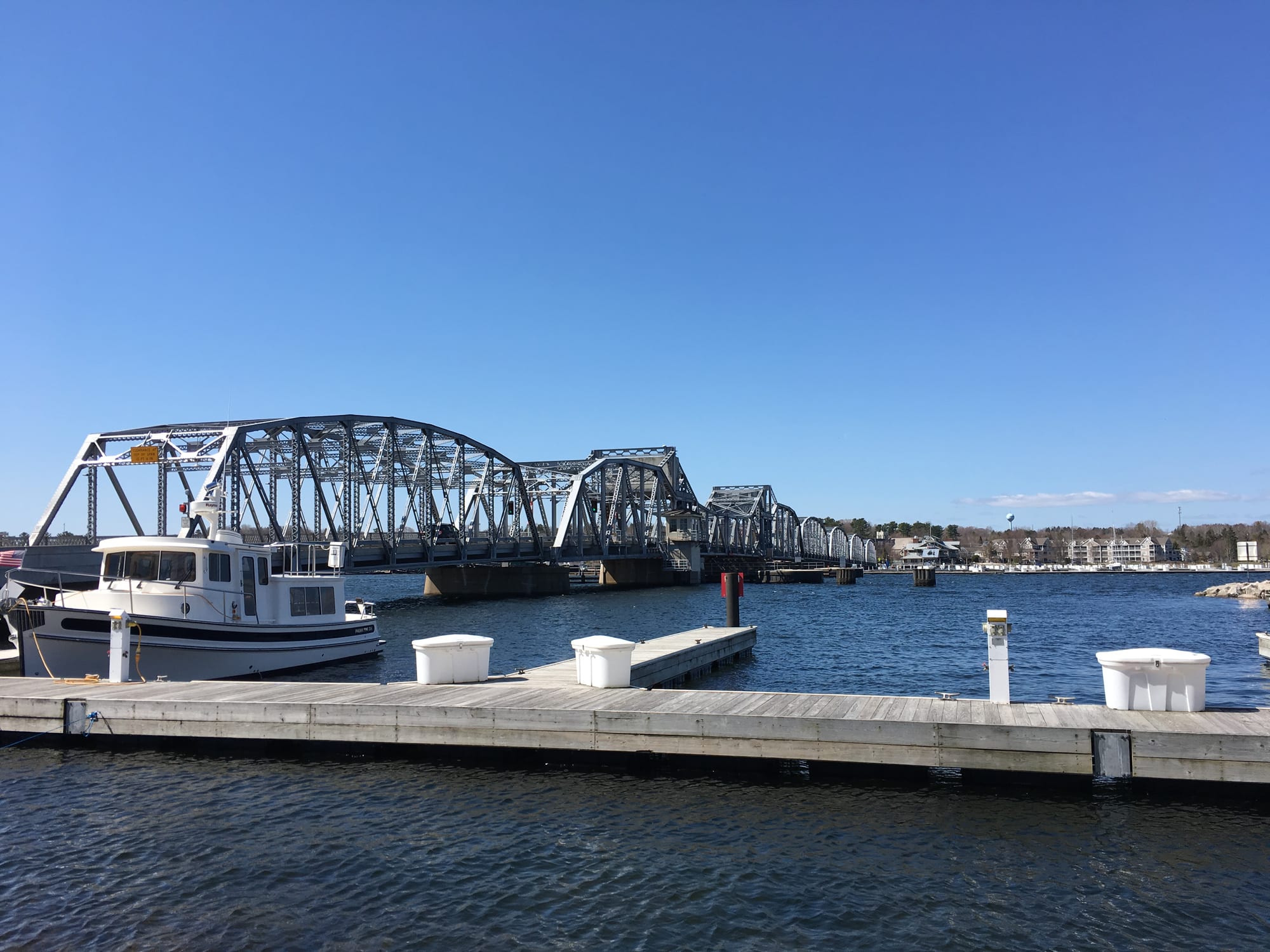
The steel trusses of the old Sturgeon Bay Bridge across blue water, with a moored boat and a wooden dock in front

Chicago & the Great Lakes, United States

Sturgeon Bay

The 1931 bascule bridge across the bay in the centre of Sturgeon Bay. (SigmaJosh / Wikimedia Commons · CC BY-SA 4.0)

The seat and largest town of Door County, at the narrow neck of Wisconsin's Door Peninsula, where a bay and a ship canal link the waters of Green Bay with Lake Michigan. A shipbuilding town for well over a century, it is now also the southern gateway to the peninsula's cherry orchards, state parks, lighthouses and harbour villages.

Neighbourhoods

  • Downtown
    • First-time visitors
    • Best for food
    • Shops

    The historic business district by the bay, around Third Avenue, with brick storefronts, galleries, cafés and restaurants, a waterfront park and the old steel bridge leading across the water.

    Open in Maps
  • The west side waterfront
    • Museums
    • Harbour views

    The shore across the bridges from downtown, with marinas, the Door County Maritime Museum and its lookout tower, and views of the shipyards where Great Lakes freighters are built and repaired.

    Open in Maps
  • The peninsula villages
    • Scenic drives
    • Quiet stays

    North of the town, small harbour villages such as Egg Harbor, Fish Creek and Ephraim line the Green Bay shore, while the Lake Michigan side is quieter and rockier; many visitors stay there and pass through Sturgeon Bay on the way.

    Open in Maps

Things to do

In town

  • Door County Maritime Museummuseum

    A museum of the peninsula's shipbuilding, shipwrecks and lighthouses on the waterfront, with a tall lookout tower over the bay and the shipyards.

    Open in Maps
  • Sturgeon Bay Bridgelandmark

    A steel bascule bridge of 1931 across the bay, raised for passing boats and listed on the National Register of Historic Places.

    Open in Maps
  • Sturgeon Bay Ship Canallandmark

    The canal dug in the late 19th century to link the bay with Lake Michigan, marked at its lake end by lighthouses and a Coast Guard station.

    Open in Maps

Parks and the shore

  • Potawatomi State Parkpark

    A wooded park on the bay north-west of town, with shoreline, trails, a campground and the eastern end of the Ice Age Trail.

    Open in Maps
  • Whitefish Dunes State Parkpark

    A park on the Lake Michigan side of the peninsula with the most substantial sand dunes on the western shore of Lake Michigan, a beach and forest trails.

    Open in Maps

Short trips up the peninsula

  • Peninsula State Parkpark

    A large park between Fish Creek and Ephraim with bluffs above Green Bay, beaches, trails, a golf course and the Eagle Bluff Lighthouse.

    Open in Maps
  • Ephraimattraction

    A small village founded by Moravian settlers, with white-painted buildings above a harbour and views over Eagle Harbor.

    Open in Maps
  • Washington Islandattraction

    An island beyond the tip of the peninsula, reached by car ferry across the strait known as Death's Door, with a strong Icelandic heritage and quiet country roads.

    Open in Maps

Eat and drink

Long-standing places and food districts in Sturgeon Bay. Hours, ratings and directions come from your maps app, always current.

Door County classics

  • Door County fish boilrestaurant

    Whitefish, potatoes and onions boiled in a kettle over an open fire, ended with a dramatic 'boil-over' when kerosene thrown on the fire makes the pot overflow, served with butter and cherry pie.

    Open in Maps
  • Cherry orchards and farm marketsmarket

    Tart cherries are picked in summer, and orchards and farm markets around the peninsula sell fresh fruit, pies, jams, juice and cherry wine.

    Open in Maps

Wisconsin traditions

  • Friday fish fry and supper clubsrestaurant

    Restaurants and taverns around Sturgeon Bay keep the Wisconsin customs of the Friday fish fry and the old-style supper club with relish trays and brandy old fashioneds.

    Open in Maps

Experience Sturgeon Bay

History

The Potawatomi and Menominee, and earlier peoples before them, lived on the Door Peninsula and fished its waters long before Europeans arrived. French explorers and missionaries passed through in the 17th century, and the portage across the narrow neck of land at the head of the bay was a well-known route for canoes travelling between Green Bay and Lake Michigan.

European American settlement began in the mid-19th century, built on lumber, stone quarrying and shipbuilding. In 1871 the great Peshtigo fire, the deadliest wildfire in American history, burned parts of the peninsula south of the town. The ship canal across the neck of land was completed in the early 1880s, letting ships cross from Green Bay to Lake Michigan without the long and dangerous passage around the peninsula's tip, and the town became the county seat and its commercial centre.

Shipbuilding grew into the town's defining industry. Yards here built vessels during the Second World War, and in the later 20th century they became known for building and repairing the large freighters of the Great Lakes, many of which spend the winter laid up in the bay. Over the same period the cherry orchards and tourism brought new visitors each summer, and the town became the southern gateway to Door County's holiday villages.

Culture & Customs

Sturgeon Bay mixes two identities: a working shipbuilding town and the gateway to a holiday region. The shipyards, the freighters and the maritime museum give it an industrial waterfront unlike the villages further north, while galleries, cafés and restaurants downtown serve the summer and autumn visitors.

Door County as a whole is known for its arts scene, with galleries, studios and summer theatre in the villages; Peninsula Players near Fish Creek, founded in 1935, calls itself America's oldest professional resident summer theatre. The fish boil, the cherry harvest and the autumn colour are cherished traditions, and the peninsula's Scandinavian, German and Belgian settlers left their marks on its churches, place names and food.

Like much of Wisconsin, the town is devoted to the Green Bay Packers, and football Sundays in autumn shape the week. Friday fish fries, supper clubs and the brandy old fashioned are part of local life, and people tend to be friendly, unhurried and proud of their peninsula.

Daily Life

About 9,600 people live in Sturgeon Bay, and around 30,000 in the whole of Door County, a number that rises sharply in summer as seasonal residents and visitors arrive. The town is the county's commercial and administrative centre, with its courthouse, hospital, schools and main shops.

Shipbuilding remains a major employer, with yards that build and repair vessels for Great Lakes and other customers, and the sight of freighters in the bay is part of daily life, especially in winter. Tourism, agriculture — cherries, apples and dairy — and services make up much of the rest of the economy. Like many holiday areas, the county has many seasonal homes, and its population is older than the state average.

The rhythm follows the seasons: busy summers and autumns, and long, quiet winters when the town returns to its residents, ice fishing and snowmobiling take over, and many businesses up the peninsula close until spring.

Food

The fish boil is Door County's signature meal: whitefish from Lake Michigan, red potatoes and sometimes onions boiled in a large kettle over a wood fire, finished with a boil-over — a burst of flame when kerosene is thrown on the fire, making the pot overflow and carrying off the fish oils. It is served with melted butter, bread and coleslaw, and usually followed by cherry pie.

Cherries are the peninsula's crop. Door County grows mostly tart cherries, picked in summer and sold fresh at orchards and farm markets, or turned into pies, jams, juice, salsa and cherry wine. Apples follow in autumn, and local wineries make fruit and grape wines.

Wisconsin traditions shape the rest of the menu. The Friday fish fry — usually perch, walleye or cod with rye bread, coleslaw and potato pancakes or chips — is a weekly ritual, and supper clubs serve steaks and relish trays with brandy old fashioneds. Cheese curds, bratwurst and Scandinavian pastries such as Swedish pancakes with lingonberries are common across the peninsula.

Planning tools

Budget

Door County is a seasonal holiday area, and summer and autumn colour weekends are expensive and fill up early. Sturgeon Bay itself is often a little cheaper than the villages further north. Restaurants, ferry trips and boat tours are the main extra costs, and a car is needed.

Daily Budget Midrange
USD 220–380 (mid-range inn or motel, restaurant dinners with tax and tip, a fish boil and museum, a hire car)
Daily Budget Shoestring
USD 100–160 (state-park campsite or budget motel, sandwiches and farm-market food, free beaches and trails)

Book July, August and October weekends well ahead; spring and early summer are cheaper and quieter.

Best Time to Visit

Summer brings warm weather, open beaches and the cherry harvest. Autumn, from late September to October, brings colour and harvest festivals and is very popular. Late spring sees blossom in the orchards. Winters are cold and quiet, when freighters lie up in the shipyards and many seasonal businesses close.

Suggested Number of Days

A day or two covers the town itself. Most visitors use it as a base or a stop on a longer trip around the peninsula, which needs three to five days to see properly. A trip to the islands beyond the tip adds a day.

First Visit
1–2 days
With Surroundings
3–5 days

Transportation

A car is essential for the peninsula, where the state highways run along both shores and public transport is very limited. In town, bikes are useful in summer, and many visitors cycle the quiet country roads and park trails.

Expect slow traffic through the villages on summer and autumn weekends, and watch for cyclists and deer on country roads.

Airport & Station Connections

The nearest major airport is Green Bay Austin Straubel International, to the south-west, about 45 minutes' drive away. Nearly everyone arrives by car on the state highway up the peninsula.

Walkability

Downtown and the waterfront are compact and easy to walk, and the bridges lead across to the west side and the maritime museum. Beyond the centre, the parks and sights are spread out and need a car or a bike.

Safety

Sturgeon Bay is a small, low-crime town. The main risks are natural: waves and cold water on Lake Michigan, slippery limestone ledges on the lake shore, and winter driving in snow and ice.

Stay back from the rock edges in rough water, and check the weather before taking a small boat or kayak out. Check current official travel advice before travelling.

Climate

A humid continental climate moderated by the surrounding water: summers are mild, autumn tends to linger, and spring arrives late. Winters are cold and snowy.

Summer
mild and pleasant — the warmest month averages about 69°F across day and night, with cool nights by the water
Winter
cold and snowy — the coldest month averages about 18°F across day and night

Local Customs

Life is informal and outdoorsy. Tipping follows US custom — about 18–20 per cent in restaurants. Sales tax is added at the till. Wisconsin traditions run deep: the Friday fish fry, supper clubs, the brandy old fashioned and loyalty to the Green Bay Packers.

The legal age for alcohol is 21, and identification is asked for. Pick cherries only at orchards that invite visitors.

Common Payment Methods

The currency is the US dollar. Cards and contactless payment are accepted in most places, and ATMs are easy to find in town. A little cash is useful at farm stands and small shops in the villages.