History · Tunisia
How did Carthage rise to rival Rome, and how did it fall?
A Phoenician trading post grew rich on the sea lanes of the western Mediterranean, then lost three wars to Rome and was razed in 146 BC.
By Globeway Editorial · 13 October 2026
The short answer
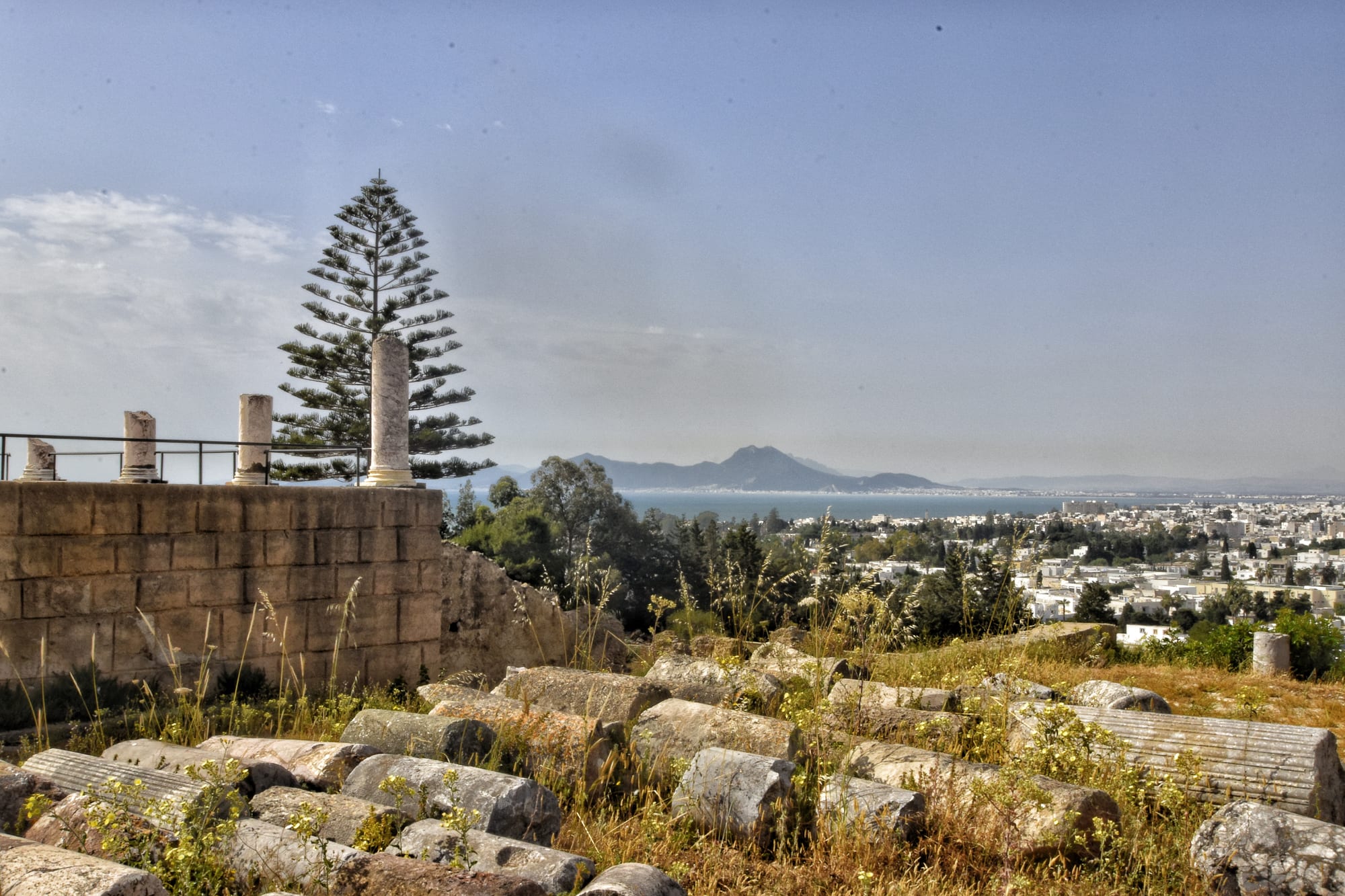
Carthage rose by trade. Founded around 814 BC by merchants from Tyre, a Phoenician city in what is now Lebanon, it sat on the Tunisian coast facing Sicily, beside the narrows that join the eastern and western Mediterranean. It grew rich on commerce, on the fertile farmland around it and on rich mineral deposits, and it protected that wealth with one of the largest navies of the ancient world. By 300 BC it dominated the western Mediterranean.
It fell because its interests collided with those of an expanding Rome. The two fought three Punic Wars between 264 and 146 BC. Carthage lost the first, over Sicily, and the second, despite Hannibal's invasion of Italy. Stripped of its empire and its fleet, it was no longer a military threat, but a faction in the Roman Senate wanted it gone. In the third war the Romans besieged the city for three years, stormed it in 146 BC, enslaved its survivors and demolished it.
A colony that outgrew its founders
Carthage was one of many Phoenician trading posts around the Mediterranean, and its name, Qart-Hadasht, simply means "New City". In the best-known legend, the Tyrian princess Elissa, better known as Dido, fled her murderous brother King Pygmalion and founded the city. Within a century of its founding, the population had reached 30,000. After the Neo-Assyrian Empire conquered the Phoenician homeland in the 7th century BC, Carthage gradually became independent; historians place this between the 7th and the mid-6th century BC.
Unlike most Phoenician colonies, which stayed small, Carthage prospered from farmland and mineral wealth as well as from the sea. It built an empire mostly through treaties, alliances and tribute rather than conquest, and because its own citizens were too few to defend scattered colonies, it relied heavily on foreign mercenaries. By 300 BC it controlled the coast of north-western Africa, southern and eastern Iberia, and the islands of Sicily, Sardinia, Corsica, Malta and the Balearics.
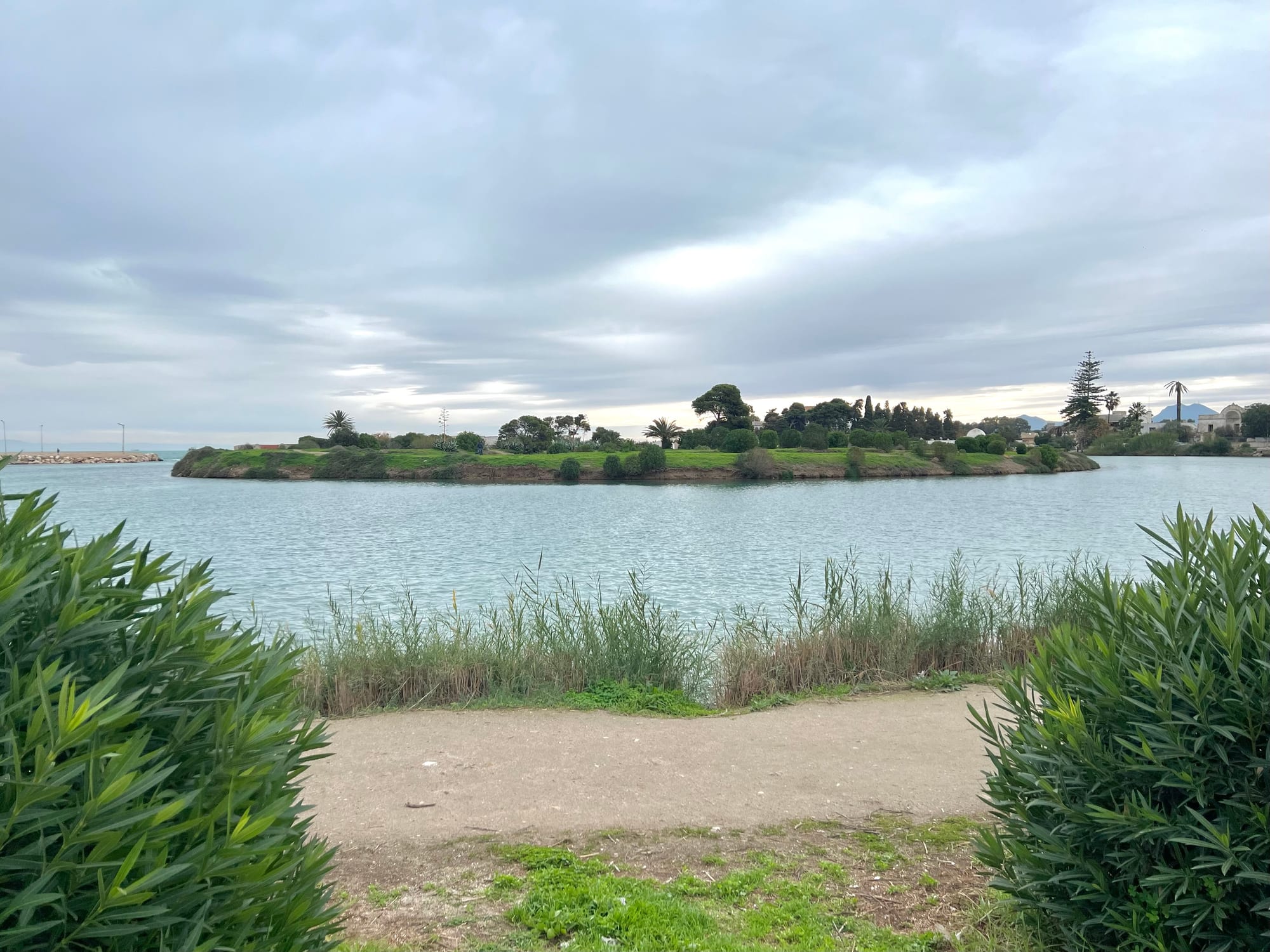
Carthage dug two artificial inner harbours, called cothon in Punic: one for trade and one for a navy of 220 warships, overlooked by a walled tower. The city itself was ringed by walls some 37 kilometres long and became one of the largest cities of its age.
Rome and Carthage were not born enemies. In 509 BC they signed the first of several treaties dividing their spheres of trade, and as late as the 270s BC Carthage supplied the Romans with materiel and once ferried a Roman army by sea against a common enemy.
Sicily, where the two powers met
The breaking point was Sicily, the island between them. Carthage had fought the Greek cities there, led by Syracuse, on and off since 480 BC and by 264 BC held much of the south and west. That year a dispute over the city of Messana drew Rome onto the island, and the First Punic War began.
Rome had a strong army but no real navy, and Carthage's fortified coastal cities could be supplied by sea. So in 260 BC the Romans built a fleet, using a shipwrecked Carthaginian warship as their model, and added the corvus, a spiked boarding bridge that let their legionaries fight at sea as if on land. They won at Mylae in 260 BC and at Cape Ecnomus in 256 BC, possibly the largest naval battle in history by the number of people involved. After 23 years, with both sides close to exhaustion, a new Roman fleet destroyed Carthage's at the Aegates Islands in 241 BC. Carthage paid 3,200 talents of silver and gave up Sicily, which became Rome's first province.
Then Carthage's unpaid mercenaries mutinied, and while it was weakened Rome forced it to hand over Sardinia and Corsica and pay 1,200 talents more. The historian Polybius called this "contrary to all justice", and the resentment helped cause the next war.
Hannibal's gamble
The general Hamilcar Barca looked for new strength in Iberia. From 237 BC he carved out a domain in the south-east of the peninsula, with silver mines, farmland, manpower and shipyards. His son Hannibal took command in 221 BC, and after he captured Saguntum, a city allied to Rome, Rome declared war in 218 BC.
Hannibal marched from New Carthage, today's Cartagena, through Gaul and crossed the Alps in 24 days. He destroyed Roman armies at the Trebia and Lake Trasimene, and at Cannae in 216 BC encircled a Roman army and killed or captured at least 67,500 men. Yet Rome fought on, and its general Publius Scipio invaded Africa in 204 BC. Hannibal was recalled and defeated at Zama in 202 BC. The peace of 201 BC took Carthage's overseas territories, imposed 10,000 talents payable over 50 years, shrank its fleet and forbade it to wage war without Rome's permission.
- c. 814 BC
Merchants from Tyre settle Carthage.
- 509 BC
First treaty between Carthage and Rome.
- 264–241 BC
First Punic War; Carthage loses Sicily.
- 218–201 BC
Second Punic War; Hannibal crosses the Alps but loses at Zama.
- 149 BC
Rome declares war for the third time.
- 146 BC
Carthage is stormed, its people enslaved and the city demolished.
- 49–44 BC
Julius Caesar founds a Roman Carthage on the site.
"Carthage must be destroyed"
Carthage recovered. It paid off its debt and prospered, but it could not defend itself. For about 50 years the Numidian king Masinissa, Rome's ally, raided and seized its territory, and Rome refused every request to let Carthage fight back. The Roman statesman Cato the Elder, who visited in 152 BC, was shocked by the city's wealth and is said to have ended every speech, whatever its subject, with the words "Carthage must be destroyed".
When Carthage finally raised an army against Masinissa in 151 BC, it broke the treaty, and Rome declared war in 149 BC. The Carthaginians handed over 200,000 sets of armour and 2,000 catapults to avert it, but when Rome then ordered them to abandon their city and move at least 16 kilometres from the sea, they refused and rearmed.
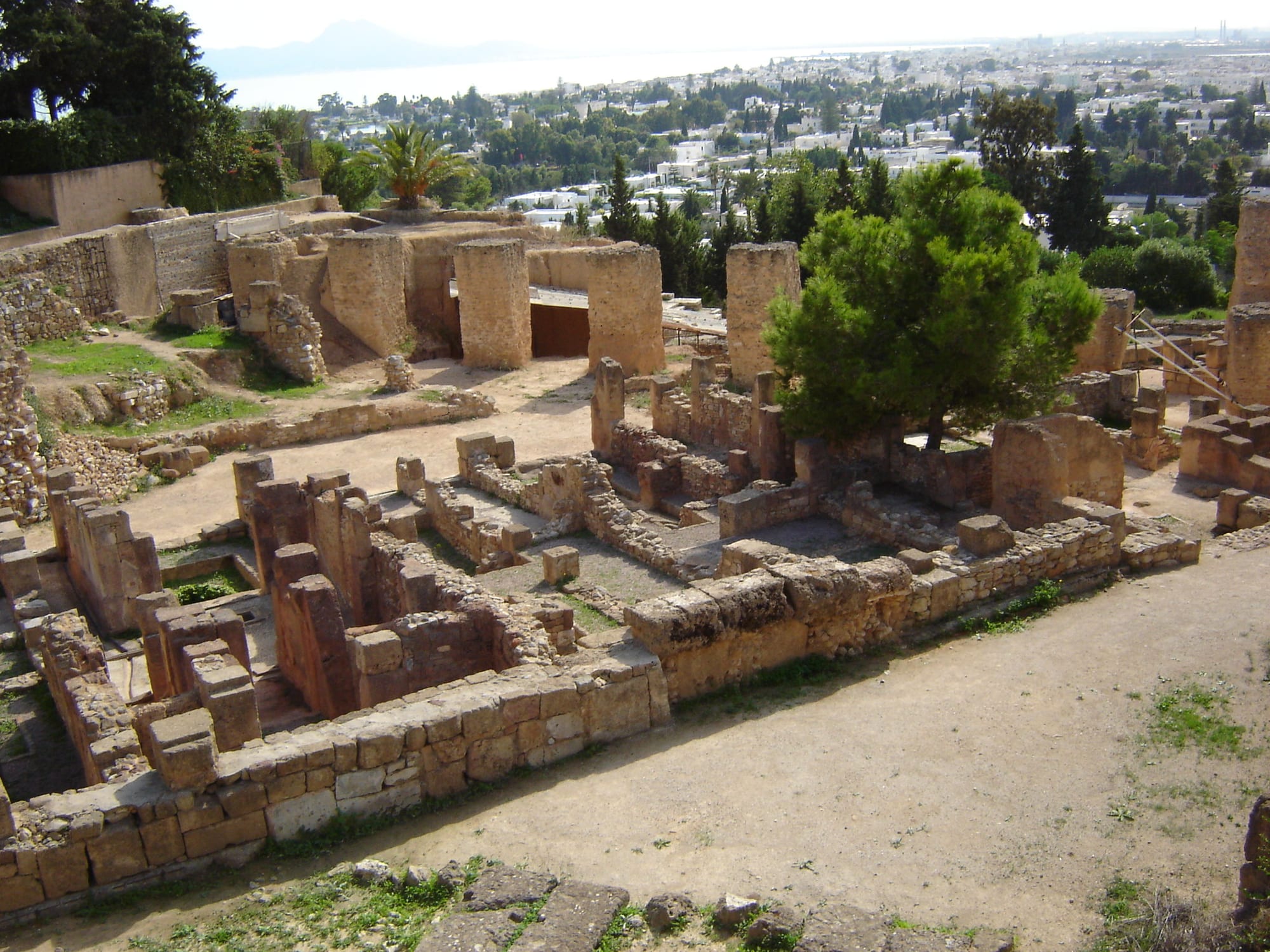
The siege lasted until the spring of 146 BC, when Scipio Aemilianus, an adopted grandson of Scipio Africanus, broke in near the harbour. It took six days of street fighting to clear the city. The 50,000 prisoners, a small part of the pre-war population, were sold into slavery.
Rome sent a commission to oversee further demolition and turned Carthage's remaining lands into the province of Africa, which became a major source of grain for Rome.
The city after the fall
The site did not stay empty. Julius Caesar built a new Roman Carthage there between 49 and 44 BC, and by the 1st century AD it had become the second-largest city in the western half of the Roman Empire. Punic language and culture survived under Roman rule, and Punic was still spoken in North Africa at least until the late 4th century AD. The Vandals invaded Roman Africa in 429 and damaged the city, and Umayyad forces destroyed it after the Battle of Carthage in 698.
Almost all Carthaginian texts were lost after 146 BC, so most of what is known of the city comes from its Greek and Roman enemies and from archaeology. Today the ruins lie in Carthage, a coastal suburb of Tunis incorporated as a municipality in 1919, and are a UNESCO World Heritage Site. Visitors can see the Punic harbours, the Byrsa hill and the Roman Antonine Baths, which were still in use under Arab rule. In 1985 the mayors of Rome and Carthage signed a symbolic peace treaty and pact of friendship, more than 2,100 years after the last war ended.