💰 Budget
Tunis is the most expensive city in Tunisia and still cheap by Mediterranean standards. Restored guesthouses in the medina and hotels in Sidi Bou Said and La Marsa cost the most; simple hotels in the new town, street food, museum tickets and the TGM keep a day's spending low. Taxis are inexpensive when the meter is used.
- Daily Budget Midrange
- USD 85–190 (medina guesthouse or seaside hotel, restaurant meals, site tickets, taxis)
- Daily Budget Shoestring
- USD 30–55 (simple hotel in the new town, street food, TGM and metro léger, one site ticket)
A single ticket covers the Carthage archaeological sites, so they are most easily visited on one day; the medina, the avenue and the corniche cost nothing.
📅 Best Time to Visit
April to June and September to October, when days are warm, the medina is comfortable to walk and the sea is swimmable from June. July and August are hot and busy, with the festival season at Carthage and Tunisian families filling the beaches. Winter is mild, grey and showery, and best for museums and the Roman sites.
⏳ Suggested Number of Days
Two to three days cover the old and new city and the coastal suburbs at a steady pace. Four or five allow the wider Cap Bon and northern coast as well. Visitors interested in archaeology or museums will want more time than those mainly after cafés and beaches.
- First Visit
- 2–3 days
- With Surroundings
- 4–5 days
🚆 Transportation
The TGM light rail runs from Tunis Marine, at the foot of Avenue Habib Bourguiba, through La Goulette and Carthage to Sidi Bou Said and La Marsa, and is the simplest way to reach the coast. Metro léger trams cover the city itself, buses fill the gaps, and yellow taxis are cheap and plentiful. Louages, the shared long-distance vans, leave from stations on the edge of the centre for other towns.
Ask taxi drivers to switch on the compteur (fare counter) before setting off, and keep small notes, as change is often short.
🛬 Airport & Station Connections
Tunis–Carthage airport lies about 8 km north-east of the centre, a short taxi ride away, and is the country's main international gateway. Trains from the central station link Tunis with Bizerte and with the coast south towards Sousse and Sfax, louages run to every region, and ferries from Marseille, Genoa and Palermo dock at La Goulette.
🚶 Walkability
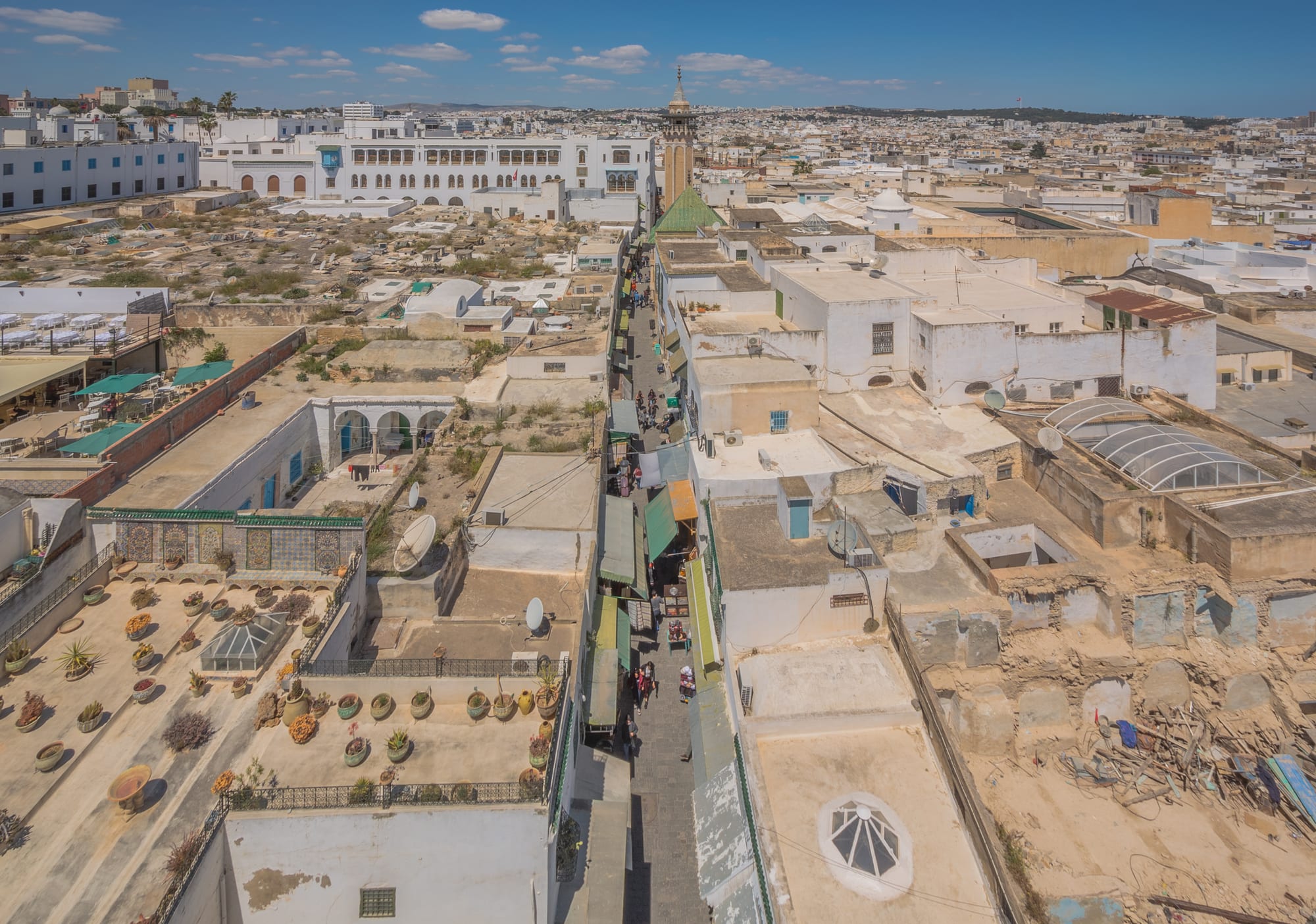
The centre is easy on foot: the medina is a walking-only maze of lanes, and it is about fifteen minutes from the Bab el Bhar gate along Avenue Habib Bourguiba to the lake. Pavements in the new town are broad but often parked on and uneven, traffic is heavy and drivers rarely give way, and the coastal suburbs are far enough apart to need the TGM. Summer heat makes the middle of the day slow going.
🛡️ Safety
Tunis is generally calm and heavily policed at its main sites. The everyday problems are pickpocketing and bag-snatching in the medina souks, at TGM stations and along Avenue Habib Bourguiba, insistent touts and shop guides in the medina and Sidi Bou Said, and chaotic traffic. The 2015 attack at the Bardo Museum brought heavy security to major sites, and demonstrations in the centre are best avoided.
Keep bags closed in crowds, avoid political gatherings, and take care crossing roads in Tunis. Agreeing the taxi meter before setting off and being firm with medina touts save most of the everyday trouble. Check current official travel advice before travelling.
🌦️ Climate
A Mediterranean climate with hot dry summers and mild wet winters. Sea breezes soften the coastal suburbs, while the city centre, set back from the water behind the lagoon, holds the heat; the sirocco from the Sahara can push temperatures far above the seasonal average for a few days at a time.
- Summer
- hot and dry, typically 30–35°C by day with hotter spells, and little rain between June and September
- Winter
- mild and damp, roughly 8–17°C, with grey days and heavy showers
🤝 Local Customs
Greetings matter: a handshake and a few words of Arabic or French open most conversations, and men and women who do not know each other often greet without touching. Dress is relaxed in the capital, but covered shoulders and knees are expected in the medina and essential at mosques and shrines, where non-Muslims may be limited to the courtyard. Bargaining is normal in the souks and not in shops with marked prices. Ask before photographing people, and avoid photographing police, the presidential palace and military sites.
Tipping is modest — rounding up a taxi fare and about 10 per cent in a restaurant. Alcohol is served in hotels, licensed restaurants and some bars but not openly during Ramadan, and public drinking is frowned upon.
💳 Common Payment Methods
The currency is the Tunisian dinar, a closed currency that cannot be bought abroad or legally taken in or out, so money is changed on arrival and reconverted before leaving. Cards work in hotels, larger restaurants and supermarkets; souk stalls, cafés, taxis and louages are cash only. ATMs are plentiful in the new town and the coastal suburbs, and keeping small notes makes daily transactions easier.