History · Haiti
How did Haiti become the first Black republic?
Enslaved people in France's richest colony rose in 1791, beat the armies of three empires, and in 1804 founded the first independent Black-led nation.
By Globeway Editorial · 13 October 2026
The short answer
Haiti was born from the only slave revolt in history that founded a state. In August 1791 enslaved Africans in the French colony of Saint-Domingue, then France's most profitable colony, rose against their masters. Over twelve years of war, led first by Toussaint Louverture and then by Jean-Jacques Dessalines, they won their freedom, fought off Spanish and British invaders, and finally defeated the army Napoleon sent to restore slavery. On 1 January 1804 Dessalines declared independence and gave the country the Taíno name Haiti.
That made Haiti the first independent nation in Latin America and the Caribbean, the second in the Americas after the United States, and the first independent Black-led nation to emerge from colonial rule. Strictly speaking, its first government was not a republic for long: Dessalines made himself emperor later in 1804, and a republic in the full sense was founded only after his death in 1806.
The richest colony in the Caribbean
Saint-Domingue, the western part of the island of Hispaniola, was the jewel of France's empire. In 1789 it produced about 60 per cent of the world's coffee and 40 per cent of the sugar imported by France and Britain, and the livelihoods of about a million people in France depended directly on its trade.
That wealth rested on extreme cruelty. Around 1789 the colony held an estimated 452,000 enslaved people, against about 40,000 white colonists and 28,000 free people of colour. So many enslaved Africans died, many within a year of arriving, that planters constantly imported more, which kept the population largely African-born. Many came from the lands of the Kongo, Fon and Yoruba peoples, and from their traditions and Catholicism they shaped a new religion, Vodou. Runaways called Maroons lived in the hills and raided plantations.
The uprising of 1791
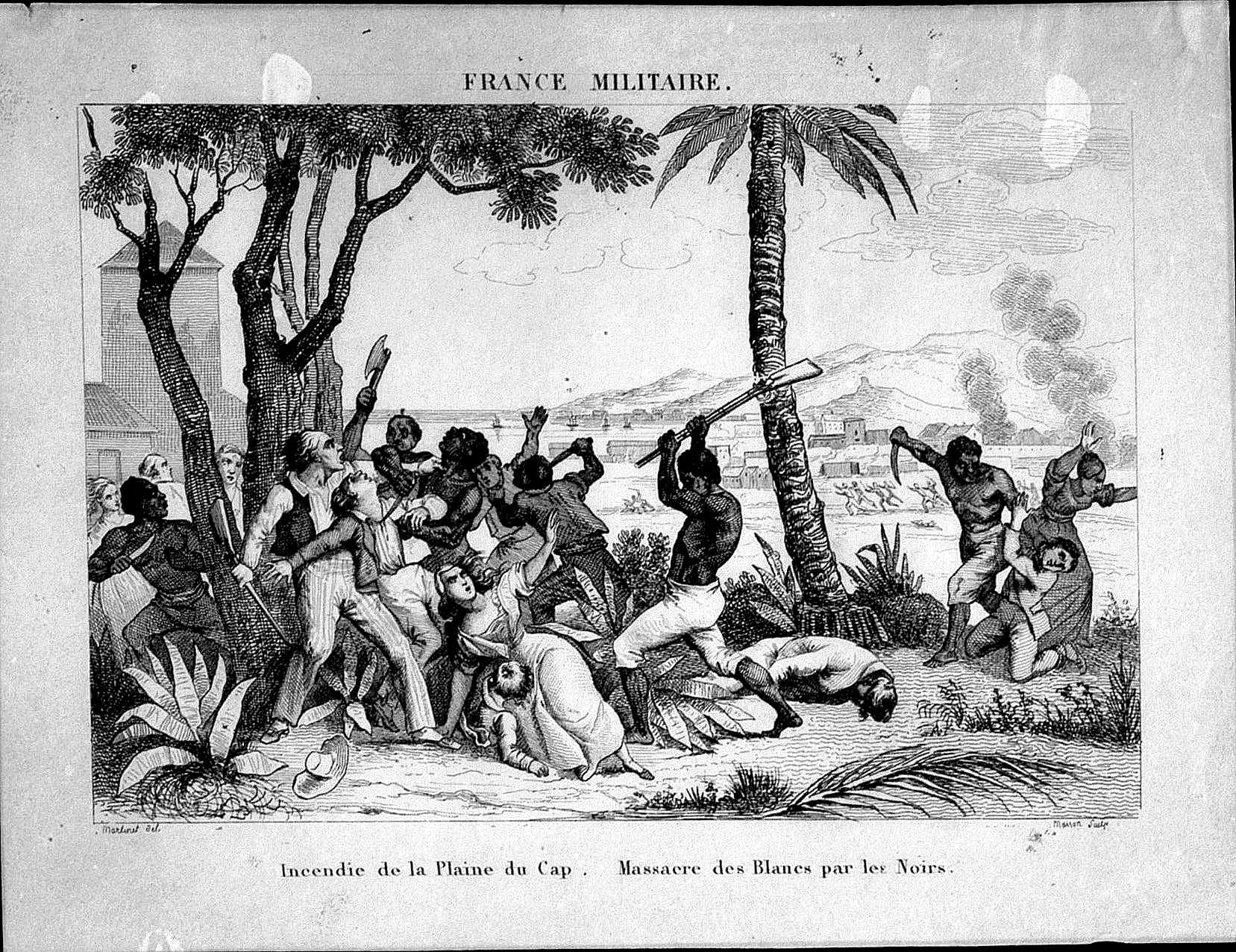
The French Revolution cracked the colony open. Its promise of liberty and equality led free people of colour to demand citizenship, and when white planters refused, fighting broke out between them. Enslaved people saw their chance. On the night of 14 August 1791, at a religious ceremony at Bois Caïman near Le Cap, the Vodou priest Dutty Boukman and the priestess Cécile Fatiman gave the signal for revolt, which broke out on the night of 21 August.
Within ten days the rebels held the entire Northern Province, and within weeks some 100,000 had joined. The violence on both sides was ferocious. By 1792 rebels controlled a third of the colony. Facing defeat by the rebels and by British and Spanish invaders, French commissioners abolished slavery in the colony in 1793, and in February 1794 the National Convention in Paris abolished it throughout the French empire.
Toussaint Louverture's colony
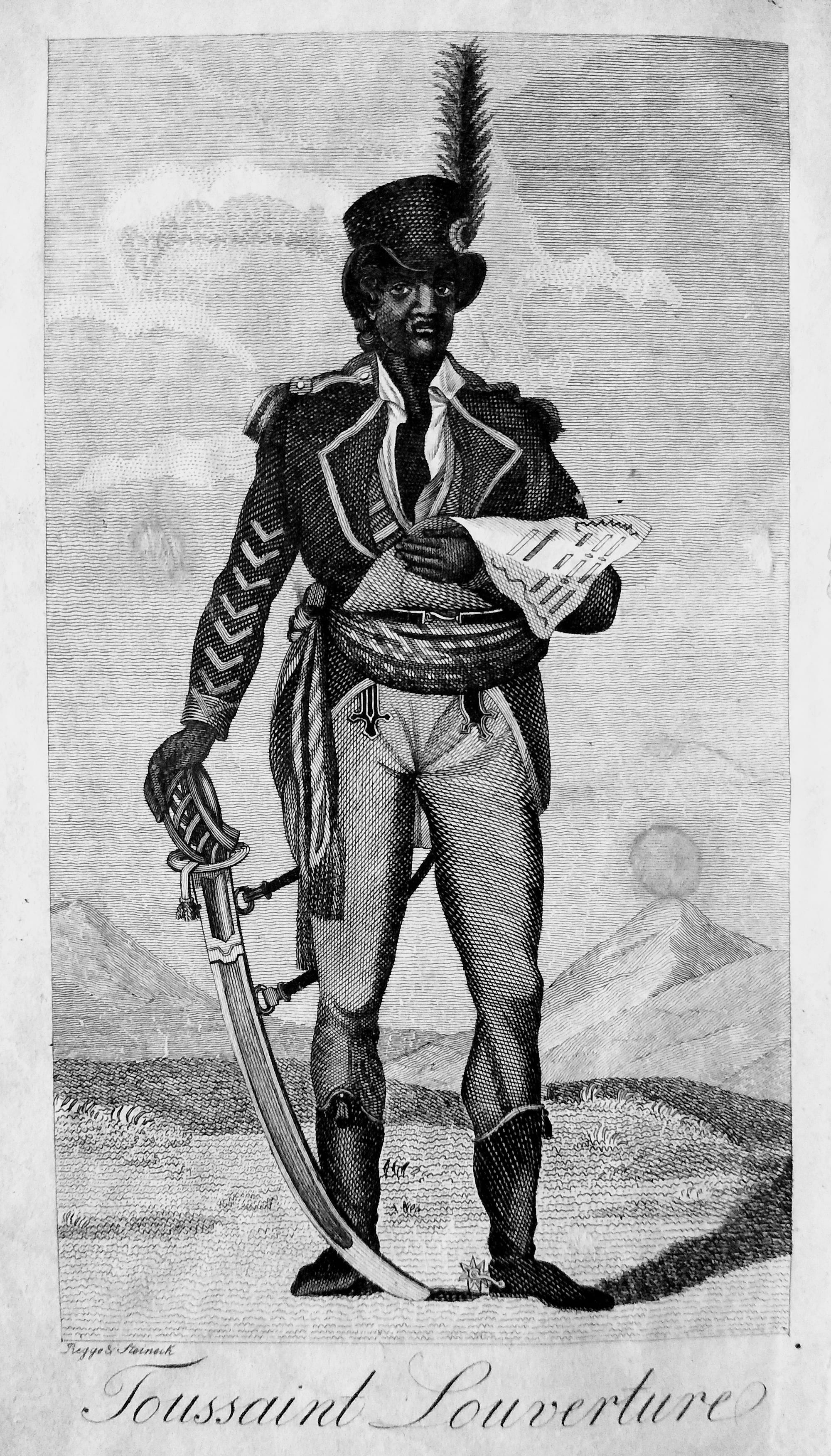
The revolution's greatest general was Toussaint Louverture, a self-educated former domestic slave. He first fought for Spain, then in May 1794 switched to the French side once France had ended slavery. His army drove out the Spanish, and the British, ravaged by yellow fever, gave up and withdrew completely in
- British officers were astonished that he had turned former slaves with no
military experience into soldiers the equal of a European army.
By 1801 Toussaint ruled the colony in all but name. He still professed loyalty to France, but that year he issued a constitution that made him governor for life. Napoleon Bonaparte, now in power in Paris, answered by sending a large expedition under his brother-in-law Charles Leclerc, with secret instructions to restore French rule and, in the end, slavery.
Napoleon's war and the road to Vertières
Leclerc landed in February 1802. Haitian forces burned towns rather than surrender them and made a celebrated stand at the fort of Crête-à-Pierrot. In May 1802 Toussaint agreed to lay down arms on the promise that slavery would not return, but he was later seized and shipped to France, where he died in prison at the Fort de Joux in April 1803.
His capture did not end the war. When it became clear that the French meant to restore slavery, as they had nearly done on Guadeloupe, people across the colony rose again in the summer of 1802. Yellow fever destroyed the French army: by mid-July about 10,000 had died of it, and in November Leclerc died of it too. Dessalines and Alexandre Pétion, who had served with the French, changed sides in October 1802. In May 1803, at the Congress of Arcahaie, the rebels adopted their first flag; Haitian tradition says Dessalines made it by tearing the white band out of the French tricolour.
When war resumed between France and Britain in 1803, the Royal Navy cut the French off from reinforcements. On 18 November 1803 Dessalines's army won the last major battle at Vertières, near Le Cap, and the French evacuated. The Haitians paid an enormous price for freedom: about 200,000 dead between 1791 and 1803, most of them killed by violence.
- 1791: The uprising begins in the Northern Province in August
- 1794: France abolishes slavery throughout its empire
- 1798: The British withdraw from Saint-Domingue
- 1802: Napoleon's expedition lands; Toussaint is captured
- 1803: Victory at Vertières on 18 November
- 1804: Independence is declared at Gonaïves on 1 January
- 1825: France recognises Haiti in return for a huge indemnity
- 1862: The United States recognises Haiti
A republic, an empire, and a heavy price
Dessalines proclaimed independence at Gonaïves and took the title of governor general for life; in September 1804 his generals named him emperor, as Jacques I. Early in 1804 he ordered the killing of most of the remaining French population, in which some 3,000 to 5,000 people died. After he was assassinated in 1806, the country split: Henri Christophe ruled the north, later as king, while Pétion became the first president of the Republic of Haiti in the south in 1807. The country was reunited as a republic in 1820.
The world was slow to accept a nation founded by former slaves. President Thomas Jefferson refused to recognise it, and the United States did not do so until
- France recognised Haiti only in 1825, after warships off the coast forced
it to agree to pay 150 million gold francs to compensate former slaveholders. The sum was later reduced to 90 million, but Haiti did not finish paying until 1947, and the debt drained its treasury for generations.
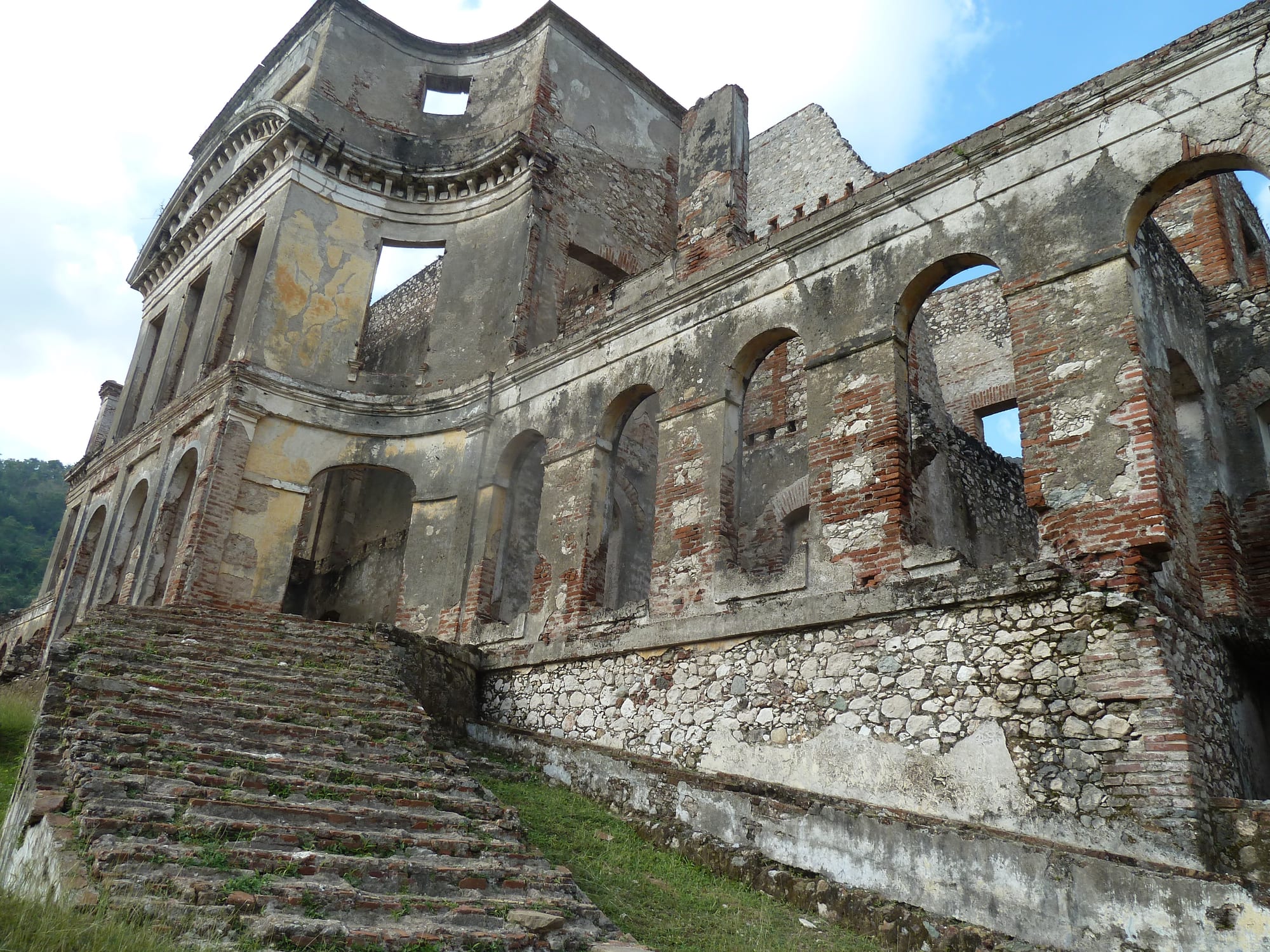
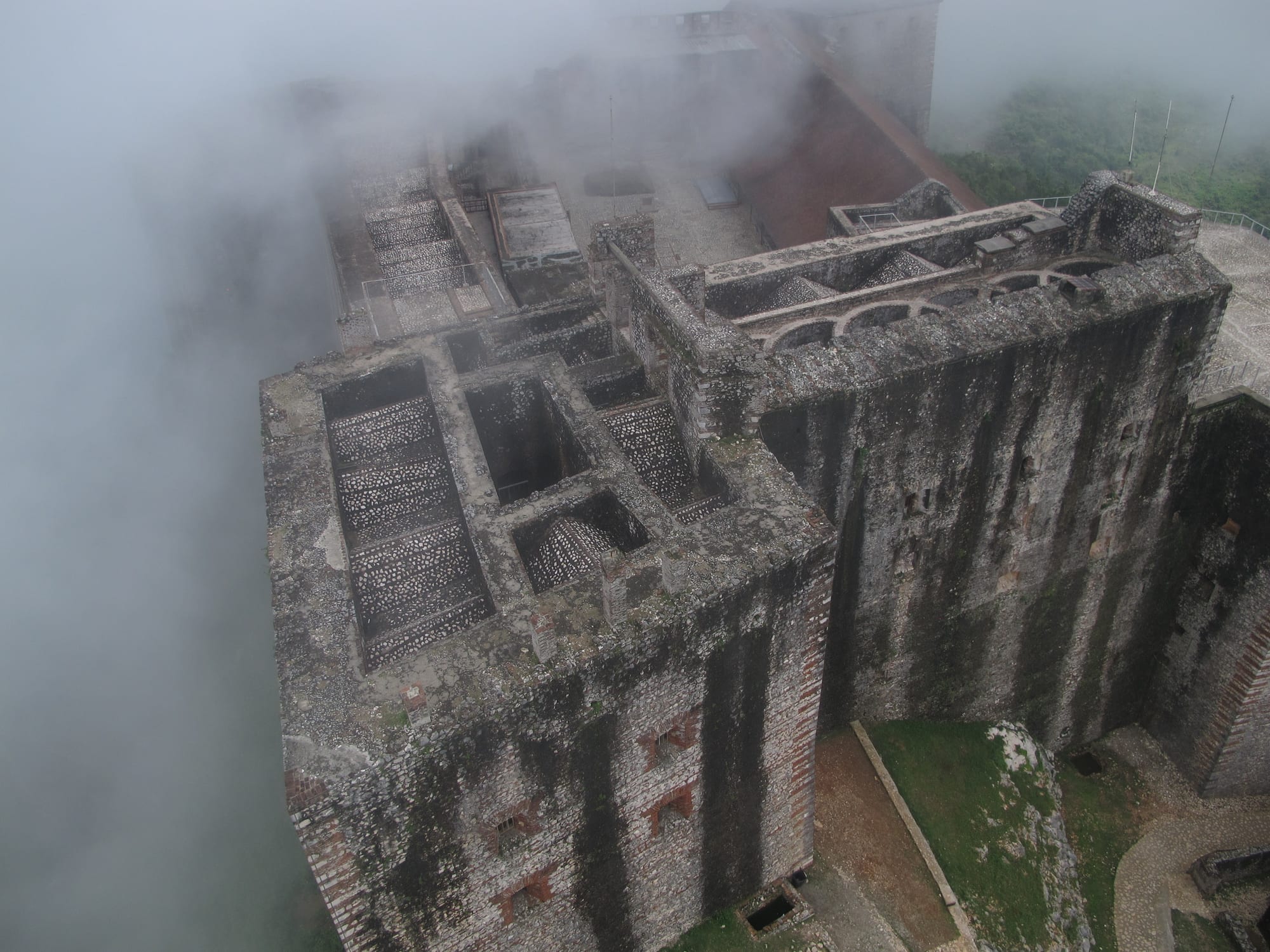
The revolution's monuments still stand. Christophe's Citadelle Laferrière, begun in 1805 to repel a French invasion that never came, and his Sans-Souci Palace became a UNESCO World Heritage Site in 1982. Haiti today is in deep crisis, with armed gangs controlling most of the capital, Port-au-Prince, and no elected officials in office. The revolution's legacy endures in the country's name, in its blue and red flag, and in these mountain fortresses.