History · Italy
What happened at Pompeii in AD 79?
Mount Vesuvius erupted for two days, burying a Roman town of about 11,000 people under pumice and searing ash clouds, and sealing it for 1,700 years.
By Globeway Editorial · 13 October 2026
The short answer
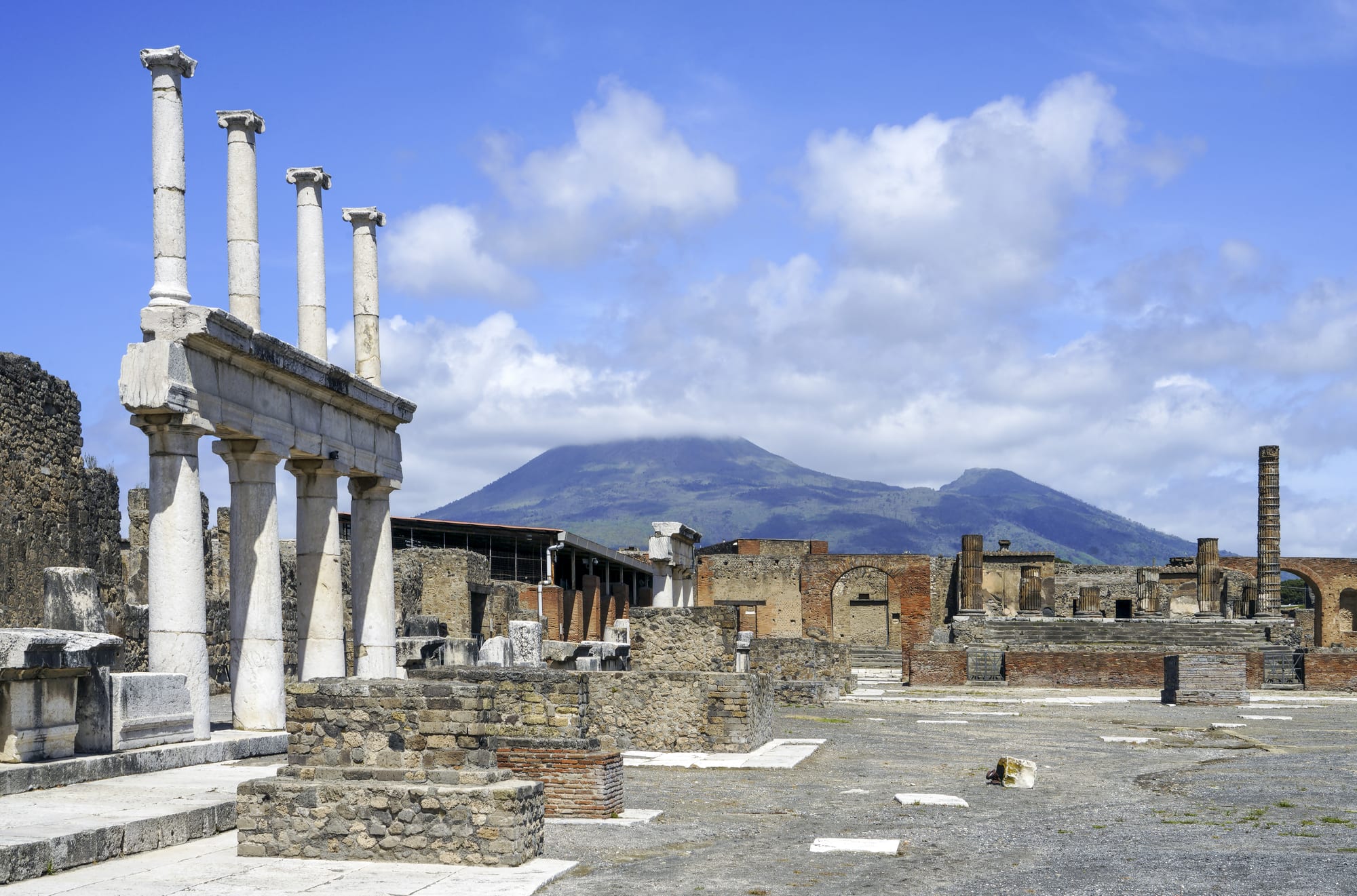
In AD 79 Mount Vesuvius, the volcano that towers over the Bay of Naples, erupted for two days. On the first day it blasted a column of ash and pumice more than 30 kilometres into the sky, and stones rained down on Pompeii for about 18 hours, collapsing roofs. Most of the town's roughly 11,000 people seem to have fled during that time. Early on the second morning, avalanches of scorching gas and ash, called pyroclastic surges, swept over the town and killed everyone who had stayed behind, almost instantly.
Pompeii ended up buried under up to 6 metres of volcanic debris. Its name and site were forgotten, and it lay hidden until the 16th century. Because it was sealed so suddenly, UNESCO describes it as the only archaeological site that gives a complete picture of an ancient Roman town: streets, shops, houses, paintings, graffiti and the hollow shapes of the people who died there.
A town that was used to tremors
Pompeii was a prosperous town of 64 to 67 hectares at the foot of Vesuvius, rich from the fertile farmland around it. On 5 February 62 a major earthquake caused widespread destruction around the bay, and Pompeii was hit particularly hard; another followed in 64.
Small earthquakes shook the area in the four days before the eruption, but no one read them as a warning. Tremors, as the eyewitness Pliny the Younger later wrote, were "not particularly alarming because they are frequent in Campania".
Two days of fire and ash
The eruption began in the early afternoon. Vesuvius threw out a column of hot gas, pulverised pumice and ash that rose as high as 33 kilometres, and the wind carried it south-east over Pompeii. For 18 to 20 hours a rain of light pumice stones built up a layer 2.8 metres deep. Roofs gave way under the weight, and earthquakes during the eruption brought down more buildings and killed some of the people sheltering inside. This was the time to escape, and most people did, probably taking their most valuable belongings with them.
Then the column began to collapse. Its edges slumped into dense, fast clouds of searing gas and ash that rolled down the mountainside, a pyroclastic surge. The first surges devastated the coastal town of Herculaneum, much closer to the crater, during the night or early morning. Early on the second morning two major surges reached Pompeii, flattening walls and covering the town in a further 1.8 metres of ash. By the evening of the second day the eruption was over.
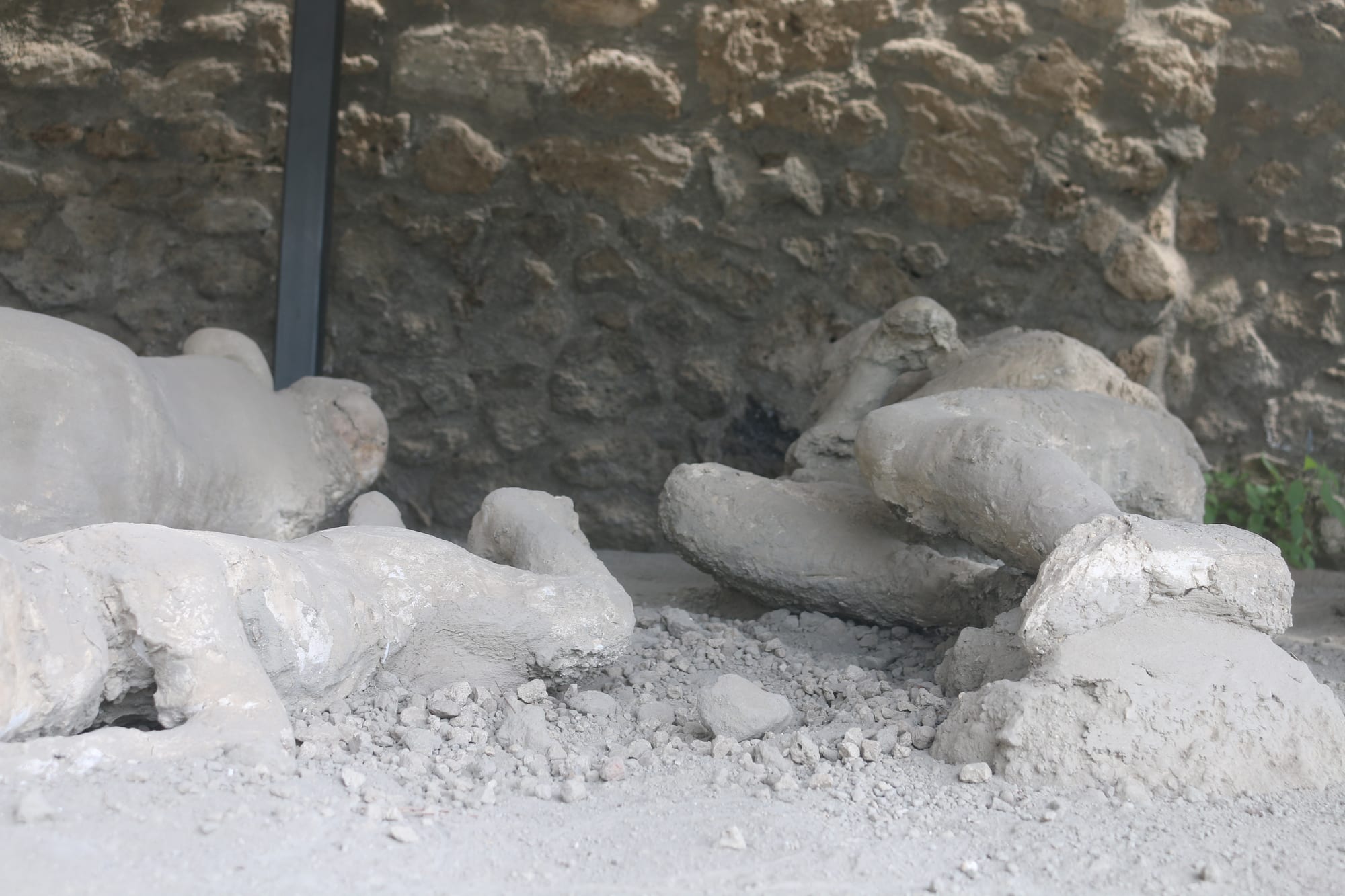
The people still in Pompeii died of heat, not slow suffocation as was long believed. A study published in 2010 found that surges of at least 250 °C were enough to kill instantly at 10 kilometres from the vent, even indoors. The twisted poses of many victims are not signs of a long agony but a muscle spasm caused by the heat after death.
By 2003 the remains of about 1,150 people had been found at Pompeii, and more than 1,500 at Pompeii and Herculaneum together. The full death toll of the eruption will never be known.
The admiral who sailed towards the volcano
Almost everything known about how the day felt comes from one witness. Pliny the Younger, aged 17, was staying at Misenum, about 29 kilometres away across the bay. He described a vast cloud shaped like a pine tree, a long trunk spreading into branches, and the next morning a black cloud that blotted out the island of Capri as he led his mother away through falling ash. He wrote two letters about it to the historian Tacitus some 25 years later. Volcanologists still call this kind of towering eruption "Plinian" after him.
His uncle, Pliny the Elder, the famous naturalist, commanded the Roman fleet at Misenum. When a messenger came from a friend, Rectina, whose household was trapped by the shore beneath the mountain, he launched warships to evacuate the coast. Warned to turn back by his helmsman, he is said to have replied "Fortune favours the brave" and sailed on to Stabiae, about 4.5 kilometres from Pompeii. The same onshore wind that carried him there stopped anyone sailing away. The next morning, on the beach, he sat down and could not get up again; his body was found, with no apparent injuries, once the cloud had cleared.
Lost, robbed and found again
The eruption did not hide Pompeii completely at first. The tops of large buildings still poked through the ash, and survivors and looters dug back in for statues and valuables; one house has a graffito left by the robbers reading "house dug". The emperor Titus sent two former consuls to organise relief and gave money from the imperial treasury. A small settlement grew up on the site and lasted until the 5th century, but later eruptions in 471–473 and 512 buried the ruins deeper, and the place became known simply as La Civita, "the city".
Pompeii buried and found
- 62
Earthquake
A major earthquake on 5 February badly damages Pompeii.
- 79
Eruption
Vesuvius buries Pompeii and Herculaneum over two days.
- 1592
First glimpse
Digging a water channel, the architect Domenico Fontana cuts through painted walls and keeps the find secret.
- 1748
Digging begins
Excavations start at the site, still unidentified.
- 1763
Named
An inscription found on 20 August confirms the town is Pompeii.
- 1863
Casts
Giuseppe Fiorelli begins filling the hollows left by bodies with plaster.
Giuseppe Fiorelli, who took charge in 1863, realised that the strange empty spaces found in the ash were the moulds of bodies that had decayed away. By pouring plaster into them he recovered the shapes of the dead, down to the folds of their clothes.
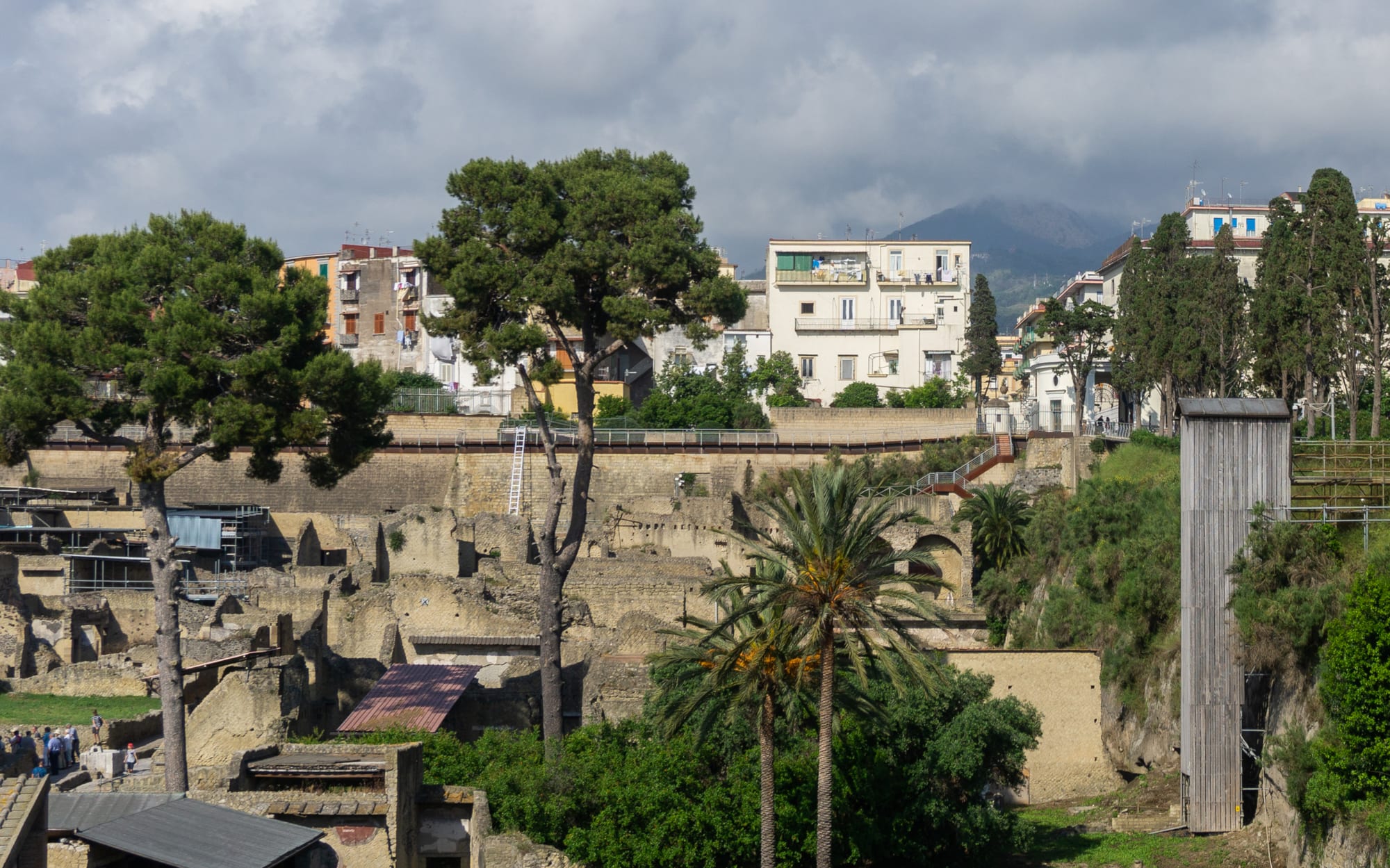
Herculaneum suffered differently. The wind spared it the rain of pumice, but it lay closer to the crater and was buried under 23 metres of surge deposits. From 1980 onwards about 300 skeletons were found crowded into arched vaults on the ancient shore, the so-called boathouses, where the last people left in the town seem to have waited for rescue from the sea.
Summer or autumn?
For five centuries the eruption was dated to 24 August, a date taken from a 1508 printed edition of Pliny's letter. But the letter had been copied by hand for 1,400 years, and other manuscripts can be read as giving dates in October or November. The town itself points to autumn: victims in heavy clothing, autumn fruit such as pomegranates, and storage jars freshly filled with wine after the grape harvest. Summer winds in the area also blow west, while the ash fell to the south-east.
In 2018 archaeologists found a charcoal scribble on a wall under renovation giving the date 17 October, without a year. A 2022 study placed the eruption between 24 October and 1 November, though both the inscription and that study have been challenged.
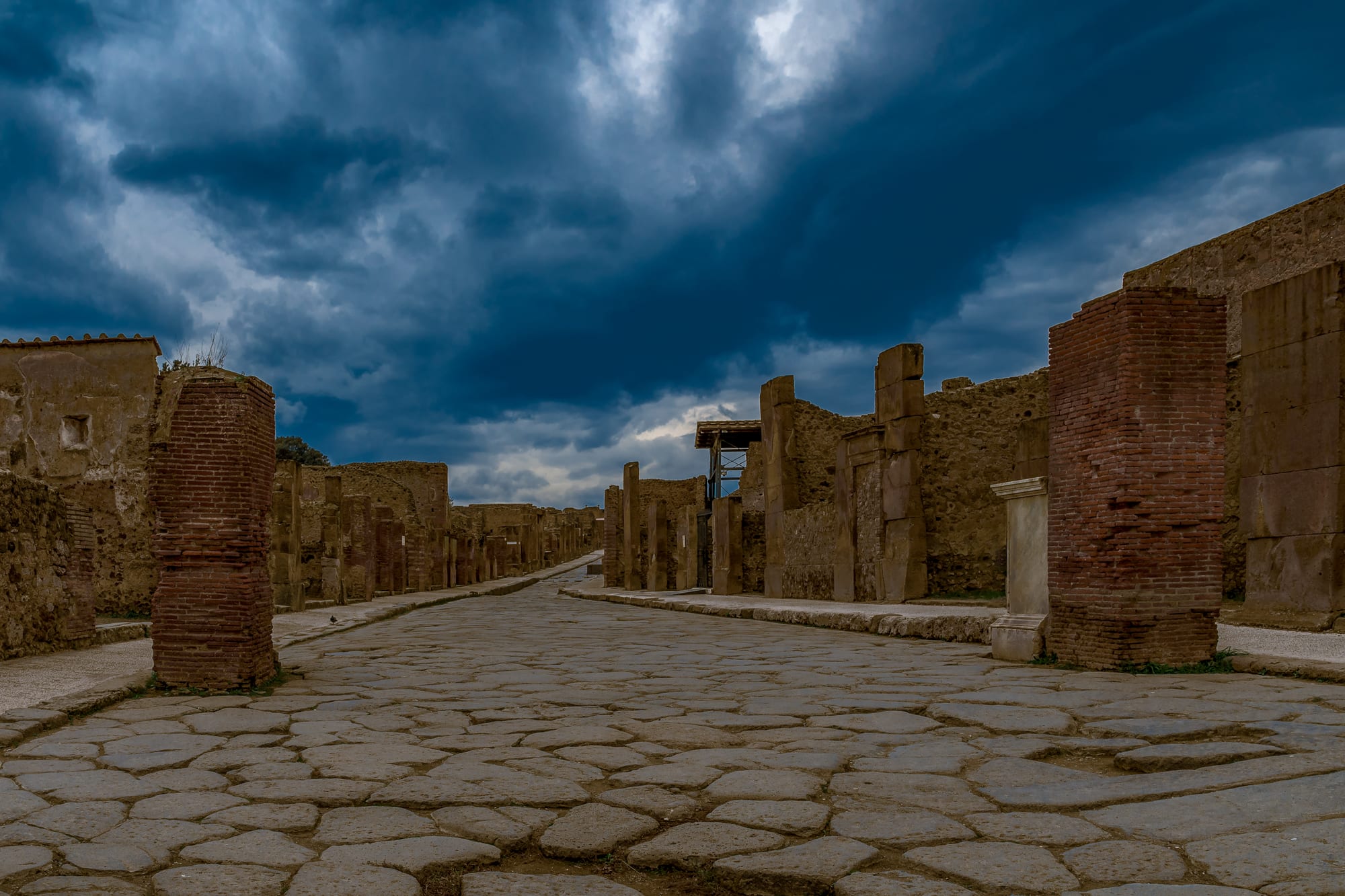
About two-thirds of Pompeii has been excavated, and around 2.5 million people visit it each year. Large new excavations are not planned; archaeologists now concentrate on recording the ruins and slowing their decay, although in 2024 work along the edge of the unexcavated area uncovered a dining hall lined with rare frescoes and a shrine with blue-painted walls.
Vesuvius has not finished. It has erupted many times since, most recently in 1944, and about 600,000 people live in its danger zone today.