History · Iraq
Where were the Hanging Gardens of Babylon?
Nobody knows for certain. They may lie lost in Babylon, may never have existed, or may really have been an Assyrian king's garden at Nineveh.
By Globeway Editorial · 13 October 2026
The short answer
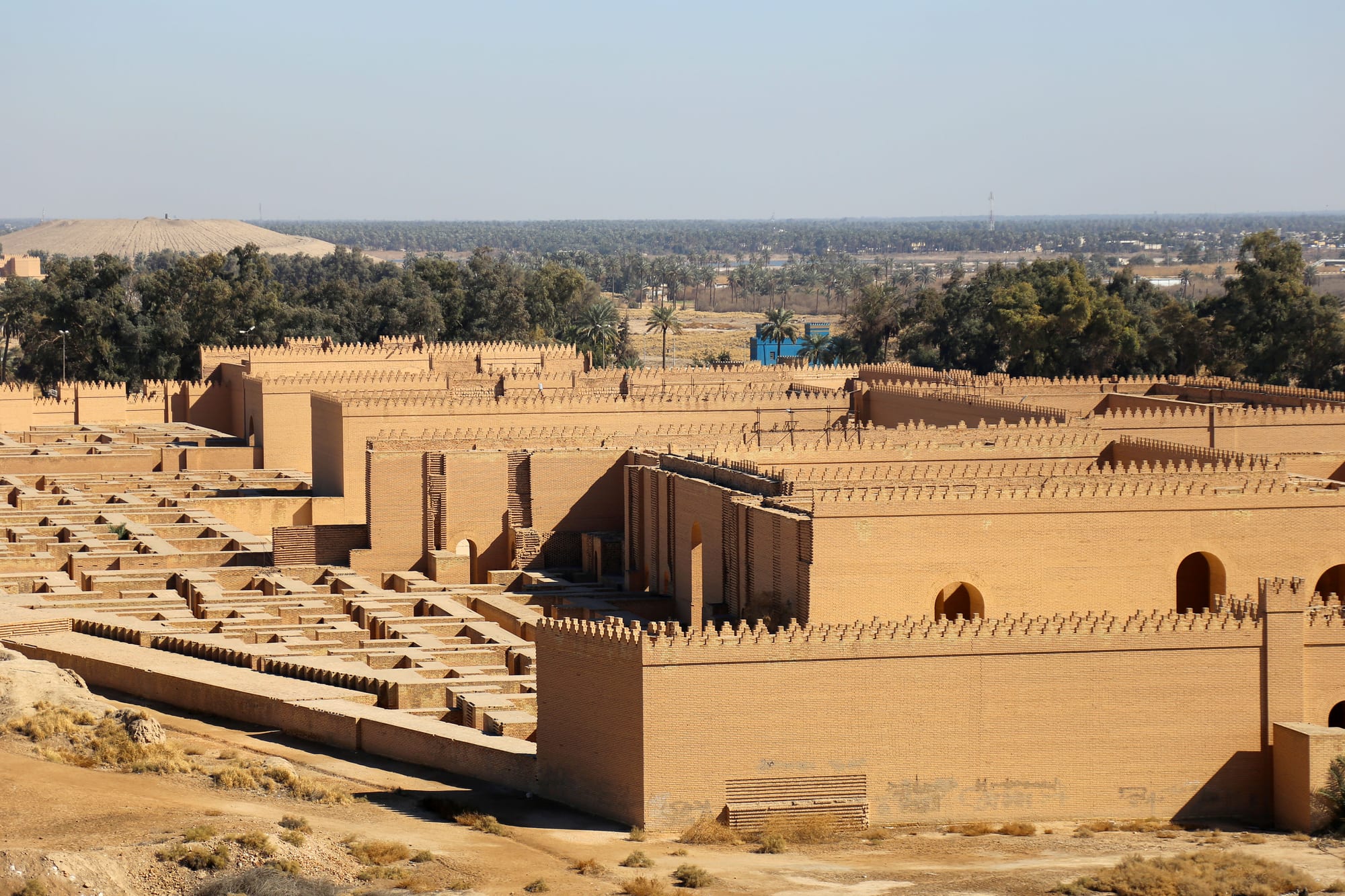
Nobody knows. Ancient writers placed the Hanging Gardens in Babylon, on the Euphrates near the modern Iraqi city of Hillah, about 85 kilometres (53 miles) south of Baghdad. But they are the only one of the Seven Wonders of the Ancient World whose location has never been established. No Babylonian text mentions them, and archaeologists have found no definite trace of them in Babylon.
Three explanations compete. The gardens may have stood in Babylon and been destroyed long ago, perhaps leaving remains now under the Euphrates. They may never have existed at all, a Greek fantasy of an eastern paradise. Or, as the Oxford scholar Stephanie Dalley argues, the stories may describe a real and well-recorded garden built by the Assyrian king Sennacherib at his capital, Nineveh, far to the north in what is now Mosul.
The story the ancient writers told
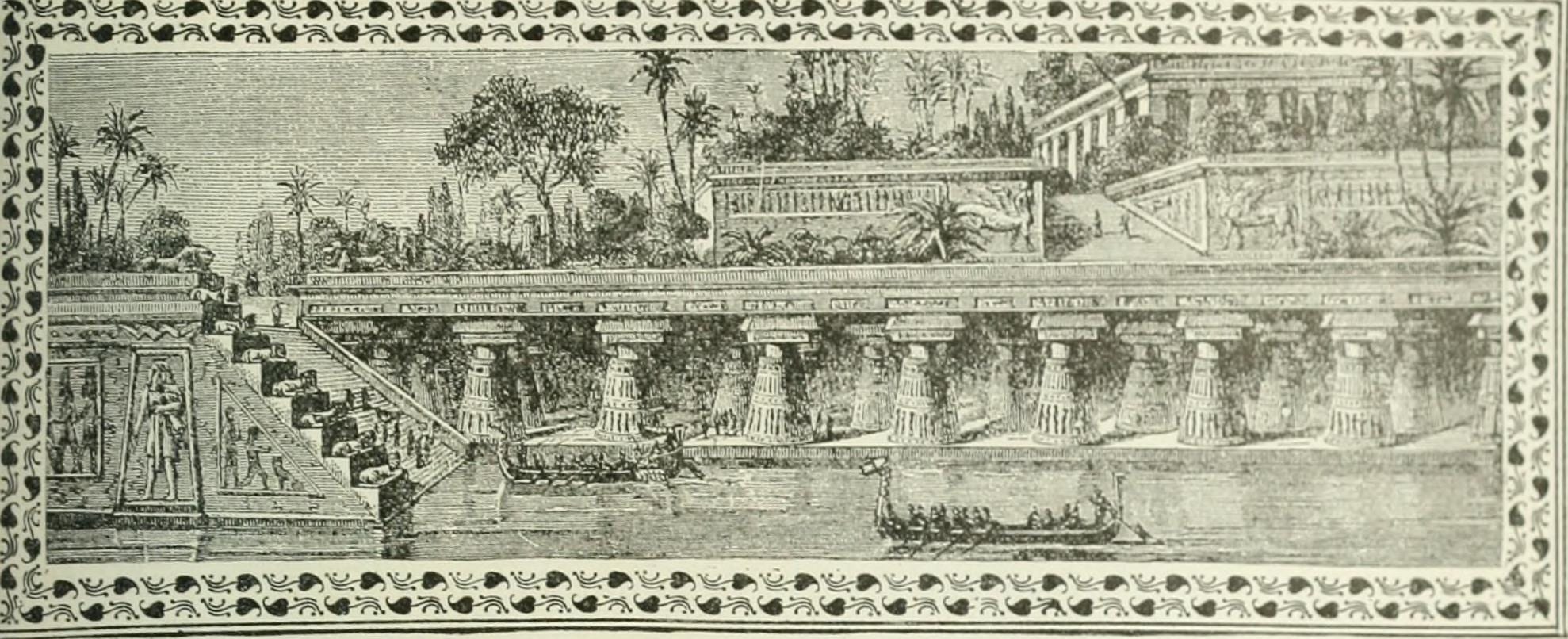
The legend says that Nebuchadnezzar II, who ruled Babylon from 605 to 562 BC, built the gardens beside his palace for his wife Amytis, who had grown up in Media and missed the green hills of her homeland. The gardens were imagined as rising terraces of trees, shrubs and vines, like a green mountain made of mud brick. The name comes from the Greek word kremastos, "overhanging", which meant trees planted on a raised structure such as a terrace, rather than gardens literally hanging in the air.
The earliest known mention comes from Berossus, a Babylonian priest writing around 290 BC, roughly 270 years after Nebuchadnezzar's death, and his words survive only because the historian Josephus quoted them in the 1st century AD. Later Greek and Roman writers added details. Diodorus Siculus described a square garden with tiers rising to 50 cubits and walls 22 feet thick, watered from the Euphrates. Strabo said water was lifted by a screw, and Philo of Byzantium marvelled at the weight of deep soil held so high above the ground. Some accounts credited the legendary queen Semiramis instead, and two writers attributed the gardens to an unnamed "Syrian king".
The silence in Babylon
The problem is what Babylon itself does not say. Nebuchadnezzar left long, detailed inscriptions boasting of his building works, and none mentions a garden. No surviving Babylonian record names his wife Amytis at all. The Greek historian Herodotus described Babylon at length in the 5th century BC without mentioning the gardens, though they may simply not yet have been famous among Greeks.
Archaeology has not filled the gap. German excavators led by Robert Koldewey dug Babylon from 1899 to 1917, and Koldewey suggested that a basement of vaulted rooms in the Southern Citadel, among Nebuchadnezzar's palaces, was the base of the gardens. Several scholars now doubt that reading. Some evidence may lie under the Euphrates, which in Nebuchadnezzar's time flowed east of its present course and cannot be safely excavated, and little is known of the western part of the city. One historian, Robert Rollinger, has suggested that Berossus credited the gardens to Nebuchadnezzar for political reasons, borrowing a legend from somewhere else.
The case for Nineveh
That somewhere, Dalley argues, was Nineveh, the capital of the Assyrian empire on the Tigris. Sennacherib, who reigned from about 705 to 681 BC, a century before Nebuchadnezzar, built a great garden beside his palace there and described it in his own inscriptions, calling his new palace and garden "a wonder for all peoples". He also recorded casting screws to raise water into it.
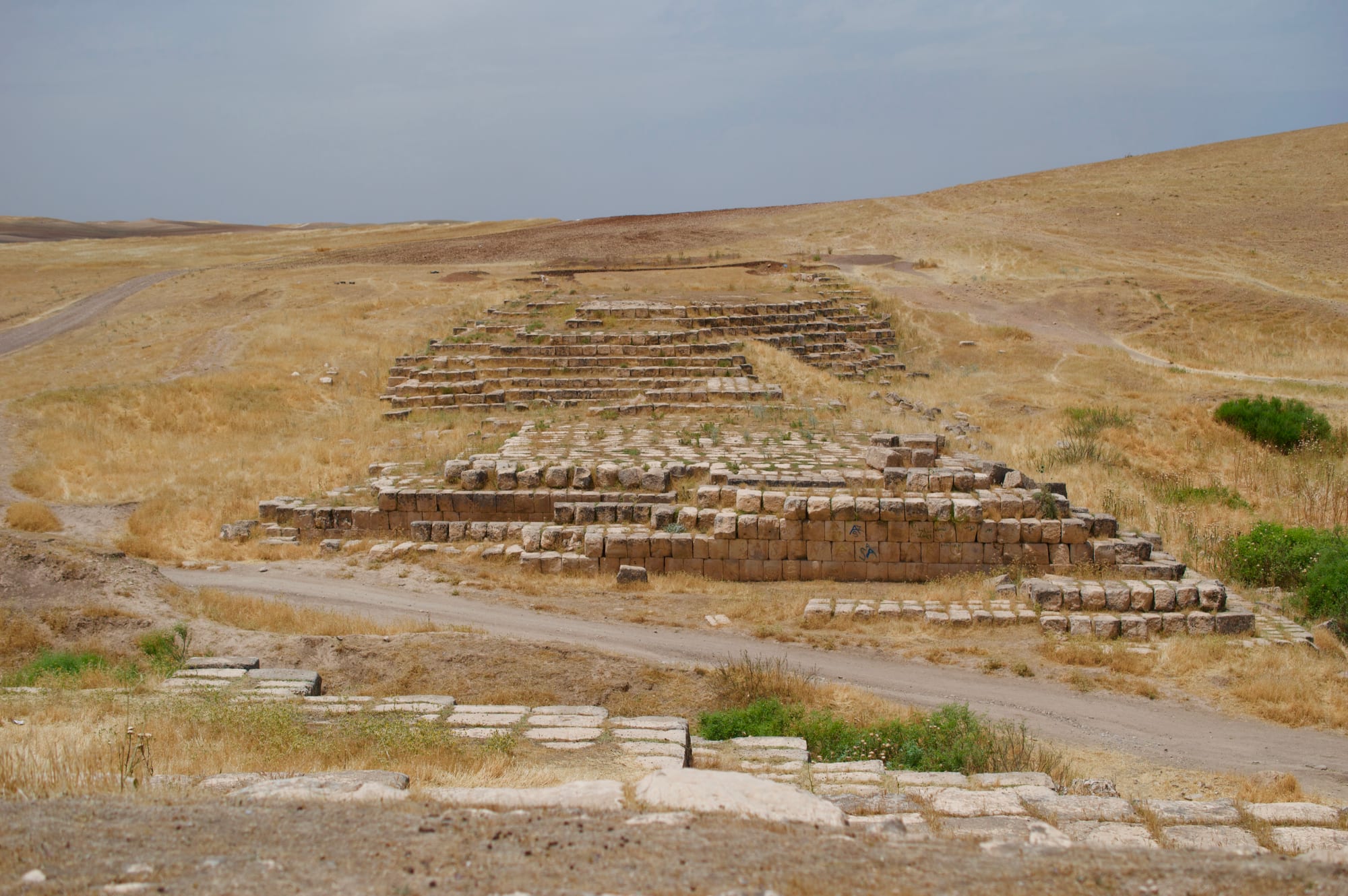
To feed the garden he built a water system of canals, dams and aqueducts some 80 kilometres long, bringing water from the mountains. At Jerwan, north of Mosul, an aqueduct of more than two million dressed stones carried the water across a valley, and an inscription on it names Sennacherib. Because the water came from high in the hills and was then lifted by screws, trees could grow on terraces towering over the plain, which matches the classical descriptions closely. His grandson Ashurbanipal had the mature garden carved on a wall panel in his palace.
How could a garden in Nineveh end up credited to Babylon? Dalley points out that "Babylon", meaning "Gate of the Gods", was a name given to several Mesopotamian cities, and that Sennacherib renamed Nineveh's gates after gods, as if to make his capital a new Babylon. Sennacherib had also destroyed the real Babylon in 689 BC. Before the Battle of Gaugamela in 331 BC, Alexander the Great camped for four days near the aqueduct at Jerwan, and the historians travelling with him may have recorded the great works there in accounts later Greek writers drew on. Over the centuries, the two cities could easily have been confused.
The theory is not proven. Parts of Sennacherib's palace were dug in the mid-19th century, and the excavation plan shows contours that would fit a garden, but its position has not been confirmed, and the area has since been used as a military base, which makes further work difficult.
What can be seen today
Babylon became a UNESCO World Heritage Site in 2019. Much of what stands there now is a reconstruction begun in 1978 under Saddam Hussein's government, which rebuilt features such as the Southern Palace on top of the ancient ruins; a planned rebuilding of the Hanging Gardens never took place. Nineveh's ruins lie across the Tigris from the old centre of Mosul, and several of its gates were bulldozed while the Islamic State group held the city between 2014 and 2017. Archaeologists have since returned to repair the damage.