Daily Life · United States
Why are there no cars on Mackinac Island?
In 1898 islanders banned the motor car after one frightened their horses, and more than a century later the horses, bicycles and carriages still rule.
By Globeway Editorial · 13 October 2026
The short answer
Mackinac Island, a small island in Lake Huron between Michigan's Upper and Lower Peninsulas, has had no ordinary cars since the very start of the motor age. On 6 July 1898 the island's local government banned motor vehicles after local carriage drivers complained that automobiles startled their horses; a doctor's car had frightened horses and caused carriage accidents. The state park that covers most of the island adopted the same rule in 1901, and the ban was extended to motorcycles, then called motor bicycles, in 1907.
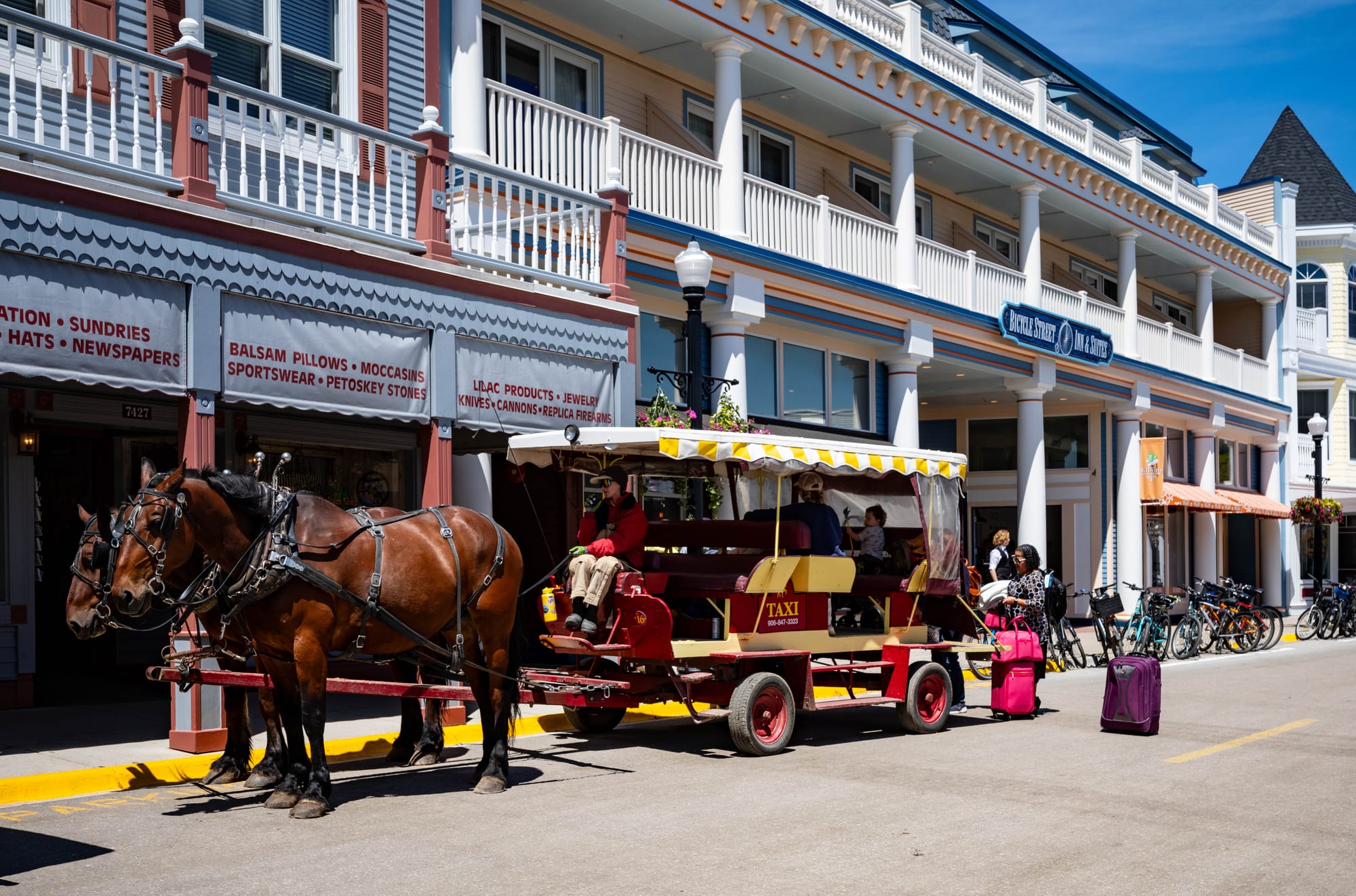
The ban has never been lifted. People get around on foot, by bicycle, on horseback or by horse-drawn carriage, and the island's ring road is the only state highway in the United States closed to motor vehicles. The only motors allowed are city emergency vehicles (an ambulance, police cars and fire trucks), city and state park service vehicles, and snowmobiles in winter, plus a handful of special, short-term permits.
A resort built for horses
By the time cars appeared, Mackinac Island had already spent decades as a summer escape for city dwellers around the Great Lakes. After the fur trade faded and commercial fishing peaked, sport fishing drew visitors in the 1880s, arriving by train and lake steamer from Detroit and beyond. Much of the island became Mackinac National Park in 1875, the second national park in the United States after Yellowstone, and railway and steamship companies built hotels to house the crowds.
The grandest of these, the Grand Hotel, opened on 10 July 1887 after only 93 days of construction. Wealthy families built summer "cottages" along the bluffs. Getting around this resort meant carriages and saddle horses, and local carriage drivers made their living ferrying visitors. When a doctor's car frightened horses and caused carriage accidents, residents complained, and the town passed its first ordinances banning all motorised vehicles.
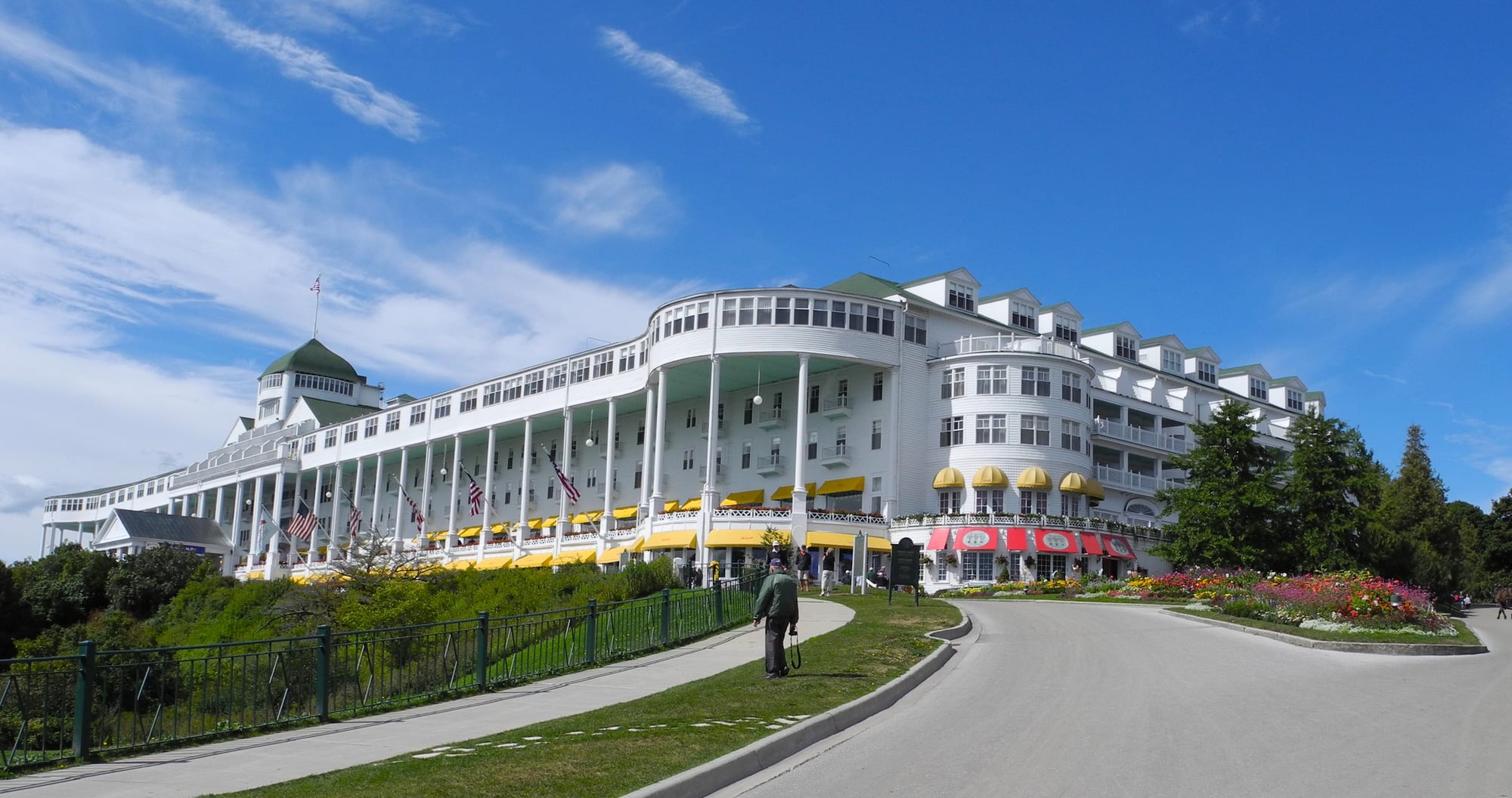
Guests still travel between the ferry docks and the hotel by horse-drawn carriage, as they did when it opened.
Why the rule survived
Part of the answer is who runs the island. When the federal government left in 1895, it handed its land, including Fort Mackinac, to Michigan, and the national park became Michigan's first state park. Mackinac Island State Park now covers about 80 percent of the island, and its commission has restricted private development and requires leaseholders to keep the island's Victorian architecture. The whole island was listed as a National Historic Landmark in October 1960.
Geography helped too. The island covers only 4.35 square miles and sits about 3 miles from the mainland, so cars could only ever arrive by boat. Most visitors still come by passenger ferry from St. Ignace or Mackinaw City, by small plane to the island's airstrip, or in a hard winter by snowmobile across an ice bridge over the frozen straits. Keeping cars out has therefore never meant stopping a flow of traffic, only refusing to let any be shipped in. Its year-round population was 583 at the 2020 census, swelled each summer by hundreds of seasonal workers and tens of thousands of visitors.
The highway without cars
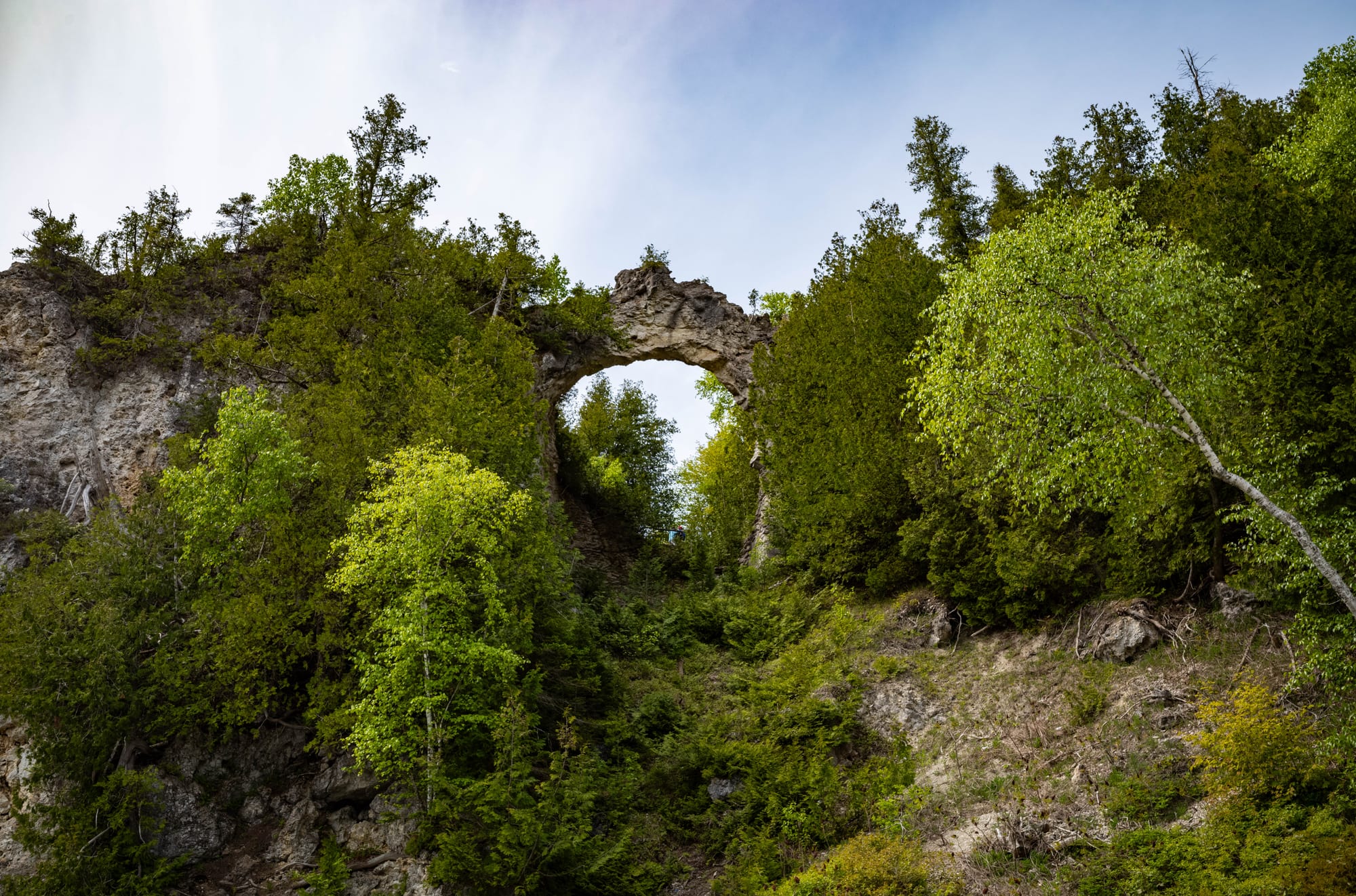
The road around the island, Lake Shore Road, was built by the state between 1900 and 1910 and became state highway M-185 in 1933, when park officials persuaded the state to take over maintenance they could not afford. It runs just over 8 miles along the shoreline, past sites such as Arch Rock and British Landing. Because it was built for horses and bicycles, it is only 12 feet wide, the width of one standard highway lane. Until it was paved with asphalt in 1960, its surface was a mixture of limestone and manure.
The Michigan Department of Transportation calls M-185 "the only state highway in the nation where motor vehicles are banned". Even its roadside litter is collected with a horse-drawn wagon. Life without cars still needs rules, though: a centre line was first painted in 1976, and in 2024 M-185 became the last state highway in Michigan to get a speed limit, 15 miles per hour, after lawmakers noted that some electric bicycles could reach 28.
The rare exceptions
Exceptions have been few enough to make news. In 1979 a car was brought over for the film Somewhere in Time, for Christopher Reeve's character to drive. On 6 July 1998, the ban's hundredth anniversary, a 1901 Geneva steam car toured the island and was then towed back by horse. When President Gerald Ford visited in 1975, a car was hidden on the island in case of emergency. Vice President Mike Pence's eight-vehicle motorcade in September 2019, the first of its kind on the island, caused some controversy.
Since the 1970s the state park commission has allowed snowmobiles in winter, when the island police sometimes patrol on them.
Seeing it today
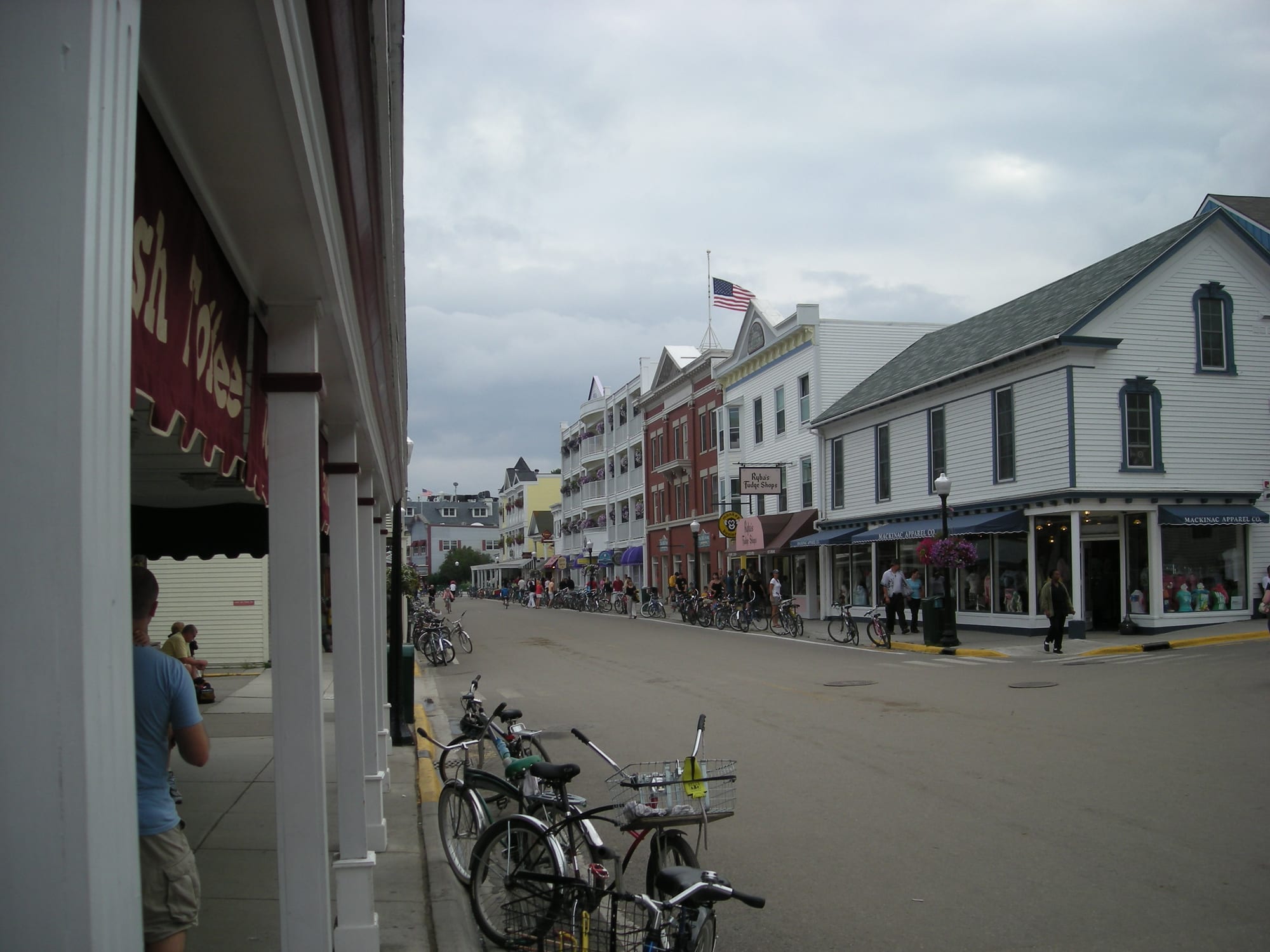
Downtown Mackinac Island, along Main Street, is a business district of shops, restaurants and hotels served by carriages and bicycles. Bicycles, carriages and saddle horses can be rented; roller skates are allowed except downtown. Horse-drawn taxis carry visitors and their luggage. The main visitor season runs from the start of May to the end of October.
The island's best-known souvenir is fudge, made fresh in downtown shops during the season; locals call visitors "fudgies". Each June a Feast of Epona, named after a Gallo-Roman horse goddess, brings stable tours and a blessing of the animals, a fitting festival for a place where horses still do the work cars do elsewhere.