History · Greece
Why did democracy take root in ancient Athens?
Athens was not the first Greek democracy, but debt, tyranny and a popular uprising pushed it to build the fullest one, and to give it its name.
By Globeway Editorial · 13 October 2026
The short answer
Strictly, Athens did not invent democracy on its own. Other Greek city-states adopted democratic constitutions before it did, and by the late 4th century BC as many as half of the more than one thousand Greek cities may have been democracies. What Athens did was build the most far-reaching version, popularise the name dēmokratia, "people power", and leave behind the fullest record of how it worked, including the only complete surviving description of a Greek city's constitution. That is why it is remembered as democracy's birthplace.
The Athenian system grew out of a century of crisis rather than one bright idea. A debt crisis that was turning poor farmers into slaves forced the reforms of Solon in 594 BC. Decades of tyranny and feuding noble clans followed, and in 508 BC, when a faction backed by Sparta tried to take over the city, ordinary Athenians rose against it and brought back the reformer Cleisthenes, who rebuilt the state around where citizens lived rather than which family they belonged to.
Debt, slavery and a shaking-off of burdens
In the 7th century BC Athens looked like many other Greek cities. It was ruled by archons, or magistrates, and by the council of the Areopagus, made up of former archons, and almost all of them were aristocrats.
The deeper problem was debt. Farmers who could not repay their creditors surrendered their land and became hektemoroi, serfs who worked their own former fields and handed over a sixth of the harvest. If they failed again, they and their families could be sold into slavery. As the conflict between rich and poor grew dangerous, Athenians of every class turned to Solon, a noble and a poet, to mediate.
His answer, the seisachtheia or "shaking-off of burdens", cancelled outstanding debts, freed Athenians who had been enslaved for debt and banned anyone from pledging their own freedom as security for a loan. Solon then split citizens into four classes by the size of their harvests, so that political rights depended on wealth rather than noble birth, and every citizen gained the right to attend the Assembly and vote. It was not yet democracy, but it gave ordinary men a place in the city's politics.
Tyrants, and a city that refused to go back
Solon's settlement did not end the feuds between noble clans. Peisistratos made himself tyrant three times from 561 BC and held power until his death in 527 BC, and his sons Hippias and Hipparchus succeeded him. After Hipparchus was murdered in 514 BC, Hippias grew harsher. Cleisthenes, a member of the powerful Alcmaeonid family, persuaded the oracle at Delphi to urge Sparta to help, and in 510 BC Spartan soldiers helped drive Hippias out.
What happened next decided the matter. Cleisthenes and a rival aristocrat, Isagoras, competed for power, and Isagoras called in King Cleomenes I of Sparta, who forced Cleisthenes into exile. Isagoras turned hundreds of Athenians out of their homes and tried to dissolve the city council. The council refused, and the people of Athens backed it. Isagoras and his followers were besieged on the Acropolis for two days and fled on the third. Cleisthenes returned with the exiled families and began his reforms. Athenian democracy was, in other words, born of a popular uprising that defended a council against a would-be strongman.
How Athenian democracy took shape
- 621 BC
Draco
Athens replaces unwritten custom with a written law code.
- 594 BC
Solon
Debts are cancelled and every citizen may attend the Assembly.
- 561 BC
Tyranny
Peisistratos seizes power for the first of three times.
- 510 BC
Hippias expelled
With Spartan help the last tyrant is driven out.
- 508 BC
Cleisthenes
After the revolt against Isagoras, ten new tribes replace the old clans.
- 462 BC
Ephialtes
The aristocratic Areopagus loses most of its powers.
- 322 BC
The end
Democracy is suppressed by the Macedonian general Antipater.
Rewiring the city around neighbourhoods
Cleisthenes' reforms of 508 and 507 BC attacked the root of the trouble, the family loyalties that had fuelled faction and tyranny. He abolished the political role of the four old tribes, which were based on kinship, and created ten new ones based on residence. Every citizen was registered in his deme, a local district, of which there may have been 139. Each tribe combined demes from three zones, the city, the coast and the inland country, so that no tribe could become the private army of a single region or clan. Athenians even began to name themselves after their deme rather than their father.
A new council of 500, fifty men from each tribe, was chosen every year by lot. Ostracism, probably also his creation and first used in 487 BC, let the citizens vote to send any man who seemed too powerful into exile for ten years, without losing his property. Cleisthenes called the result isonomia, equality before the law, and the word "democracy" itself first appears in writing in the following century, in the histories of Herodotus.
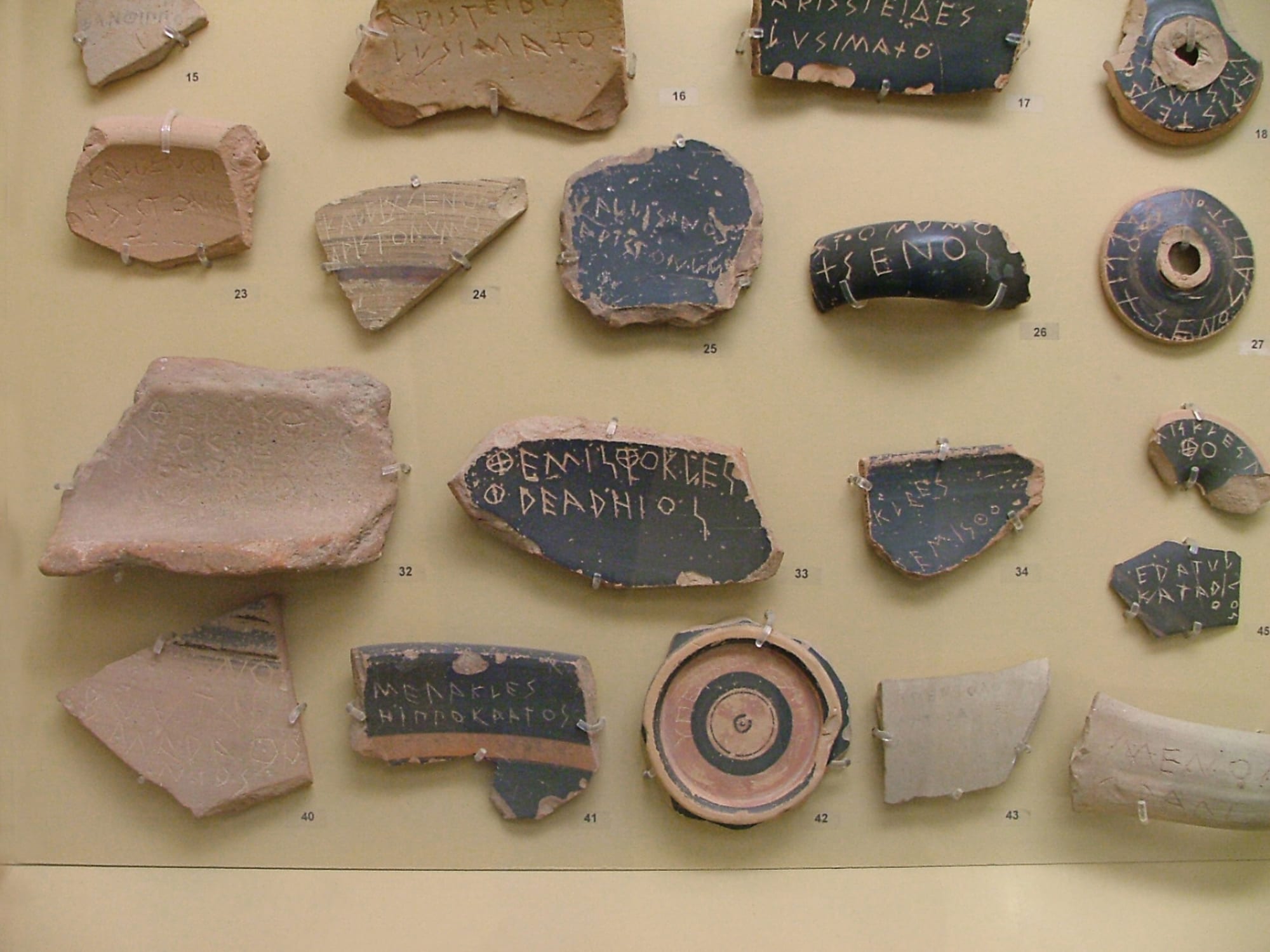
Voters scratched a name on a broken piece of pottery, an ostrakon, which gave the procedure its name. Many citizens could not write, so scribes did it for them. Around 12,000 political ostraka have been dug up in the Agora and the Kerameikos cemetery. One story holds that Aristides, known as "the Just", was asked by an illiterate voter to write the name Aristides for him, because the man was tired of hearing him called just.
Rowers, juries and the lottery
The final push came in the decades after the Greek victories over Persia. In 462 BC Ephialtes persuaded the Assembly to strip the aristocratic Areopagus of most of its powers, leaving it a court for homicide and sacrilege. He was assassinated the following year, and leadership passed to Pericles. Pay for jurors, introduced around the same time and credited to Pericles, let poorer citizens serve.
The system that followed was direct, not representative. Any adult male citizen could speak and vote in the Assembly, usually by a show of hands. Most of the roughly 1,100 officials each year were chosen by lot, and no office filled by lot could be held twice, to stop anyone building a power base. Juries of 200 or more citizens, sometimes well over 1,000, decided cases with no judges. Only posts needing real expertise or private wealth, such as the ten generals and the treasurers, were elected. Hostile ancient writers complained that the common people dominated the navy as rowers and filled hundreds of overseas administrative posts to their own advantage.
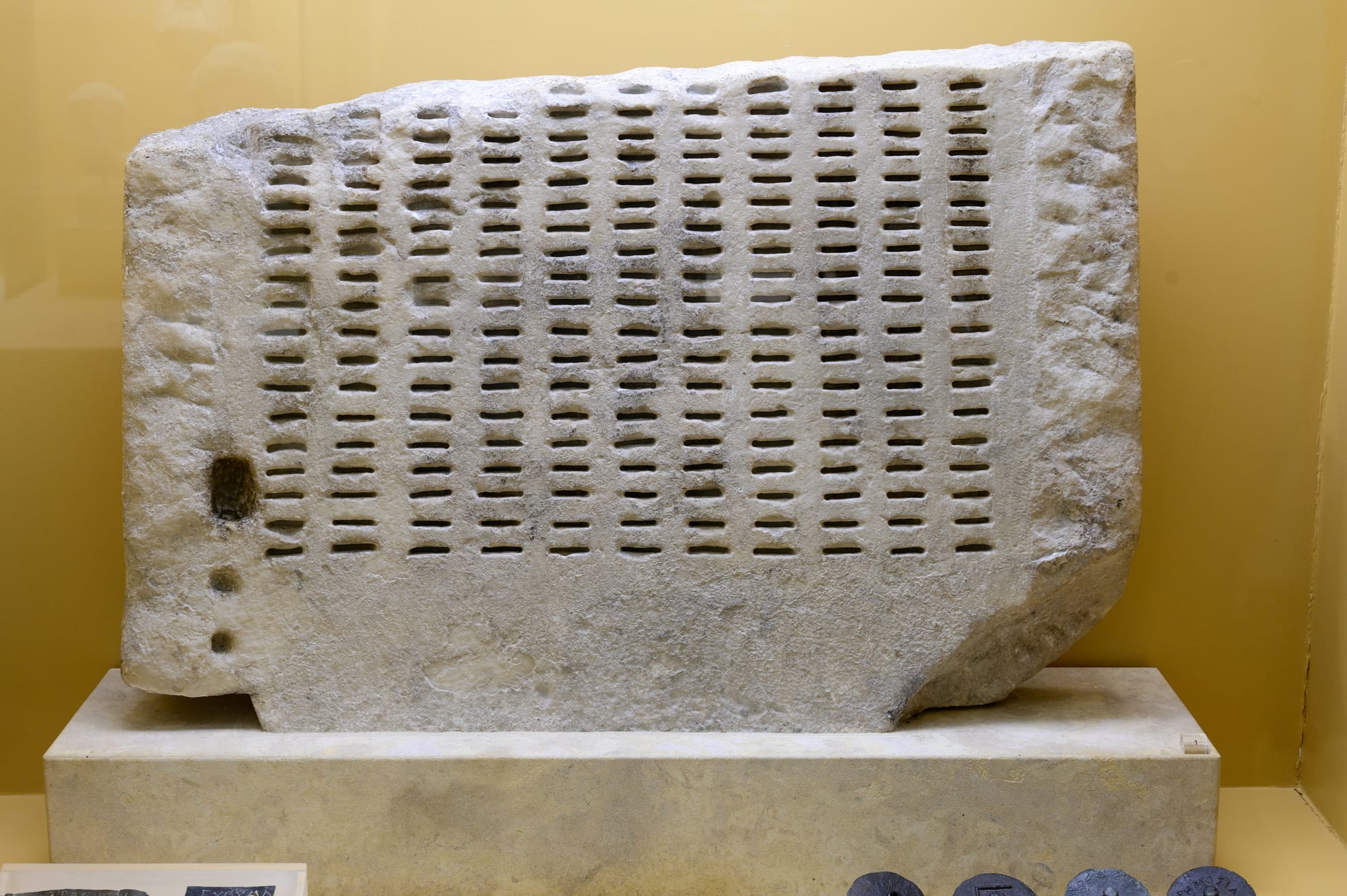
Citizens' name tokens went into the slots, one column per tribe. Coloured dice dropped down an attached tube, and each die either selected or rejected a whole row, one man from every tribe, until enough had been chosen for the council, an office or a jury.
A democracy for a minority
Athenian democracy was radical for its time and narrow by modern standards. Only adult male citizens could take part, and from 450 BC only those with two Athenian parents; women, slaves and resident foreigners were excluded. In the 4th century BC perhaps 30,000 adult male citizens could vote, out of some 250,000 to 300,000 people in Attica.
It also proved fragile. Oligarchs overthrew it briefly in 411 and 404 BC, near the end of the long war with Sparta, and it was suppressed by the Macedonian general Antipater in 322 BC.
Standing where the Assembly met
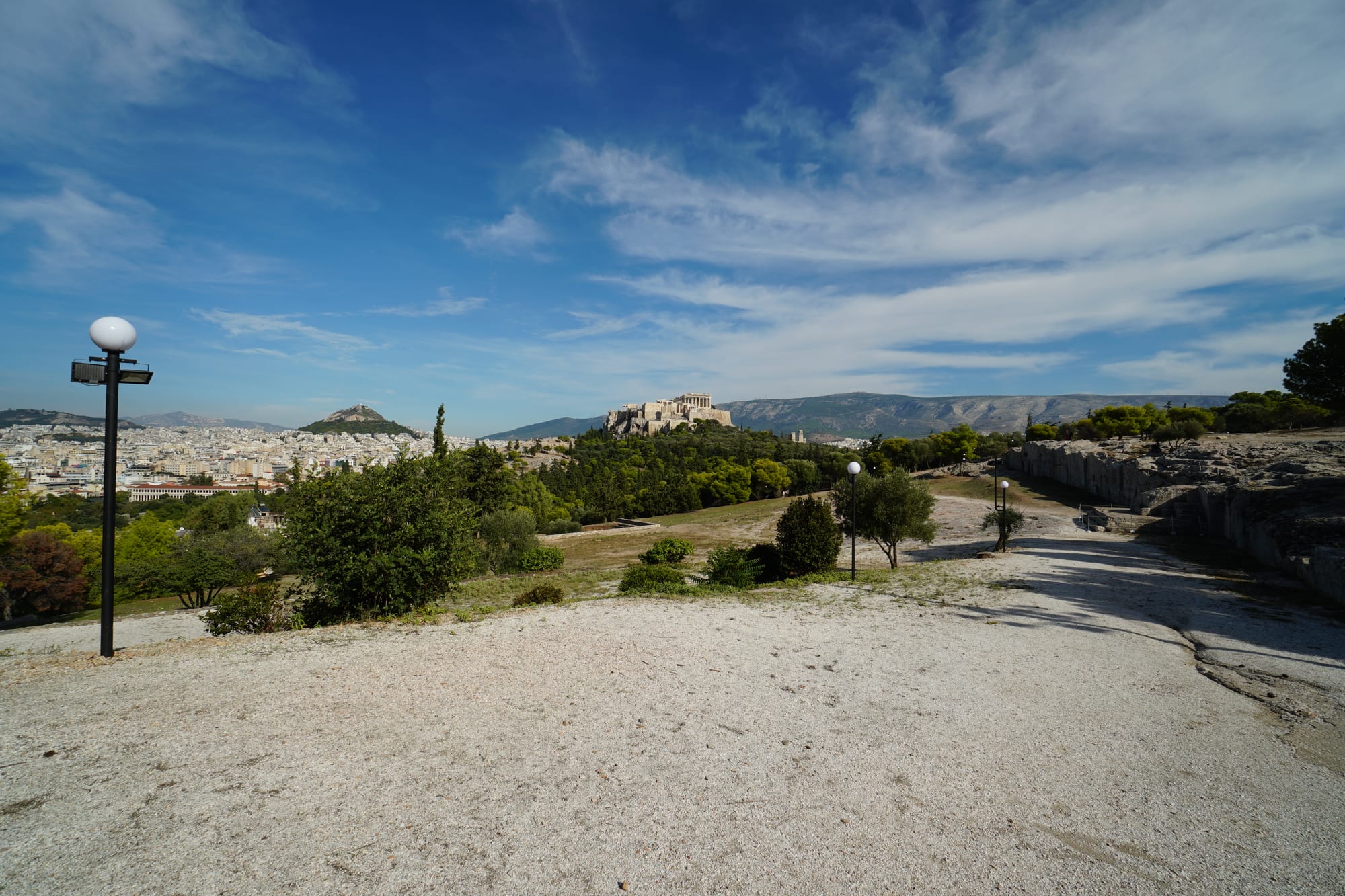
The Assembly gathered on the Pnyx, a hill less than a kilometre west of the Acropolis, from around 500 BC. The citizens sat on the slope of a mostly natural hollow facing a speakers' platform, the bema, and the space may have held anywhere from 6,000 to 13,000 people. The platform cut from the bedrock still stands, with the Acropolis in view across the trees. Below, in the Ancient Agora, the city's old marketplace, the museum displays the ostraka and allotment machines that made the system work.