History · Kazakhstan
Why did Kazakhstan move its capital?
Almaty was boxed in by mountains, prone to earthquakes and far from the north, so Nazarbayev built a new capital on the steppe.
By Globeway Editorial · 13 October 2026
The short answer
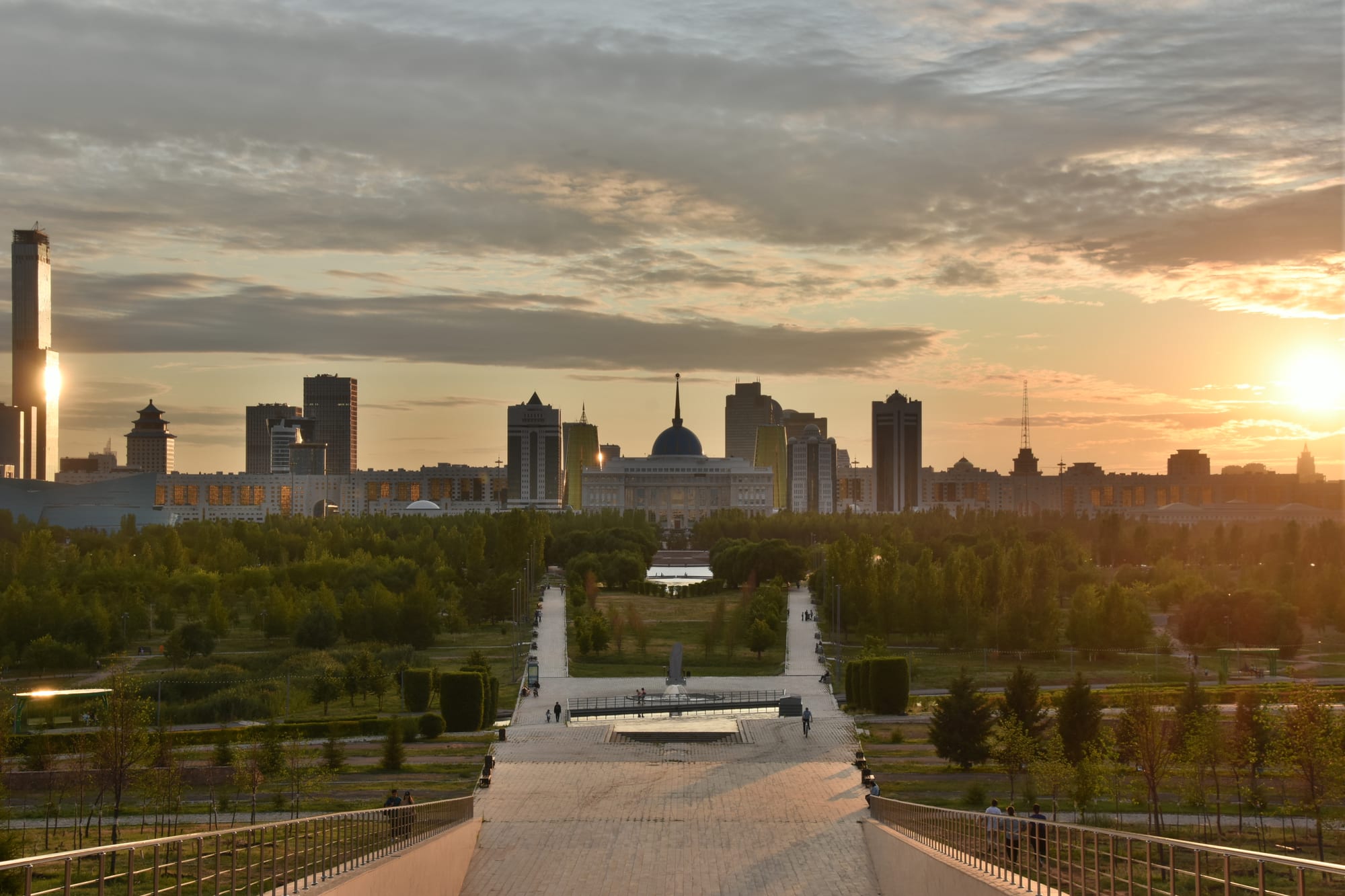
Kazakhstan moved its capital from Almaty to the northern city of Akmola, soon renamed Astana, on 10 December 1997. The idea belonged to the country's first president, Nursultan Nazarbayev, and the official reasons were practical: Almaty sits in a mountain basin in the far south-east, with no land left to grow, it lies in a zone of destructive earthquakes, and it is close to the country's outer borders and a long way from most of its regions.
The deeper reasons were about holding a new country together. When the Soviet Union broke up, the north of Kazakhstan was home to large numbers of ethnic Russians and some regions showed separatist feeling. Putting the capital in the middle of the steppe, close to the north, was a way of tying those lands firmly to the new state and of drawing Kazakhs from the crowded south into them. It was also the first and only time a post-Soviet state moved its capital.
A capital in the wrong corner
Almaty, called Alma-Ata in Soviet times, had been the capital since 1929. It lies in the foothills of the Trans-Ili Alatau mountains near the border with Kyrgyzstan, at 700 to 900 metres above sea level, and it remains the country's largest and most ethnically diverse city. But it sits almost 1,000 kilometres from Astana and the northern heartland, and Kyrgyzstan's capital, Bishkek, is only 190 kilometres away.
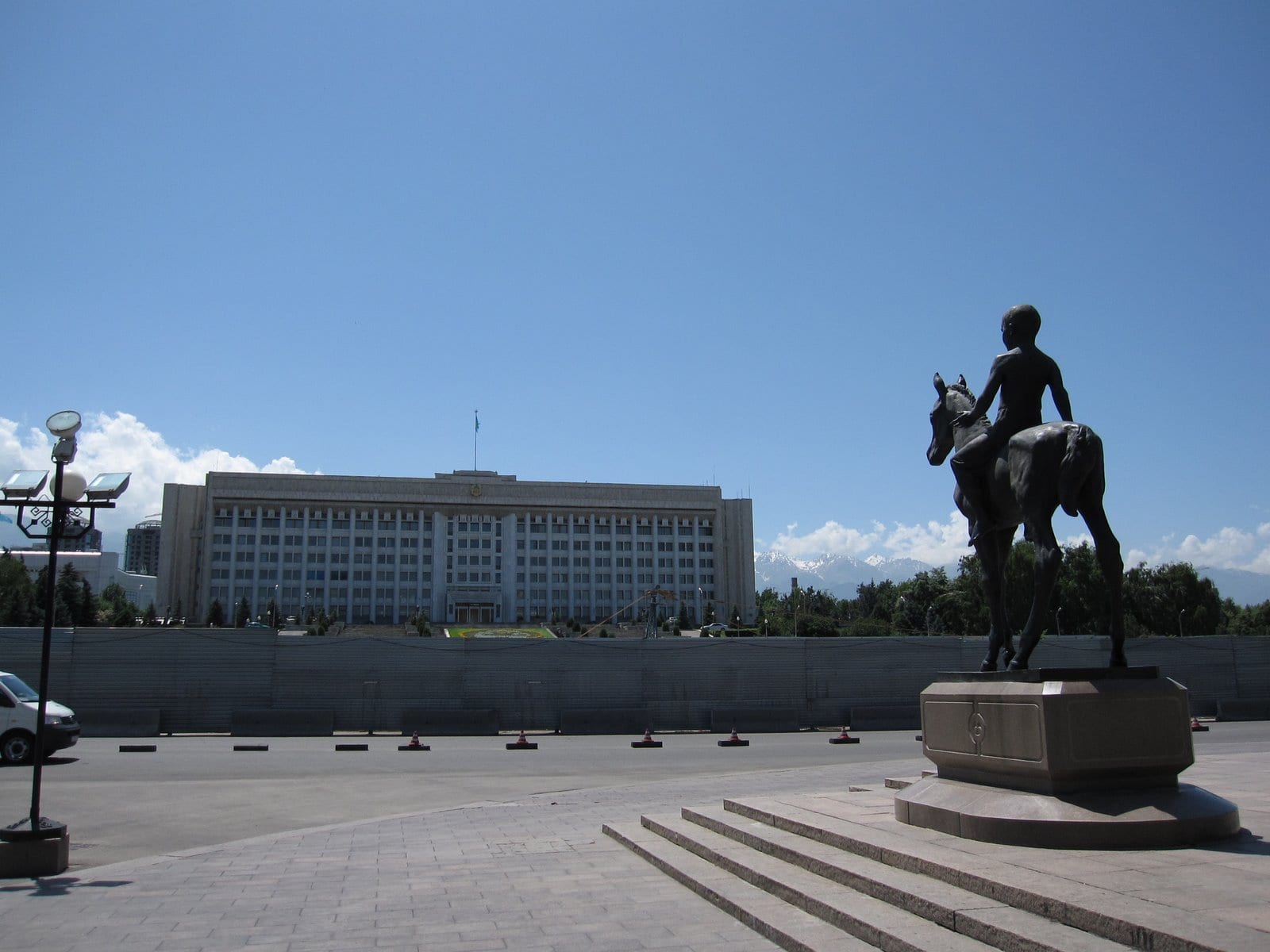
The mountains that make Almaty beautiful also trapped it. The city sits in a basin, and by the early 1990s building was so hemmed in that there was no territory left into which it could expand.
The ground itself was a second worry. On 28 May 1887 an earthquake nearly destroyed the town, then called Verny, in 11 to 12 minutes, and on 3 January 1911 the Kebin earthquake brought down more than 770 brick buildings. A capital in a known seismic zone was a standing risk to the whole machinery of government. Security planners added a third argument: the capital of an independent state, they said, should be far from its external borders and close to its centre, so that the government could keep working if the region around it grew tense.
Holding the north
The less comfortable reason lay in the north. Russian settlement there went back to the Russian Empire's forts of the 18th and 19th centuries, and for several decades of Soviet rule Russians were the largest single group in the republic. In 1989 the city that became Astana, then called Tselinograd, had about 281,000 people, of whom roughly 54 percent were Russian and under 18 percent Kazakh.
According to Nazarbayev's own account, he first thought of a new capital in the opening months of independence in 1992, partly because some regions showed separatist feeling and moving the capital was one answer to a question of national security. The commission that chose Akmola valued its position between the main economic regions, and saw the move as a way to balance the country's ethnic map, encouraging migration from the labour-rich south to the industrial north.
1992 | Nazarbayev first conceives a new capital, by his own account. 1994 | On 6 July parliament narrowly votes for the transfer. 1995 | A decree of 15 September creates a state commission for the move. 1997 | Akmola becomes the capital on 10 December. 1998 | The city is renamed Astana in May and presented to the world in June. 2019 | Renamed Nur-Sultan in March, after Nazarbayev resigns. 2022 | The name reverts to Astana in September.
Choosing a city, and paying for it
Nazarbayev said he weighed 32 criteria, from climate and terrain to seismic risk, water, transport and labour. Several towns were considered. Ulytau was dropped at once for its water shortage and lack of a railway, Karaganda and Kokshetau for weak infrastructure, and Aktobe because it lay too far from the centre. Akmola had a road and rail junction, drinking water, a modest population and, even in its centre, about 30 hectares of empty land ready for building.
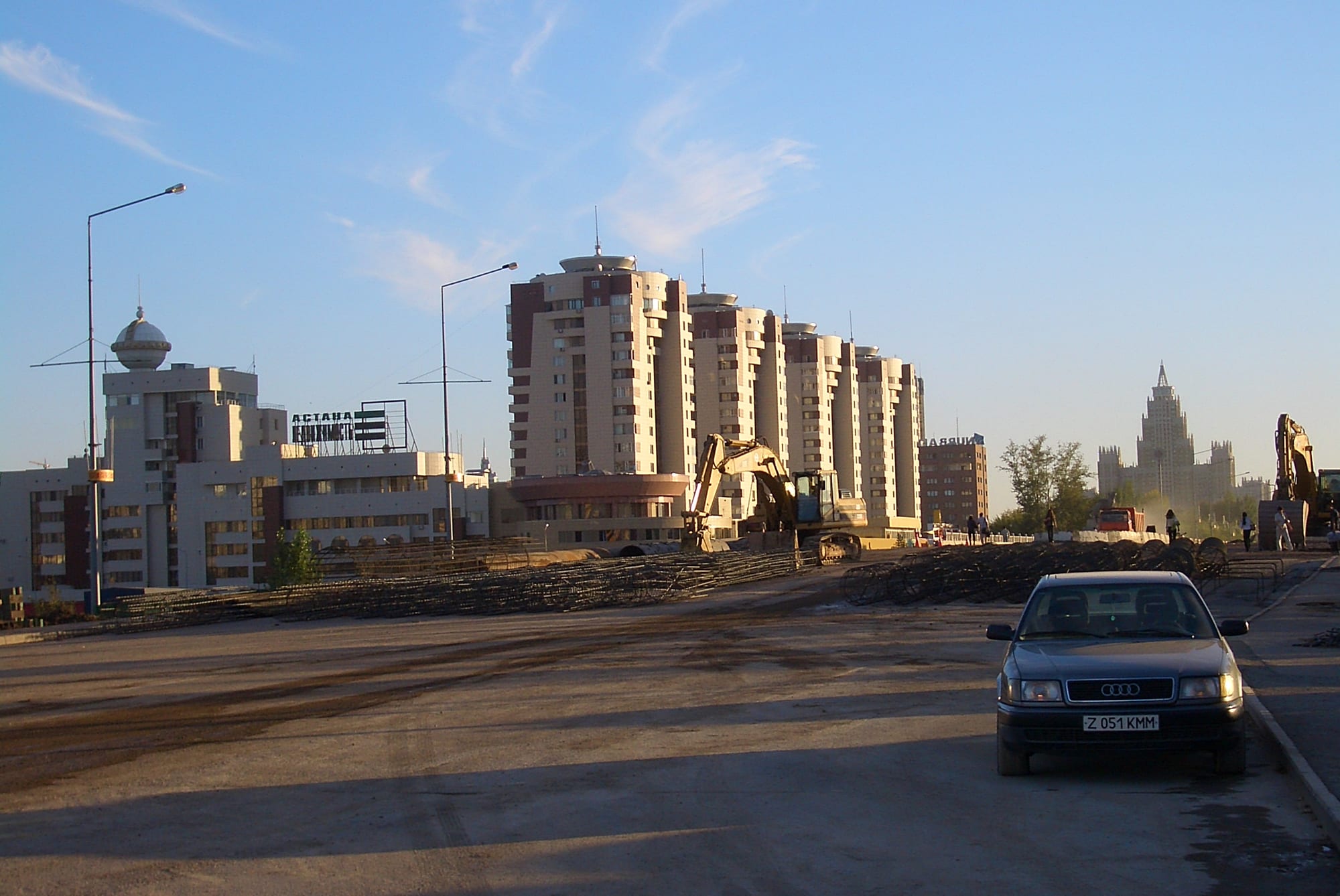
The new districts rose on the south bank of the Ishim River, while the older town north of the river was kept.
Parliament was far from unanimous. When Nazarbayev put the idea to deputies on 6 July 1994, the debate lasted all day. Some backed him, some wanted to wait, and others argued that a country in economic crisis, unable to pay wages on time, could not afford a new capital. The motion passed by a narrow margin, and 6 July is now a public holiday, Capital Day. A special fund called New Capital was set up to gather money outside the state budget, and the government was told to draw up tax and customs breaks for investors who built there.
In April 1998 the government invited international architects to compete for the master plan. The Japanese architect Kisho Kurokawa won on 6 October 1998 with a scheme to preserve the existing city and build a new one on the south and east sides of the river.
From provincial town to capital
The move remade the city. Its population was 493,000 in 2002, passed one million in 2017 and stood at 1,528,703 in January 2025. The ethnic balance the planners wanted has arrived: by 2026 Kazakhs made up 83 percent of the city, against 17 percent at independence.
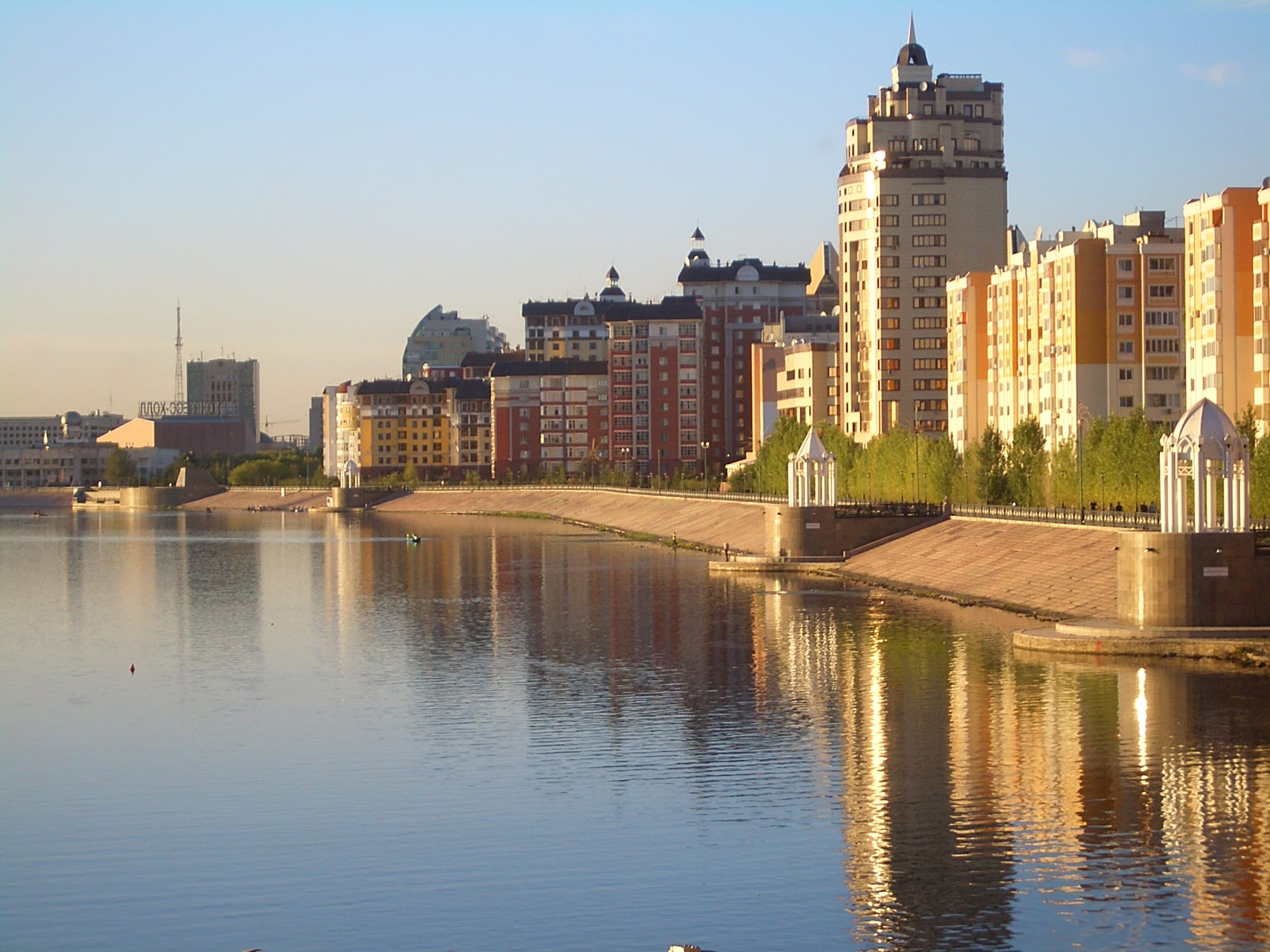
Astana is the second-coldest national capital in the world after Ulaanbaatar, a title Ottawa held until 1997. Temperatures of minus 30 to minus 35°C are common from mid-December to early March.
The name has been political too. Akmola became Astana, meaning simply "capital" in Kazakh, in May 1998. In March 2019 it was renamed Nur-Sultan in honour of Nazarbayev after he stepped down, and in September 2022, after unrest that ended with his resignation from the Security Council, President Kassym-Jomart Tokayev signed a constitutional amendment restoring Astana, a move widely seen as distancing the country from the former president.
Seeing the capital today
The showpieces of the new city stand south of the river. Baiterek, a 105-metre tower holding a golden sphere, was built as a symbol of the transfer and stands for a folk tale of a tree of life in which the magic bird Samruk laid her egg. Norman Foster designed the glass Palace of Peace and Reconciliation, a 62-metre pyramid completed in 2006, and the Khan Shatyr, a vast transparent tent that holds a park, shops and an indoor beach. The Khan Shatyr's name means "Grand Marquee", and its shape is that of a giant tent. Almaty, meanwhile, is still called the southern capital and remains the country's cultural and business centre.