History · Guatemala
Why did the Maya abandon Tikal?
Drought, war, a crowded and worn-out landscape and fouled reservoirs broke the power of Tikal's kings, and by 950 its people had drifted away.
By Globeway Editorial · 13 October 2026
The short answer
There was no single reason, and no sudden exodus. Tikal, one of the largest cities of the ancient Maya, emptied slowly over about a century. After a building boom in the 8th century, its population fell sharply after about 830, its kings stopped raising monuments, and its last dated stela went up in
- By the end of the 9th century most people had gone, squatters were
living in the royal palaces, and after 950 the city was all but deserted.
The causes worked together. Tikal was part of a wider crisis, the Classic Maya collapse, in which city after city in the southern lowlands fell silent. Severe, repeated droughts struck just as the region was crowded, its forests cleared and its soils overworked. Generations of war with rival kingdoms had drawn the population into the city, straining the land further, and Tikal's reservoirs, its only water supply, became polluted. Faced with failing harvests and kings who could no longer deliver, people left, drifting towards regions that were still prospering, and power shifted above all to the north of the Yucatán Peninsula.
A superpower of the rainforest
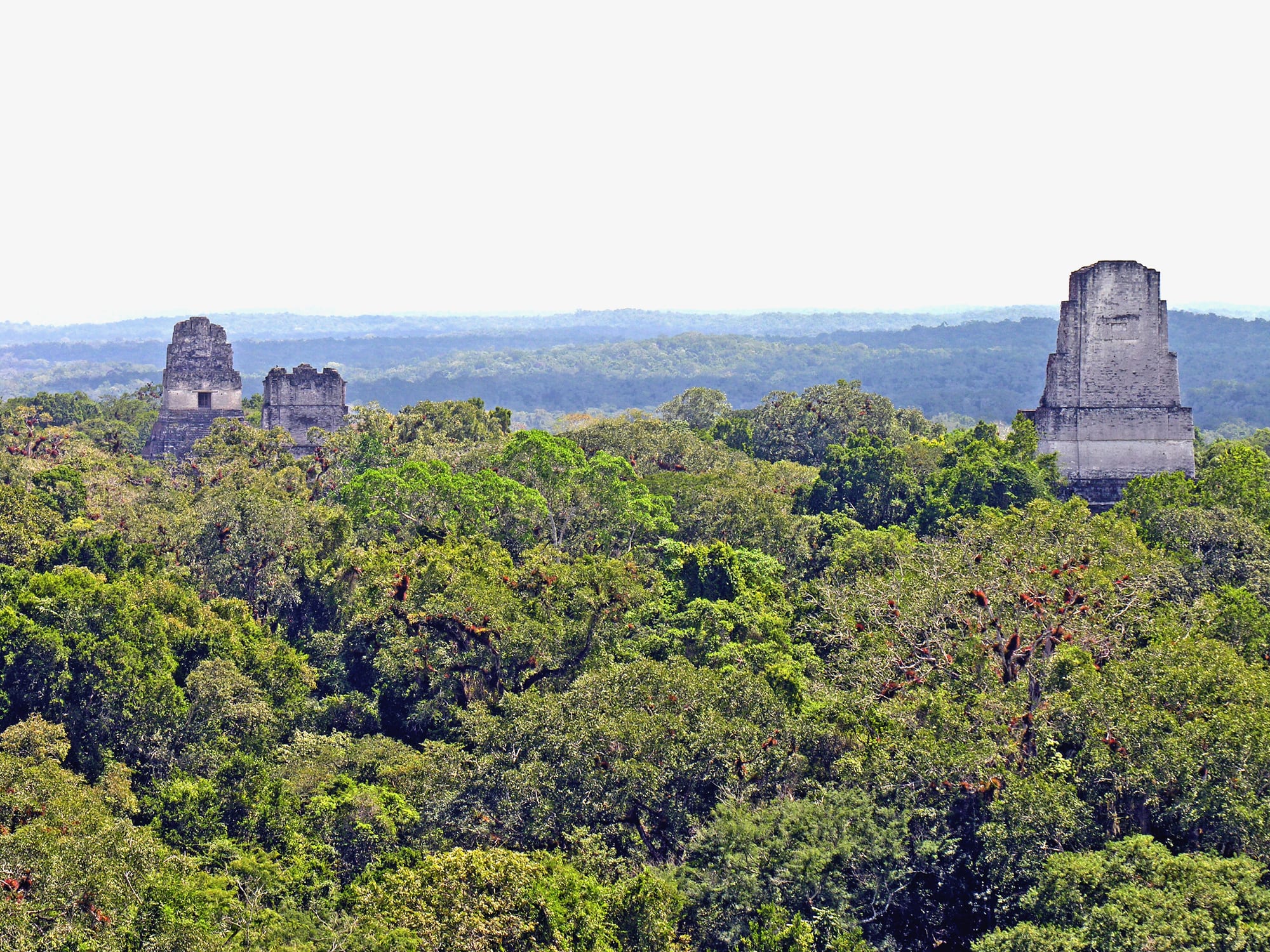
Tikal, in the Petén forest of northern Guatemala, was probably called Yax Mutal by its people. It has monumental buildings from as early as the 4th century BC and reached its height in the Classic Period, from about 200 to 900, when it dominated much of the Maya world. Estimates of the city's population range from 10,000 to 90,000, and within 12 kilometres of its core there may have been 120,000 people at the peak. Its tallest limestone temples rise some 65 to 70 metres.
Its history was violent. In January 378 a general named Siyaj K'ak', probably serving the great city of Teotihuacan in central Mexico, took Tikal and installed a new dynasty. From the 6th century Tikal fought a long war with Calakmul, to the north in what is now Mexico, a struggle often likened to a contest between two superpowers. In 562 Tikal was crushed by Calakmul and its ally Caracol, and its king was probably captured and sacrificed. For more than a century afterwards, a period known as the Tikal hiatus, almost nothing new was built or carved.
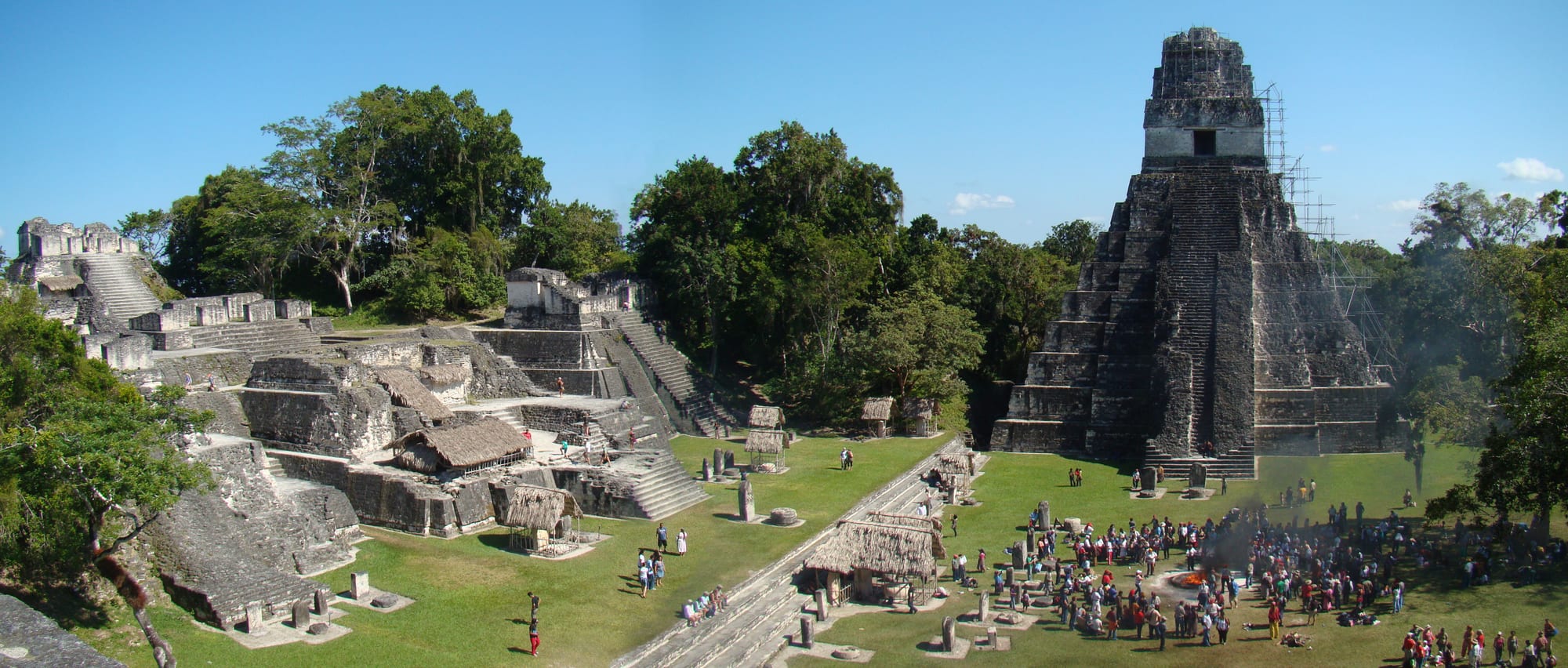
Temple I, the burial place of King Jasaw Chan K'awiil I, was completed around 732, when Tikal was rising again after the hiatus.
The last golden age
The recovery came under Jasaw Chan K'awiil I, who took the throne in 682, erected the first dated monument at Tikal in 120 years and began a wave of new building. In 695 he defeated Calakmul, which never fully recovered. Under him and his son, Tikal's population grew rapidly from about 700 to 830, and the great temple-pyramids that dominate the site today went up, among them Temple IV, the tallest, at about 65 metres from its platform to the top of its roof comb.
That boom carried the seeds of trouble. Constant warfare made people crowd close to the city for protection, which forced more intensive farming of the land nearby and sped up the damage to it. The region, though it looks like rainforest, is effectively a seasonal desert without stable sources of drinking water. Tikal had no water except rain, channelled off its plastered plazas into ten reservoirs, and the rains were unpredictable: a long dry spell before the crops ripened could threaten the whole city.
Drought, poisoned water and silence
From around 800 the Maya lowlands suffered a long series of droughts. Sediment cores from Lake Chichancanab in Yucatán, published in 1995, revealed an intense, protracted drought in the 9th century that coincided with the collapse. A 2018 study of crystals in Yucatán lake beds estimated that annual rainfall fell by 41 to 54 per cent during the collapse, and by up to 70 per cent at the drought's peak. For people growing maize on thin tropical soils, that was catastrophic.
At Tikal, the water itself turned against the city. Research on the reservoirs suggests that drought fouled some of those near the temples and palaces with algae blooms, while others stayed drinkable. Analysis has also found high levels of mercury, phosphate and toxic cyanobacteria in its water: buildings were painted with cinnabar, a red mercury ore, and rain washed it into the reservoirs.
- 378
A Teotihuacan-backed conquest installs a new dynasty at Tikal.
- 562
Caracol, allied to Calakmul, defeats Tikal; the hiatus begins.
- 682
Jasaw Chan K'awiil I ends the hiatus and rebuilds the city.
- 810
Temple III, the last great pyramid, and new monuments are raised.
- 830
A major calendar date passes uncelebrated; a 60-year silence begins.
- 869
The last dated stela is erected in the Great Plaza.
- c. 950
Tikal is all but deserted.
- 1848
The ruins are explored by Modesto Méndez and Ambrosio Tut.
The political system cracked under the strain. In 830 the start of a new cycle of the Maya calendar, the 10th bak'tun, passed without any monument, probably because central control of the city had collapsed. A king named Jasaw Chan K'awiil II tried to revive royal power and raised a stela in the Great Plaza in 869, but it was the last. Tikal's satellite towns, such as Uaxactun, put up their final monuments in 889. There is evidence that elite palaces were burned. Squatters moved into the royal rooms, blocking doorways and leaving their rubbish, and built thatched huts in the ceremonial plazas.
Temple III, built in the early 9th century, was the last of Tikal's great pyramids; none was raised after it.
Not an ending, a move
Archaeologists still argue over the weight of each cause. More than 80 theories of the Classic Maya collapse have been put forward, from foreign invasion and peasant revolt to disease and the breakdown of trade with central Mexico. Drought has gained ground in the 21st century as the leading explanation, partly because it can account for many of the others: prolonged drought helps explain heavier warfare, unrest and the decline of trade. Others stress a failure of religion and royal authority, as rituals and kings lost their power to hold an ever more complex society together. Some critics note that much of the drought evidence comes from the north, but newer records from further south support a drought across the whole peninsula.
What is clear is that the Maya did not vanish. Many scholars now describe the period as a rupture or transformation rather than a collapse. Cities in the north, such as Chichén Itzá, Uxmal and Cobá, carried on, and independent Maya kingdoms lasted until the Spanish conquered Nojpetén, the last of them, in
- Millions of Maya people still live in Guatemala and Mexico today. Tikal
itself was swallowed by the forest, and is now the heart of a national park of 570 square kilometres, declared a UNESCO World Heritage Site in 1979.